



Lateral Entry: Meaning, Advantages, Challenges and Importance in Indian Administration

Lateral Entry is an important administrative reform in India that allows experts from the private sector and other fields to join senior government positions directly. Traditionally, senior government posts in India are filled by officers selected through the Civil Services Examination conducted by the Union Public Service Commission. However, in recent years, the Government of India has started appointing specialists from outside the regular civil services system through lateral entry.
Thank you for reading this post, don't forget to subscribe!In 2018, the central government announced the recruitment of experts from the private sector for the post of Joint Secretary in different ministries. This decision started a national debate about whether lateral entry is beneficial for governance or whether it weakens the traditional civil services system.
Supporters of lateral entry believe that modern governance has become highly complex and requires technical knowledge and professional expertise. On the other hand, critics argue that it may reduce transparency, create conflicts of interest, and affect the morale of career civil servants.
Lateral entry has become a major topic in Indian polity and public administration because it directly affects policymaking, governance, and public service delivery.
What is Lateral Entry?
Lateral Entry refers to the appointment of specialists and experts from outside the traditional government services to senior positions in the government.
Usually, senior administrative posts such as Joint Secretary, Additional Secretary, and Director are occupied by Indian Administrative Service (IAS) officers and other civil servants who enter government through competitive examinations. Under lateral entry, professionals from the private sector, academia, public sector enterprises, international organizations, or non-governmental organizations can directly join these senior positions.
These individuals are selected because of their expertise, experience, and specialized knowledge in specific fields.
For example, experts in:
- Finance
- Agriculture
- Infrastructure
- Environment
- Renewable Energy
- Aviation
- Commerce
- Technology
- Public Health
can be appointed to government departments related to these subjects.
The main purpose of lateral entry is to improve governance by bringing fresh ideas, innovation, and professional expertise into the government system.
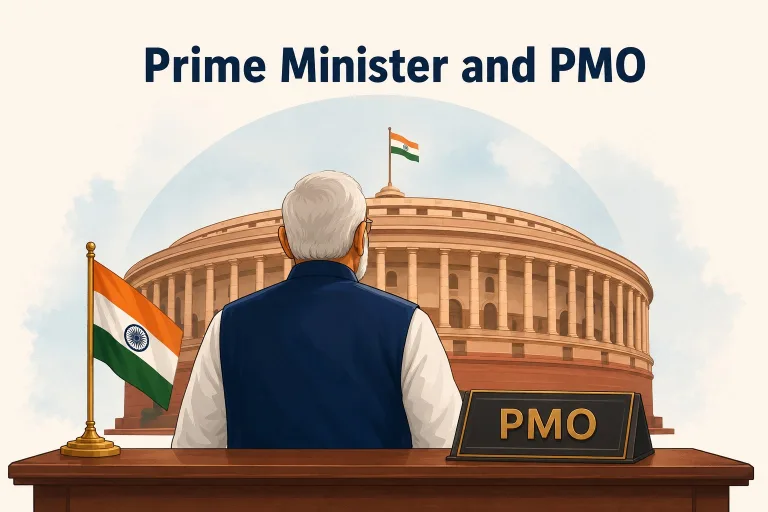
Meaning of Joint Secretary
A Joint Secretary is a senior officer in the Government of India. This officer plays an important role in:
- Policy formulation
- Decision-making
- Programme implementation
- Coordination between ministries
- Monitoring government schemes
Joint Secretaries are usually experienced IAS officers. They work directly under the central government and manage important departments.
Through lateral entry, the government opened some Joint Secretary positions to professionals from outside the civil services system.
Historical Background of Lateral Entry in India
Lateral entry is not completely new in India. Even in the past, experts from outside government services were appointed to important positions.
Some examples include:
- Economists appointed to finance-related positions
- Scientists appointed to research organizations
- Technocrats appointed to planning bodies
- Experts appointed to regulatory authorities
India has seen several notable appointments of professionals from outside the civil services in organizations like:
- Reserve Bank of India (RBI)
- NITI Aayog
- Economic Advisory Councils
- Planning Commission
- Public Sector Undertakings
However, these appointments were usually limited and temporary.
The modern concept of structured lateral entry gained attention after economic liberalization in 1991. As India’s economy became more complex and market-oriented, the need for specialized knowledge increased.
Several committees recommended lateral entry reforms, including:
- Second Administrative Reforms Commission (ARC)
- Surinder Nath Committee
- Hota Committee
These committees believed that governance should combine the strengths of both generalist administrators and specialists.
Why is Lateral Entry Needed?
Increasing Complexity of Governance
Modern governance involves many technical and specialized subjects such as:
- Artificial Intelligence
- Climate Change
- Cybersecurity
- Financial Markets
- International Trade
- Digital Technology
- Renewable Energy
A generalist officer may not always have deep technical knowledge in every field. Therefore, experts with professional experience are needed.
For example, handling aviation policy may require knowledge of airlines, airports, and international aviation standards.
Shortage of IAS Officers
India faces a shortage of civil servants.
According to government reports, there is a shortage of IAS officers at various levels. This shortage affects policy implementation and administration.
Lateral entry helps fill these vacancies quickly by appointing experienced professionals.
Need for Specialized Knowledge
Many government departments now require officers with technical expertise.
For example:
- Financial experts in economic ministries
- Scientists in environmental departments
- Infrastructure experts in transport ministries
- Health professionals in healthcare departments
Specialists can improve decision-making and policy quality.
Better Policy Making
Experts with real-world experience can provide practical solutions to complex problems.
Private sector professionals often have experience in:
- Project management
- Innovation
- Data analysis
- Technology adoption
- Organizational efficiency
This can help improve government performance.
Improving Government Efficiency
Lateral entry may bring:
- Faster decision-making
- Better management systems
- Professional work culture
- Greater accountability
- Performance-based administration
The government hopes that such reforms will improve public service delivery.
Participatory Governance
Modern governance involves cooperation between:
- Government
- Private sector
- Civil society
- Academic institutions
Lateral entry allows experts from different sectors to directly participate in governance.
This supports democratic participation and policy innovation.
Advantages of Lateral Entry
Brings Specialized Expertise
One of the biggest advantages of lateral entry is the availability of domain experts.
An expert in finance understands financial markets better than a general administrator. Similarly, a healthcare expert can better manage public health policies.
Specialized knowledge improves governance quality.
Encourages Innovation
Private sector professionals often work in competitive environments where innovation is necessary.
When such professionals join government services, they may introduce:
- Modern technology
- Efficient systems
- Creative ideas
- Better management practices
This can modernize administration.
Improves Administrative Efficiency
Private organizations focus on:
- Time management
- Productivity
- Result-oriented work
- Performance measurement
These practices can improve government functioning.
Reduces Bureaucratic Delays
Traditional bureaucracy is sometimes criticized for slow decision-making.
Lateral entrants may help speed up administrative processes by introducing efficient working methods.
Helps in Economic Reforms
After liberalization, the government increasingly interacts with markets and industries.
Experts with corporate or financial experience can help regulate modern economic sectors more effectively.
Competition Improves Performance
Lateral entry creates competition within the bureaucracy.
This may encourage existing civil servants to improve performance and develop specialized skills.
Fresh Perspective
Career bureaucrats often work within the same administrative structure for many years.
External professionals can bring:
- New viewpoints
- Independent thinking
- Practical approaches
Fresh perspectives can improve policymaking.
Challenges and Criticism of Lateral Entry
Although lateral entry has several benefits, it also faces criticism and concerns.
Lack of Transparency
Critics argue that the selection process must be completely transparent.
If appointments are made without proper checks, there may be:
- Political favoritism
- Bias
- Lack of fairness
Therefore, agencies like the Union Public Service Commission should play a major role in recruitment.
Conflict of Interest
Professionals from private companies may have connections with industries they previously worked for.
This creates the possibility of conflict of interest.
For example:
- A corporate executive may favor certain industries.
- Confidential information may be misused.
Strict ethical rules are necessary to prevent such problems.
Difference in Work Culture
Government and private sector organizations function differently.
Government administration involves:
- Public accountability
- Constitutional responsibilities
- Legal procedures
- Welfare orientation
Private companies mainly focus on profit and efficiency.
Adjusting to government culture can be difficult for lateral entrants.
Threat to Civil Services
Some civil servants believe lateral entry reduces the importance of the traditional civil services system.
They argue that IAS officers:
- Have years of field experience
- Understand public administration deeply
- Work in difficult conditions across India
Bringing outsiders directly to senior positions may affect morale.
Lack of Reservation
One major criticism is that lateral entry may weaken reservation policies.
Traditional civil service recruitment follows constitutional reservation provisions for:
- Scheduled Castes (SC)
- Scheduled Tribes (ST)
- Other Backward Classes (OBC)
- Economically Weaker Sections (EWS)
Critics argue that lateral recruitment may bypass social justice principles.
Limited Understanding of Ground Realities
Private sector professionals may not fully understand rural administration, social diversity, and public welfare challenges.
Field-level administrative experience is very important in India.
Without such experience, policy decisions may become disconnected from reality.
Narrow Scope of Impact
Most lateral entry appointments are made at senior policymaking levels.
However, implementation happens at lower administrative levels.
Therefore, the actual impact on governance may remain limited.
Constitutional and Administrative Issues
Lateral entry also raises important constitutional and administrative questions.
Role of UPSC
The Constitution gives an important role to the Union Public Service Commission in civil service recruitment.
Critics argue that bypassing UPSC may weaken constitutional safeguards.
Therefore, many experts recommend that UPSC should supervise lateral recruitment.
Equality and Fairness
Recruitment to public offices should follow:
- Merit
- Transparency
- Equal opportunity
If the process is not fair, it may violate administrative principles.
Need for Clear Criteria
The eligibility conditions for lateral entry should be clearly defined.
The government must specify:
- Experience requirements
- Educational qualifications
- Selection standards
- Performance evaluation systems
Clear criteria improve public trust.

Comparison Between Traditional Civil Services and Lateral Entry
| Feature | Traditional Civil Services | Lateral Entry |
|---|---|---|
| Recruitment | UPSC Examination | Direct Appointment |
| Experience | Administrative field experience | Specialized professional experience |
| Training | Extensive government training | Limited government exposure |
| Expertise | General administration | Domain specialization |
| Work Style | Bureaucratic system | Professional management |
| Focus | Public administration | Technical expertise |
Both systems have strengths and weaknesses.
A balanced combination may work best for India.
International Examples of Lateral Entry
Many countries use lateral entry in governance.
United States
The United States appoints many experts from:
- Universities
- Private companies
- Think tanks
Senior government officials often change with political administrations.
United Kingdom
The UK civil services system also allows recruitment of specialists into senior government positions.
Singapore
Singapore combines merit-based bureaucracy with professional expertise from various sectors.
Its administration is considered highly efficient.
Lateral Entry and Governance Reforms in India
India is trying to modernize governance through:
- Digital administration
- Policy innovation
- Technology adoption
- Administrative reforms
Lateral entry is part of this broader reform process.
The government believes that combining:
- Experienced bureaucrats
- Professional experts
can improve governance quality.
Need for Proper Training
Experts entering government services need training in:
- Constitutional values
- Public administration
- Government procedures
- Welfare policies
- Ethics and accountability
Training programs help lateral entrants adjust to administrative responsibilities.
Importance of Ethics in Lateral Entry
Ethics is extremely important in public service.
Lateral entrants must follow:
- Neutrality
- Integrity
- Transparency
- Public accountability
Government service is different from private employment because it directly affects citizens’ lives.
Suggestions for Improving Lateral Entry
Transparent Recruitment Process
Recruitment should be:
- Fair
- Open
- Merit-based
- Monitored by independent agencies
Transparency builds trust.
UPSC Involvement
The Union Public Service Commission should play a central role in recruitment.
This ensures constitutional legitimacy.
Strong Ethical Guidelines
Strict conflict-of-interest rules must be introduced.
Lateral entrants should disclose:
- Financial interests
- Business links
- Professional associations
Balanced Representation
Lateral entry should not weaken reservation policies and social justice principles.
Diversity in recruitment is important.
Proper Training and Orientation
Special training should be provided before appointment.
This helps professionals understand government functioning.
Performance Evaluation
A strong evaluation system should measure:
- Work quality
- Public impact
- Integrity
- Efficiency
Performance-based assessment improves accountability.
Future of Lateral Entry in India
Lateral entry is likely to continue growing in India.
Modern governance increasingly requires:
- Technology experts
- Economists
- Environmental specialists
- Healthcare professionals
- Cybersecurity experts
As governance becomes more complex, specialist knowledge will become even more important.
However, success depends on maintaining:
- Transparency
- Fairness
- Constitutional values
- Administrative balance
India must ensure that lateral entry strengthens governance without weakening democratic principles.
Conclusion
Lateral Entry is an important administrative reform aimed at improving governance by bringing specialized professionals into government services. It reflects the changing needs of modern administration where technical knowledge and expertise have become essential.
The system offers many advantages such as specialized expertise, innovation, better efficiency, and improved policymaking. It can help the government handle complex economic, technological, and social challenges more effectively.
At the same time, lateral entry also raises important concerns regarding transparency, accountability, conflict of interest, reservation policies, and the morale of career civil servants.
Therefore, India must adopt a balanced approach. The recruitment process should be transparent, merit-based, and supervised by constitutional bodies like the Union Public Service Commission. Ethical standards, proper training, and accountability mechanisms should also be strengthened.
If implemented carefully, lateral entry can become a powerful tool for administrative reform and better governance in India.
FAQs on Lateral Entry
- What is lateral entry in government services?
Lateral entry is the direct recruitment of experts from private or other sectors into senior government positions. - Why was lateral entry introduced in India?
It was introduced to bring specialized knowledge and professional expertise into governance. - Which posts are usually filled through lateral entry?
Senior posts like Joint Secretary, Director, and Deputy Secretary are filled through lateral entry. - Who conducts the regular Civil Services Examination?
The Union Public Service Commission conducts the Civil Services Examination. - What are the advantages of lateral entry?
It improves efficiency, brings fresh ideas, and provides technical expertise in policymaking. - What challenges are linked with lateral entry?
Challenges include lack of transparency, conflict of interest, and resistance from civil servants. - How can lateral entry improve governance?
Experts from different fields can help make better policies and improve administration. - Why is transparency important in lateral entry?
Transparency ensures fair recruitment and builds public trust in the system. - Does lateral entry replace the IAS system?
No, lateral entry is meant to support and strengthen the existing administrative system. - What is the role of Joint Secretaries in the government?
Joint Secretaries help in policymaking, administration, and implementation of government schemes.