National Register of Citizens (NRC): Meaning, History, Importance, Challenges and Impact

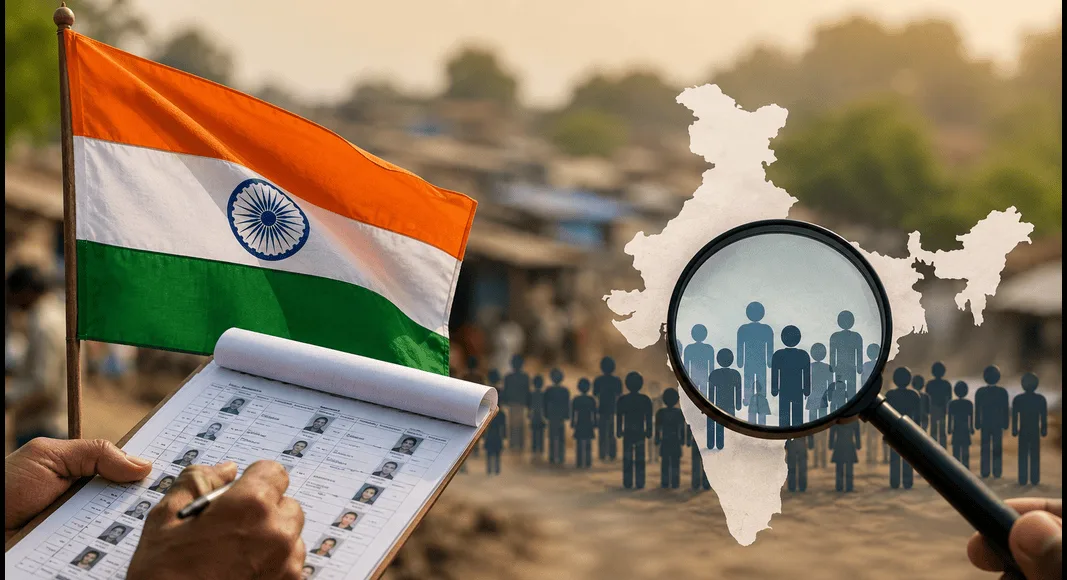
National Register of Citizens (NRC) is an official record that contains the names of genuine Indian citizens. The main purpose of the NRC is to identify legal citizens of India and separate illegal migrants who entered the country without proper documents. The NRC became a major national issue especially in Assam, where concerns about illegal immigration have existed for many decades.
Thank you for reading this post, don't forget to subscribe!The debate around the NRC involves citizenship, migration, identity, human rights, national security, and constitutional values. Supporters of the NRC believe that it is necessary to protect the culture, language, and rights of indigenous people. On the other hand, critics fear that many genuine citizens may be left out due to documentation problems, poverty, illiteracy, and administrative mistakes.
The issue became more important after the final draft of the NRC in Assam excluded nearly four million people. This created fear and confusion among many residents of the state. Several political parties, social organisations, and minority groups also raised concerns about discrimination and unfair treatment.
The NRC is not just a legal or political issue. It also affects the lives of ordinary people, especially poor families who may not possess proper documents to prove their citizenship. Therefore, understanding the NRC is important for students, policymakers, and citizens.
What is the National Register of Citizens (NRC)?
The National Register of Citizens (NRC) is an official list of Indian citizens. It was first prepared in 1951 after the Census of India.
The register included details such as:
- Name of the person
- House number
- Family details
- Village or locality
The NRC was created to keep a record of all legal citizens living in India.
However, after 1951, the NRC was not updated for many years. Later, due to the growing issue of illegal migration in Assam, the government decided to update the NRC in that state.
At present, Assam is the only state where the NRC updating process has been completed.
Purpose of NRC
The main purpose of the NRC is to identify illegal migrants and separate them from genuine Indian citizens.
The objectives of the NRC include:
- Identifying illegal immigrants
- Protecting the rights of Indian citizens
- Maintaining accurate citizenship records
- Reducing illegal migration
- Protecting indigenous culture and identity
- Strengthening national security
In Assam, the NRC was especially important because of concerns about migration from Bangladesh.
Nodal Agency for NRC
The nodal agency responsible for the NRC process is the:
Registrar General and Census Commissioner of India
This authority works under the Ministry of Home Affairs and manages population records, census activities, and citizenship data.
History of NRC in India
NRC of 1951
The first NRC was prepared in 1951 after the first Census of independent India.
It was created to record all Indian citizens living in different villages and towns.
The document included information about families and residents house by house.
However, after its creation, the NRC was not regularly updated.
Illegal Migration and Assam
The issue of illegal migration became very serious in Assam over time.
Migration from East Pakistan and Bangladesh
Before 1971, many people migrated from East Pakistan to Assam.
After the creation of Bangladesh in 1971, migration continued for various reasons such as:
- Poverty
- Political instability
- War
- Better economic opportunities
Large-scale migration changed the social and demographic structure of Assam.
Many local people feared that illegal migrants would affect:
- Employment opportunities
- Political representation
- Land ownership
- Indigenous culture and language
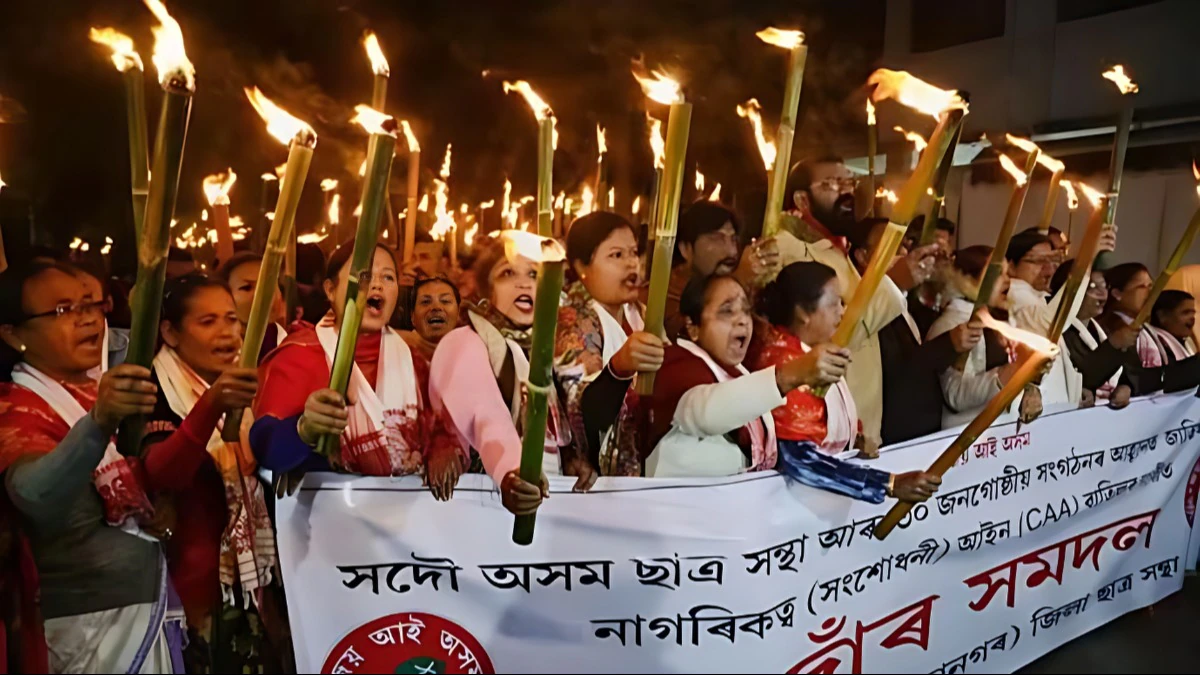
Assam Movement (1979-1985)
The issue of illegal migration led to a major protest movement in Assam.
Leadership of AASU
The movement was led by the All Assam Students’ Union (AASU).
The main demands were:
- Detection of illegal migrants
- Deletion of their names from voter lists
- Deportation of illegal migrants
- Updating the NRC
The movement lasted for six years and witnessed strikes, protests, and political tension.
Many people lost their lives during the agitation.
Assam Accord of 1985
The Assam Movement ended with the signing of the Assam Accord in 1985 between the Government of India and leaders of the Assam Movement.
Important Points of Assam Accord
Cut-off Date
The Accord fixed 24 March 1971 as the cut-off date for citizenship in Assam.
People who entered Assam after this date were to be identified as illegal migrants.
Protection of Assamese Identity
The agreement promised protection of:
- Assamese culture
- Language
- Social identity
- Political rights
Updating NRC
The Accord also supported the updating of the NRC.
Citizenship Act and Special Provision for Assam
The Citizenship Act, 1955 was amended to include special provisions for Assam.
A new section was added to give legal effect to the 1971 cut-off date.
This provision applied only to Assam because of its unique historical situation.
Supreme Court and NRC Update
For many years, the NRC was not updated despite repeated demands.
Later, an Assam-based NGO approached the Supreme Court seeking implementation of the NRC update process.
Supreme Court Order (2014)
In December 2014, the Supreme Court directed the government to complete the NRC update process in a time-bound manner.
The Court supervised the entire process to ensure transparency and efficiency.
Legacy Data in NRC
Two important documents were used during the NRC verification process.
These are called Legacy Data.
They include:
- NRC of 1951
- Electoral Rolls up to midnight of 24 March 1971
People whose names appeared in these records, and their descendants, could apply for inclusion in the NRC.
NRC Process in Assam
The NRC update process in Assam was a massive administrative exercise.
People had to submit documents proving:
- Their citizenship
- Their family linkage with persons listed in legacy documents
Documents Required
Some commonly accepted documents included:
- Birth certificates
- Land records
- Electoral rolls
- Educational certificates
- Refugee registration certificates
Publication of NRC Drafts
First Draft
The first draft of the NRC was published in 2017.
Many people were worried because several names were missing.
Final Draft
The final draft was published in August 2019.
Nearly 19 lakh people were excluded from the final list.
Earlier drafts had excluded around 40 lakh people.
The exclusions created fear, uncertainty, and political controversy.
Status of NRC in Other Northeastern States
The NRC issue has also influenced other northeastern states.
RIIN in Nagaland
Nagaland started a similar exercise called:
Register of Indigenous Inhabitants of Nagaland (RIIN)
The purpose was to identify indigenous Naga people and separate non-indigenous residents.
The aim was to protect local identity and resources.
NRC Demand in Manipur
In Manipur, several tribal organisations demanded implementation of the NRC.
The Manipur Assembly also discussed setting up:
- NRC mechanisms
- State Population Commission (SPC)
People feared that increasing migration could affect indigenous communities.
Importance of NRC
Supporters of the NRC believe it has many advantages.
Identification of Illegal Migrants
The NRC helps identify people who entered the country illegally.
This can improve border management and citizenship records.
Protection of Indigenous Identity
Many local communities believe the NRC can help protect:
- Language
- Culture
- Traditions
- Land rights
Accurate Population Data
An updated NRC provides verified population records.
This can help in better planning and policymaking.
National Security
Supporters argue that identifying illegal migrants is important for national security.
Reduction in Fake Documents
The NRC process can reduce misuse of fake identity documents.
Impact of NRC
The NRC has had both positive and negative impacts.
Positive Impact
Better Citizenship Records
The NRC creates a more accurate database of citizens.
Reduction in Illegal Migration
Supporters believe it may discourage future illegal migration.
Relief for Genuine Citizens
People who successfully proved their citizenship received legal recognition and relief from suspicion.
Negative Impact
Fear and Anxiety
Many people feared exclusion because they lacked documents.
Poor families, elderly persons, and rural residents faced serious difficulties.
Risk of Statelessness
People excluded from the NRC faced uncertainty about their future.
Many worried they could become stateless.
Social Tension
The NRC debate created social and political tension in Assam and other states.
Economic Burden
The NRC process required huge financial and administrative resources.
Challenges Associated with NRC
The NRC process faced many practical and legal challenges.
Documentation Problems
Many poor people did not have proper documents.
Natural disasters like floods in Assam destroyed important papers.
Women especially faced difficulties because many changed homes after marriage.
Errors and Exclusion
Some genuine citizens found their names missing from the list.
There were reports of confusion and inconsistencies.
Even relatives of important personalities reportedly faced exclusion.
Coordination Problems
Different agencies handled citizenship-related matters separately.
These included:
- NRC authorities
- Election Commission
- Foreigners’ Tribunals
- Assam Border Police
Lack of coordination created confusion.
Burden on Judiciary
People excluded from the NRC could appeal before Foreigners’ Tribunals and courts.
This increased pressure on the judiciary, which already has many pending cases.
Uncertainty About Future
One major challenge is deciding the future of excluded persons.
Questions remain such as:
- Will they be detained?
- Will they lose voting rights?
- Will they be deported?
- What will happen to their children?
These issues are still debated.
Human Rights Concerns
Many human rights groups criticised the NRC process.
They argued that:
- Poor people suffered the most
- Minorities felt targeted
- Detention centres raised humanitarian concerns
- Documentation requirements were difficult
Critics fear that genuine citizens may lose their rights due to administrative mistakes.
NRC and Political Debate
The NRC became a major political issue in India.
Some political parties supported it as necessary for national security and indigenous rights.
Others opposed it, claiming it could lead to discrimination and communal tension.
The issue often created heated debates across the country.
Difference Between NRC and Census
People often confuse the NRC with the Census.
Census
- Conducted every ten years
- Collects population data
- Includes everyone living in the country
NRC
- Specifically identifies Indian citizens
- Focuses on citizenship verification
Thus, the NRC and Census serve different purposes.
Difference Between NRC and NPR
Another related term is the National Population Register (NPR).
NPR
- Records all residents of India
- Includes citizens and non-citizens
NRC
- Includes only legal Indian citizens
The NPR may be used as a database for future NRC exercises.
Foreigners’ Tribunals
People excluded from the NRC can approach Foreigners’ Tribunals.
These tribunals decide citizenship cases.
If a person is declared a foreigner, they may lose certain legal rights.
However, individuals can further appeal in higher courts.
Role of Supreme Court
The Supreme Court played an important role in supervising the NRC process in Assam.
The Court aimed to ensure:
- Transparency
- Fairness
- Timely completion
However, the Court also faced criticism because many people remained dissatisfied with the process.
Detention Centres and Concerns
Some excluded persons feared detention.
Detention centres are places where declared foreigners may be kept temporarily.
Human rights organisations raised concerns regarding:
- Living conditions
- Mental stress
- Family separation
This became one of the most controversial parts of the NRC debate.
Citizenship and Humanitarian Concerns
India has a long tradition of welcoming refugees and migrants.
The idea of “Vasudhaiva Kutumbakam”, meaning “the world is one family,” reflects Indian cultural values.
Therefore, many experts argue that citizenship policies should balance:
- National security
- Human rights
- Compassion
- Constitutional values
Need for Legal Support
Many excluded persons are poor and uneducated.
They may not understand legal procedures.
Therefore, experts suggest:
- Free legal aid
- Awareness programs
- Simplified procedures
- Fair hearings
This can help genuine citizens defend their rights.
Need for Transparency
A transparent and error-free process is necessary.
Authorities should ensure:
- Proper verification
- Easy appeal systems
- Coordination between agencies
- Clear communication
Transparency can reduce fear and confusion.
Role of Political Parties
Political parties should avoid using the NRC issue for electoral gains.
Irresponsible political statements can increase:
- Fear
- Communal tension
- Social division
Leaders should focus on peaceful and constitutional solutions.
Way Forward
The NRC issue requires a balanced and humane approach.
Clear Government Policy
The government should clearly explain the future of excluded persons.
People deserve certainty and legal clarity.
Protection of Genuine Citizens
No genuine Indian citizen should suffer because of technical errors or missing documents.
Humanitarian Approach
Authorities should treat all individuals with dignity and respect.
Human rights should remain important during citizenship verification.
Better Border Management
Improved border security can help reduce illegal migration in the future.
Strong Legal Mechanism
There should be an effective and fair legal system for appeals and citizenship claims.
Public Awareness
Citizens should be educated about documentation and legal procedures.
Awareness programs can reduce confusion and panic.
Conclusion
The National Register of Citizens (NRC) is one of the most debated issues in modern India. It involves questions related to citizenship, migration, identity, law, and human rights. The NRC in Assam was introduced to identify illegal migrants and protect indigenous communities, but it also created fear and uncertainty among many people.
While supporters believe the NRC is necessary for national security and accurate citizenship records, critics point out problems such as documentation difficulties, exclusion errors, and humanitarian concerns.
The challenge before India is to balance national interests with constitutional values and human dignity. Any citizenship verification process must be fair, transparent, and compassionate. Genuine citizens should not suffer because of poverty, illiteracy, or administrative mistakes.
The NRC debate shows the importance of careful policymaking in a diverse and democratic country like India. Moving forward, the government, judiciary, and society must work together to ensure justice, equality, and humanity for all people.
FAQs on National Register of Citizens (NRC)
1. What is the National Register of Citizens (NRC)?
The NRC is an official register that contains the names of genuine Indian citizens.
2. When was the NRC first prepared in India?
The NRC was first prepared in 1951 after the Census of India.
3. Why was the NRC updated in Assam?
The NRC was updated in Assam to identify illegal migrants and protect indigenous communities.
4. What is the cut-off date for NRC in Assam?
The cut-off date is 24 March 1971, according to the Assam Accord.
5. Which organisation supervised the NRC process in Assam?
The Supreme Court of India supervised the NRC updating process in Assam.
6. What are Legacy Data in NRC?
Legacy Data includes the NRC of 1951 and electoral rolls up to 24 March 1971.
7. What happens if a person’s name is missing from the NRC?
The person can appeal before Foreigners’ Tribunals and higher courts to prove citizenship.
8. What is the difference between NRC and Census?
The Census records all residents, while the NRC identifies only legal Indian citizens.
9. What is RIIN in Nagaland?
RIIN stands for Register of Indigenous Inhabitants of Nagaland, created to identify indigenous residents.
10. What are the main challenges of NRC?
Major challenges include documentation issues, exclusion errors, legal uncertainty, and humanitarian concerns.