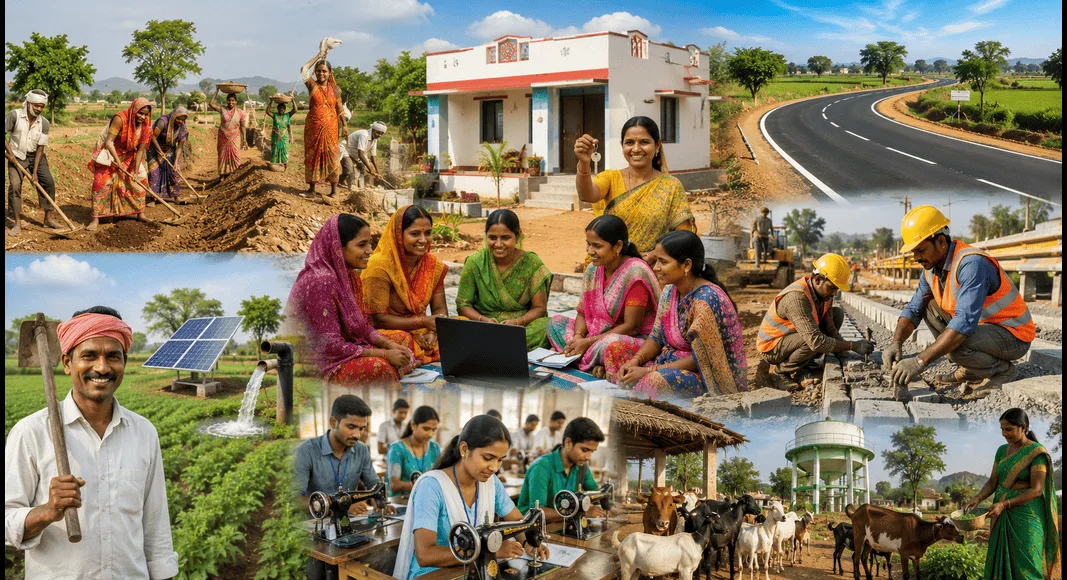
Rural Development: Major Schemes for Rural Growth and Employment

Rural Development marked an important year for India’s efforts to improve the lives of people living in villages. The Ministry of Rural Development introduced and strengthened several schemes to create employment, reduce poverty, improve rural infrastructure, provide housing, develop skills, and promote self-employment. These initiatives focused on making rural communities stronger and more self-reliant while ensuring that economic growth reached every corner of the country.
Thank you for reading this post, don't forget to subscribe!India’s villages are home to nearly two-thirds of the country’s population. Agriculture, animal husbandry, small businesses, and rural industries are the main sources of income for millions of families. Therefore, rural development plays a major role in reducing poverty and improving the overall economy.
What is the Ministry of Rural Development?
The Ministry of Rural Development is responsible for improving the quality of life in rural India. Its main objective is to reduce poverty by creating employment opportunities, building infrastructure, improving housing, promoting self-employment, and strengthening social security.
The ministry works through two departments:
- Department of Rural Development
- Department of Land Resources
Since its formation, the ministry has undergone several administrative changes, but its mission has remained the same to improve rural livelihoods and ensure inclusive development.
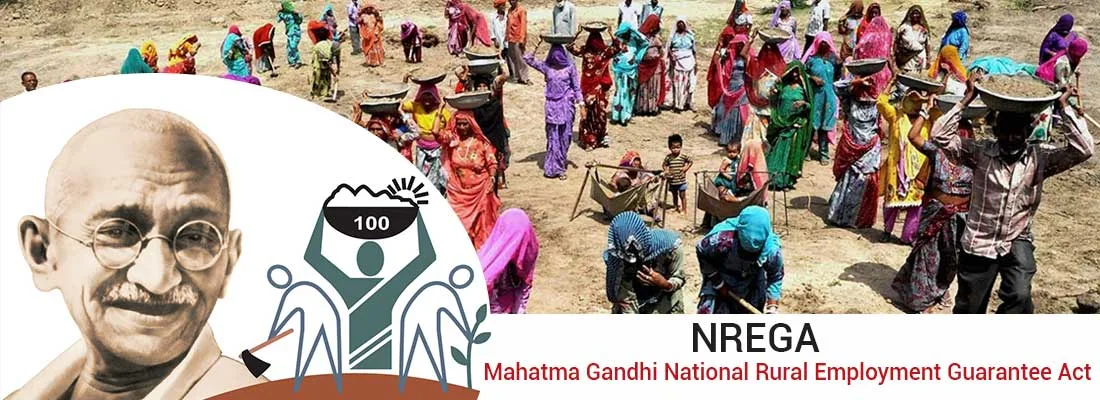
Mahatma Gandhi National Rural Employment Guarantee Scheme (MGNREGS)
One of the most important rural development programmes is the Mahatma Gandhi National Rural Employment Guarantee Scheme (MGNREGS).
The scheme is based on the Mahatma Gandhi National Rural Employment Guarantee Act (MGNREGA), 2005.
Objective
The main objective is to guarantee 100 days of wage employment every financial year to rural households whose adult members are willing to do unskilled manual work.
This makes it one of the world’s largest public employment programmes.
Features of MGNREGS
Some important features include:
- Guarantees employment on demand.
- Provides wage employment to rural families.
- Creates durable community assets.
- Supports agriculture and water conservation.
- Strengthens rural infrastructure.
- Reduces seasonal migration.
The Central Government bears the full cost of wages for unskilled labour, while material costs are shared between the Centre and the States.
SECURE Software
During 2019, the government introduced SECURE (Software for Estimate Calculation Using Rural Rates for Employment).
This software helps:
- Prepare project estimates.
- Speed up administrative approvals.
- Improve transparency.
- Monitor project progress.
- Reduce delays in implementation.
It has made the execution of MGNREGS works more efficient.
Pradhan Mantri Gram Sadak Yojana (PMGSY)
Road connectivity is essential for rural development.
The Pradhan Mantri Gram Sadak Yojana (PMGSY) was launched to connect unconnected villages through all-weather roads.
Objectives
The scheme aims to:
- Improve transportation.
- Connect villages with markets.
- Improve access to schools and hospitals.
- Increase employment opportunities.
- Promote economic growth.
Existing rural roads are also upgraded under the programme.
E-MARG Software
To improve road maintenance, the government introduced E-MARG software.
It helps in:
- Monitoring rural roads.
- Planning maintenance.
- Reducing repair delays.
- Increasing road quality.
Deendayal Antyodaya Yojana – National Rural Livelihoods Mission (DAY-NRLM)
The DAY-NRLM aims to reduce poverty by organizing poor rural households into Self Help Groups (SHGs).
The mission believes that collective efforts help families become financially stronger.
Main Objectives
The programme focuses on:
- Formation of SHGs.
- Financial inclusion.
- Bank credit.
- Self-employment.
- Farm and non-farm livelihoods.
- Skill development.
- Women’s empowerment.
- Social inclusion.
Millions of rural women have benefited through SHGs under this mission.
Pradhan Mantri Awaas Yojana – Gramin (PMAY-G)
Housing is an important part of rural development.
The Pradhan Mantri Awaas Yojana – Gramin (PMAY-G) aims to provide permanent houses to poor rural families.
Objectives
The scheme provides:
- Pucca houses.
- Basic amenities.
- Better sanitation.
- Safe living conditions.
- Improved quality of life.
Beneficiaries are encouraged to use local building materials and trained masons for quality construction.
Deen Dayal Upadhyaya Grameen Kaushalya Yojana (DDU-GKY)
Employment opportunities increase when people have the right skills.
The DDU-GKY provides skill development training to rural youth.
Features
The programme offers:
- Placement-linked training.
- Industry-based skills.
- Entrepreneurship support.
- Bank linkage.
- Employment opportunities.
Training is provided through Rural Self Employment Training Institutes (RSETIs).
More than sixty vocational courses are available in areas such as agriculture, food processing, manufacturing, and entrepreneurship.
National Social Assistance Programme (NSAP)
The National Social Assistance Programme (NSAP) provides financial support to vulnerable sections of society.
It mainly benefits poor families who have little or no regular income.
Components of NSAP
The programme includes:
- Indira Gandhi National Old Age Pension Scheme
- Indira Gandhi National Widow Pension Scheme
- Indira Gandhi National Disability Pension Scheme
- National Family Benefit Scheme
- Annapurna Scheme
These schemes provide financial assistance to elderly people, widows, persons with disabilities, and poor families.
Constitutional Support
Article 41 of the Constitution directs the State to provide public assistance during:
- Old age
- Unemployment
- Disability
- Sickness
- Other situations of need
NSAP reflects this constitutional commitment.
Shyama Prasad Mukherji Rurban Mission (SPMRM)
The Rurban Mission aims to bridge the gap between rural and urban areas.
Instead of converting villages into cities, it seeks to provide urban-like facilities in rural areas.
Objectives
The mission focuses on:
- Better roads
- Drinking water
- Skill development
- Economic activities
- Digital infrastructure
- Sanitation
- Public services
It covers hundreds of rural clusters across India.
Saansad Adarsh Gram Yojana (SAGY)
The Saansad Adarsh Gram Yojana encourages Members of Parliament (MPs) to develop model villages.
The programme promotes:
- Community participation.
- Better infrastructure.
- Clean villages.
- Education.
- Health.
- Livelihood generation.
Each selected village prepares a Village Development Plan (VDP) according to local needs.
Importance of Rural Development
Rural development is important because it:
- Reduces poverty.
- Creates employment.
- Improves infrastructure.
- Increases agricultural productivity.
- Promotes entrepreneurship.
- Improves education and healthcare.
- Reduces migration to cities.
- Strengthens the national economy.
Developments After 2019 (2020-2025)
Many rural development programmes expanded significantly after 2019.
Increased MGNREGS Employment During COVID-19
During the COVID-19 pandemic, MGNREGS became a lifeline for millions of migrant workers returning to villages.
The Government increased budget allocations, resulting in record numbers of workdays generated.
PMAY-G Progress
By 2025, millions of rural houses had been completed under PMAY-G.
The programme also integrated facilities like:
- Toilets
- Electricity
- LPG connections
- Drinking water
- Digital payments
This improved the overall standard of living in rural areas.
Digital Rural Governance
Many rural schemes adopted digital technology.
Major improvements included:
- Aadhaar-based verification.
- Direct Benefit Transfer (DBT).
- Online beneficiary tracking.
- Mobile applications.
- GIS-based monitoring.
These reduced leakages and improved transparency.
Strengthening Self Help Groups
Women’s Self Help Groups under DAY-NRLM expanded rapidly.
Many SHGs started:
- Food processing units.
- Dairy businesses.
- Handicraft production.
- Digital services.
- Agriculture-based enterprises.
SHGs also played an important role during the pandemic by producing masks, sanitizers, and community support services.
Better Rural Roads
PMGSY continued expanding road connectivity.
Improved roads increased access to:
- Schools
- Hospitals
- Markets
- Banking facilities
- Government services
Better connectivity also encouraged rural businesses.
Skill Development
DDU-GKY introduced new training programmes related to:
- Digital skills.
- Retail.
- Healthcare.
- Logistics.
- Renewable energy.
- Hospitality.
This improved employment opportunities for rural youth.
Challenges in Rural Development
Despite major achievements, several challenges continue.
These include:
- Climate change affecting agriculture.
- Rural unemployment.
- Migration.
- Limited irrigation.
- Digital divide.
- Small landholdings.
- Income inequality.
Addressing these issues requires continued investment, innovation, and community participation.
Conclusion
The Rural Development initiatives reflected the Government’s commitment to improving the lives of rural citizens through employment generation, housing, road connectivity, livelihood promotion, skill development, and social security. Schemes like MGNREGS, PMGSY, PMAY-G, DAY-NRLM, DDU-GKY, NSAP, SPMRM, and SAGY laid the foundation for inclusive rural growth.
Between 2020 and 2025, these programmes expanded further with greater use of digital technology, higher budget support, stronger Self Help Groups, improved infrastructure, and enhanced transparency. Together, these efforts are helping create more resilient villages, increasing rural incomes, and contributing to India’s long-term goal of sustainable and inclusive development.
FAQs
1. What is Rural Development 2019?
Rural Development 2019 refers to the key schemes and reforms introduced or strengthened by the Ministry of Rural Development to improve employment, housing, roads, livelihoods, and social security in rural India.
2. What is MGNREGS?
The Mahatma Gandhi National Rural Employment Guarantee Scheme (MGNREGS) guarantees up to 100 days of wage employment every financial year to eligible rural households willing to do unskilled manual work.
3. What is the purpose of PMGSY?
Pradhan Mantri Gram Sadak Yojana (PMGSY) aims to provide all-weather road connectivity to eligible unconnected rural habitations and improve access to markets, schools, and healthcare.
4. What is DAY-NRLM?
Deendayal Antyodaya Yojana – National Rural Livelihoods Mission (DAY-NRLM) organizes poor rural households into Self Help Groups (SHGs) to improve livelihoods, financial inclusion, and income generation.
5. What is PMAY-G?
Pradhan Mantri Awaas Yojana – Gramin (PMAY-G) provides financial assistance to eligible rural families for constructing pucca houses with basic amenities.
6. What is DDU-GKY?
Deen Dayal Upadhyaya Grameen Kaushalya Yojana (DDU-GKY) is a skill development programme that provides industry-relevant training and placement opportunities for rural youth.
7. What is the National Social Assistance Programme (NSAP)?
NSAP is a social welfare programme that provides financial assistance to elderly people, widows, persons with disabilities, and poor families through various pension and support schemes.
8. What is the Shyama Prasad Mukherji Rurban Mission?
The Shyama Prasad Mukherji Rurban Mission (SPMRM) develops rural clusters by providing urban-like infrastructure and services while preserving rural character.
9. What is Saansad Adarsh Gram Yojana (SAGY)?
SAGY encourages Members of Parliament to develop selected villages into model villages through community participation, better infrastructure, and integrated development planning.
10. What progress was made in rural development after 2019?
Between 2020 and 2025, India expanded MGNREGS, completed more rural houses under PMAY-G, strengthened Self Help Groups, improved rural roads, promoted digital governance, and increased skill development opportunities.