
Tribal Affairs in India: Schemes and Development

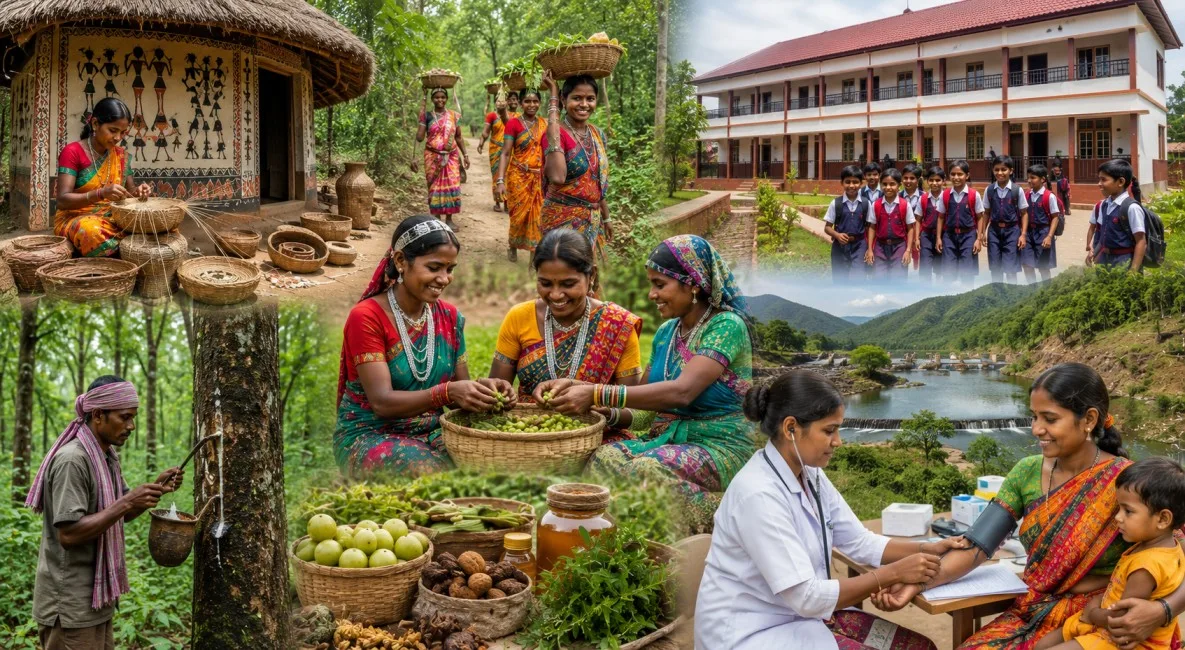
India is home to one of the largest tribal populations in the world. Tribal communities have their own unique culture, traditions, languages, and way of living. Most tribal people live in forests, hilly regions, and remote villages. They depend on forests, agriculture, handicrafts, and traditional knowledge for their livelihood. Even though they have made valuable contributions to society, many tribal communities still face challenges such as poverty, lack of education, poor healthcare, unemployment, and limited access to government services.
Thank you for reading this post, don't forget to subscribe!To improve the lives of tribal communities, the Government of India has launched several schemes and welfare programmes. These initiatives focus on education, healthcare, employment, entrepreneurship, forest rights, and economic development. The Ministry of Tribal Affairs plays an important role in planning and implementing these programmes to ensure that tribal communities receive equal opportunities for growth.
Over the years, the government has introduced many important schemes like the Pradhan Mantri Van Dhan Yojana, Eklavya Model Residential Schools, the Minor Forest Produce Scheme, digital governance initiatives, and health programmes for tribal regions. These programmes aim to empower tribal people while preserving their traditional culture and knowledge.
Importance of Tribal Welfare
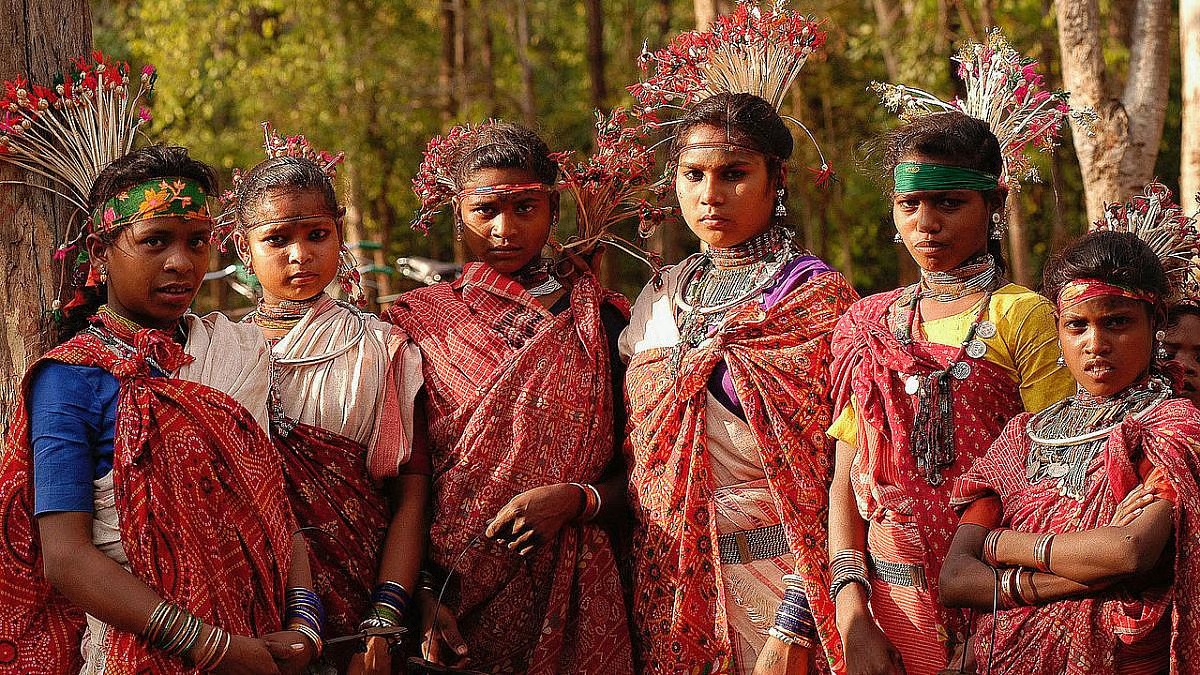
Tribal communities are an important part of India’s social and cultural diversity. They protect forests, preserve biodiversity, and maintain traditional knowledge that has been passed down through generations. Their traditional farming methods, medicinal practices, and forest conservation techniques are valuable for sustainable development.
However, tribal communities often live in remote areas where schools, hospitals, roads, and employment opportunities are limited. Government welfare schemes help bridge this gap by improving education, healthcare, livelihood, and infrastructure.
The Ministry of Tribal Affairs works with different state governments and organizations to improve the quality of life of Scheduled Tribes (STs).
Pradhan Mantri Van Dhan Yojana (PMVDY)
One of the most important initiatives for tribal development is the Pradhan Mantri Van Dhan Yojana (PMVDY). It was launched in 2018 and is implemented by the Tribal Cooperative Marketing Development Federation of India (TRIFED).
The main objective of this scheme is to increase the income of tribal people by making better use of forest resources. Instead of simply collecting forest products and selling them at low prices, tribal communities are encouraged to process, package, and market these products to earn higher profits.
The scheme promotes tribal entrepreneurship by forming groups known as Van Dhan Self Help Groups (SHGs). Several SHGs together form Van Dhan Vikas Kendras, which serve as centers for processing and marketing forest products.
These Kendras provide:
- Training to tribal workers
- Better storage facilities
- Value addition to forest products
- Modern packaging methods
- Marketing support
- Business guidance
The scheme focuses on Minor Forest Produce (MFP) such as honey, bamboo, lac, medicinal plants, herbs, tamarind, wild fruits, gums, resins, and many other natural products.
By adding value to these products, tribal families earn better income while reducing exploitation by middlemen.
Benefits of PM Van Dhan Yojana
Some major benefits include:
- Increases tribal income.
- Promotes self-employment.
- Encourages women-led Self Help Groups.
- Supports sustainable forest management.
- Preserves traditional tribal knowledge.
- Strengthens the rural economy.
- Reduces poverty among tribal communities.
Eklavya Model Residential Schools (EMRS)
Education plays a major role in the development of any society. Many tribal children live in remote villages where quality schools are not easily available. To solve this problem, the Government started Eklavya Model Residential Schools (EMRS) in 1997-98.
These schools provide free, quality education to Scheduled Tribe students while offering hostel facilities, nutritious food, sports, libraries, laboratories, and modern classrooms.
The main objective is to provide tribal students with educational opportunities equal to those available to students in cities.
According to the government plan announced in the Union Budget 2018-19, every block having more than 50% Scheduled Tribe population and at least 20,000 tribal people was proposed to have an EMRS.
These schools are funded through Article 275(1) of the Constitution of India.
Objectives of EMRS
The schools aim to:
- Provide quality education.
- Improve literacy among tribal children.
- Prepare students for higher education.
- Help students compete in professional courses.
- Improve employment opportunities.
- Promote overall personality development.
- Encourage sports, cultural activities, and leadership.
Students studying in EMRS receive education similar to leading residential schools in India while remaining connected to their tribal heritage.
Minor Forest Produce (MFP) Scheme
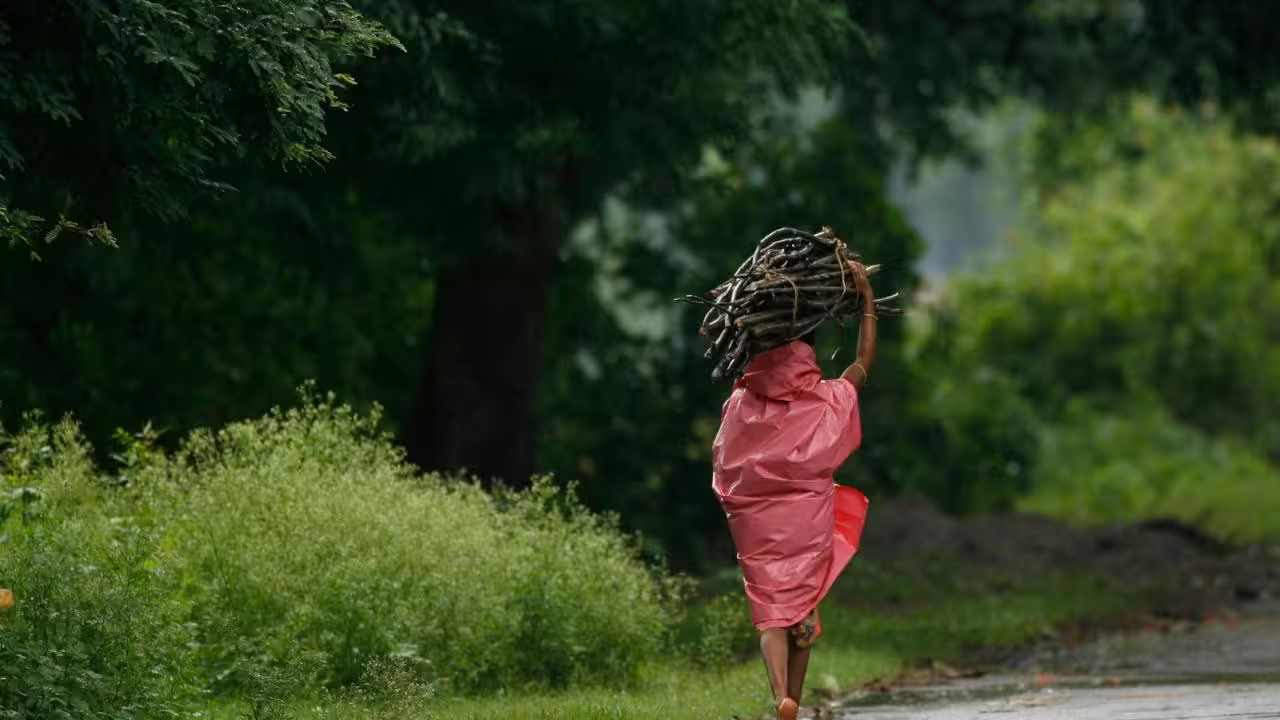
Minor Forest Produce is one of the biggest sources of income for tribal communities. In many tribal regions, MFP contributes up to 80% of household cash income.
Minor Forest Produce includes:
- Honey
- Bamboo
- Cane
- Lac
- Wild fruits
- Medicinal plants
- Herbs
- Leaves
- Resins
- Gums
- Waxes
- Natural dyes
- Nuts
- Tusser
Recognizing its importance, the Government launched the Minimum Support Price (MSP) Scheme for Minor Forest Produce in 2013.
Under this scheme, the government fixes a Minimum Support Price (MSP) for selected forest products. This ensures that tribal gatherers receive fair prices even if market prices fall.
Initially, 23 forest products were included under the scheme. Later, the number increased to 49 products, giving greater benefits to tribal families.
TRIFED plays a key role in recommending MSP and supporting marketing activities.
Importance of Minor Forest Produce
Minor Forest Produce provides:
- Daily income
- Food security
- Traditional medicines
- Employment
- Raw materials for local industries
- Financial stability during agricultural off-seasons
The Forest Rights Act, 2006 also officially recognized Minor Forest Produce, giving tribal communities greater rights over forest resources.
e-Governance Initiatives for Tribal Welfare
Technology has made government schemes more transparent and efficient. The Ministry of Tribal Affairs has introduced several digital initiatives to improve fund management and monitoring.
Nearly 250 NGOs are supported by the Ministry for around 350 projects, mainly in education and healthcare.
Instead of manual paperwork, NGOs now submit applications through an online portal.
The digital system allows:
- Online application submission
- Faster verification
- Transparent fund release
- Real-time monitoring
- Easy status tracking
The Ministry also uses the Expenditure Advance Transfer (EAT) Module, which tracks the utilization of government funds and ensures that money is spent only for approved purposes.
This reduces corruption and improves accountability.
Focus on Health, Water, and Livelihood
Many tribal regions face serious challenges related to drinking water, healthcare, and employment. To address these issues, several development projects have been launched.
Ice Stupas in Ladakh
The government supported the construction of Ice Stupas in around 50 villages of Ladakh.
Ice Stupas are artificial glaciers that store winter water in the form of ice. During summer, the ice melts slowly and supplies water for drinking and irrigation.
This innovative technology helps villages facing water shortages due to climate change.
Livelihood Projects
Several livelihood projects have been introduced for tribal communities.
These include:
- Sheep rearing
- Apricot processing
- Pea packaging
- Skill development
- Value addition of agricultural products
Such projects create employment opportunities while increasing rural income.
Health Action Plan
The Ministry has also prepared a Health Action Plan to improve healthcare facilities in tribal areas.
The plan focuses on:
- Better hospitals
- Mobile health services
- Vaccination
- Maternal healthcare
- Child nutrition
- Disease prevention
Improved healthcare helps reduce infant mortality and increases life expectancy among tribal populations.
Tribal Healers and Traditional Knowledge
Tribal communities possess centuries-old knowledge about medicinal plants and natural healing methods.
Many modern medicines have their roots in traditional herbal practices.
To preserve this valuable knowledge, the Tribal Research Institute (TRI), Uttarakhand has been made the nodal institute for coordinating research on tribal medicine.
The institute works with various Centres of Excellence and Tribal Research Institutes across India.
Its objectives include:
- Documenting traditional medicines.
- Scientific research on medicinal plants.
- Preserving indigenous knowledge.
- Creating a centralized database.
- Promoting sustainable use of medicinal resources.
This initiative protects tribal heritage while supporting scientific research.
Tribal Forest Rights
Forest rights are closely connected with the identity and livelihood of tribal communities.
The Scheduled Tribes and Other Traditional Forest Dwellers (Recognition of Forest Rights) Act, 2006, commonly known as the Forest Rights Act (FRA), recognizes the rights of tribal people over forest land and forest resources.
The Act provides rights related to:
- Land ownership
- Forest produce collection
- Community forest resources
- Grazing
- Traditional livelihoods
In 2019, the Ministry of Environment, Forest and Climate Change withdrew the proposed amendments to the Indian Forest Act, 1927 after concerns were raised by tribal organizations.
Many believed that the proposed changes would have given excessive powers to forest officials and affected tribal rights.
The withdrawal of these amendments was welcomed as an important step in protecting tribal interests.
Recent Developments After 2019
Since 2019, the government has continued expanding tribal welfare programmes.
Some important developments include:
- Expansion of Eklavya Model Residential Schools across India.
- Growth of Van Dhan Vikas Kendras in tribal districts.
- Increased support for tribal entrepreneurship through TRIFED.
- Promotion of tribal handicrafts through digital marketplaces.
- Greater use of digital platforms for scholarship distribution.
- Strengthening of tribal healthcare under Ayushman Bharat.
- Focus on skill development and digital literacy.
- Better implementation of Forest Rights Act in several states.
These initiatives aim to improve education, income, healthcare, and overall development while protecting tribal identity.
Challenges in Tribal Development
Despite many welfare schemes, several challenges still remain.
These include:
- Poor connectivity in remote areas.
- Low literacy rates.
- Lack of healthcare facilities.
- Unemployment.
- Poverty.
- Illegal exploitation of forest resources.
- Climate change affecting livelihoods.
- Limited market access for tribal products.
Addressing these challenges requires better coordination between governments, local communities, and civil society organizations.
Conclusion
Tribal communities are an important part of India’s cultural heritage and environmental conservation. Their traditional knowledge, forest management practices, and sustainable lifestyles contribute significantly to the country’s development.
The Ministry of Tribal Affairs has introduced several schemes such as the Pradhan Mantri Van Dhan Yojana, Eklavya Model Residential Schools, the Minor Forest Produce Scheme, digital governance initiatives, healthcare programmes, and forest rights protection to improve the lives of tribal people.
These programmes have helped increase income, improve education, strengthen healthcare, and preserve tribal traditions. However, continuous efforts are needed to ensure that every tribal family benefits from development while maintaining its unique identity and cultural heritage.
With better implementation of welfare schemes, improved infrastructure, quality education, healthcare, and sustainable livelihood opportunities, tribal communities can play an even greater role in India’s inclusive growth and sustainable future.
FAQs About Tribal Affairs in India
1. What is Tribal Affairs in India?
Tribal Affairs in India refers to government policies, schemes, and programmes aimed at improving the education, healthcare, livelihood, and overall development of Scheduled Tribes (STs).
2. What is the Pradhan Mantri Van Dhan Yojana (PMVDY)?
PMVDY is a tribal entrepreneurship scheme launched in 2018. It helps tribal communities earn better income by processing and marketing Minor Forest Produce (MFP).
3. What is TRIFED?
TRIFED (Tribal Cooperative Marketing Development Federation of India) is a government organization that supports tribal livelihoods by promoting tribal products and implementing schemes like PMVDY.
4. What are Eklavya Model Residential Schools (EMRS)?
EMRS are residential schools established to provide quality education, hostel facilities, and skill development opportunities to Scheduled Tribe students living in remote areas.
5. What is Minor Forest Produce (MFP)?
Minor Forest Produce includes non-timber forest products such as bamboo, honey, lac, medicinal plants, wild fruits, leaves, gums, and resins collected by tribal communities.
6. What is the Forest Rights Act, 2006?
The Forest Rights Act recognizes the rights of Scheduled Tribes and other traditional forest dwellers over forest land, forest resources, and community rights.
7. How does the government support tribal education?
The government supports tribal education through EMRS, scholarships, hostels, digital learning initiatives, and financial assistance for higher education.
8. What are Van Dhan Vikas Kendras?
Van Dhan Vikas Kendras are community-based centers where tribal groups receive training in processing, packaging, and marketing forest products to increase their income.
9. What role does technology play in tribal welfare?
Technology improves transparency through online portals, digital fund transfers, scholarship management, NGO monitoring, and e-governance systems for tribal welfare schemes.
10. Why is tribal development important for India?
Tribal development helps reduce poverty, improve education and healthcare, protect tribal culture, strengthen livelihoods, and promote inclusive and sustainable national development.