


Governor in India: Role, Powers, Functions, Challenges and Constitutional Position

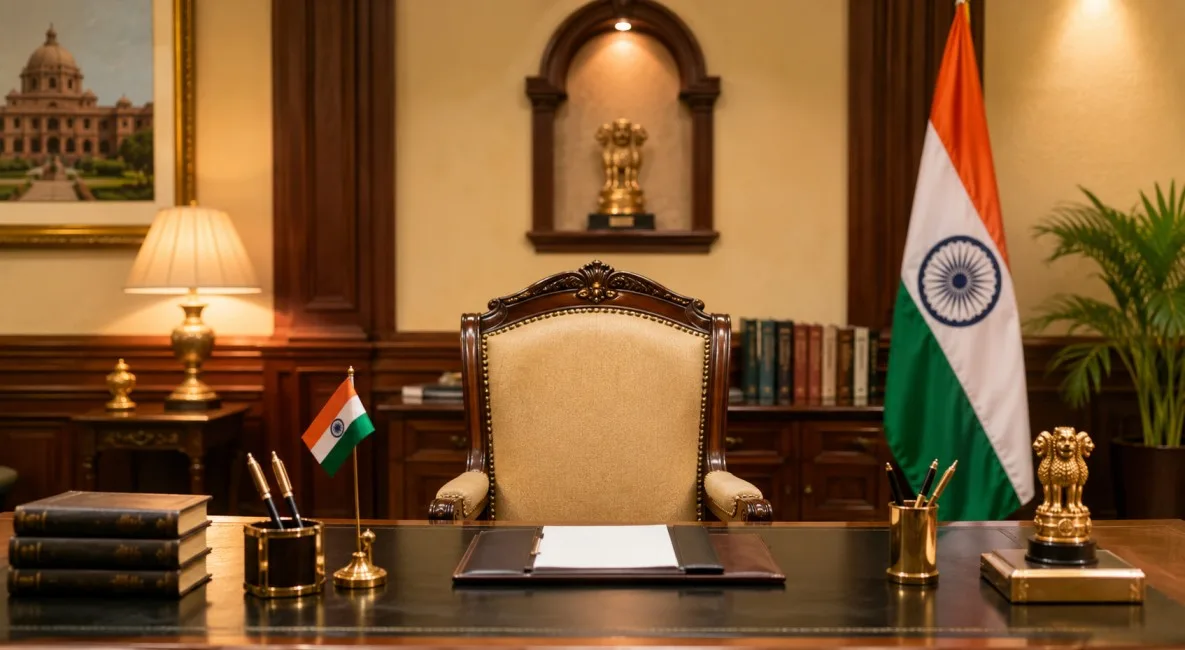
Governor in India is one of the most important constitutional posts in the Indian political system. The Governor acts as the constitutional head of a state and serves as a link between the Union Government and the State Government. Although the Governor functions similarly to the President at the state level, the role carries unique responsibilities and powers under the Indian Constitution.
The office of the Governor is discussed under Articles 153 to 162 of the Constitution of India. Over the years, the Governor’s position has played a significant role in maintaining constitutional governance, ensuring political stability, and safeguarding the federal structure of the country.

What is a Governor?
A Governor is the constitutional head of a state in India. While the real executive powers are exercised by the Chief Minister and the Council of Ministers, the Governor formally performs executive, legislative, financial, and judicial functions on behalf of the state.
The Governor represents both:
- The constitutional head of the state.
- The representative of the President and the Union Government.
Thus, the Governor occupies a unique position in India’s federal system.
Constitutional Provisions Related to Governor
The Constitution provides detailed provisions regarding the appointment, powers, duties, and tenure of the Governor.
Article 153
Article 153 states that there shall be a Governor for every state. One person can also be appointed as Governor of two or more states.
Article 154
The executive power of the state is vested in the Governor and is exercised either directly or through officers subordinate to him.
Articles 155 and 156
- The Governor is appointed by the President of India.
- The Governor holds office during the pleasure of the President.
- The normal tenure is five years.
Articles 157 and 158
These articles specify the qualifications required for appointment as Governor.
A Governor must:
- Be a citizen of India.
- Be at least 35 years old.
- Not be a member of Parliament or a State Legislature.
- Not hold any office of profit.
Articles 159 to 162
These articles deal with:
- Oath of office.
- Conditions of service.
- Executive powers of the Governor.
Historical Background of the Governor’s Office
The office of Governor has its roots in the colonial period.
Under the Government of India Act, 1935, Governors enjoyed extensive powers and acted mainly in the interests of the British government.
During the framing of the Constitution, there was a debate regarding whether Governors should be elected or nominated. Some members of the Constituent Assembly favored elected Governors.
However, concerns arose that an elected Governor might clash with the elected Chief Minister. To avoid conflicts and maintain harmony in governance, the Constituent Assembly adopted the system of appointed Governors.
As a result, Governors are appointed by the President rather than directly elected by the people.
Appointment of Governor
The Governor is appointed by the President of India.
Although the Constitution does not specify a detailed selection process, the appointment is generally made on the advice of the Union Council of Ministers headed by the Prime Minister.
The Governor takes an oath to:
- Preserve, protect, and defend the Constitution.
- Serve the people of the state faithfully.
Tenure of Governor
The normal tenure of a Governor is five years.
However, the Governor may leave office before completing the term due to:
Resignation
The Governor can resign by submitting a resignation letter to the President.
Removal
The President may remove the Governor before the completion of the five-year term.
However, the Supreme Court has clarified that Governors should not be removed arbitrarily for political reasons.
Transfer
A Governor may also be transferred from one state to another by the President.
Powers of the Governor
The Governor enjoys several powers under the Constitution. These powers can be classified into different categories.
Executive Powers
As the constitutional head of the state, the Governor performs various executive functions.
Appointment Powers
The Governor appoints:
- Chief Minister.
- Other ministers on the advice of the Chief Minister.
- Advocate General of the state.
- State Election Commissioner.
- Chairman and members of State Public Service Commission.
Administrative Powers
The Governor:
- Conducts state administration in his name.
- Allocates business among ministers.
- Seeks information from the Chief Minister regarding state affairs.
Legislative Powers
The Governor is an integral part of the state legislature.
Summoning and Proroguing the Legislature
The Governor:
- Summons sessions of the state legislature.
- Prorogues the legislature.
- Dissolves the Legislative Assembly.
Addressing the Legislature
The Governor addresses the first session of the legislature after general elections and the first session each year.
Assent to Bills
A bill passed by the legislature becomes law only after the Governor’s assent.
The Governor may:
- Give assent.
- Withhold assent.
- Return the bill for reconsideration.
- Reserve the bill for the President’s consideration.
Financial Powers
The Governor plays an important role in state finances.
Budget
The annual budget is presented in the state legislature with the Governor’s recommendation.
Money Bills
A Money Bill can be introduced in the legislature only with the Governor’s prior recommendation.
Contingency Fund
The Governor controls the State Contingency Fund and can authorize expenditure from it during emergencies.
Judicial Powers
The Governor also has certain judicial powers.
These include:
- Granting pardons.
- Reprieves.
- Respites.
- Remissions of punishment.
However, these powers apply only to offenses against state laws.
The Governor also consults the High Court while appointing district judges.
Discretionary Powers of the Governor
One of the most debated aspects of the Governor’s office is discretionary power.
Article 163
Article 163 allows the Governor to act at his discretion in certain situations.
Some examples include:
- Inviting a leader to form the government when no party has a clear majority.
- Sending a report to the President regarding constitutional breakdown in the state.
- Reserving certain bills for the President.
These powers are intended to protect constitutional governance but have often become controversial.
Dual Role of Governor
The Governor performs a dual role in India’s federal structure.
Constitutional Head of the State
The Governor acts on the advice of the Council of Ministers headed by the Chief Minister.
Representative of the Union Government
The Governor keeps the Union Government informed about developments in the state and helps maintain coordination between the Centre and the State.
This dual responsibility makes the office highly significant.
Importance of the Governor
The Governor plays several important roles in the functioning of democracy.
Maintaining Constitutional Governance
The Governor ensures that state governments function according to constitutional principles.
Political Stability
During political crises, the Governor helps in government formation and ensures continuity in administration.
Protecting Federalism
The Governor acts as a bridge between the Centre and the States, strengthening cooperative federalism.
Safeguarding Minority Governments
The Governor ensures that governments enjoy legislative support and function according to democratic norms.
Major Issues Related to the Governor’s Office
Despite its importance, the office of Governor has often been criticized.
Political Appointments
Many Governors are former politicians or bureaucrats associated with ruling parties.
This sometimes raises concerns about neutrality.
Misuse of Discretionary Powers
The power to invite parties to form governments after elections has occasionally led to controversies.
Several states have witnessed disputes regarding government formation.
Misuse of Article 356
Governors have sometimes been accused of recommending President’s Rule for political reasons rather than genuine constitutional breakdown.
Arbitrary Removal
Governors have occasionally been removed before completing their tenure after changes in government at the Centre.
Perception as an Agent of the Centre
Critics often argue that Governors act more as representatives of the Union Government than as neutral constitutional authorities.
Important Supreme Court Judgments
S.R. Bommai Case (1994)
This landmark judgment placed limits on the misuse of Article 356.
The Supreme Court held that:
- President’s Rule is subject to judicial review.
- Constitutional breakdown must be genuine.
- The Governor’s report can be examined by courts.
This judgment significantly strengthened federalism.
Nabam Rebia Case (2016)
The Supreme Court ruled that:
- The Governor’s discretionary powers are limited.
- Decisions must be reasonable and made in good faith.
- Governors cannot act arbitrarily.
The judgment reinforced constitutional accountability.
Recommendations of Various Commissions
Several commissions have suggested reforms regarding the Governor’s office.
Administrative Reforms Commission (1968)
Recommended that Governors should submit objective reports regarding President’s Rule.
Rajamannar Committee (1971)
Suggested:
- Limiting misuse of Article 356.
- Strengthening state autonomy.
Sarkaria Commission (1988)
Recommended:
- Governors should be politically neutral.
- Article 356 should be used only in exceptional cases.
- A warning should be issued before imposing President’s Rule.
Punchhi Commission (2010)
Suggested:
- Clear guidelines for Governors.
- Fixed tenure.
- Greater independence from political influence.
Important Constitutional Articles Related to Governor
| Article | Subject |
|---|---|
| Article 153 | Governor of States |
| Article 154 | Executive power of State |
| Article 155 | Appointment of Governor |
| Article 156 | Term of office |
| Article 157 | Qualifications |
| Article 158 | Conditions of office |
| Article 159 | Oath of office |
| Article 161 | Pardoning powers |
| Article 163 | Council of Ministers and discretionary powers |
| Article 356 | President’s Rule |
Challenges Before the Governor’s Office
The office faces several challenges today:
- Political interference.
- Lack of neutrality.
- Centre-State conflicts.
- Frequent constitutional disputes.
- Controversies in government formation.
- Questions regarding discretionary powers.
Addressing these issues is necessary to maintain public confidence in the institution.
Measures to Strengthen the Office of Governor
Several reforms can improve the effectiveness of the Governor’s office.
Transparent Appointment Process
The appointment process should be more transparent and based on merit.
Fixed Tenure
Governors should generally be allowed to complete their five-year tenure.
Code of Conduct
A clear code of conduct should guide the Governor’s actions.
Political Neutrality
Governors should remain above party politics and act impartially.
Judicial Oversight
Courts should continue to review unconstitutional actions to prevent misuse of power.
Conclusion
Governor in India is a crucial institution in the constitutional framework of the country. As the constitutional head of the state and a link between the Centre and the State, the Governor plays an important role in ensuring smooth governance, political stability, and constitutional order.
While the office has occasionally faced criticism due to political controversies and misuse of discretionary powers, it remains indispensable to India’s federal system. Reforms such as transparent appointments, fixed tenure, greater neutrality, and adherence to constitutional principles can strengthen the credibility and effectiveness of the Governor’s office. A fair, impartial, and constitutionally guided Governor is essential for the successful functioning of Indian democracy.
FAQs About Governor of India
1. Who is the Governor of a state in India?
The Governor is the constitutional head of a state and represents the President of India at the state level.
2. Who appoints the Governor?
The Governor is appointed by the President of India.
3. What is the minimum age required to become a Governor?
A person must be at least 35 years old to become a Governor.
4. What is the tenure of a Governor?
The normal tenure of a Governor is five years, though they serve at the pleasure of the President.
5. Which Article of the Constitution deals with the Governor?
Articles 153 to 162 of the Indian Constitution deal with the Governor and related provisions.
6. Can one Governor serve more than one state?
Yes, one person can be appointed as the Governor of two or more states.
7. What are the main powers of a Governor?
The Governor has executive, legislative, financial, judicial, and discretionary powers.
8. What is the role of the Governor during a political crisis?
The Governor may invite a party or coalition to form the government and ensure constitutional governance.
9. Can the Governor dismiss a Chief Minister?
A Governor can dismiss a Chief Minister only in specific constitutional situations, such as loss of majority support.
10. Why is the Governor important in Indian democracy?
The Governor acts as a constitutional guardian, maintains federal balance, and ensures smooth functioning of state governance.