Emergency in India (1975–77): Dark Days of Democracy

Emergency in India (1975–77) was one of the most serious and controversial periods in the history of independent India. It lasted from 25 June 1975 to 21 March 1977. During these 21 months, democratic rights were suspended, thousands of opposition leaders were arrested, newspapers were censored, and the government gained extraordinary powers.
Thank you for reading this post, don't forget to subscribe!This period is often called a turning point in Indian democracy. It showed how strong a government can become during a crisis, but it also showed how important it is to protect freedom, rights, and the Constitution.
Background: India in the Early 1970s
In the early 1970s, India was going through many problems. Although the country had won the 1971 war against Pakistan and created Bangladesh, economic conditions were not stable.
The main problems were:
- Rising prices (inflation)
- Shortage of food and essential goods
- High unemployment
- Poverty
- Corruption allegations in government
Many students and workers were unhappy. Protests began in different states, especially in Gujarat and Bihar.
In Bihar, a major movement was led by Jayaprakash Narayan, also known as JP. He was a respected freedom fighter and social leader. He started a movement called “Total Revolution.”
JP asked people to protest peacefully against corruption and poor governance. He wanted a complete change in the political system. Thousands of students joined him. The movement became very powerful.
As protests increased, the political situation became tense. The government felt that law and order were being disturbed.
The Allahabad High Court Judgment
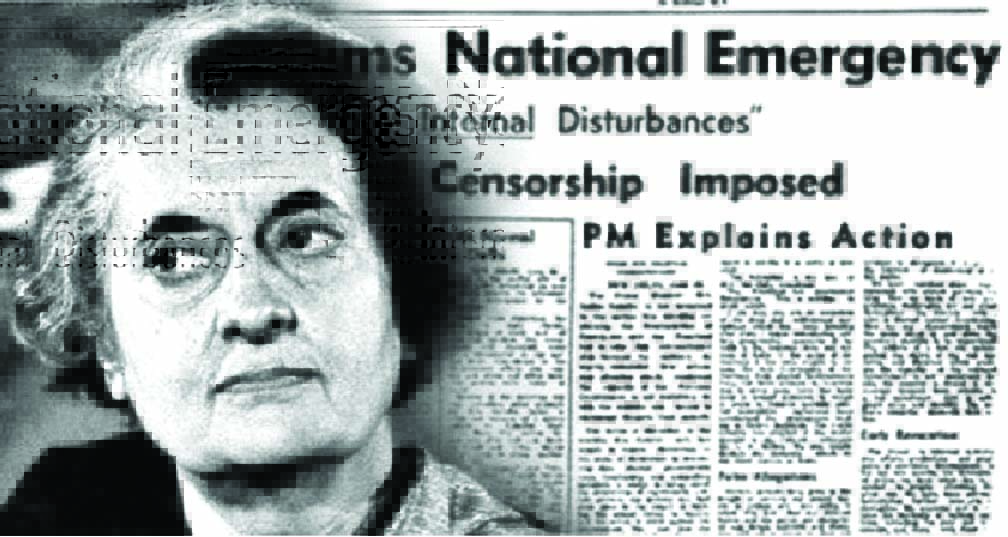
Another major event that led to the Emergency in India (1975–77) was a court case against Prime Minister Indira Gandhi.
In the 1971 Lok Sabha elections, she won from the Rae Bareli constituency. Her opponent, Raj Narain, filed a case against her. He accused her of using government resources during her election campaign.
On 12 June 1975, the Allahabad High Court gave its judgment. The court found Indira Gandhi guilty of electoral malpractice under the Representation of the People Act, 1951.
The court:
- Cancelled her election
- Disqualified her from holding elected office for six years
This decision created a political storm. Opposition leaders demanded her resignation as Prime Minister.
Indira Gandhi appealed to the Supreme Court. The Supreme Court gave her a conditional stay. She could remain Prime Minister temporarily, but she could not vote in Parliament.
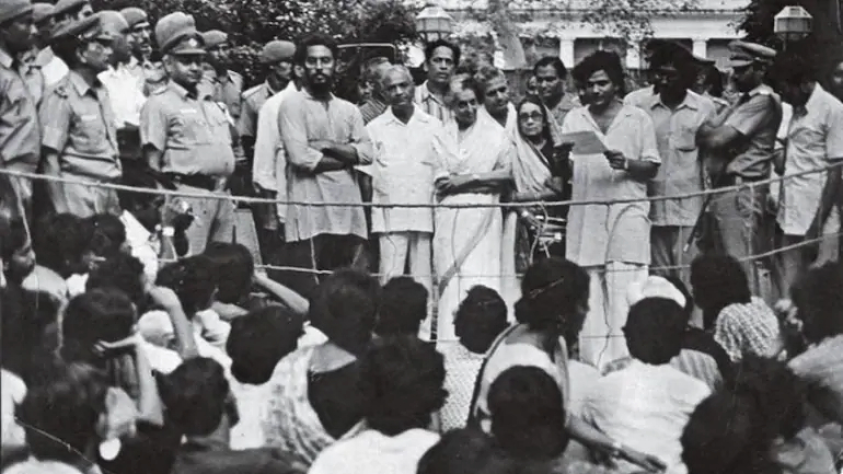
Meanwhile, protests increased. On 25 June 1975, Jayaprakash Narayan addressed a large rally in Delhi and asked people to continue peaceful protests. The government claimed that the country was facing serious “internal disturbance.”
Declaration of Emergency
On the night of 25 June 1975, the President of India, Fakhruddin Ali Ahmed, declared a national Emergency under Article 352 of the Indian Constitution, on the advice of Prime Minister Indira Gandhi.
The reason given was “internal disturbance.”
This was the third Emergency in India:
- 1962 (during war with China)
- 1971 (during war with Pakistan)
- 1975 (during peacetime – internal disturbance)
The Emergency in India (1975–77) was the first one declared during peacetime.
After the declaration:
- Electricity to major newspaper offices was cut
- Opposition leaders were arrested
- Civil liberties were suspended
On 26 June 1975, people woke up to a very different India.
Suspension of Fundamental Rights
One of the most serious effects of the Emergency in India (1975–77) was the suspension of Fundamental Rights.
On 27 June 1975, the government used Articles 358 and 359 of the Constitution.
Article 358
This suspended Article 19, which gives citizens:
- Freedom of speech
- Freedom of expression
- Freedom of assembly
- Freedom of movement
People could not freely criticize the government.
Article 359
This allowed the government to suspend enforcement of:
- Article 14 (Right to Equality)
- Article 21 (Right to Life and Personal Liberty)
- Article 22 (Protection against arrest and detention)
Citizens could not go to court if their rights were violated.
This meant that even if someone was arrested without reason, they could not challenge it in court. This greatly weakened democracy.
Arrest of Opposition Leaders
During the Emergency in India (1975–77), thousands of political leaders and activists were arrested under the Maintenance of Internal Security Act (MISA).
Important leaders arrested included:
- Jayaprakash Narayan
- Morarji Desai
- Atal Bihari Vajpayee
- L. K. Advani
The Shah Commission later estimated that around 35,000 people were detained without trial.
Many were kept in jail for months. Families did not know when their loved ones would return.
Censorship of the Media
Another major feature of the Emergency in India (1975–77) was strict control over the press.
From 26 June 1975:
- Newspapers had to send their reports to government officers before publishing.
- If the government did not like a report, it was removed.
- Some newspapers left blank spaces where news was censored.
The Press Council of India was abolished. Four major news agencies were merged into one agency called “Samachar” on 1 February 1976.
Newspapers were classified as:
- Friendly
- Neutral
- Hostile
Power supply to some newspaper offices was cut to stop printing.
Freedom of the press was almost completely controlled.
Constitutional Amendments During the Emergency
Several major amendments were passed during the Emergency in India (1975–77).
38th Amendment
It stopped courts from questioning the President’s decision to declare Emergency.
39th Amendment
It said that the election of the Prime Minister and Speaker could not be challenged in court.
42nd Amendment
This was one of the most powerful amendments in Indian history.
It:
- Increased the power of the central government
- Reduced the power of courts
- Gave more importance to Directive Principles over Fundamental Rights
- Extended the term of Lok Sabha and State Assemblies from 5 to 6 years
- Limited judicial review
Because of this amendment, the balance between the government and judiciary was disturbed.
The Sterilisation Campaign
One of the most controversial parts of the Emergency in India (1975–77) was the large-scale sterilisation drive.
The government launched a population control program.
Statistics show:
- 1975–76: 26.42 lakh sterilisation procedures
- 1976–77: 81.32 lakh sterilisation procedures
- Total in two years: 1.07 crore operations
In many places, people were forced to undergo sterilisation.
Some states linked benefits like:
- Food rations
- Housing
- Government jobs
- Loans
to sterilisation compliance.
The Shah Commission later reported:
- 548 complaints of sterilisation of unmarried people
- 1,774 deaths due to procedures
This created fear and anger among the public.
Condition of Jails
The Shah Commission revealed that jails were overcrowded.
As of 1 January 1975:
- Total prisoners: 2,20,146
- Jail capacity: 1,83,369
- Under-trial prisoners: Over 1.26 lakh
Many people were detained without proper trial. Prison conditions were poor.
End of the Emergency
In January 1977, Indira Gandhi suddenly announced elections.
Lok Sabha elections were held between 16 and 20 March 1977.
The result shocked many.
The Congress Party was defeated. The Janata Party formed the government on 24 March 1977.
On 21 March 1977, the Emergency in India (1975–77) officially ended.
The new Prime Minister became Morarji Desai.
This showed that Indian voters still believed in democracy. Through voting, they restored democratic rule.
44th Constitutional Amendment
After the Emergency, the government passed the 44th Constitutional Amendment in 1978.
It:
- Replaced “internal disturbance” with “armed rebellion”
- Restored judicial review
- Made it harder to declare Emergency
- Protected Fundamental Rights more strongly
This amendment was meant to prevent misuse of emergency powers in the future.
Impact of Emergency in India (1975–77)
1. Political Impact
Opposition parties united. Indian politics became more competitive.
2. Legal Impact
Important constitutional safeguards were added.
3. Social Impact
People became more aware of their rights.
4. Media Awareness
Journalists became more conscious about protecting press freedom.
5. Democratic Strength
It proved that democracy in India was strong enough to recover.
Lessons from Emergency in India (1975–77)
The Emergency teaches important lessons:
- Democracy must always be protected.
- Fundamental Rights are very important.
- Courts must remain independent.
- Media freedom is necessary.
- Power should not be concentrated in one person.
- Citizens must remain alert.
Conclusion
Emergency in India (1975–77) was a dark but important chapter in Indian history. For 21 months, many freedoms were suspended. Opposition leaders were jailed. Newspapers were censored. Constitutional changes increased government power.
However, this period also proved the strength of Indian democracy. When elections were held in 1977, the people voted for change. Democracy was restored peacefully.
Today, the Emergency in India (1975–77) reminds us that rights and freedoms should never be taken for granted. The Constitution gives power to the government, but it also protects citizens. A balance between authority and liberty is necessary.
The story of this period is not just about the past. It is a reminder for every generation to protect democracy, respect the Constitution, and stay aware of their rights.
FAQs: Emergency in India (1975–77)
1. What was Emergency in India (1975–77)?
Emergency in India (1975–77) was a 21-month period from 25 June 1975 to 21 March 1977 when democratic rights were suspended and the government received extraordinary powers.
2. Who declared the Emergency in 1975?
The Emergency was declared by President Fakhruddin Ali Ahmed on the advice of Prime Minister Indira Gandhi.
3. Why was the Emergency declared?
The official reason given was “internal disturbance.” It followed political protests, economic problems, and a court judgment against Indira Gandhi by the Allahabad High Court.
4. Which Fundamental Rights were suspended during the Emergency?
Articles 14, 19, 21, and 22 were affected. Citizens could not freely speak, protest, or challenge unlawful arrests in court.
5. What was the role of Jayaprakash Narayan?
Jayaprakash Narayan led the “Total Revolution” movement against corruption and poor governance. He was arrested during the Emergency.
6. How did the Emergency affect the media?
Newspapers were censored. Reports had to be approved by government officers before publication. Press freedom was severely restricted.
7. What was the 42nd Constitutional Amendment?
It was a major amendment passed during the Emergency that increased the powers of the central government and limited judicial review.
8. What was the sterilisation campaign during the Emergency?
It was a large-scale population control drive. In many cases, people were forced to undergo sterilisation, which caused public anger.
9. How did the Emergency end?
Elections were held in March 1977. The Congress Party lost, and the Janata Party formed the government. The Emergency officially ended on 21 March 1977.
10. What changes were made after the Emergency?
The 44th Constitutional Amendment was passed in 1978. It made it harder to declare an Emergency and strengthened protection of Fundamental Rights.