

Kazi Nazrul Islam: A Life, Legacy and Love for Music

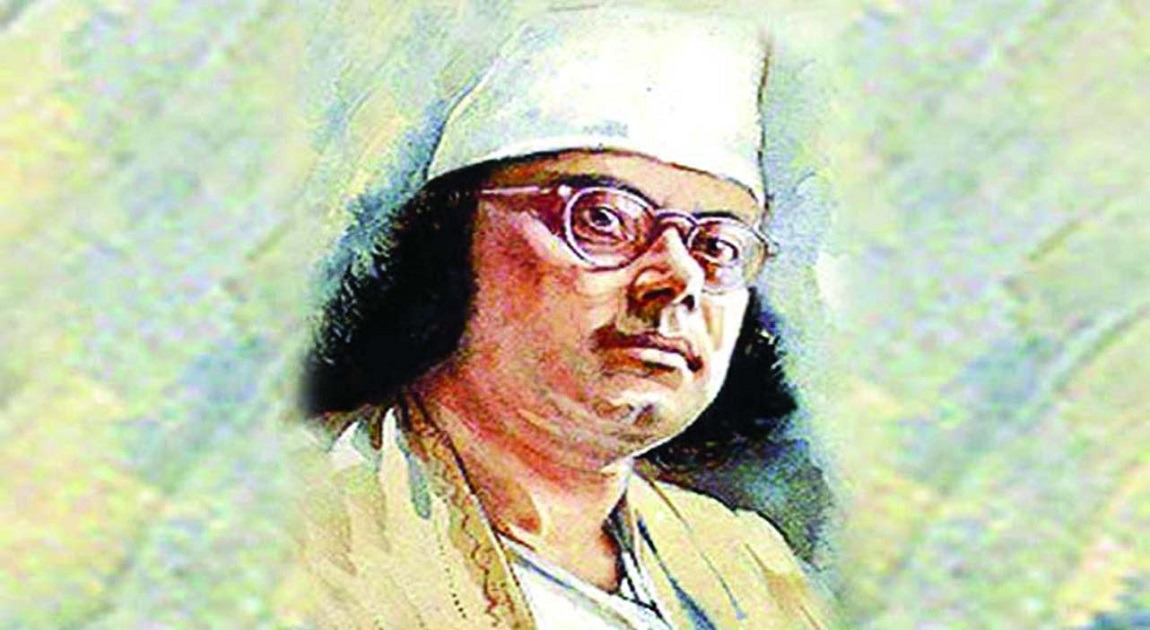
Kazi Nazrul Islam remains one of the most incandescent figures in the cultural, literary, and musical heritage of Bengal. Known widely as the “Bidrohī Kobi” (Rebel Poet), his works ranging from fiery poems to soulful songs continue to stir hearts and inspire movements. Born in colonial India at the turn of the 20th century, Nazrul’s life and creations embodied defiance against oppression, deep empathy for humanity, and an unshakeable belief in justice, equality, and unity.
Early Life and Roots
Kazi Nazrul Islam was born on 24 May 1899 in a small village called Churulia, in what was then Bengal (now in West Bengal, India) but was under British rule.

He was born to a Muslim family. His father Kazi Fakir Ahmad was the imam of a mosque and the caretaker of a local shrine (mazar). His mother was Zaheda Khatun. Nazrul had many siblings, but only some survived.
When Nazrul was just about 9 years old in 1908 his father died. That changed the course of Nazrul’s childhood. Because of financial hardship, his formal schooling was disrupted, and he had to start earning a living early.
Soon, young Nazrul worked as a muezzin (the person who calls for prayer at a mosque), a caretaker of the shrine, and sometimes as a teacher at the local primary religious school (maktab).
Despite difficulties, he showed early interest in music and drama. Around 1911 he joined a folk-theatre group known as a “leto” troupe a traditional travelling troupe that performed songs, dramas, and folk music. Under the guidance of his uncle (who was a singer-songwriter), Nazrul began writing songs, poems, and even drama scripts for the troupe. This humble beginning laid the foundation for his future as a poet, musician, and cultural rebel.
Youth Years: Struggles and Early Creativity
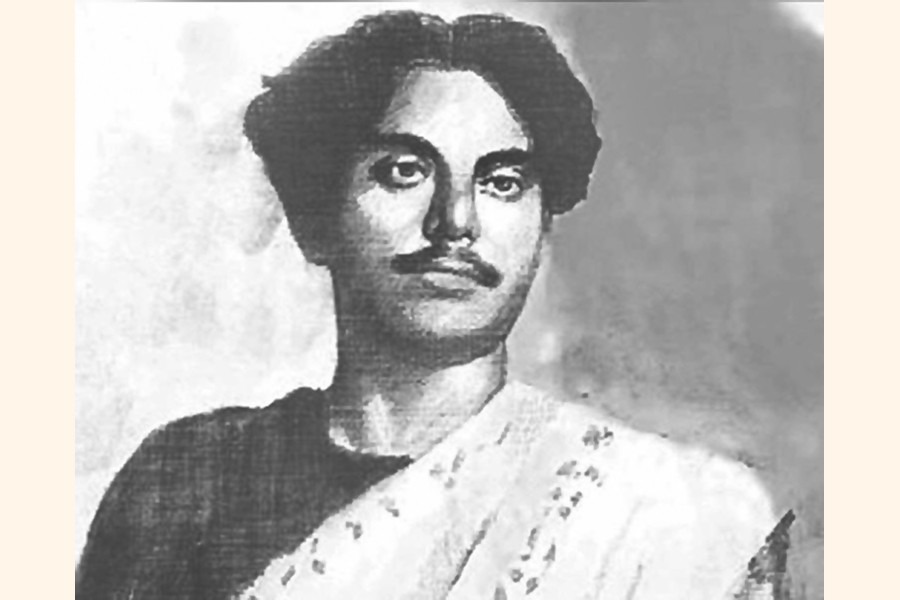
After intermittent schooling, Nazrul could not continue formal education for long due to financial crisis. At one point he worked as a railway guard’s assistant, in a bakery shop, and took up various odd jobs just to make ends meet.
Even during these hardships, he nurtured a deep love for literature, folk‐songs and drama. His work with the “leto” troupe helped him learn about music, songwriting, drama, and storytelling. He wrote scripts for dramas based on Bengali mythologies and epics, mixing folk traditions with his emerging literary voice.
This period shaped his worldview one that would later challenge social norms, religious intolerance, colonial rule, and injustice.
Military Service and Awakening
In 1917, at the age of 18, Nazrul enlisted in the British Indian Army. He was posted to Karachi with his regiment. During his service he rose to the rank of quartermaster (but he did not see active combat).
Even while in the army far from home, Nazrul’s creative spirit did not die. He continued writing poems, songs, and essays. The exposure to different people, cultures, and the harsh realities of colonial army life helped sharpen his voice against oppression and tyranny a voice that would soon emerge in his political and literary activism.
After leaving the army in around 1920, Nazrul moved to Calcutta (now Kolkata), where he stepped more seriously into the world of literature.
Literary Debut and Rise as the “Rebel Poet”
Once in Calcutta, Nazrul’s pen moved fast. His first novel titled Bandhan-Hara (“Freedom from Bondage”) was published serially in 1920, marking his entry into Bengali literature.
But Nazrul did not limit himself to novels. He wrote poems, short stories, essays, plays truly a versatile artist. And in 1922, he published what is perhaps his most famous poem: Bidrohi (“The Rebel”). That poem created a storm: it spoke passionately of resistance against oppression, inequality, injustice and evoked images from different religions and mythologies, blending Hindu, Muslim, and even classical (Greek) references.
This fearless embrace of unity across religion and culture and defiance against colonial rule made him a unique voice. People began calling him the “Bidrohi Kobi” the Rebel Poet.
In 1922, Nazrul also founded a political-literary magazine called Dhumketu (“The Comet”) which became a major platform for anti-colonial and progressive ideas. His writings in Dhumketu challenged British colonial rule, social injustice, and religious bigotry.
Because of this, Nazrul faced repression. He was arrested in January 1923 for sedition after publishing poems critical of British rule. While in prison, he staged a 40-day hunger strike in protest of jail authorities’ treatment of prisoners. He was released in December 1923.
But that did not silence him. Instead he became more determined. His fiery poems, stories, songs kept coming more powerful, more poignant.
Poetry, Prose, Music — A Multidisciplinary Master
One of the most remarkable things about Nazrul is the diversity of his work. He did not confine himself to one form. He wrote:
- Poems — sometimes fiery and militant, sometimes romantic, sometimes spiritual.
- Short stories and novels — exploring social themes.
- Plays and drama scripts — for theatre and performance.
- Essays and journalistic articles — on society, politics, religion, human dignity.
- Songs and music — blending folk, devotional, classical, and modern.
Because of this versatility, Nazrul helped give birth to a new trend in Bengali literature and music. He challenged traditional poetic norms that were often conservative or nostalgic; instead he brought realism, rebellion, social consciousness, and inclusivity.
One of his major contributions was in music. He composed a vast number of songs estimates vary, but many sources mention between 2,000 and 4,000 musical compositions.
These songs came under the umbrella of Nazrul Geeti (Songs of Nazrul) a rich fusion of folk, classical, devotional, romantic and revolutionary music.
In doing so, Nazrul embodied what the concept of “musical composition” means in a broad sense not just structuring notes and melody, but creating a unique, expressive musical and social statement.
His songs touched on many themes love, devotion, spirituality, protest, sorrow, longing, hope, humanity. Many of his songs were devotional (bhajans, kirtans), even Hindu devotional songs (Shyama sangeet), which was unusual for a Muslim composer in Bengal then.
He also wrote ghazals in Bengali, bringing Islamic lyrical traditions into mainstream Bengali music.
In short he didn’t only rebel with words. He rebelled with tunes, music, rhythm, melody. He used music as a tool for unity, social change, and beauty.
Social, Religious and Cultural Vision
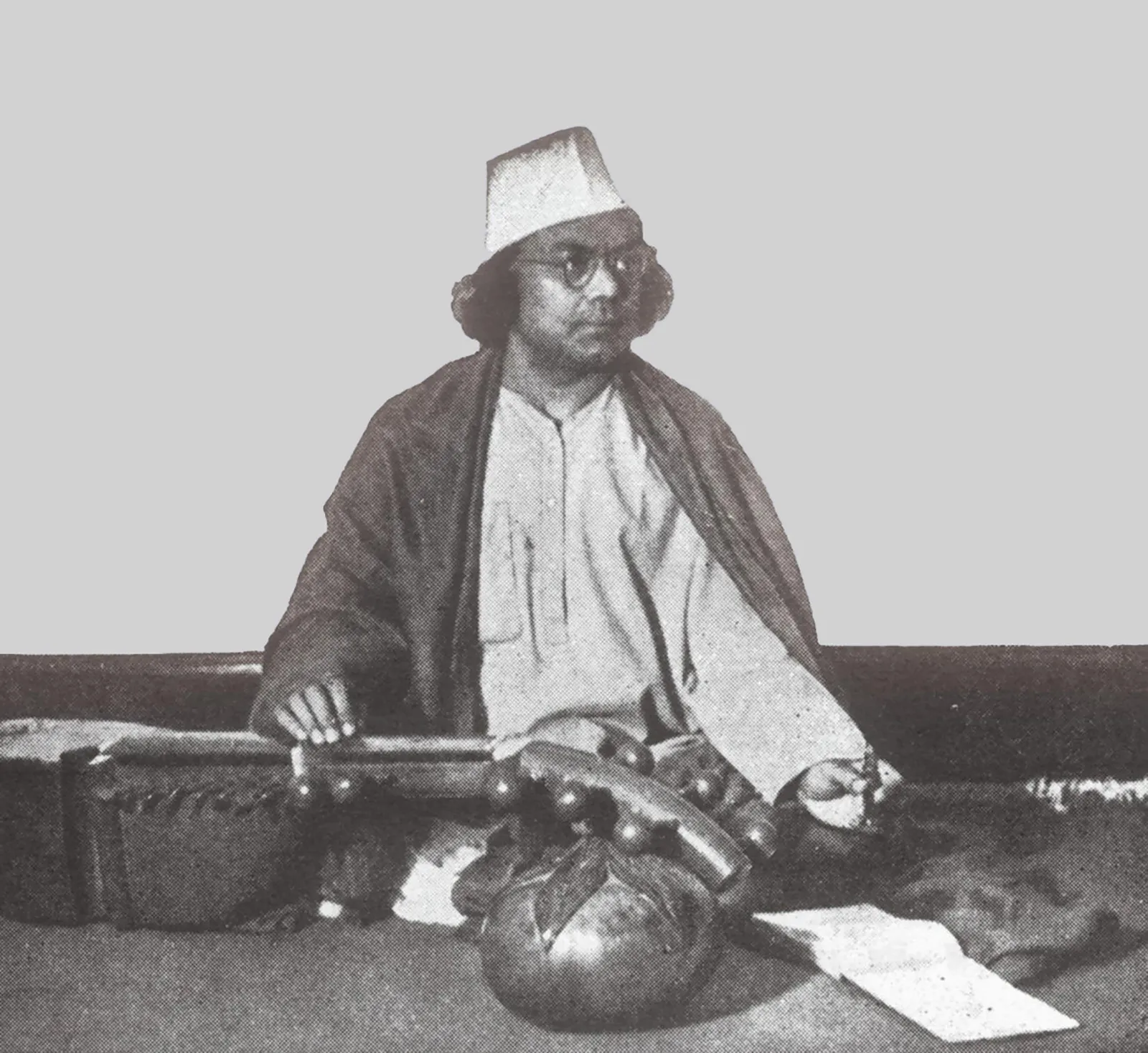
What makes Nazrul stand out not just as poet or musician is his inclusive vision. He wrote and composed across religious and cultural lines. He believed in communal harmony, social justice, freedom, equality. His poems and songs spoke against oppression whether by colonial rulers or by social orthodoxies.
In times when religion often divided people, Nazrul’s voice tried to bring them together. In his songs and poems, you find references to Hindu gods, Muslim beliefs, universal humanism a deep conviction that humanity matters more than sect or creed.
His life and writing were acts of rebellion not just political rebellion against colonial rule, but social rebellion against narrow-mindedness, prejudice, casteism, communalism. That is why his legacy remains relevant even today.
Challenges, Hardships and Pain
Nazrul’s life was not easy. After his early financial struggles, his path though creative was unstable. His political writings brought attention from colonial rulers; his activism got him arrested and jailed several times.
His personal life too was complex. In 1924 he married Pramila Devi, who was a member of a Hindu reform movement (Brahmo Samaj). Given the social and religious context of Bengal then this inter-religious marriage attracted criticism from both communities.
Despite fame and popularity, Nazrul struggled with health issues. Over time, he developed serious illness, which severely affected his mental and physical health.
Because of his illness (some sources suggest a neuro-degenerative disease, often referred to as “Pick’s disease”), Nazrul lost his ability to speak, and his memory and creative powers declined. For years he remained largely out of the public eye.
This decline was tragic for someone who had once filled the air with poems and songs, a spirited rebel longing for justice and freedom in his verse now silenced by illness.
Later Years: Return, Recognition and Legacy
In 1972 after the independence of Bangladesh Nazrul moved to Dhaka (capital of Bangladesh), along with his family. He became a citizen of Bangladesh in February 1976.
Sadly, he did not live much longer. On 29 August 1976, Nazrul passed away in Dhaka at the age of 77. As per his wish, he was buried next to a mosque on the campus of the University of Dhaka.
Over the decades, his works poems, songs, music have continued to inspire generations.
Today, he is recognized as the national poet of Bangladesh.
His songs are still sung; his poems are still read. His spirit of rebellion against injustice, inequality, imperialism, communalism remains alive.
Nazrul’s Musical Contributions — In Light of “Musical Composition”
To appreciate Nazrul’s music, it helps to understand what “musical composition” means in general the act of conceiving, structuring, and producing music, whether notated or performed.
But Nazrul’s compositions were more than mere tunes or melodies. He created music that carried emotion, resistance, spirituality, social message.
- His songs blended folk music rooted in the common people with classical, devotional, and modern styles. This mixing of traditions made his music accessible yet rich, familiar yet novel.
- By composing songs that addressed social injustice, colonial oppression, human suffering, love, and unity, he used music as a medium of expression and change not just entertainment.
- Through genres like ghazal (musical–poetic form rooted in Islamic tradition) and bhajan / kirtan / devotional songs (often associated with Hindu tradition), he wove together religious and cultural threads giving voice to unity and harmony.
In essence, Nazrul’s body of work is a testament to what musical composition can achieve not only aesthetic beauty but also a powerful social and human message.
Major Works and Themes
While listing all of Nazrul’s works would take a long time (he was extremely prolific), some of his major contributions and recurring themes stand out:
- Poems of Rebellion and Freedom — like “Bidrohi,” which kindled the spirit of resistance against colonial rule and injustice.
- Songs for Humanity and Equality — songs that celebrate love, human dignity, communal harmony, and social justice. His music spoke to the hearts of common people.
- Devotional and Spiritual Songs — bhajans, kirtans, ghazals showing his respect for diverse religious traditions, spirituality beyond religious division.
- Novels, Short Stories, Plays — exploring social issues, human relationships, oppression, class struggle, identity, freedom.
- Journalism and Political Writings — through his magazine Dhumketu and other writings, he raised his voice against colonialism, communalism, social injustice, and oppression.
Overall, his works reflect a deep empathy for common people, passion for freedom, belief in unity, courage to challenge norms all wrapped in beautiful language and powerful music.
Nazrul’s Vision — Why He Matters Even Now
- Voice of the Oppressed: Nazrul understood poverty, struggle, social injustice firsthand. His writings and songs gave voice to those who suffered under colonial rule or social oppression.
- Champion of Unity: At a time when communal divisions were deep, he dared to bring Hindu and Muslim traditions together in his work showing that humanity and culture transcend religion.
- Bridge Between Tradition and Modernity: By mixing folk music, classical traditions, mythology and modern themes he created something new, yet rooted in his people’s culture.
- Freedom & Justice Universal Themes: His poetry and music called not just for political freedom, but social freedom, gender equality, human dignity values that remain relevant.
- Inspiration for Generations: Writers, poets, musicians, activists many have drawn strength and inspiration from Nazrul’s life and works. His legacy lives on.
What We Can Learn from Nazrul Even Today

- Even from a humble beginning and with many hardships, determination, talent and sincerity can lead to greatness.
- Art poetry, music, writing can be powerful tools for change, unity, empathy, and social justice.
- Inclusivity across religion, caste, community is possible, and art can help bridge divides.
- Being genuine, fearless and compassionate can make one voice matter beyond time.
- Legacy isn’t just about fame. It is about impact: touching hearts, inspiring minds, shaping culture.
Conclusion
Kazi Nazrul Islam’s life was full of trials poverty, oppression, illness. Yet, his spirit never bowed. Through pen and tune, he rebelled against injustice and inequality. He dreamed of unity, freedom, and human dignity.
As a poet, composer, musician, rebel, humanist Nazrul’s contributions are timeless. His songs and poems continue to stir souls. His message of love, resistance, harmony remains relevant across generations and borders.
When we sing his songs or read his poems, we are not just remembering a man. We are inheriting a vision a vision of a world where art, humanity, justice, and unity walk together.
That is why Nazrul matters not only for Bengal or Bangladesh, but for anyone who believes in art, freedom, and humanity.