Migration in Geography: Meaning, Types, Causes, Impacts and Challenges

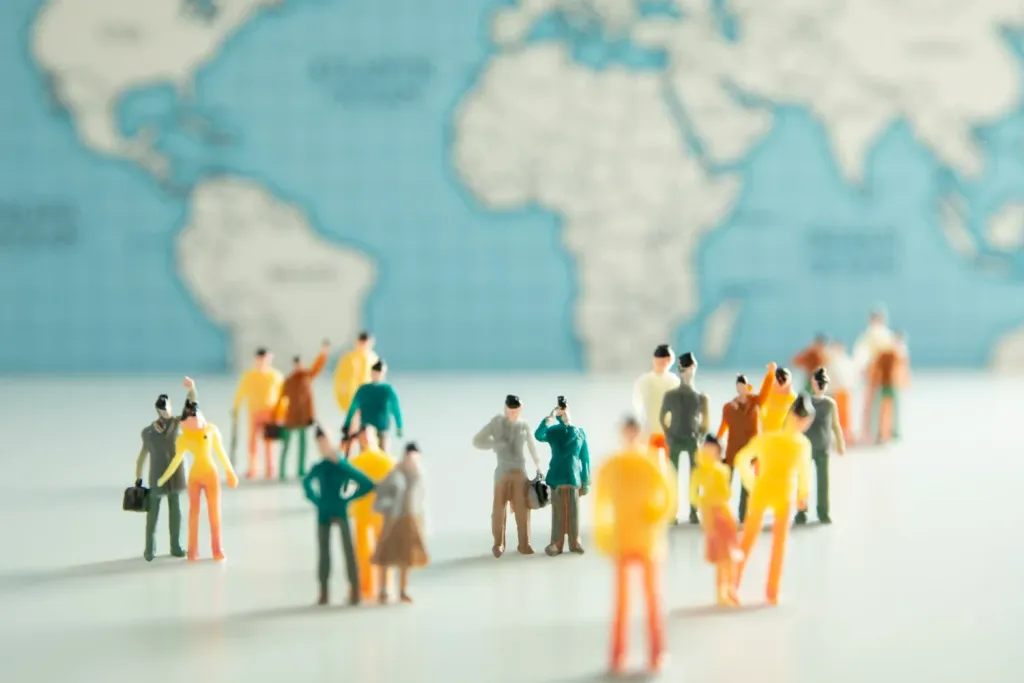
Migration in Geography is one of the most important topics in human geography. It helps us understand how and why people move from one place to another. Migration is not a new concept. Humans have been moving from one place to another since ancient times for food, safety, and better living conditions.
Thank you for reading this post, don't forget to subscribe!Today, migration plays a big role in shaping population, economy, culture, and development of a country like India. It affects both the place people leave and the place they go to.
What is Migration?
Migration means the movement of people from one place to another with the intention of living there for a short time or permanently.
In simple words, when a person leaves their home and shifts to another place, it is called migration.
Migration happens due to many reasons such as:
- Job opportunities
- Education
- Natural disasters
- Better lifestyle
Migration is very important because it affects:
- Population size
- Population growth
- Distribution of people
- Workforce availability
Types of Migration
Migration can be divided into different types based on distance, duration, and reasons.
1. Internal Migration
Internal migration means moving within the same country.
Types of Internal Migration
| Type | Meaning |
|---|---|
| Rural to Rural | Moving from one village to another |
| Rural to Urban | Moving from village to city |
| Urban to Rural | Moving from city to village |
| Urban to Urban | Moving from one city to another |
Other Forms
- In-migration: People coming into an area
- Out-migration: People leaving an area
2. External Migration
External migration means moving from one country to another.
| Type | Meaning |
|---|---|
| Immigration | Coming into a country |
| Emigration | Leaving a country |
Example: Many Indians migrate to countries like the USA, Canada, and Middle East for jobs.
3. Forced Migration
Forced migration happens when people are forced to move due to:
- War
- Natural disasters
- Violence
- Political issues
Example: People moving due to floods or earthquakes.
4. Voluntary Migration
Voluntary migration happens when people choose to move for:
- Better jobs
- Education
- Improved lifestyle
5. Temporary Migration
Temporary migration means moving for a short period and then returning.
Examples:
- Seasonal workers
- Students
- Short-term jobs
6. Permanent Migration
Permanent migration means moving to a place forever with no plan to return.
7. Reverse Migration
Reverse migration means people returning back to their original place after living somewhere else.
Example: Many workers returned to villages during COVID-19.
Recent Migration Pattern in India
Recent data shows important changes in migration trends:
- Total migrants in India (2023): 40.20 crore
- Migrants in 2011 Census: 45.57 crore
- Migration rate decreased from 37.64% to 28.88%
This shows that migration is still high but has slightly reduced.
Causes of Migration
Migration happens due to many reasons. These reasons are divided into three main categories:
1. Economic Factors
Economic reasons are the most important cause of migration.
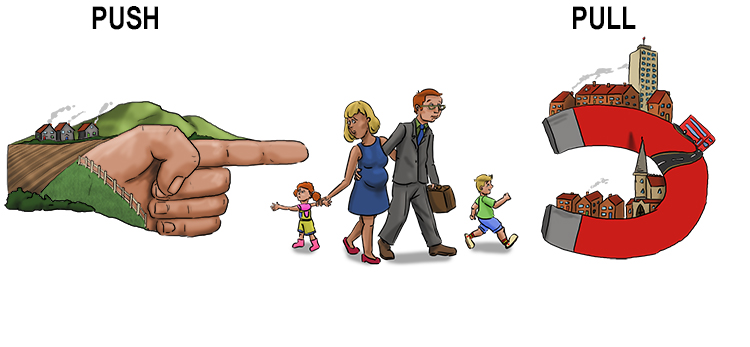
Push Factors (Forcing people to leave)
Push factors are negative conditions such as:
- Poverty
- Unemployment
- Low income
- Lack of resources
- Natural disasters
These problems force people to leave their homes.
Pull Factors (Attracting people)
Pull factors are positive conditions such as:
- Better jobs
- Higher salary
- Good living conditions
- Better facilities
Cities attract people because of industries, businesses, and services.
2. Social and Cultural Factors
Social reasons also play a major role in migration.
Some important factors:
- Family problems
- Marriage
- Education
- Better lifestyle
- Influence of media (TV, cinema)
Modern communication and transport have made migration easier.
3. Environmental Factors
Environmental issues are becoming a major reason for migration.
These include:
- Floods
- Droughts
- Earthquakes
- Climate change
- Deforestation
- Water scarcity
These problems destroy homes and jobs, forcing people to move.
Impact of Migration
Migration has both positive and negative effects on society and economy.
Positive Impacts of Migration
1. Remittances (Money Sent Home)
Migrants send money to their families. This money is used for:
- Food
- Education
- Healthcare
- House building
- Farming
International remittances are a major source of income for India.
2. Better Workforce Distribution
Migration helps in:
- Providing workers to industries
- Supporting urban growth
- Filling labor shortages
3. Social Change
Migrants bring new ideas such as:
- Education
- Technology
- Family planning
- Women empowerment
4. Cultural Exchange
Migration leads to mixing of cultures:
- New traditions
- New food habits
- New languages
This creates a diverse and rich society.
Negative Impacts of Migration
1. Labor Shortage in Rural Areas
Villages lose young and skilled workers.
2. Imbalance in Population
- Rural areas lose male population
- Cities become overcrowded
3. Urban Problems
Cities face:
- Overpopulation
- Traffic
- Pollution
- Slums
4. Social Issues
Migrants may face:
- Isolation
- Stress
- Depression
Sometimes this leads to:
- Crime
- Substance abuse
Challenges Related to Migration
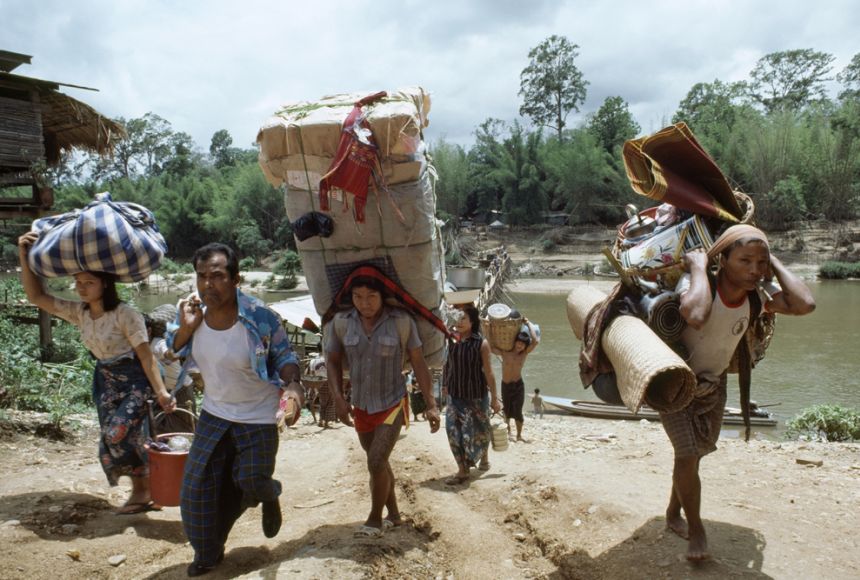
Migration creates many challenges for both migrants and government.
1. Economic Challenges
- Low-paying jobs
- Unstable work
- Informal sector employment
Cities also face pressure on:
- Housing
- Transport
- Healthcare
2. Social Challenges
- Discrimination (language, caste, region)
- Lack of education for children
- Poor healthcare access
This leads to:
- Malnutrition
- Poor health
- Unsafe working conditions
3. Political and Legal Challenges
- Migrants cannot vote easily
- Lack of identity documents
- Difficulty in getting government benefits
In some cases:
- Conflicts over jobs and resources
Government Initiatives for Migrants
The government has taken several steps to support migrants.
Major Schemes
- Draft National Migrant Labour Policy (2021)
Focus on improving migrant conditions - One Nation One Ration Card (ONORC)
Allows migrants to get ration anywhere in India - Affordable Rental Housing Complexes (ARHC)
Provides cheap housing - PM Garib Kalyan Yojana
Support during crisis - e-Shram Portal
Database for unorganized workers - Code on Social Security
Provides insurance and benefits
Way Forward (Solutions)
To improve migration conditions, the following steps are important:
1. Better Government Policies
- Strong social security
- More job opportunities
- Better living conditions
2. Skill Development
Training programs can help migrants:
- Get better jobs
- Earn more income
3. Improved Urban Planning
Cities should improve:
- Housing
- Transport
- Sanitation
This will reduce slums and overcrowding.
4. Legal Protection
- Strong labor laws
- Protection from exploitation
- Equal rights
Conclusion
Migration in Geography is a very important topic that explains human movement and development. It affects economy, society, and culture in many ways.
Migration brings opportunities, but it also creates challenges. Proper planning, government support, and awareness can help make migration beneficial for everyone.
FAQs
1. What is migration in simple words?
Migration means moving from one place to another for living.
2. What are the main types of migration?
Internal, external, forced, voluntary, temporary, and permanent migration.
3. What are push and pull factors?
Push factors force people to leave, while pull factors attract people.
4. Why do people migrate to cities?
For better jobs, education, and lifestyle.
5. What is reverse migration?
It is when people return to their original place.
6. What are the problems faced by migrants?
Low income, poor housing, lack of education and healthcare.