Static GK Questions 2025–2026 for SSC, RRB, UPSC, and Banking Exams

Static GK plays a key role in every competitive exam. To help aspirants strengthen their preparation, this section presents the most important Static GK Questions with factual clarity and topic-wise accuracy. These questions are crafted for quick revision and concept recall — ideal for SSC, RRB, UPSC, and Banking exam aspirants aiming for a high score.
Thank you for reading this post, don't forget to subscribe!Why Practice Static GK Questions Regularly?
- Builds a strong foundation in General Knowledge that doesn’t change with time.
- Improves accuracy and boosts confidence in the Static GK section.
- Helps identify recurring topics often asked in previous year questions (PYQs).
- Aids in quick revision before examinations with short, factual notes.
Topic-Wise Static GK Questions for SSC, Railway, and State PCS Exams
Here you will find a comprehensive archive of topic-wise Static GK Questions designed for SSC, SSC-CGL, Railway, and State PCS (Civil Services) preliminary examinations across India. Each GK quiz includes a set of five carefully selected questions covering essential subjects in General Knowledge, General Studies, and General Awareness, helping aspirants strengthen their preparation for one-day competitive exams.
These quizzes are ideal for daily practice and concept revision, ensuring candidates build a solid foundation in Static General Knowledge. With a structured approach and exam-oriented content, this section aims to boost accuracy, confidence, and overall performance in upcoming government exams.
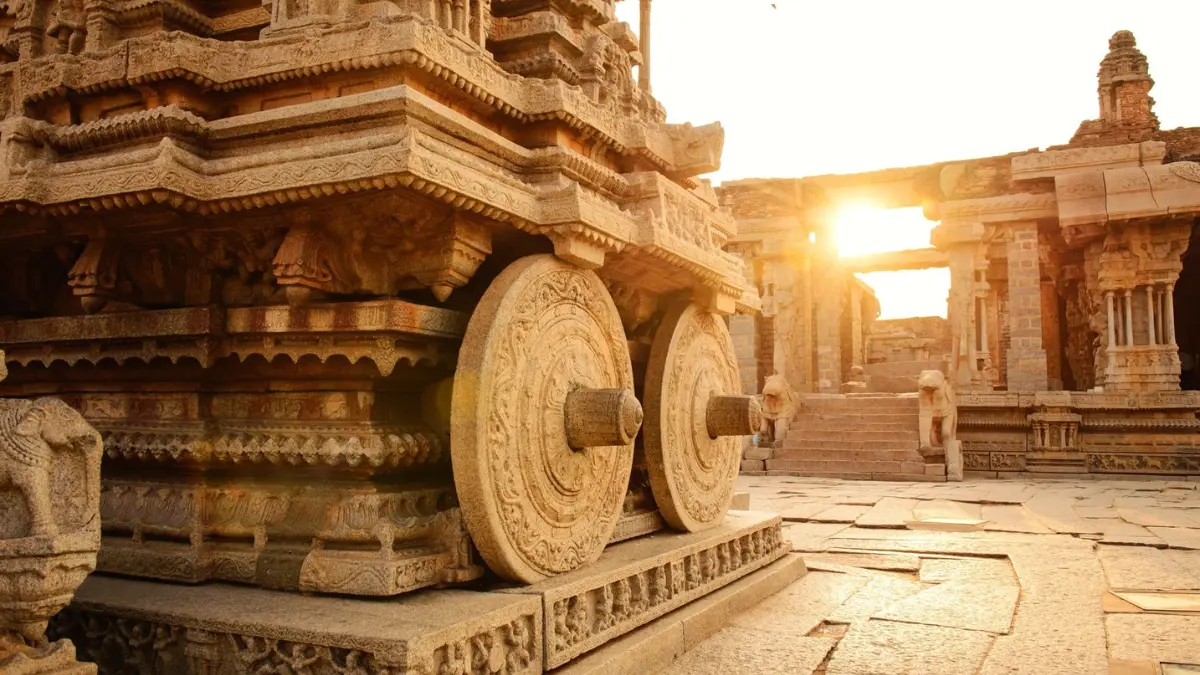
Ancient Indian History
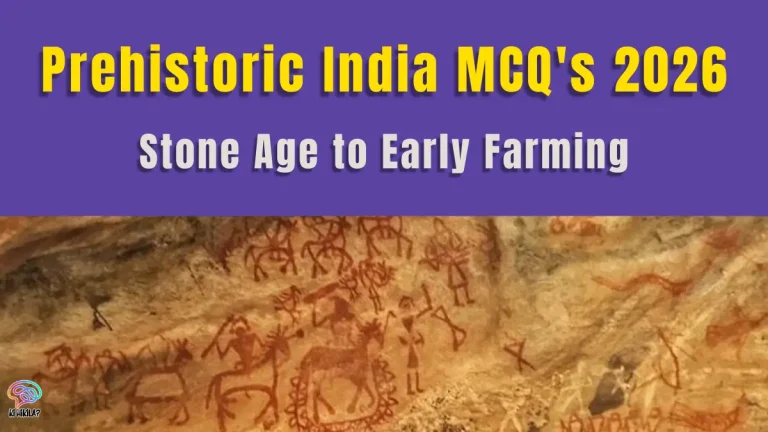
- Prehistoric India
- Indus Valley Civilisation
- Rig Vedic Society, Economy, Polity & Religion
- Rig-Vedic Literature
- Later Vedic Society, Economy, Polity & Religion
- Later Vedic Literature
- Rise of Jainism
- Rise of Buddhism
- Ajivikas and Other Ascetics
- Ancient Republics of India
- Sixteen Mahajanapadas
- Magadha Empire
- Invasion of Alexander on India
- Maurya Empire- Chandragupta and Bindusara
- Maurya Empire- Ashoka
- Administration of Mauryas
- Mauryan Culture, Society and Economy
- Shungas, Kanvas and Mahameghavanas
- Changes in Post-Mauryan times
- The Indo-Greek rulers
- The Shakas Rulers & Satrap System
- The Satavahanas
- Kushana Empire
- Gupta Empire- Political History
- Gupta Empire- Society, Religion, Literature
- Gupta Polity, Economy, Numismatics
- Gupta Art, Architecture
- Vakatakas, Maitrakas and Mukharis
- Era of Harsha
- Early Medieval North India
- Early Medieval South India
- Early Medieval Society & Religion
- Changes in Indian Economy (600-1000 AD)
- Art and Architecture of India (600-1000 AD)
- The Rashtrakutas
- The Chalukyas
- The Pallavas
- The Cholas
- Pandya Kingdom
- Sangam Age
Medieval Indian History
- Sources of Medieval Indian History
- Medieval Indian Coins and Coinage
- Indian Society & Economy in Early Medieval Period
- Initial Invasions of Arabs and Turks
- Mahmud of Ghazni
- Muhammad Ghori & Foundation of Delhi Sultanate
- Mamluk dynasty (1206–90)
- Khilji Dynasty (1290-1320)
- Tughlaq dynasty (1320–1413)
- Sayyid and Lodi Dynasties
- Lodi Dynasty (1451–1526)
- Decline of Delhi Sultanate and Rise of Provincial Kingdoms
- Delhi Sultanate: Polity, Administration & Economy
- Delhi Sultanate: Architecture, Arts and Culture
- Vijayanagara Empire
- Deccan Sultanates: Bahmani, Ahmadnagar, Berar, Bijapur, Golconda, Bidar
- Bhakti & Sufi Movements
- Mughal Empire: Political History
- Mughal Empire: Polity, Administration & Economy
- Mughal Empire: Society, Culture, Arts, Architecture & Literature
- Maratha Empire
Modern Indian History
- Various States in India in 18th century
- Socio-economic Condition in 18th century India
- Beginning of European Trade
- Dutch and Danes Companies
- British East India Company – Initial Days
- French East India Company
- British Conquest & Annexation of Territories Till 1857
- East India Company Rule – Revenue, Reforms Etc.
- EIC – Internal Administration & Regulation
- Resistance Before 1857
- The Revolt of 1857
- British Raj – Viceroys of India [1858-1947]
- British Raj – Provincial Administration
- Relations with Princely States
- Judicial Developments during British Era
- Constitutional and Legislature Developments
- Development of Civil Services
- Development of Police and Military
- British Frontier Policy
- Economic Policies and Impacts
- Development of Education
- Development of Infrastructure
- Famines and other Natural Disasters
- Indian Press & Literature in British Era
- Socio-Religious Reform Movements
- Freedom Struggle – Important Organizations
- Freedom Struggle – Important Events [1905-1947]
- Freedom Struggle – Freedom Fighters & Leaders
- Mahatma Gandhi – Life, Role and Philosophy
- Subhash Chandra Bose and Azad Hind
- Communalism & Pakistan Movement
- Peasant & Tribal Movements 1857-1947
- Working Class & Left Movements
Indian Polity & Constitution
- Historical Background
- Constituent Assembly & Making of the Constitution
- Salient Features of the Constitution
- Preamble of the Constitution
- Union and its Territory
- Citizenship & Citizenship Laws
- Fundamental Rights
- Directive Principles and Fundamental Duties
- Amendment of Constitution and Basic Structure Doctrine
- Important Amendment of Constitution
- System of Government in India
- President
- Vice-President
- Prime Minister & Union Council of Ministers
- Parliament
- Parliamentary Committees, Forums and Parliamentary Group
- Supreme Court, Review, Activism, PIL
- State Government – Governor
- Chief Minister & State Council of Ministers
- State Legislature: Assemblies & Legislative Councils
- High Courts & Subordinate Courts
- Special Provisions for Various States
- Centre-State Relations & Inter-state Relations
- Emergency Provisions
- Evolution of Panchayati Raj
- Rural Local Government
- Urban Local Government
- Union Territories
- Scheduled and Tribal Areas
- Overview of Various Bodies in India
- Finance Commissions [Central & States]
- Election Commission [Central & States]
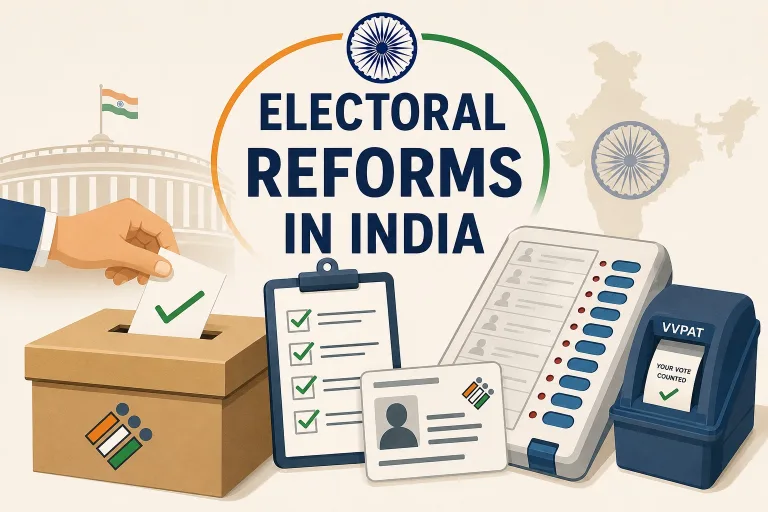
- Elections & Election Laws in India
- Public Service Commissions [Central & States]
- Public Services in India
- Various National Commissions
- RTI and Information Commissions
- Comptroller and Auditor General of India (CAG)
- Attorney General, Advocate General and other Law Officers
- Planning Commission & NITI Aayog
- Central Vigilance Commission & CBI
- Lokpal & Lokayuktas
- GST and GST Council
- 97th Amendment and Co-operative Societies
- Provisions Related to Languages
- Tribunals
- Rights and Liabilities of the Government
- Special Provisions Relating to Certain Classes
- Important Laws on Consumer Protection
- Important Laws on Corruption
- Important Laws on Crime and Terror
- Important Laws on Education
- Important Laws on Environment & Forests
- Important Laws on Finance & Financial Crimes
- Important Laws on Healthcare
- Important Labour and Personnel Laws
- Important Laws on Social Protection
World and Physical Geography
- Basics of Geography and the Role of Geographers
- Astronomy: Universe, Galaxies, Constellations, and Stars
- Geology: Earth Movements, Latitude, Longitude, and Time Calculation
- Geological Time Scale and Earth’s Internal Structure
- Rocks, Plate Tectonics, Earthquakes, and Volcanoes
- Weathering, Mass Wasting, and Erosion Processes
- Major Landforms of the Earth
- Important Seas, Archipelagos, Coral Reefs, and Atolls
- Key Islands, Gulfs, Bays, Isthmuses, Glaciers, and Canyons
- Major Rivers, River Islands, Deltas, and Lakes of the World
- Important Coasts and Beaches
- Significant Mountain Ranges, Hills, Plateaus, Volcanoes, and Mountain Passes
- Major Plains and Deserts of the World
- World Soils and Major Biomes
- Climatology: Classification of Climates
- Atmosphere, Winds, Humidity, Clouds, and Rainfall Patterns
- Air Masses, Fronts, Cyclones, and Weather Phenomena
- Oceanography: Major Oceans, Ocean Floor Relief, and Deposits
- Ocean Temperature, Density, and Salinity
- Coral Reefs, Tides, and Wave Movements
- Ocean Currents and Coastal Climate Influence
- Human Geography: Evolution, Races, and World Tribes
- Population, Demography, Migration, and Urban Settlements
- Economic Geography: Hunting, Fishing, Forestry, and Pastoral Activities
- Agriculture, Livestock, Dairy, and Plantation Crops
- Minerals, Mining, and Industrial Development
- Manufacturing and Service Industries, Quaternary Sector
- Continents and Country Facts under World Geography
Indian Geography
- Physiographic Divisions of India
- Geology and Tectonics – Earthquakes and volcanic zones in India.
- Plains and Deserts – Major plains and arid regions.
- Mountains and Plateaus – Key ranges, glaciers, and passes.
- Islands and Coasts – Coral reefs, mangroves, and beaches.
- Drainage System – Rivers, lakes, and waterfalls.
- Climate of India – Monsoon, rainfall, and wind patterns.
- Soils and Forests – Soil types and vegetation zones.
- Minerals and Energy – Mines, coal, oil, and gas resources.
- Power Resources – Thermal, hydro, nuclear, and renewable energy.
- Agriculture and Irrigation – Major crops and water resources.
- Industries and Cities – Key sectors and industrial hubs.
- Transport System – Roads, railways, ports, and airways.
- Demography and Population – Census, tribes, and settlements.
International Organizations, Defence, Books and Authors, and World History
- Important Days and Years
- International Organizations
- Defence and Security of India
- Books and Authors
- Ancient World History
- Medieval World History
- Modern World History
- Discoveries and Inventions
Indian Economy
- Important Concepts
- Notable Economists
- Types of Economies
- Indian Economy
- Economic Planning
- Agriculture and Irrigation
- Crops and Patterns
- Oilseeds and Plantation Crops
- Dairy and Fisheries
- Agro-based Industries
- Agricultural Policies
- Industrial Development
- Automobile Industry
- Cement Industry
- Chemical and Petrochemical Sector
- FMCG and Consumer Durables
- Engineering and Capital Goods
- Gems and Jewellery
- Metals and Mining
- Oil and Gas Industry
- Pharmaceuticals Industry
- Real Estate and Construction
- Steel Industry
- Textile Industry
- Sugar Industry
- Pulp and Paper Industry
- Education and Training
- Healthcare Services
- IT and ITeS Sector
- Media and Entertainment
- Retail and Wholesale Trade
- Telecommunications Sector
- Tourism and Hospitality
- Research and Development
- Money Markets
- Capital and Debt Markets
- Banking and Finance
- Infrastructure and Policy
- Transport Sector
- Energy Sector
- Fiscal Policy and Budget
- Tax Regime of India
- Foreign Trade and Policy
- Forex Reserves and Management
- World Bank and IMF
- Foreign Investments in India
- Economic Growth and Development
- Socio-economic Issues
- Labour Issues and Reforms
- Inflation and Price Rise
Indian Culture
- Indian Culture
- Religion and Philosophy
- Indian Paintings
- Folk Paintings of India
- Sculpture and Art Forms
- Ancient Architecture of India
- Medieval Architecture of India
- Modern Indian Architecture
- Indian Classical Dance
- Folk Dances of India
- Indian Classical Music
- Indian Folk Music
- Fairs and Festivals of India
- Traditional Sports and Martial Arts
- Theatre and Indian Cinema
- Folk Theatre Traditions
- Puppetry Art of India
- Television and Media Culture
- Family and Marriage Traditions
- Indian Cuisine and Food Heritage
- Handlooms and Handicrafts
- Indian Clothing and Textiles
- Languages of India
- Ancient and Medieval Literature
- Modern Indian Literature
- Regional Language Literature
- Cultural Heritage Sites and Landmarks
- National Insignia of India
Computers and IT
- Introduction to Computers and Their History
- Types of Computers
- Computer Hardware Components
- Software, Operating Systems, and Programming Languages
- Database Management Systems
- Computer Networks and Networking Devices
- Wired and Wireless Technologies
- Internet, Browsers, Apps, and Cloud Computing
- Websites, Blogs, Search Engines, and Social Media
- Microsoft Windows and Office Tools
- Computer Security, Attacks, and Malware
- Applications of Computers and IT in Various Fields
Environment & Biodiversity
- Environment & Biodiversity
- Introduction to Environment and Ecology
- World Biomes and Biogeographic Regions
- Biogeographic Regions of India
- India’s Forests, Wetlands, Mangroves, and Coral Reefs
- Global Flora and Fauna
- Flora and Fauna of India
- Environmental Conservation Treaties and Organizations
- World National Parks and Wildlife Sanctuaries
- National Parks and Wildlife Areas of India
- Environmental Laws and Policies in India
- Pollution and Control Measures
- Climate Change and Related Issues
- Sustainability and Green Initiatives
- Disaster Management and Preparedness
- Environmental Impact Assessment
Biology
- Introduction and Branches of Biology
- Famous Biologists and Their Contributions
- Classification of Living Organisms
- Cell Structure and Organelles
- Biomolecules and Biochemistry
- Viruses and Their Characteristics
- Overview of the Plant Kingdom
- Bacteria and Their Functions
- Algae and Fungi
- Mosses and Bryophytes
- Pteridophytes and Gymnosperms
- Morphology and Adaptations in Higher Plants
- Plant Tissues and Their Functions
- Photosynthesis, Respiration, and Nutrition in Plants
- Plant Growth and Development
- Reproduction in Plants
- Plant Products and Their Uses
- Plant Diseases and Control Measures
- Overview of the Animal Kingdom
- Lower Animals and Invertebrates
- Fishes and Mollusks
- Amphibians and Their Traits
- Reptiles and Their Characteristics
- Birds and Their Adaptations
- Mammals and Their Features
- Useful Animal Products
- Human Body – Tissues and Skin
- Human Body – Brain and Nervous System
- Human Body – Sensory Organs: Eyes, Ears, Nose
- Human Body – Muscles and Bones
- Human Body – Blood, Circulation, and Immune System
- Human Body – Urinary System
- Human Body – Respiratory System
- Human Body – Digestive System
- Human Body – Endocrine System
- Human Body – Reproductive System
- Animal Diseases
- Human Diseases
- Genetics, Inheritance, and Evolution
- Biofertilizers and Biofuels
- Biotechnology, GMOs, and Modern Biological Innovations
Chemistry
- Important Chemical Scientists
- Matter and Its States
- Elements and Their Properties
- Chemical Compounds
- Mixtures and Their Types
- Minerals and Ores
- Atomic Structure and Composition
- Radioactivity and Its Applications
- Periodic Table and Classification of Elements
- Chemical Bonds and Interactions
- Chemical Reactions and Equations
- Acids, Bases, and Salts
- Electrochemistry Fundamentals
- Basics of Organic Chemistry
- Hydrocarbons and Fuels
- Plastics and Polymers
- Important Metals and Their Uses
- Important Non-Metals and Their Characteristics
- Soaps and Detergents
Physics
- Introduction to Physics
- Units and Measurements
- Kinematics and Motion
- Motion and Friction
- Work, Energy, and Power
- Gravitation and Laws of Motion
- Satellites and Orbits
- General Properties of Matter
- Pressure and Its Applications
- Principles of Floatation
- Surface Tension and Capillarity
- Density and Specific Gravity
- Viscosity and Fluid Dynamics
- Simple Harmonic Motion (SHM)
- Mechanical and Electromagnetic Waves
- Sound Waves and Vibrations
- Heat and Modes of Heat Transfer
- Thermodynamics and Laws of Energy
- Light and the Human Eye
- Electricity and Electric Circuits
- Electrochemical Cells
- Magnetism and Magnetic Effects
- Basics of Atomic and Nuclear Physics
- Fundamentals of Electronics
Static GK Topics You Should Not Miss
- Governors-General and Viceroys of India
- Important National Parks & Wildlife Sanctuaries
- Indian Rivers, Dams, and Lakes
- State Capitals and Chief Ministers (2025 Updates)
- Major Awards, Books, and Authors
- Indian Freedom Movements and Social Reforms
FAQs on Static GK Questions
Q1. What are Static GK Questions?
Static GK Questions are those based on facts that do not change over time, such as history, geography, and important events.
Q2. Which Static GK topics are most asked in SSC exams?
Questions on Indian History, Geography, and National Symbols are commonly repeated.
Q3. How to prepare Static GK for competitive exams?
Use topic-wise PDFs, attempt quizzes, and revise PYQs regularly.
Q4. Are Static GK Questions useful for Banking exams?
Yes, especially for the General Awareness section where factual recall is tested.
Q5. What is the best way to revise Static GK before exams?
Practice from short notes and Static GK practice sets weekly for quick recall.