


Guru Gobind Singh Jayanti 2025 – Inspiring Biography & Glorious Legacy

Guru Gobind Singh, the tenth Sikh Guru, was a spiritual leader, warrior, and poet who inspired courage, unity, and sacrifice for justice and faith.
Guru Gobind Singh Jayanti 2025
In 2025, followers of Sikhism and admirers of Guru Gobind Singh will solemnly observe Guru Gobind Singh Jayanti, honoring the birth of the tenth Sikh Guru. This auspicious day is marked with prayers, kirtans, langars, and community services across gurdwaras and Sikh communities.

Special commemorations are expected at Anandpur Sahib, Patna Sahib, and other key historical places associated with his life. Schools and colleges also organize cultural programs and discussions focused on his teachings and contributions.
In 2025, the celebrations will additionally reflect on his martial spirit, leadership in founding the Khalsa, and his role in preserving Sikh values during challenging times. The day connects past traditions with present ideals, encouraging reflection on the principles of courage, equality, and justice that Guru Gobind Singh championed.
Guru Gobind Singh Biography
Guru Gobind Singh Ji (1666–1708), the tenth and last human Sikh Guru, was a spiritual master, poet, philosopher, and fearless warrior. He was born as Gobind Rai on 22 December 1666 in Patna Sahib, Bihar, to Guru Tegh Bahadur Ji and Mata Gujri Ji. From a young age, he exhibited remarkable intellect, courage, and leadership qualities.
After the martyrdom of Guru Tegh Bahadur Ji in 1675, Guru Gobind Singh ascended to Guruship at the tender age of nine. His early leadership period was marked by immense challenges, including Mughal oppression and the protection of Sikh identity and faith.
His life represents the perfect blend of spiritual enlightenment and martial strength. He preached that righteousness (Dharma) must always be defended, even at great personal sacrifice. His teachings emphasized justice, equality, discipline, and devotion to God.
As a reformer, Guru Gobind played a pivotal role in transforming the Sikh community into a powerful, organized, and self-reliant force. His establishment of the Khalsa Panth in 1699 remains one of the most defining moments in Sikh history, symbolizing unity, courage, and moral integrity.
Early Life of Guru Gobind Singh
Guru Gobind Singh Ji was born on 22 December 1666 in Patna Sahib, Bihar, then part of the Mughal Empire. His father, Guru Tegh Bahadur Ji, was the ninth Sikh Guru, and his mother, Mata Gujri Ji, was known for her strong faith and wisdom. The young Gobind Rai spent his early childhood in Patna, where he was deeply influenced by spiritual teachings, heroic tales, and the values of truth and justice.
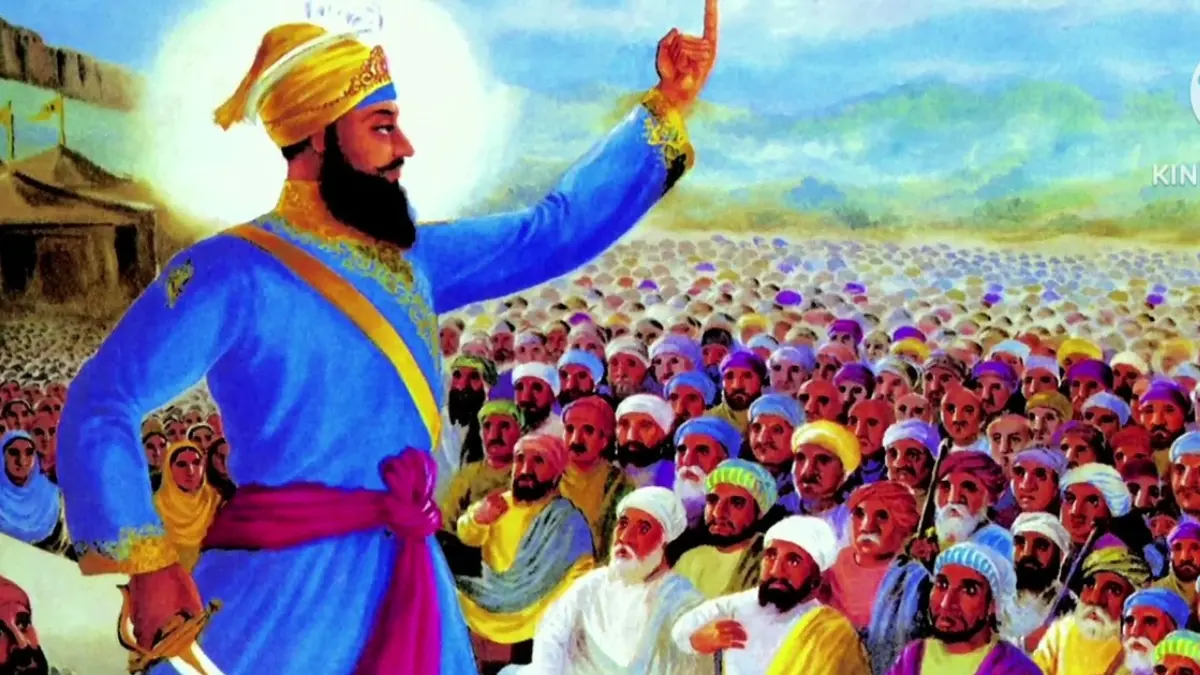
At the age of five, he began his education, learning Punjabi, Sanskrit, Persian, and Arabic. His early tutors included scholars such as Pandit Shiv Dutt and Qazi Pir Muhammad, who helped shape his intellectual and philosophical foundation. Even in his youth, Guru Gobind displayed exceptional courage and leadership qualities.
In 1670, his family moved to Anandpur Sahib (Punjab), a center that later became the cradle of Sikh faith and identity. Under his father’s guidance, Gobind Rai was trained in archery, horse riding, swordsmanship, and the art of warfare—skills that would later define his leadership.
Guru Gobind Singh’s formative years were marked by both spiritual growth and exposure to the harsh realities of Mughal persecution. These experiences prepared him for the great responsibilities he would soon shoulder as the Tenth Sikh Guru.
Guru Gobind Singh Guruship
Guru Gobind Ji became the Tenth Sikh Guru in 1675, at the tender age of nine, following the martyrdom of his father, Guru Tegh Bahadur Ji. His father had sacrificed his life to defend the religious freedom of Hindus who were being forced to convert under the Mughal Emperor Aurangzeb. This defining event deeply shaped young Gobind Rai’s resolve to stand against tyranny and injustice.
Upon assuming the Guruship, Guru Gobind Singh emphasized the importance of courage, equality, discipline, and faith in God. He inspired his followers to uphold righteousness (Dharma) and resist oppression through spiritual strength as well as martial preparedness.
At Anandpur Sahib, he continued his father’s mission and transformed it into a vibrant center of Sikh learning and defense. He strengthened the community by introducing the concept of Saint-Soldier (Sant-Sipahi) — a person who is spiritually devoted yet capable of defending justice with bravery.
Guru Gobind Singh’s leadership not only preserved Sikh values but also revitalized the spirit of unity and self-respect among his followers. His wisdom, resilience, and divine inspiration laid the foundation for the historic transformation that would occur with the creation of the Khalsa Panth in 1699.
Military Leadership of Guru Gobind Singh
Guru Gobind Singh Ji was not only a spiritual leader but also a brilliant military strategist who defended the Sikh community and Northern India against repeated Mughal aggression. He organized and led numerous battles to protect religious freedom, justice, and the safety of his people.
Some of the most notable battles under his leadership include the Battle of Bhangani (1688), Battle of Nadaun (1691), Battle of Anandpur (1700–1704), and Battle of Chamkaur (1704). These battles demonstrated his tactical brilliance, courage, and ability to inspire his followers to fight for righteousness against overwhelming odds.
Guru Gobind emphasized the concept of moral warfare — fighting not for personal gain but for justice, equality, and protection of the oppressed. His formation of the Khalsa in 1699 further strengthened the Sikh military force, instilling discipline, courage, and unity among his followers.
Through his military leadership, Guru Gobind Singh ensured that the Sikh community remained resilient against oppression, while also setting an enduring example of leadership, bravery, and sacrifice for future generations.
Literary Contributions of Guru Gobind Singh
Guru Gobind Singh Ji was a prolific writer, poet, and scholar whose literary works have had a lasting impact on Sikhism and Indian literature. He composed several religious texts, poems, and philosophical writings that emphasized devotion, courage, morality, and the importance of righteous action.
Some of his key literary contributions include:
- Jaap Sahib – A hymn praising the attributes of God, forming part of the daily Sikh prayer.
- Bachittar Natak – An autobiographical work detailing his life, struggles, and spiritual experiences.
- Akal Ustat – Hymns glorifying the eternal, formless God.
- Chandi di Var – Verses depicting the triumph of good over evil, inspired by Hindu mythology.
- Zafarnama – A powerful letter in Persian addressed to Mughal Emperor Aurangzeb, asserting moral authority and courage in adversity.
His writings reflect a blend of spirituality, philosophy, and heroism, encouraging Sikhs to uphold righteousness, remain fearless in the face of injustice, and live disciplined, principled lives. Guru Gobind Singh’s literary legacy continues to guide and inspire generations worldwide.
Legacy of Guru Gobind Singh
Guru Gobind Singh Ji’s legacy is one of courage, spiritual wisdom, and unwavering commitment to justice. As the tenth Sikh Guru, he not only strengthened the Sikh faith but also laid down principles that continue to inspire millions globally.
One of his most enduring contributions was the formation of the Khalsa Panth in 1699, which empowered Sikhs to uphold righteousness, defend the oppressed, and maintain moral and spiritual discipline. The Five Ks introduced by him — Kesh, Kangha, Kara, Kachera, and Kirpan — became symbols of Sikh identity, courage, and devotion.
Guru Gobind Singh’s teachings emphasized equality, freedom of belief, and service to humanity. His military leadership protected the Sikh community from persecution, while his literary contributions enriched Sikh scriptures and philosophy.
Temples, schools, and institutions across India and the world commemorate his life and teachings. His messages of bravery, faith, and justice continue to guide leaders, scholars, and Sikhs in maintaining resilience and moral strength in challenging times.
Guru Gobind Singh UPSC
Guru Gobind Singh Ji’s life and teachings are highly relevant for UPSC exams, especially in the context of Indian history, culture, and philosophy. Questions often focus on his role in Sikhism, military leadership, social reforms, and literary contributions.
Key points for UPSC preparation include:
- Birth and Early Life: Born on 22 December 1666 in Patna Sahib, Bihar.
- Guruship: Became the tenth Sikh Guru in 1675 at age nine.
- Formation of Khalsa: Established the Khalsa Panth in 1699, emphasizing discipline, courage, and equality.
- Military Leadership: Led battles like Bhangani, Nadaun, Anandpur, and Chamkaur against Mughal forces.
- Literary Contributions: Authored Jaap Sahib, Zafarnama, Bachittar Natak, Akal Ustat, Chandi di Var.
- Legacy: Promoted equality, justice, and devotion; Khalsa principles continue to shape Sikh identity.
Understanding these aspects helps UPSC aspirants answer questions related to freedom movements, religious reforms, and cultural heritage. Guru Gobind Singh’s life exemplifies bravery, spirituality, and leadership, making him a significant figure in Indian history and ethics.
Must-Read Related Articles
Lala Lajpat Rai Biography, Legacy & Influence
Dr. Raju Narayana Swamy: IAS Officer, Anti-Corruption Crusader and Author
Dadabhai Naoroji (1825–1917): The Grand Old Man of India
Chandra Shekhar Azad Biography, Freedom Struggle & Legacy
FAQs About Guru Gobind Singh
1. When is Guru Gobind Singh Jayanti celebrated in 2025?
Guru Gobind Singh Jayanti 2025 will be observed according to the Nanakshahi calendar, typically falling in January or December, depending on lunar calculations.
2. Who was Guru Gobind Singh?
Guru Gobind Singh Ji was the tenth Sikh Guru, a spiritual leader, warrior, poet, and founder of the Khalsa Panth.
3. What is the significance of Guru Gobind Singh Jayanti?
The day commemorates the birth of Guru Gobind Singh, celebrating his teachings, leadership, and contributions to Sikhism and Indian society.
4. Where was Guru Gobind Singh born?
He was born on 22 December 1666 in Patna Sahib, Bihar.
5. What is Khalsa Panth?
The Khalsa Panth, founded by Guru Gobind Singh in 1699, is a community of initiated Sikhs committed to discipline, courage, and spiritual devotion.
6. What were Guru Gobind Singh’s major battles?
Notable battles include Bhangani, Nadaun, Anandpur, and Chamkaur, demonstrating his military strategy and valor.
7. What are the Five Ks introduced by Guru Gobind Singh?
The Five Ks are Kesh (uncut hair), Kangha (comb), Kara (bracelet), Kachera (underwear), and Kirpan (sword), symbolizing Sikh identity and values.
8. What literary works did Guru Gobind Singh write?
His major works include Jaap Sahib, Bachittar Natak, Akal Ustat, Chandi di Var, and Zafarnama.
9. How did Guru Gobind Singh contribute to Sikhism?
He strengthened Sikhism through spiritual teachings, martial organization, social reforms, and literary contributions.
10. Why is Guru Gobind Singh remembered today?
He is remembered for his bravery, leadership, moral teachings, and the establishment of Khalsa, which continue to inspire Sikhs and others worldwide.