


India Belgium MoUs

India Belgium MoUs signed in New Delhi on 2 and 3 September 2026 have expanded cooperation between the two countries across several important areas. India and Belgium signed multiple Memoranda of Understanding (MoUs) during bilateral discussions involving Prime Minister Narendra Modi and Belgian Prime Minister Bart De Wever. The agreements cover renewable energy, defence industries, migration and mobility, semiconductors, and critical minerals.
The new agreements come at a time when India and European countries are increasing cooperation in clean energy, advanced technology, defence manufacturing and supply-chain security. The partnership with Belgium is expected to create opportunities for technology sharing, industrial investment and closer cooperation between companies and institutions from both countries.

India Belgium MoUs Strengthen Renewable Energy Cooperation
One of the major areas covered by the India Belgium MoUs is renewable energy. The two countries renewed their agreement on cooperation in the renewable energy sector. The framework includes areas such as green hydrogen, solar power, energy storage, offshore wind energy and pumped storage plants.
Green hydrogen is becoming an important part of India’s clean-energy strategy because it can be used in industries and transport while reducing dependence on fossil fuels. Belgium also has an interest in clean energy technologies as European countries work to reduce carbon emissions and develop more secure energy systems.
Energy storage is another important area of cooperation. Renewable sources such as solar and wind do not produce electricity continuously. Battery systems and pumped storage projects can help store energy and provide electricity when demand is high.
Bilateral Trade Target Gets a New Push
India and Belgium have also set a joint objective to double bilateral trade volume over the next five years. Bilateral trade includes the exchange of goods and services between the two countries.
Belgium is an important European trading partner for India, with economic links covering areas such as chemicals, pharmaceuticals, diamonds, machinery, technology and industrial products. A larger trade relationship could encourage more business partnerships and investment.
The trade target also fits into India’s broader effort to strengthen economic relations with European markets and diversify international supply chains.
Defence Cooperation and Indian Manufacturing
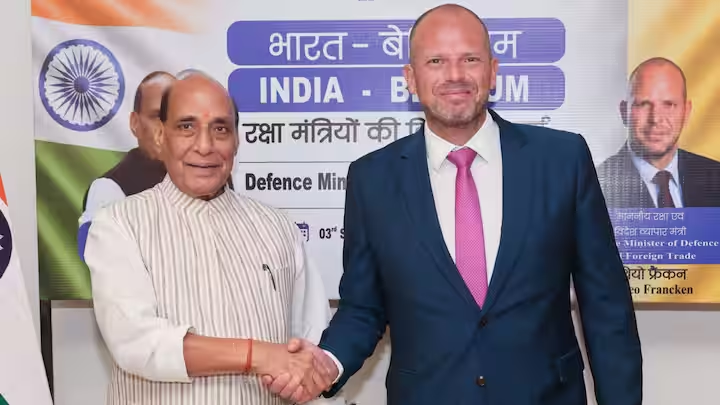
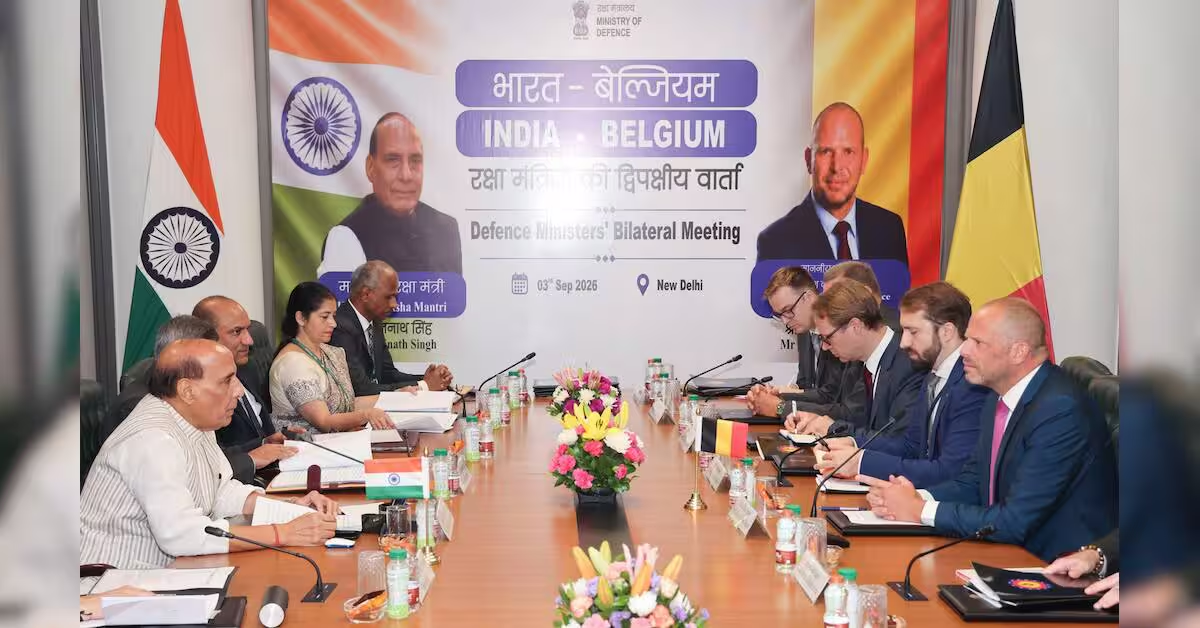
Defence is another key part of the new partnership. Indian Defence Minister Rajnath Singh and Belgian Minister of Defence and Foreign Trade Theo Francken signed defence-industrial agreements and contracts in New Delhi on 2 September.
The cooperation aims to combine Belgian technology with India’s manufacturing capabilities. One of the projects mentioned in the partnership is connected with the Zorawar light tank.
The Zorawar is an Indian light tank project designed for operations in difficult and high-altitude terrain. Cooperation involving foreign technology and Indian manufacturing can support the development of advanced defence equipment while strengthening domestic production capabilities.
India and Belgium also agreed to expand military exchanges and training programmes. Such cooperation can include professional interaction, training activities and sharing of experience between the armed forces of the two countries.
Belgian Frigate to Visit India
The two sides also welcomed the planned visit of the Belgian Navy’s frigate LEOPOLD I to India from 5 to 8 November 2026.
Naval visits are an important part of defence diplomacy. They provide opportunities for military personnel to interact, conduct professional exchanges and understand each other’s operational practices.
The planned visit also adds a maritime dimension to the growing India-Belgium defence relationship.
Migration and Mobility Partnership
Another important development is the planned Migration and Mobility Partnership Agreement between India and Belgium. The two countries said they would soon sign the agreement.
Migration and mobility partnerships can provide a framework for the movement of professionals, students, researchers and other skilled people between countries. They can also help create clearer procedures for legal mobility while addressing issues related to migration management.
For India, stronger mobility links with European countries can support students, skilled workers and researchers seeking international education and professional opportunities.
Cooperation in Semiconductor Technology
Semiconductors have become a major focus of global economic and strategic policy. India is developing its semiconductor manufacturing and design ecosystem, while Belgium has advanced research capabilities in semiconductor technology.
Under the latest partnership, India and Belgium agreed to explore the integration of Belgium’s IMEC Institute with India’s semiconductor ecosystem.
IMEC is a leading international research and development organisation in semiconductor and nanoelectronics technology. Greater cooperation between Belgian research institutions and Indian companies or research centres could support innovation in chip design, manufacturing technologies and advanced electronics.
The semiconductor sector is important not only for mobile phones and computers but also for electric vehicles, telecommunications, defence systems, artificial intelligence and modern industrial equipment.
Critical Minerals Become a Shared Priority
The India Belgium MoUs also include cooperation on critical minerals processing and recycling. Critical minerals are raw materials that are important for modern technologies and strategic industries but may face supply risks.
These minerals are used in batteries, renewable energy equipment, electric vehicles, electronics and defence systems. As countries move towards cleaner energy and advanced technologies, demand for several critical minerals is increasing.
India and Belgium plan to explore cooperation in processing and recycling these resources. Recycling can reduce waste and help recover valuable materials from used electronic products, batteries and industrial equipment.
Such cooperation is also linked to the wider global effort to create reliable and diversified supply chains for critical raw materials.
Belgium Prime Minister’s India Visit
Belgian Prime Minister Bart De Wever’s visit has added momentum to bilateral relations. His three-day visit was described as the first official visit by a Belgian Prime Minister to India in two decades.
The bilateral discussions took place in New Delhi, including talks at Hyderabad House. The meetings focused on expanding cooperation across economic, technological, defence and energy sectors.
The relationship between India and Belgium has developed over several decades through trade, investment, technology, education and diplomatic engagement. The latest agreements broaden that relationship into newer areas that are important to both countries.
Focus on Technology, Energy and Strategic Industries
The latest India Belgium MoUs show how bilateral relations are moving beyond traditional trade. Renewable energy, semiconductors and critical minerals are now central to economic security and future industrial growth.
For India, partnerships in these areas can support domestic manufacturing, technology development and clean-energy goals. For Belgium, cooperation with India’s large market and growing industrial base can create opportunities for investment and technological partnerships.
The agreements also reflect a wider change in international cooperation. Countries are increasingly working together to secure technology, energy resources, skilled workers and critical supply chains.
With planned defence cooperation, a naval visit, semiconductor research links, clean-energy projects and a future migration agreement, India and Belgium are set to deepen their partnership across several strategic sectors.