


Important Constitutional Provisions Related to Assam: Complete Notes for APSC, UPSC & Assam Exams

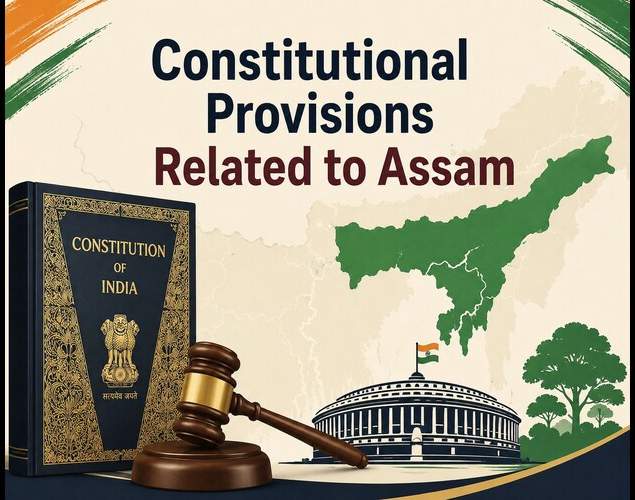
If you are preparing for APSC, UPSC, Assam Police, ADRE, Grade III & IV, Assam TET, or other competitive exams, understanding Important Constitutional Provisions Related to Assam is very important. The Constitution of India provides several special provisions for Assam because of its unique history, tribal communities, language, and cultural diversity.
What are Constitutional Provisions?
Constitutional provisions are the rules and laws written in the Constitution of India. They help in governing the country and protect the rights of people.

Some special provisions have been made only for certain states, including Assam, to protect their culture, traditions, and administrative needs.
Why Does Assam Have Special Constitutional Provisions?
Assam is different from many other Indian states because:
- It has many tribal communities.
- It is home to hundreds of languages and dialects.
- It shares international borders with Bangladesh and Bhutan.
- It has a unique cultural identity.
- It has several autonomous tribal areas.
Because of these reasons, the Constitution provides special arrangements for Assam.
Article 244 – Administration of Tribal Areas
One of the most important constitutional provisions related to Assam is Article 244.
It deals with the administration of tribal areas under the Sixth Schedule.
Main Features
- Protects tribal culture and traditions.
- Gives self-governance to tribal areas.
- Allows tribal councils to make laws on local matters.
- Protects land rights of tribal people.
Sixth Schedule of the Constitution
The Sixth Schedule provides autonomous administration for certain tribal areas in Northeast India.
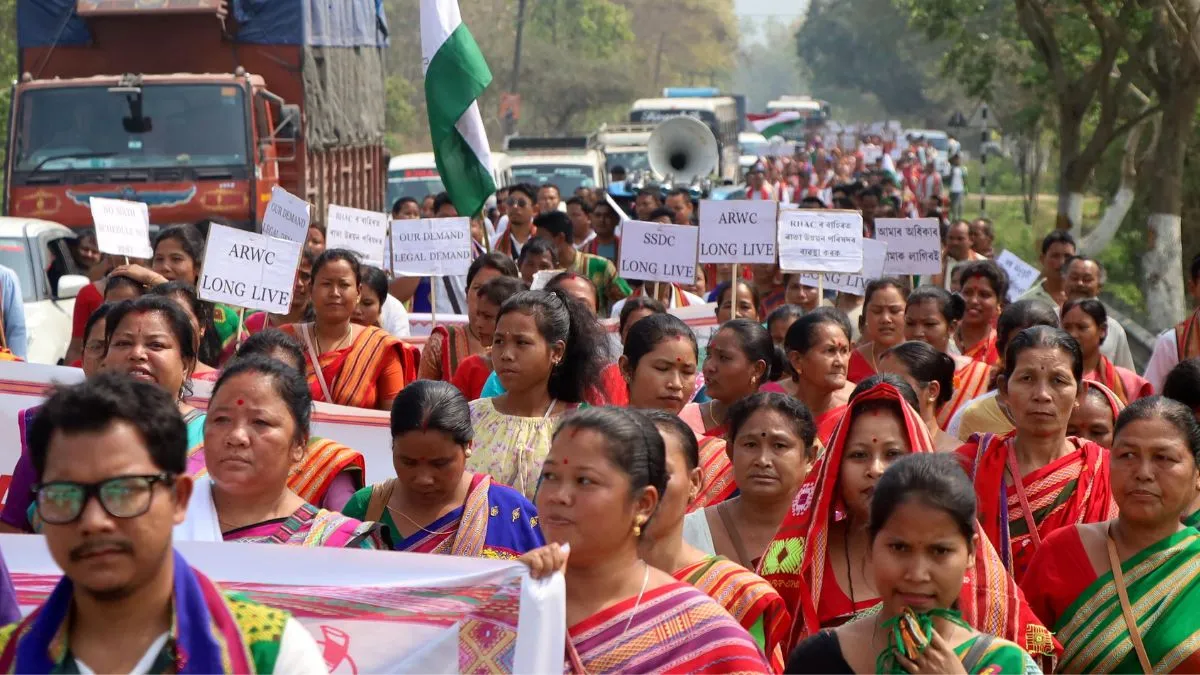
Assam has several Autonomous District Councils (ADCs).
Major Autonomous Councils in Assam
- Bodoland Territorial Region (BTR)
- Karbi Anglong Autonomous Council (KAAC)
- Dima Hasao Autonomous Council (DHAC)
Powers of these Councils
- Make laws on land.
- Manage forests.
- Control local markets.
- Promote education.
- Preserve tribal customs.
- Collect certain local taxes.
Article 275 – Grants for Tribal Areas
Article 275 allows the Central Government to provide financial assistance to tribal areas.
Purpose
- Improve education
- Build roads
- Healthcare
- Tribal welfare
- Infrastructure development
This helps in the development of backward tribal regions.
Article 371B – Special Provision for Assam
Article 371B gives a special constitutional arrangement for Assam.
It allows the President of India to create a committee in the Assam Legislative Assembly consisting of members elected from tribal areas.
Purpose
- Protect tribal interests.
- Ensure tribal representation in law-making.
- Address issues related to autonomous districts.
This article is frequently asked in APSC examinations.
Sixth Schedule vs Fifth Schedule
| Sixth Schedule | Fifth Schedule |
|---|---|
| Applies mainly to Northeast India | Applies to other tribal areas of India |
| Autonomous District Councils are created | Tribal Advisory Councils are formed |
| Councils have legislative powers | Mostly advisory powers |
| Greater local self-governance | Limited self-governance |
Autonomous District Councils in Assam
Bodoland Territorial Region (BTR)
The BTR governs areas with a large Bodo population.
It works for:
- Education
- Agriculture
- Local administration
- Tribal welfare
- Rural development
Karbi Anglong Autonomous Council (KAAC)
The KAAC administers Karbi Anglong district.
Its responsibilities include:
Dima Hasao Autonomous Council (DHAC)
DHAC governs Dima Hasao district.
It protects the interests of tribal communities living in the hill district.
Article 350A – Education in Mother Tongue
Article 350A directs states to provide facilities for instruction in the mother tongue at the primary stage.
This is important for Assam because many different languages are spoken, such as:
- Assamese
- Bodo
- Bengali
- Karbi
- Mishing
- Dimasa
- Rabha
- Tiwa
This article helps preserve linguistic diversity.
Article 350B – Special Officer for Linguistic Minorities
Article 350B provides for a Special Officer to protect the rights of linguistic minorities.
The officer reports to the President of India regarding the protection of language rights.
Article 29 – Protection of Culture
Article 29 protects the culture, language, and script of different communities.
For Assam, this article is important because many ethnic groups live in the state.
It helps preserve:
- Traditional customs
- Indigenous languages
- Cultural heritage
Article 30 – Minority Educational Institutions
Article 30 gives minorities the right to establish and manage educational institutions of their choice.
This ensures that minority communities in Assam can preserve their language and culture through education.
Panchayati Raj and Tribal Areas
The normal Panchayati Raj system does not fully apply in Sixth Schedule areas.
Instead, Autonomous District Councils perform many local government functions.
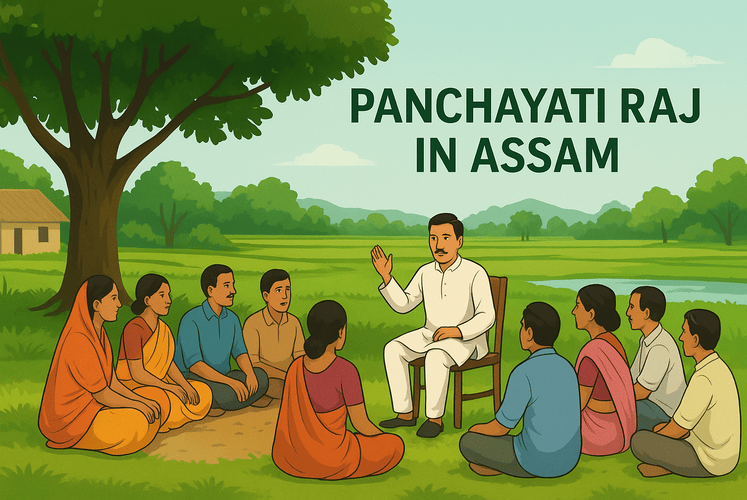
This system helps tribal communities manage their own affairs according to traditional customs.
Important Constitutional Bodies Related to Assam
Some constitutional institutions play an important role in Assam:
- Election Commission of India
- Finance Commission
- National Commission for Scheduled Tribes (NCST)
- Governor of Assam
- President of India
The Governor has special responsibilities regarding Sixth Schedule areas.
Quick Revision Table
| Article / Provision | Purpose |
|---|---|
| Article 244 | Administration of Tribal Areas |
| Sixth Schedule | Autonomous District Councils |
| Article 275 | Central grants for tribal development |
| Article 371B | Special committee for tribal areas in Assam Assembly |
| Article 29 | Protection of culture and language |
| Article 30 | Minority educational institutions |
| Article 350A | Education in mother tongue |
| Article 350B | Protection of linguistic minorities |
Important Exam Facts
- Assam is covered under the Sixth Schedule of the Constitution.
- The Governor of Assam has special powers regarding autonomous districts.
- Article 371B is a special constitutional provision made only for Assam.
- The Sixth Schedule provides greater autonomy than the Fifth Schedule.
- Autonomous District Councils can make laws on land, forests, customs, and local administration.
- Article 275 provides financial assistance for tribal development.
- Mother tongue education is protected under Article 350A.
Conclusion
Understanding the Important Constitutional Provisions Related to Assam is essential for every student preparing for Assam government examinations. Articles like 244, 275, 371B, 29, 30, 350A, and 350B, along with the Sixth Schedule, play a major role in protecting Assam’s tribal communities, languages, and unique cultural identity.
Learning these constitutional provisions will not only help you score well in competitive exams but also improve your understanding of Assam’s governance and constitutional framework.
FAQs
1. Which Article gives a special constitutional provision for Assam?
Article 371B provides a special constitutional provision for Assam by allowing a committee of tribal area representatives in the Assam Legislative Assembly.
2. Which Schedule of the Constitution applies to tribal areas in Assam?
The Sixth Schedule applies to notified tribal areas in Assam and provides Autonomous District Councils with self-governing powers.
3. Which Article deals with the administration of tribal areas in Assam?
Article 244 deals with the administration of tribal areas through the Sixth Schedule.
4. How many major Autonomous District Councils are there in Assam?
The three major Autonomous District Councils are:
- Bodoland Territorial Region (BTR)
- Karbi Anglong Autonomous Council (KAAC)
- Dima Hasao Autonomous Council (DHAC)
5. Why is Article 371B important for APSC exams?
Article 371B is frequently asked in APSC and other Assam competitive exams because it specifically relates to Assam’s legislative arrangements for tribal areas.