Australia Red Sky Dust Storm: Rare Crimson Skies Shock Western Australia

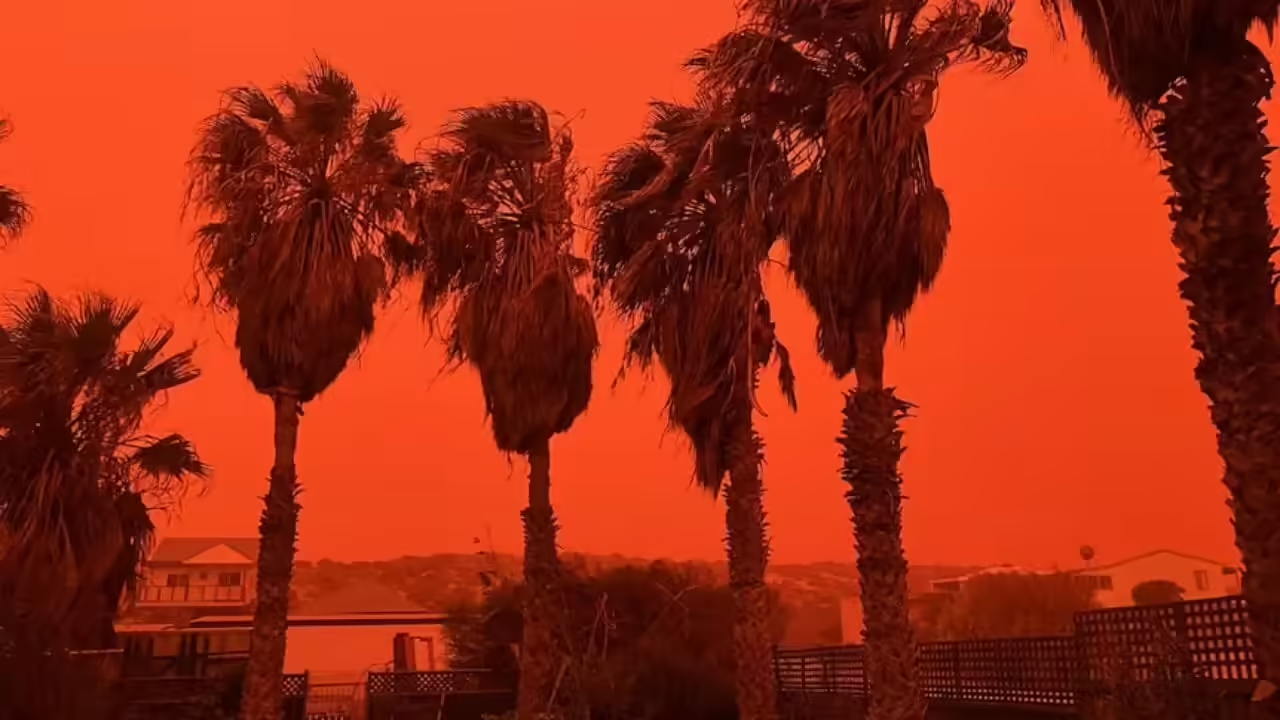
Australia Red Sky Dust Storm created a dramatic scene in parts of Western Australia as a powerful dust storm swept across the region ahead of Tropical Cyclone Narelle. Areas like Shark Bay and Denham witnessed eerie red skies, turning daylight into a deep crimson shade. The rare event quickly gained global attention due to its striking and unusual appearance.
Thank you for reading this post, don't forget to subscribe!Cause Behind Australia Red Sky Dust Storm
The Australia Red Sky Dust Storm was triggered by strong winds linked to Cyclone Narelle. These winds lifted iron-rich red soil high into the atmosphere. The fine dust particles scattered blue light and allowed red wavelengths to dominate, creating the intense red glow. This natural optical effect gave the sky an almost “apocalyptic” look while sharply reducing visibility.
Impact on Western Australia Regions
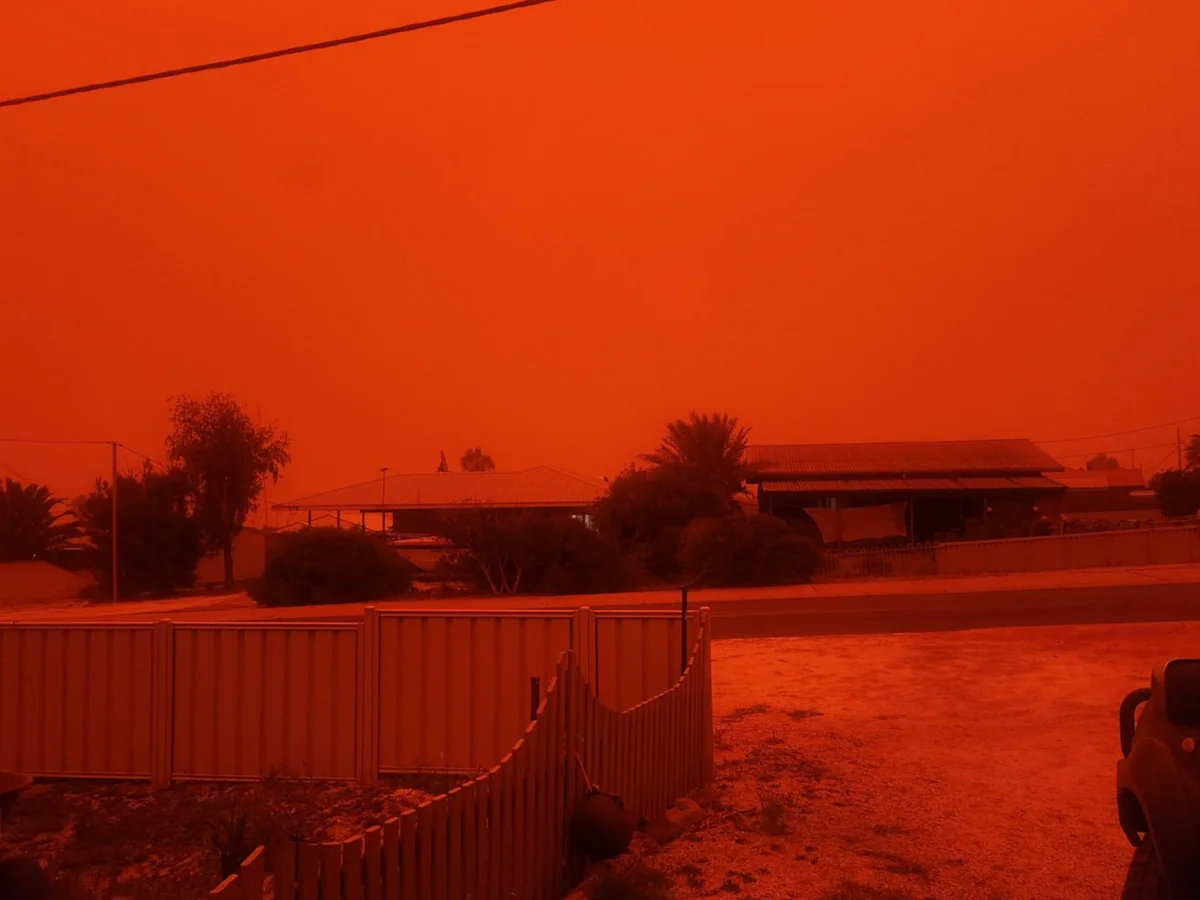
The Gascoyne region faced the most severe impact, especially around Shark Bay. Other coastal areas like Exmouth and Karratha were also affected. Residents experienced near-zero visibility, thick dust-filled air, and sudden darkness during the day. The situation disrupted daily life and raised safety concerns as the cyclone approached.
About Tropical Cyclone Narelle
Tropical Cyclone Narelle has been described as a rare and long-lasting system. It first made landfall in Queensland, moved across the Northern Territory, and later strengthened over the Indian Ocean before reaching Western Australia. The cyclone reached Category 4 intensity with wind speeds above 200 km/h, causing damage in coastal towns before weakening to Category 3.
Scientific and Environmental Significance
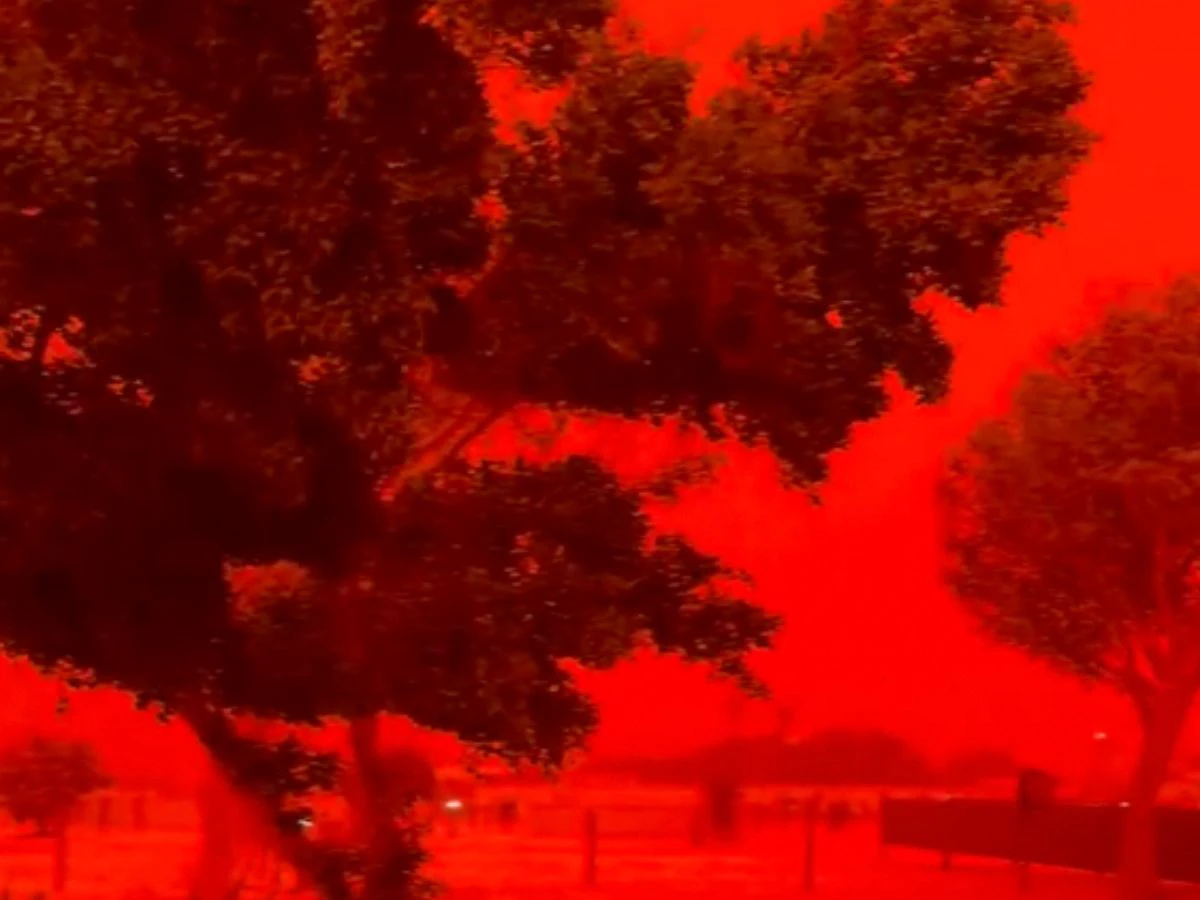
Experts explain that such red sky events happen when dust particles in the air scatter sunlight. Iron-rich soil plays a major role in producing red or orange skies. While the intensity of this event was rare, similar phenomena have been seen in other parts of the world during strong dust storms. Dry land, loose soil, and powerful winds increase the chances of such dramatic atmospheric changes. Authorities are closely monitoring the cyclone as dangerous weather conditions continue.