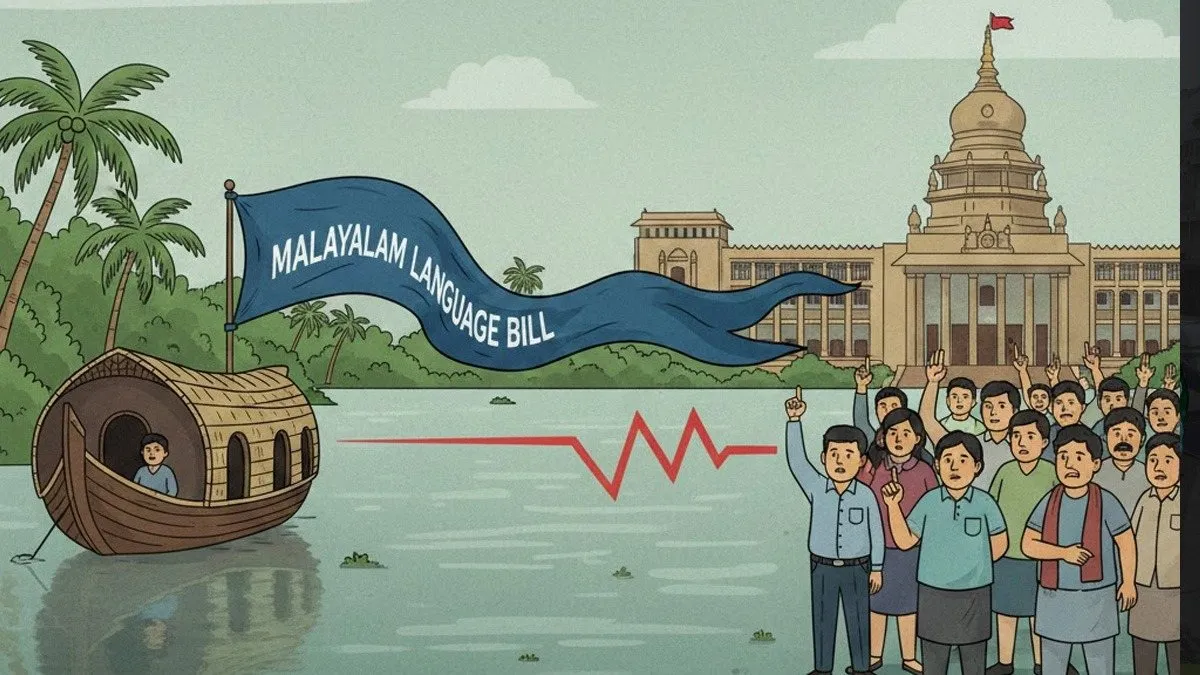
Kerala Malayalam Language Bill 2025: State Assertion, Minority Concerns, and Federal Questions

Kerala Malayalam Language Bill 2025 has emerged as a major political and cultural development, going beyond State boundaries and reopening long-standing debates on language, rights, and federal balance in India. Passed by the Kerala Legislative Assembly in early October, the Bill is presented by the State government as a necessary step to strengthen Malayalam in public life. At the same time, it has drawn sharp objections from neighbouring Karnataka, which fears that the law could affect Kannada-speaking minorities living in Kerala’s border areas.
Thank you for reading this post, don't forget to subscribe!The unfolding debate shows how language policy, even when rooted in cultural preservation, can quickly turn into an inter-State issue involving constitutional interpretation and minority safeguards.
What the Kerala Malayalam Language Bill 2025 aims to do
The Kerala Malayalam Language Bill 2025 seeks to formally establish Malayalam as the primary official language of the State and expand its use across governance, education, law, technology, and public communication. While Malayalam already holds an important place in administration, the Bill moves one step further by making it central to almost all official functions.
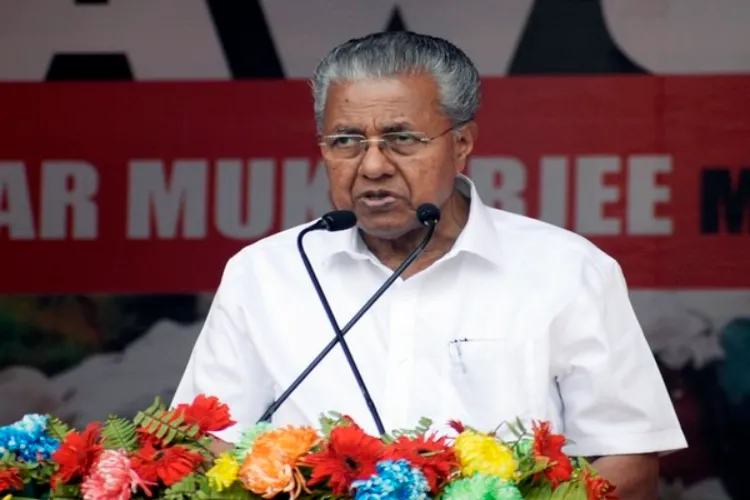
Under the Bill, Malayalam will become the compulsory first language in all government and aided schools up to Class 10. Legislative work will also see a change, as all Bills and Ordinances are to be introduced in Malayalam. In the judicial sphere, court judgments and proceedings will be translated into Malayalam in a phased and systematic manner.
The Bill also proposes institutional changes. The existing Personnel and Administrative Reforms (Official Language) Department will be renamed as the Malayalam Language Development Department. Along with this, a dedicated Malayalam Language Development Directorate will be set up to oversee implementation and growth initiatives.
Recognising the role of technology, the Bill places responsibility on the Information Technology Department to create open-source software, digital tools, and platforms that support Malayalam usage in the digital space. The government views this as essential for ensuring the language remains relevant in an increasingly online world.
Why the State government considers the law important
The Kerala government argues that the Bill corrects a long-standing imbalance where English continues to dominate official communication, even in a State with high literacy and a strong literary tradition. According to the government, language is not only a medium of communication but also a key part of cultural identity and democratic participation.
This is not the first time Kerala has tried to legislate on this issue. In 2015, the State Assembly passed the Malayalam Language (Dissemination and Enrichment) Bill. However, that law never came into force as it was reserved for the President’s consideration and did not receive approval. The Centre had raised objections, pointing to conflicts with national laws on official languages, education policy, and minority protections.
Learning from that experience, the 2025 Bill has been drafted with what the State says are stronger constitutional safeguards. The government maintains that the new law aligns with Articles 346 and 347 of the Constitution, which allow States to decide their official language while also making special arrangements for linguistic minorities.
Karnataka’s objections and the Kasaragod issue
The strongest opposition to the Kerala Malayalam Language Bill 2025 has come from Karnataka. The Karnataka government has warned that the Bill could weaken the rights of Kannada-speaking communities, especially in Kasaragod district, which shares a border with Karnataka and has a significant Kannada-speaking population.
Karnataka’s main concern lies with the provision that makes Malayalam the compulsory first language in schools. It argues that this could disturb existing arrangements that allow minority students to study Kannada as their first language. Officials from Karnataka have pointed out that the number of Kannada-medium schools in Kasaragod has already declined in recent years, raising fears of further erosion.
A delegation from the Karnataka Border Area Development Authority has formally submitted a memorandum to the Kerala Governor, requesting that assent to the Bill be withheld. Karnataka leaders have described the Bill as unconstitutional and harmful to minority language rights.
Kerala’s assurance on minority language protection
In response, the Kerala government has firmly rejected claims that the Bill sidelines linguistic minorities. State leaders have stressed that the law contains explicit provisions to protect speakers of Kannada, Tamil, Tulu, Konkani, and other languages.
A key feature highlighted by the government is Clause 7 of the Bill, which includes a non-obstante provision for linguistic minorities. This clause allows minority communities to use their mother tongue for communication with the State Secretariat, heads of departments, and local government offices in areas where they live.
The Chief Minister and the Law Minister have both stated that the Bill does not prevent minority-language education where it already exists. According to them, fears about forced language replacement are based on misunderstanding rather than the actual text of the law.
Possible next steps and rising federal tension
Despite Kerala’s assurances, Karnataka has indicated that it may pursue further action if its concerns are not addressed. State leaders have said they are prepared to approach the President and explore other constitutional options.
One demand raised by Karnataka is the introduction of explicit exemptions for Kannada-speaking areas within Kerala. Such a move would create formal territorial exceptions, which Kerala has so far resisted, arguing that it could weaken the State’s overall language policy.
The dispute has now moved beyond administrative debate and entered the political and constitutional arena. The Governor’s decision on whether to grant assent, return the Bill, or reserve it for the President will be closely watched.

What this debate means for language and federalism
The controversy surrounding the Kerala Malayalam Language Bill 2025 highlights a familiar challenge in India’s multilingual system. States have the right to promote and preserve their languages, but they also carry a constitutional responsibility to protect linguistic minorities.
How this balance is maintained will shape future language policies across the country. The outcome of this Bill, whether through assent, amendment, or legal scrutiny, may serve as a reference point for other States considering similar steps.
For Kerala, the Bill represents an effort to strengthen Malayalam in public life. For Karnataka, it raises concerns about minority security. For India as a whole, it brings back a crucial question: how to celebrate linguistic identity while ensuring that diversity within diversity remains protected.