NDB Vice President Rajiv Ranjan: India Strengthens Global Role in Development Finance

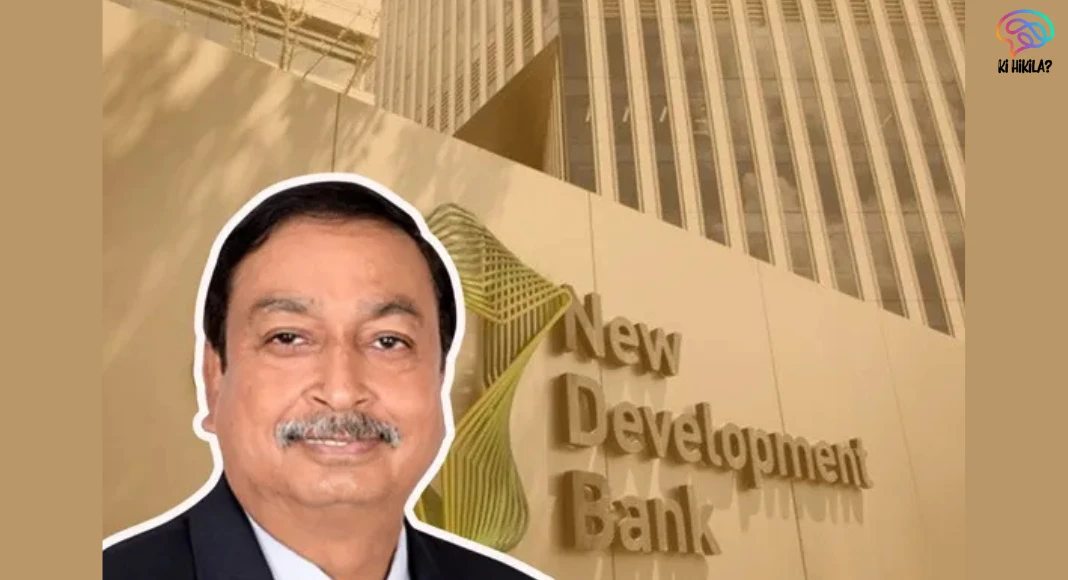
The NDB Vice President Rajiv Ranjan appointment has emerged as a significant milestone for India’s growing role in global development finance. The New Development Bank (NDB), established by the BRICS nations—Brazil, Russia, India, China, and South Africa—announced Dr. Rajiv Ranjan’s selection as its vice president and chief risk officer. This marks an important recognition of India’s leadership in multilateral financial institutions and highlights the country’s influence in shaping international economic policy.
Thank you for reading this post, don't forget to subscribe!Appointment and Background of NDB Vice President Rajiv Ranjan
Dr Rajiv Ranjan is a veteran economist with more than three decades of experience in central banking and global finance. He began his career at the Reserve Bank of India (RBI) in 1989 and has steadily risen through the ranks. Most recently, he served as an Executive Director at the RBI and was also a member of the Monetary Policy Committee (MPC) since May 2022.
His expertise spans monetary policy formulation, liquidity management, risk assessment, and financial market development. Over the years, Dr Ranjan has represented India at major international financial platforms such as the G20, IMF, World Bank, OECD, SAARC, and the Bank for International Settlements (BIS). His new role at the NDB is expected to bring technical depth and strategic direction to the institution, particularly in strengthening its risk management and lending practices.
India’s Growing Role in the New Development Bank
India holds the second-largest project portfolio within the NDB, valued at around $7.5 billion, just behind China’s $8.1 billion portfolio. The bank has financed several flagship infrastructure projects in India, ranging from metro rail networks and digital infrastructure to water resource management, clean energy systems, and environmental protection initiatives.
These projects align with the NDB’s broader commitment to the United Nations Sustainable Development Goals (SDGs), particularly in promoting green growth, expanding access to public services, and supporting climate resilience. With Dr Ranjan’s appointment, India is well-positioned to ensure that its domestic priorities—such as renewable energy adoption, smart cities, and inclusive development—find strong backing in the bank’s future financing agenda.
Push for Reforms in Multilateral Development Finance
India has consistently advocated for reforms in multilateral development institutions to make them more inclusive and equitable. The Indian government, through leaders like Union Finance Minister Nirmala Sitharaman, has urged the NDB and other global banks to adopt lending practices that meet the unique needs of emerging economies in the Global South.
The key focus of India’s reform agenda is unlocking private capital for sustainable projects. Traditional financing has often fallen short in addressing the infrastructure deficits of developing nations. With India’s growing influence in institutions like the NDB, the global community is witnessing a shift toward a more balanced and equitable approach to development financing. Dr Ranjan’s expertise in risk management will be crucial in shaping strategies that attract private investors while maintaining financial stability.
NDB Vice President Rajiv Ranjan on India’s Trade Challenges
While India celebrates the appointment of Dr Ranjan to the NDB, the country continues to face challenges in its trade environment. Recent US tariffs—raised up to 50 percent on select Indian goods—pose hurdles for exporters. However, experts believe the overall impact will be contained due to the diversified nature of India’s export basket.
At the same time, India is actively negotiating trade agreements with key partners such as the United Kingdom, the European Union, and New Zealand. These trade diversification efforts are designed to reduce dependency on single markets and to safeguard India’s long-term export growth. The government is confident that such measures, combined with the NDB’s support for domestic infrastructure and industrial development, will sustain India’s resilience against external shocks.
Economic Outlook and Investor Confidence
India’s economic outlook remains positive, bolstered by a recent sovereign rating upgrade from Standard & Poor’s. The upgrade reflects confidence in India’s fiscal reforms, tax simplification, and improved regulatory framework. Lower borrowing costs, enhanced foreign investment flows, and robust domestic demand are expected to drive growth.
The appointment of NDB Vice President Rajiv Ranjan adds another layer of credibility to India’s global standing. His leadership is anticipated to guide the NDB in channeling resources efficiently toward impactful projects, while also ensuring financial prudence. For India, this appointment represents not only recognition of its talent but also a platform to shape policies that can redefine global development finance.
Conclusion: NDB Vice President Rajiv Ranjan’s Impact
The appointment of Dr Rajiv Ranjan as NDB Vice President marks a new chapter in India’s engagement with multilateral institutions. With his vast experience in central banking and international finance, Dr Ranjan is expected to strengthen the NDB’s governance and risk management while advancing its development mission.
For India, this is more than just an individual achievement—it is a reaffirmation of the country’s growing influence in global finance. Coupled with its push for reform in multilateral lending practices and its resilient economic outlook, India is firmly establishing itself as a key voice in shaping the future of sustainable global development.