




Ethics in Buddhism and Jainism

Ethics in Buddhism and Jainism teaches people how to live a good, peaceful, and meaningful life. Both religions focus on moral values, self-control, truth, non-violence, and spiritual growth. Their ethical teachings help people avoid harmful actions and encourage kindness, honesty, and wisdom. Though Buddhism and Jainism are different religions, both give great importance to morality and right conduct.
Thank you for reading this post, don't forget to subscribe!Ethics in Buddhism
Buddhist ethics is based on natural laws, not on rules created by humans for convenience. In Buddhism, morality does not depend on changing social customs or traditions. Instead, it is based on universal truths that remain constant.
Buddhism teaches that every action has a result. Good actions bring happiness, while bad actions bring suffering. The quality of an action is judged mainly by the intention behind it.
Morality in Buddhism
In Buddhism, actions are considered good or bad based on the thoughts and intentions that cause them.
If an action comes from greed, hatred, anger, jealousy, or selfishness, it is considered bad. These actions are called Akusala Kamma, which means unwholesome actions.

Examples include:
- Stealing because of greed
- Hurting someone out of anger
- Lying for selfish benefit
Such actions create suffering for both the person and others.
On the other hand, actions that come from generosity, love, kindness, and wisdom are considered good. These are called Kusala Kamma, meaning wholesome actions.
Examples include:
- Helping people in need
- Speaking kindly
- Sharing resources with others
These actions bring peace and happiness.
Three Essentials for Life in Buddhism
Buddhism teaches three important qualities needed for a meaningful life:
1. Wisdom (Prajna)
Wisdom means understanding life clearly. A wise person sees truth and understands what is right and wrong.
Wisdom develops through:
- Right understanding
- Right thinking
- Learning from experience
When people gain wisdom, they make better choices.
2. Ethical Conduct (Sila)
Ethical conduct means behaving in a moral and disciplined way.
This includes:
- Right speech
- Right action
- Right livelihood
- Right effort
A person should avoid harming others through words or actions.
Examples of ethical conduct:
- Speaking truthfully
- Being respectful
- Earning honestly
- Avoiding harmful behavior
Good conduct creates trust and harmony in society.
3. Concentration (Samadhi)
Concentration means training the mind to stay calm and focused.
A concentrated mind helps a person:
- Stay mindful
- Control emotions
- Think clearly
- Avoid distractions
Meditation is one way Buddhists improve concentration.
When wisdom, ethical conduct, and concentration become part of daily life, a person moves closer to enlightenment, which is the highest spiritual goal in Buddhism.
Pancasila (Five Precepts)
Buddhism encourages followers to follow five important moral rules known as Pancasila. These are voluntary rules that help people live peacefully in society.
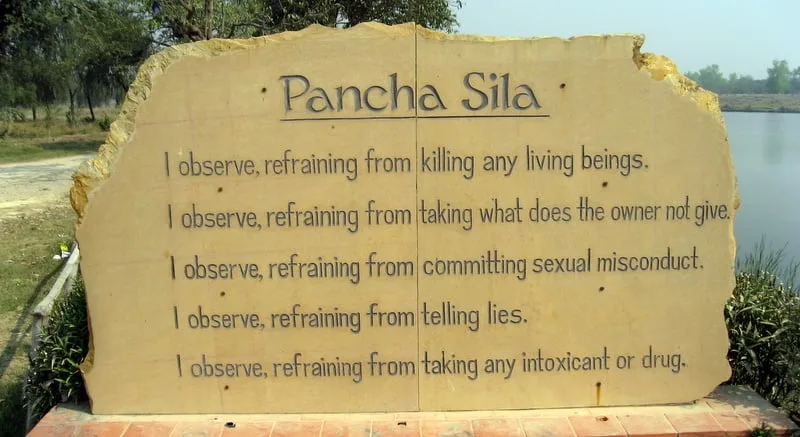
The five precepts are:
1. No Killing
A person should not kill any living being. This promotes compassion and respect for life.
2. No Stealing
One should not take what belongs to others without permission.
3. No Lying
Speaking truth builds trust. False speech harms relationships.
4. No Sexual Misconduct
People should behave responsibly and respectfully in relationships.
5. No Intoxicants
A person should avoid alcohol and harmful substances because they affect judgment and self-control.
Following these five rules helps a person live with peace, discipline, and respect.
Ten Demeritorious Deeds
Buddhism also warns against ten harmful actions that cause suffering. These actions come from greed, hatred, and ignorance.
They are divided into three groups.
Actions of the Body
These are harmful physical actions:
- Killing living beings
- Stealing
- Sexual misconduct
These actions directly harm others.
Verbal Actions
These are harmful actions done through speech:
- Lying
- Slandering others
- Harsh speech
- Meaningless talk
Words have power. Wrong speech can damage relationships and cause pain.
Actions of the Mind
These harmful actions begin in thoughts:
- Covetousness (desiring others’ possessions)
- Ill-will (wishing harm to others)
- Wrong views
Buddhism teaches that controlling thoughts is as important as controlling actions.
Ethics in Jainism
Jainism gives strong importance to self-discipline, non-violence, and spiritual purity. Jain ethics helps a person reduce attachment and move toward Moksha, or liberation from the cycle of birth and death.
Jainism teaches a threefold path called Triratna, or the Three Jewels.
Triratna (Three Jewels)
1. Right Faith (Samyag Darshana)
Right faith means believing in truth and having faith in spiritual teachings.
Without faith, a person may not begin the journey toward liberation.
2. Right Knowledge (Samyag Jnana)
Right knowledge means understanding reality correctly.
A person should gain true knowledge through learning and reflection.
3. Right Conduct (Samyag Charitra)
Right conduct means living according to moral principles.
Knowledge alone is not enough. It must be practiced in daily life.
These three work together like medicine:
- Faith gives trust in the cure
- Knowledge explains the medicine
- Conduct is actually taking the medicine
Only when all three work together can a person progress spiritually.
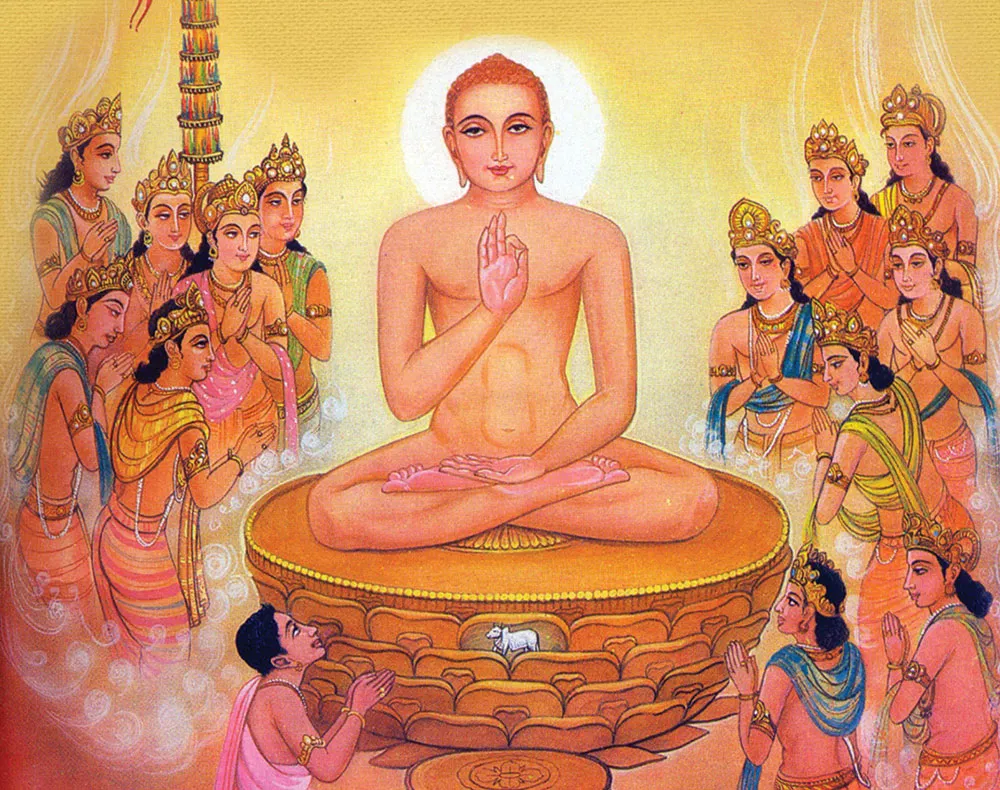
Pancha Mahavratas (Five Great Vows)
Jain ethics is mainly based on Pancha Mahavratas, or five great vows. These guide moral behavior.
1. Ahimsa (Non-Violence)
Ahimsa is the most important principle in Jainism.
It means not harming any living being, whether big or small.
Jainism teaches that all life is equal. Therefore, killing or hurting any living being is violence.
Violence is not only physical. It can also happen through:
- Angry words
- Insults
- Emotional harm
Even speech can hurt.
Since complete non-violence is difficult for householders, they are expected to reduce harm as much as possible.
Jainism strictly opposes killing animals for food.
2. Satyam (Truthfulness)
Satyam means speaking the truth.
A person should speak words that are:
- True
- Kind
- Helpful
Truth is important even in difficult situations.
However, Jainism also teaches wisdom in speech. If telling the truth causes unnecessary harm, silence may be better.
Truth should never be used as a weapon to hurt others.
3. Asteyam (Non-Stealing)
Asteyam means not taking anything that is not freely given.
Stealing includes:
- Taking someone’s property
- Helping others steal
- Buying stolen goods
- Keeping lost items dishonestly
Honesty in possessions is an important moral value.
4. Brahmacharya (Self-Control)
Brahmacharya means control over desires and sensual pleasures.
It teaches discipline of body and mind.
A person should:
- Avoid immoral behavior
- Respect others
- Control harmful desires
Jainism teaches people to treat everyone with dignity and respect.
Self-control leads to mental peace.
5. Aparigraha (Non-Attachment)
Aparigraha means avoiding greed and excessive attachment to wealth or possessions.
Money is necessary for daily life, but endless desire for wealth creates stress and unhappiness.
A person should:
- Limit unnecessary desires
- Avoid greed
- Practice contentment
True happiness comes from inner peace, not endless possessions.
Similarities Between Buddhism and Jainism
Both Buddhism and Jainism teach moral living and spiritual growth.
Common teachings include:
- Importance of non-violence
- Self-discipline
- Truthfulness
- Control over desires
- Avoiding greed and attachment
Both religions believe that bad actions create suffering, while good actions lead to peace.
The main goal in both traditions is liberation from suffering and achieving spiritual freedom.
Final Thoughts
Ethics in Buddhism and Jainism continues to inspire millions of people even today. These teachings are not only religious principles but also practical guides for daily life. They encourage people to be kind, honest, disciplined, and compassionate.
In today’s world, where stress, anger, and greed are common, the ethical values of Buddhism and Jainism remain highly relevant. By following these principles, individuals can build a peaceful life and create a better society.
FAQs
1. What is ethics in Buddhism?
Ethics in Buddhism refers to moral principles that guide a person toward good behavior, wisdom, and spiritual growth. It focuses on intentions behind actions and encourages kindness, truth, and self-control.
2. What are the three essentials of life in Buddhism?
The three essentials in Buddhism are:
- Wisdom (Prajna)
- Ethical Conduct (Sila)
- Concentration (Samadhi)
These help a person achieve enlightenment.
3. What are the five precepts of Buddhism?
The five precepts of Buddhism are:
- Do not kill
- Do not steal
- Do not lie
- Avoid sexual misconduct
- Avoid intoxicants
These rules help maintain moral discipline.
4. What is Triratna in Jainism?
Triratna, or the Three Jewels of Jainism, includes:
- Right Faith
- Right Knowledge
- Right Conduct
These guide a person toward Moksha or liberation.
5. What are the five vows of Jainism?
The five vows of Jainism are:
- Ahimsa (Non-violence)
- Satyam (Truthfulness)
- Asteyam (Non-stealing)
- Brahmacharya (Self-control)
- Aparigraha (Non-attachment)
6. Why is Ahimsa important in Jainism?
Ahimsa is the most important principle in Jainism because it teaches respect for all living beings and promotes peace and compassion.
7. What is the main similarity between Buddhism and Jainism?
Both religions emphasize non-violence, truth, self-discipline, and freedom from greed and attachment.