


Food Processing in India: Growth, Importance, Challenges and Government Initiatives

Food Processing in India is one of the fastest-growing sectors of the Indian economy. It plays an important role in connecting agriculture with industry and helps farmers earn better income from their produce. India is one of the largest producers of agricultural products such as fruits, vegetables, milk, cereals, pulses, fish, and meat. However, a large quantity of these products gets wasted due to poor storage, transportation, and processing facilities. Food processing helps reduce this waste and increases the value of agricultural products.
The food processing industry has become increasingly important because it supports farmers, creates jobs, improves food quality, boosts exports, and contributes to economic growth. With changing lifestyles, urbanization, and growing demand for packaged foods, the sector has immense potential for development.

What is Food Processing?
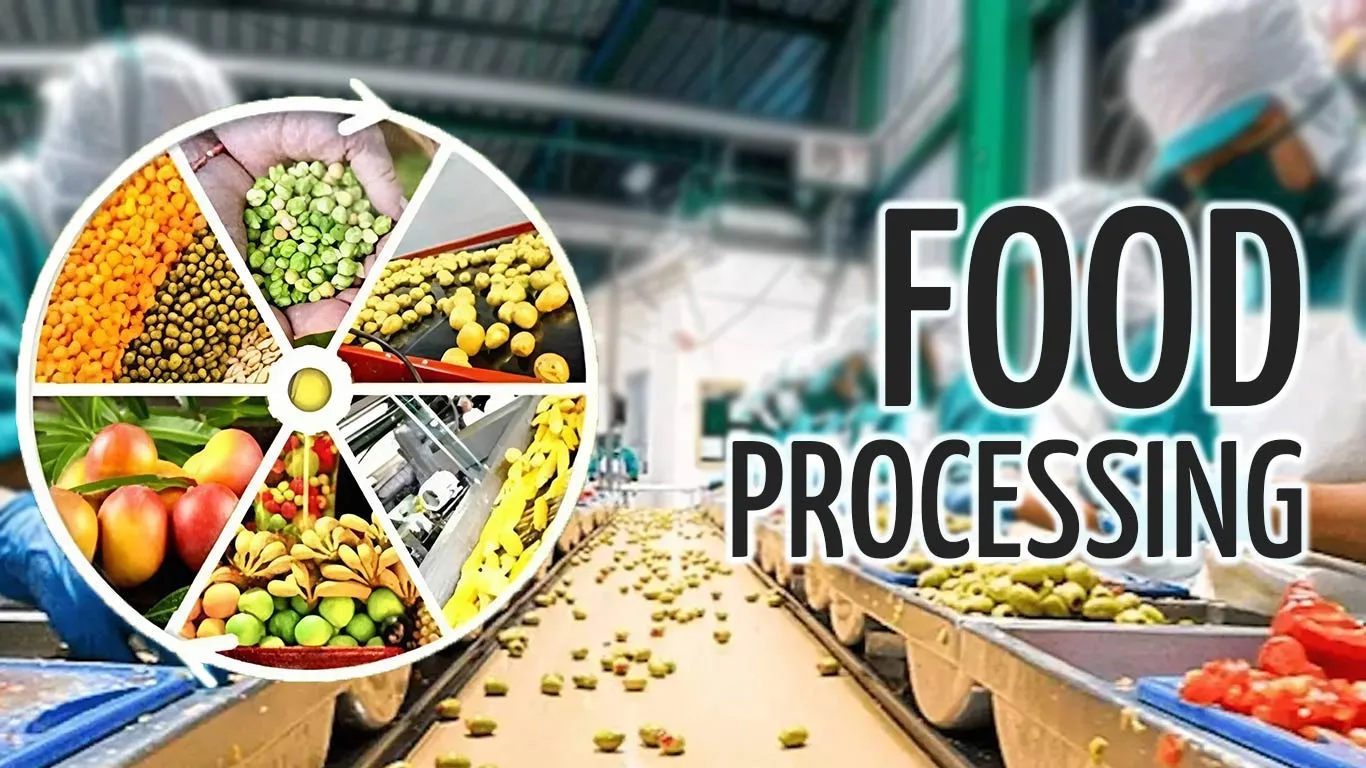
Food processing refers to the transformation of agricultural products into forms that are suitable for consumption, storage, and marketing. It involves changing raw materials such as fruits, vegetables, milk, grains, meat, poultry, and fish into processed products through various methods.
These methods include:
- Cleaning and sorting
- Grading
- Packaging
- Drying
- Freezing
- Canning
- Fermentation
- Preservation
- Addition of food additives
The main purpose of food processing is to improve shelf life, maintain quality, reduce spoilage, and increase the market value of food products.
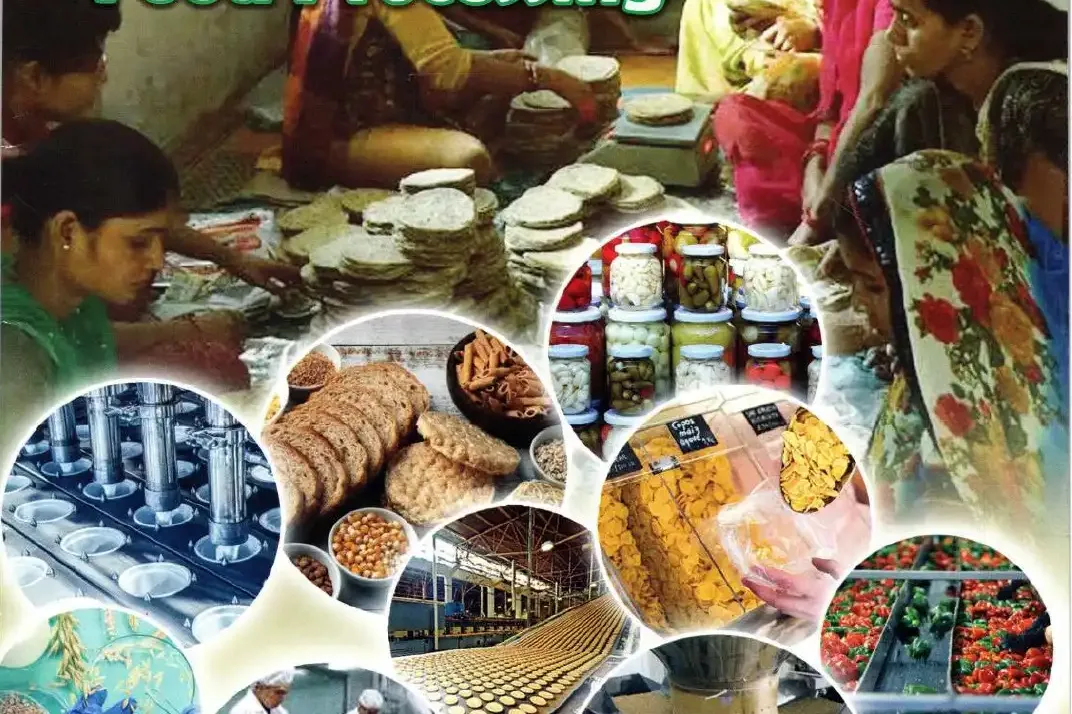
For example:
| Raw Product | Processed Product |
|---|---|
| Milk | Cheese, Butter, Paneer |
| Wheat | Flour, Bread, Biscuits |
| Fruits | Juice, Jam, Jelly |
| Potatoes | Chips, Frozen Fries |
| Fish | Frozen Fish Products |
Importance of Food Processing in India
Food processing has become a key sector for India’s economic development. It provides several benefits to farmers, consumers, and industries.
1. Increases Farmers’ Income
Food processing creates demand for agricultural products. Farmers receive better prices because their produce is converted into high-value products. Value addition helps increase their earnings and reduces dependence on middlemen.
2. Reduces Food Wastage
A significant portion of agricultural produce gets damaged after harvesting due to inadequate storage and transportation. Food processing helps preserve excess produce and reduces post-harvest losses.
3. Generates Employment
The food processing sector is labor-intensive and creates jobs in:
- Farming
- Packaging
- Transportation
- Warehousing
- Marketing
- Manufacturing
It provides both direct and indirect employment opportunities, especially in rural areas.
4. Supports Food Security
Processed foods can be stored for longer periods. This helps maintain food availability throughout the year and reduces seasonal shortages.
5. Improves Nutrition
Many processed foods are fortified with vitamins and minerals. Such products help reduce nutritional deficiencies among people.
6. Promotes Exports
Indian food products such as basmati rice, spices, tea, coffee, mango pulp, and processed foods have strong demand in international markets. This helps earn valuable foreign exchange.
7. Encourages Crop Diversification
Farmers are encouraged to grow fruits, vegetables, spices, and other high-value crops instead of relying only on traditional crops. This increases agricultural productivity and profitability.
8. Controls Food Inflation
Processing increases the shelf life of products and ensures a steady supply throughout the year. This helps stabilize prices and reduces food inflation.
Current Status of Food Processing in India
India is one of the largest agricultural producers in the world. It ranks among the top producers of:
- Milk
- Fruits
- Vegetables
- Cereals
- Pulses
- Fish
Despite this strong agricultural base, the level of food processing remains relatively low.
Some key facts include:
| Sector | Percentage Processed |
| Fruits & Vegetables | Around 2% |
| Marine Products | Around 8% |
| Milk | Around 35% |
| Poultry | Around 6% |
Most food processing activities in India are concentrated in the primary processing stage.
Primary Processing
Primary processing includes:
- Rice milling
- Flour milling
- Sugar production
- Edible oil extraction
Secondary Processing
Secondary processing includes:
- Dairy products
- Bakery products
- Chocolates
- Fruit juices
- Ready-to-eat foods
Secondary processing generates higher value addition and greater profits compared to primary processing.
Major Segments of Food Processing Industry
The food processing sector consists of various segments:
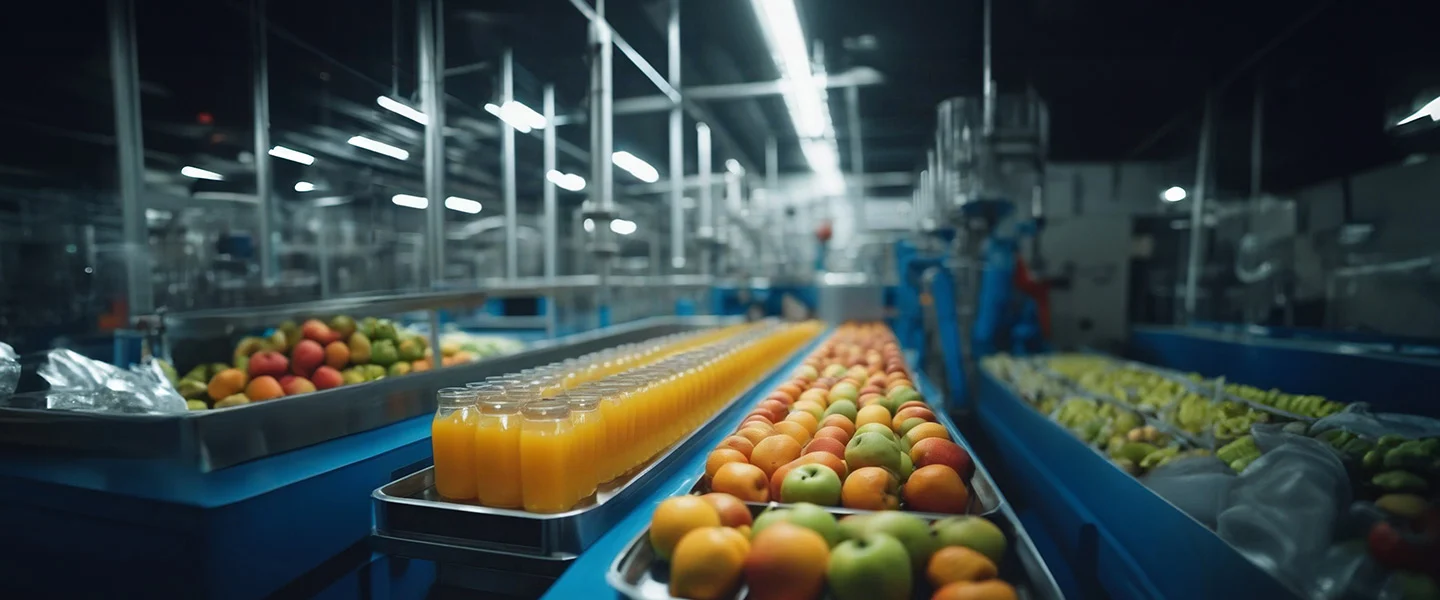
- Cereal and pulse milling
- Fruit and vegetable processing
- Milk and dairy products
- Fish and seafood processing
- Poultry and egg products
- Meat processing
- Bakery products
- Confectionery products
- Beverages such as tea and coffee
- Edible oils and fats
- Breakfast cereals
- Ready-to-eat foods
These segments contribute significantly to employment and economic growth.
Problems Faced by Food Processing Industry in India
Despite its potential, the food processing sector faces many challenges.
Farm-Level Problems
Farmers face several difficulties that affect the supply of quality raw materials.
Low Agricultural Productivity
Many farmers still use traditional farming methods, resulting in lower yields.
Poor Access to Finance
Limited financial resources prevent farmers from investing in modern technology and equipment.
Weather Uncertainty
Floods, droughts, and irregular rainfall affect crop production and quality.
Lack of Storage Facilities
Insufficient warehouses and cold storage facilities lead to spoilage of produce.
Transportation Issues
Poor rural roads and transport systems increase losses during movement of goods.
Problems Faced by Distributors
Distributors face challenges such as:
- High transportation costs
- Lack of refrigerated vehicles
- Inadequate cold chain infrastructure
- Irregular supply of agricultural produce
- Quality variations in farm products
These issues increase costs and reduce efficiency.
Problems Faced by Processing Industries
Food processing companies encounter several operational challenges.
High Cost of Raw Materials
Fluctuating agricultural prices affect profitability.
Expensive Packaging
Modern packaging materials significantly increase production costs.
Limited Cold Storage Facilities
Insufficient cold chains result in product losses and reduced quality.
Financing Challenges
Small and medium enterprises often struggle to obtain affordable credit.
High Advertising Costs
Building brand recognition requires substantial investment in marketing.
Limited Market Reach
Many processed food companies face difficulties in accessing rural markets.
Consumer-Related Problems
Consumers also face certain issues in the food processing sector.
- Price fluctuations
- Limited affordable processed food options
- Lack of product variety
- Concerns about quality and safety
- Doubts regarding nutritional value
These factors influence consumer purchasing decisions.
Reasons for Slow Growth of Processed Foods in India
The growth of processed foods has been slower than expected due to several reasons.
Low Income Levels
A large section of the population cannot afford premium processed food products.
Preference for Fresh Food
Indian consumers traditionally prefer freshly cooked meals over packaged foods.
Regional Food Habits
Food preferences differ widely across states and regions, making it difficult to create a uniform national market.
Weak Cold Chain Infrastructure
Temperature-sensitive products require reliable cold storage and transportation systems, which are still inadequate.
Poor Transportation Network
Road and railway connectivity remain inadequate in many rural regions.
Limited Retail Infrastructure
Although supermarkets are expanding, traditional retail stores still dominate food sales in India.
Major Challenges Before the Sector
Food Safety Concerns
The use of excessive fertilizers, pesticides, and chemicals can affect food quality and consumer health.
Adulteration
Food adulteration remains a serious concern. Examples include milk adulteration and the use of harmful chemicals for fruit ripening.
Low Value Addition
Many processing units focus only on basic processing activities instead of producing high-value products.
Lack of Consumer Awareness
Many consumers are unaware of food safety standards, nutrition labels, and quality certifications.
Large Unorganized Sector
More than 75% of the food processing industry operates in the unorganized sector, making regulation and quality control difficult.
Government Initiatives for Food Processing in India
The Government of India has introduced several schemes and policies to strengthen the sector.
Pradhan Mantri Kisan SAMPADA Yojana (PMKSY)
PMKSY aims to:
- Modernize food processing infrastructure
- Reduce agricultural wastage
- Improve value addition
- Increase farmers’ income
- Create employment opportunities
Components of PMKSY
| Scheme | Purpose |
| Mega Food Parks | Integrated food processing infrastructure |
| Cold Chain Projects | Preservation and transportation |
| Agro Processing Clusters | Industrial development |
| Backward and Forward Linkages | Better supply chain management |
| Food Safety Infrastructure | Quality assurance |
| Human Resource Development | Skill development |
Foreign Direct Investment (FDI)
India allows 100% FDI under the automatic route in food processing industries. This encourages domestic and international investments.
APEDA
The Agricultural and Processed Food Products Export Development Authority (APEDA) promotes exports of agricultural and processed food products from India.
Suggestions for Improving Food Processing in India
Several measures can strengthen the food processing sector.
Expand Storage Infrastructure
More warehouses, cold storage units, and refrigerated transport facilities should be established.
Promote Modern Farming
Farmers should be encouraged to adopt scientific farming techniques and good agricultural practices.
Strengthen Farmer Linkages
Contract farming and direct procurement models can provide better income security to farmers.
Improve Skill Development
Training programs should be organized for farmers, workers, and entrepreneurs involved in food processing.
Encourage Startups
Government support should be provided to food processing startups and small enterprises.
Invest in Technology
Modern machinery, automation, and digital technologies should be adopted to improve efficiency.
Promote Research and Innovation
Research institutions should work closely with industries to develop better processing methods and products.
Increase Public Investment
Improved roads, transportation systems, and communication networks will strengthen supply chains.
Future of Food Processing in India
The future of food processing in India is highly promising. Rising incomes, urbanization, changing lifestyles, and increasing demand for packaged foods are creating new opportunities for growth.
India possesses abundant agricultural resources and a large domestic market. By improving infrastructure, adopting advanced technology, strengthening supply chains, and ensuring food safety, the country can become a global leader in food processing.
The sector has the potential to increase farmers’ income, generate millions of jobs, reduce food wastage, improve nutrition, and boost exports. With coordinated efforts from government, industries, farmers, and research institutions, food processing can become a major driver of India’s economic and agricultural transformation.
FAQs
Q1. What is food processing in India?
Food processing is the conversion of raw agricultural products into useful food products through various preservation and manufacturing methods.
Q2. Why is food processing important?
It reduces food wastage, increases farmers’ income, creates jobs, improves food quality, and boosts exports.
Q3. Which government scheme supports food processing?
Pradhan Mantri Kisan SAMPADA Yojana (PMKSY) is the major scheme supporting food processing industries.
Q4. What are the major challenges in food processing?
Poor storage facilities, weak cold chains, transportation issues, food safety concerns, and lack of technology.
Q5. How does food processing help farmers?
It adds value to agricultural products, reduces losses, and helps farmers get better market prices.
Q6. What is a Mega Food Park?
It is a food processing hub that provides modern infrastructure and facilities for food processing industries.
Q7. What role does APEDA play?
APEDA promotes exports of agricultural and processed food products from India.