


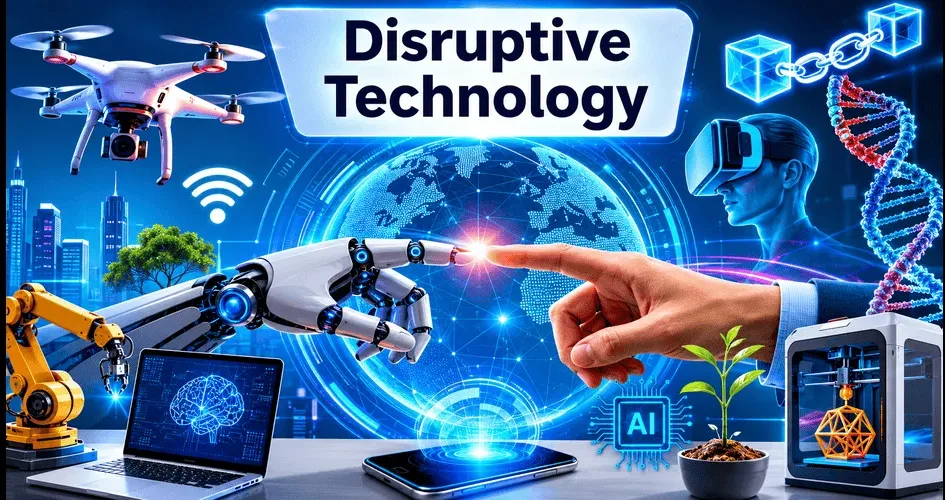
Disruptive Technology: How New Innovations Are Changing the World

Disruptive Technology is one of the most important ideas in today’s modern world. It refers to a new technology that completely changes how people live, work, communicate, or do business. These technologies often replace old systems and create new markets or industries.
Thank you for reading this post, don't forget to subscribe!In simple words, disruptive technology brings major change. It does not just improve an old product it introduces something new that transforms the whole system.
For example, smartphones changed communication, online shopping changed retail markets, and digital payments changed how people handle money. These are all examples of disruptive technology.
What is Disruptive Technology?
Disruptive technology is an innovation that changes traditional methods and creates better, faster, or cheaper solutions.
There are mainly two types of technological change:
| Type | Meaning |
|---|---|
| Sustaining Technology | Improves existing technology slowly over time |
| Disruptive Technology | Brings completely new methods and replaces old ones |
For example, improving a 4G network is sustaining technology. But moving from wired internet to wireless 5G is disruptive technology.
Disruptive technologies affect industries, businesses, education, healthcare, and even daily life.
Major Examples of Disruptive Technology
Today, many technologies are changing the world rapidly. Some of the most important ones are discussed below.
1. Blockchain Technology
Blockchain is a digital system used to store data in secure blocks connected like a chain.
Each block contains information, and once data is added, changing it becomes very difficult. This makes blockchain highly secure and transparent.
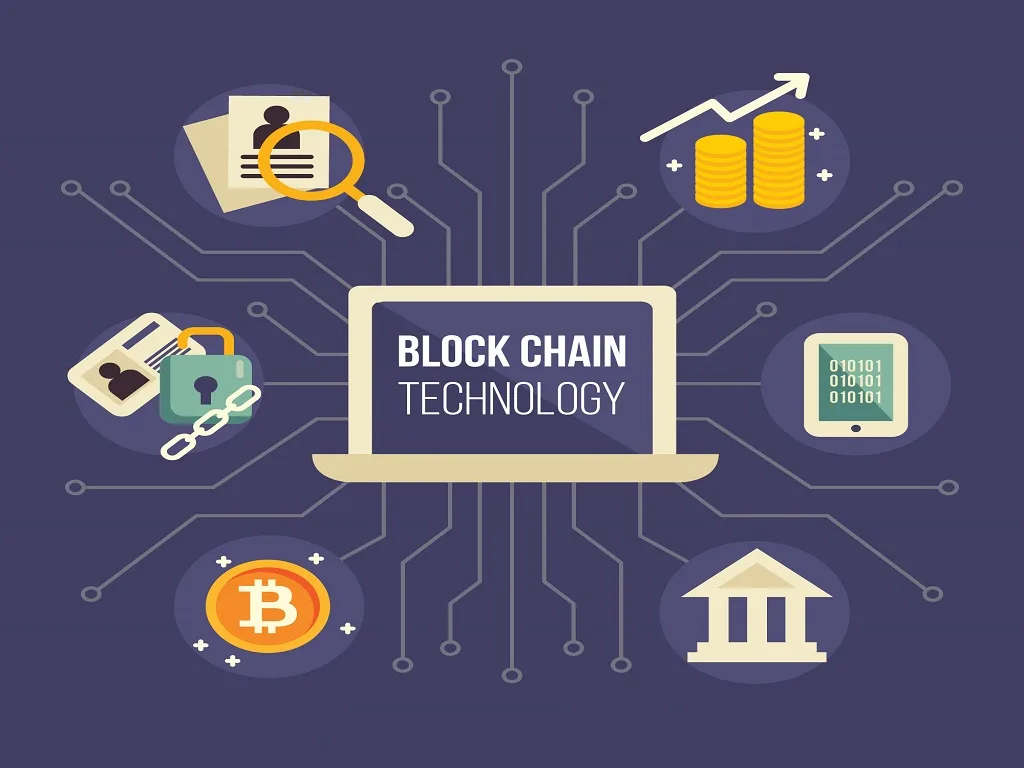
Features of Blockchain
- Secure data storage
- Difficult to hack
- Transparent transactions
- Permanent records
- Decentralized system
Instead of one central server, many computers store copies of the blockchain.
Uses of Blockchain
Blockchain is useful in many areas such as:
- Cryptocurrency transactions
- Voting systems
- Medical records
- Property records
- Academic certificates
- Financial services
Blockchain in India
India has taken important steps in blockchain development.
Centre of Excellence (CoE)
The Government of India established a blockchain Centre of Excellence through the National Informatics Centre.
Its goal is to provide Blockchain as a Service (BaaS).
National Strategy on Blockchain
The Ministry of Electronics and Information Technology introduced a national strategy to encourage blockchain-based digital platforms.
2. Artificial Intelligence (AI)
Artificial Intelligence refers to machines performing tasks that usually need human intelligence.
AI helps machines learn from data and make smart decisions.
Examples include:
- Voice assistants
- Chatbots
- Face recognition
- Self-driving systems
- Recommendation systems
AI works using technologies like:
- Machine Learning
- Neural Networks
- Big Data
- Pattern Recognition
Benefits of AI
AI helps improve efficiency in many sectors:
| Sector | Benefits |
|---|---|
| Healthcare | Disease detection |
| Agriculture | Crop analysis |
| Education | Smart learning |
| Weather | Better forecasting |
| Business | Data analysis |
AI in India
India is actively promoting AI.
US-India AI Initiative
The Indo-US Science and Technology Forum launched an AI initiative to support research and innovation.
AI in Schools
Under National Education Policy, AI is being introduced in school education.
MCA 21 Portal
The Ministry of Corporate Affairs uses AI and analytics to improve digital services.
3. 5G Technology
5G Technology is the fifth generation of mobile network technology.
It is faster than 4G and can connect more devices at the same time.
5G offers:
- Faster internet
- Low delay
- Better connectivity
- Stronger network performance
Speed in 5G can reach up to 20 Gbps, much faster than 4G.
Importance of 5G
5G can improve many sectors:
- Smart farming
- Telemedicine
- Online education
- Smart cities
- Logistics
- Industrial automation
5G in India
India launched its first 5G testbed to help startups and industries test products locally.
This reduces dependence on foreign testing facilities.
4. Internet of Things (IoT)
Internet of Things means physical devices connected to the internet that can exchange data.
Examples:
- Smart watches
- Smart TVs
- Smart lights
- Security cameras
- Smart refrigerators
These devices communicate automatically.
Applications of IoT
IoT is used in:
- Smart homes
- Agriculture
- Healthcare
- Transportation
- Security systems
- Smart cities
Supporting Technologies
IoT works with:
- Sensors
- Cloud computing
- AI
- Wireless communication
IoT in India
Smart City Project
The Government launched the Smart City Mission to develop 100 smart cities.
Features include:
- Smart roads
- Smart parking
- Smart lighting
- Smart transport
Digital India
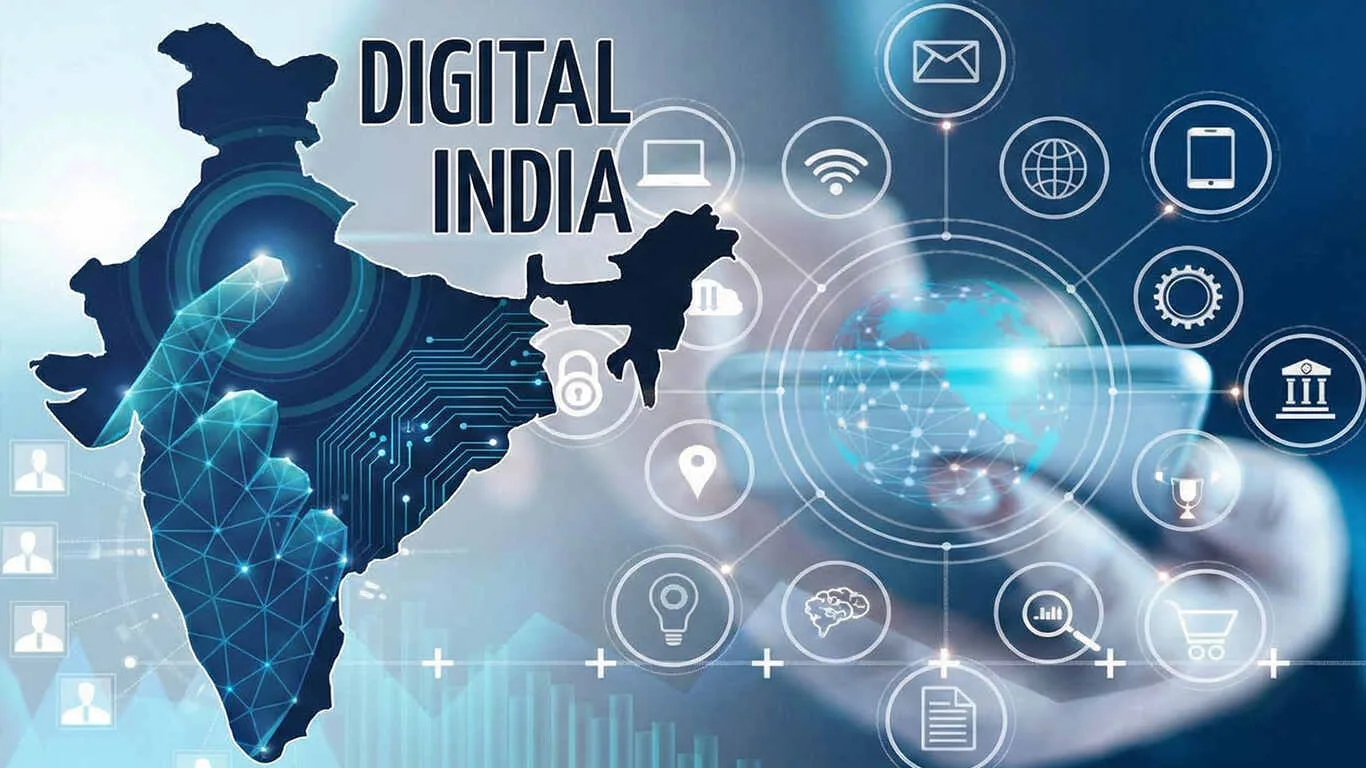
The Digital India programme promotes digital infrastructure and IoT growth.
5. Drone Technology
Drone Technology refers to unmanned flying vehicles.
Drones can be controlled remotely or operate automatically using sensors and advanced software.
Uses of Drones
Defence
Drones help in surveillance and security operations.
Healthcare
Drones can deliver medicines and vaccines to remote areas.
Agriculture
Farmers use drones for:
- Spraying pesticides
- Monitoring crops
- Soil analysis
Emergency Services
Drones help in:
- Fire rescue
- Disaster response
- Law enforcement
Drone Initiatives in India
SVAMITVA Scheme
The SVAMITVA Scheme uses drones to map rural land.
This improves property records.
Drone Rules 2021
The government introduced simpler rules to promote drone usage.
PLI Scheme for Drones
India supports drone manufacturing under the Production Linked Incentive scheme.
6. Genome Editing
Genome Editing is a technology that allows scientists to change DNA.
DNA contains genetic instructions of living organisms.

Genome editing helps scientists:
- Add genes
- Remove genes
- Modify genes
Uses of Genome Editing
It can help in:
- Medical research
- Crop improvement
- Disease treatment
- Biotechnology
India’s Initiative
India introduced Genome Engineering/Editing Technologies Initiative (GETin) to promote research and development.
This supports collaboration between Indian and global institutions.
7. 3D Printing
3D Printing is also called additive manufacturing.
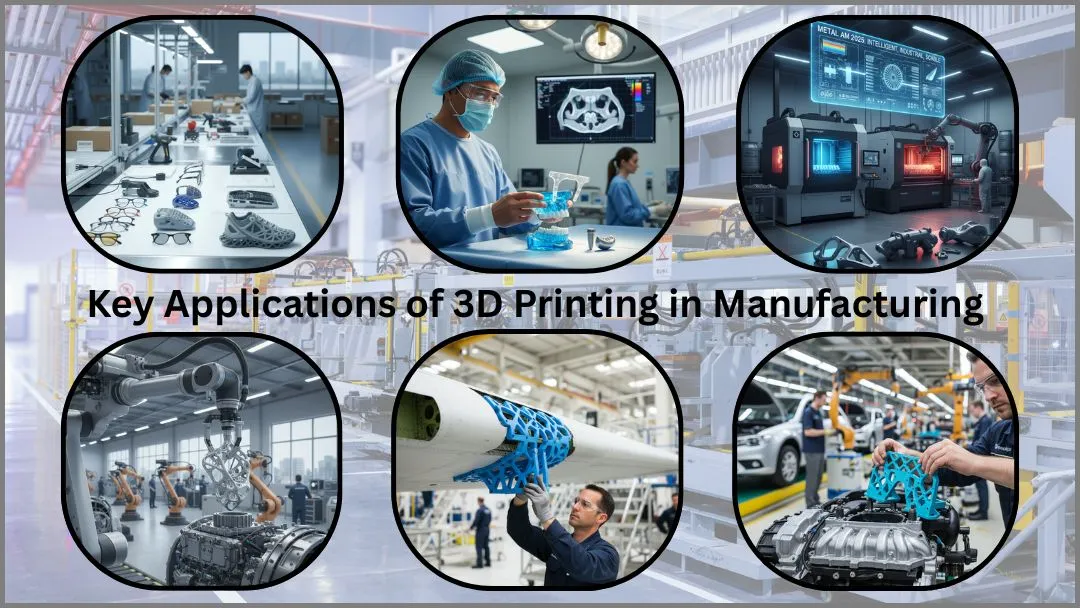
It creates three-dimensional objects layer by layer from digital designs.
Unlike traditional manufacturing, which cuts material away, 3D printing builds objects from scratch.
Uses of 3D Printing
It is used in:
- Artificial limbs
- Dental products
- Automobile parts
- Consumer goods
- Medical devices
India’s Policy
The Ministry of Electronics and Information Technology launched a strategy for additive manufacturing.
Its aim is to increase India’s share in global 3D printing.
Benefits of Disruptive Technology
Disruptive technology offers many advantages.
1. Encourages Innovation
It brings fresh ideas and better solutions.
Businesses can improve products and services.
2. Better Efficiency
Technology helps save:
- Time
- Energy
- Cost
This improves productivity.
3. Startup Growth
Small companies can compete with large businesses using innovation.
Many startups grow rapidly because of disruptive ideas.
4. Economic Growth
New industries create:
- Jobs
- Investments
- Business opportunities
This strengthens the economy.
5. Supports Digital India
India’s strong IT sector can use disruptive technologies for faster development.
Small towns can also benefit from new digital opportunities.
Challenges of Disruptive Technology
Although beneficial, disruptive technology also creates challenges.
1. Lack of Infrastructure
Developing countries may lack proper digital infrastructure.
Poor connectivity slows growth.
2. Ethical Issues
Important concerns include:
- Privacy
- Data security
- Ownership
- Transparency
These issues must be handled carefully.
3. Adaptation Difficulty
People and businesses need time to adopt new systems.
Training becomes necessary.
4. High Cost
New technology often requires heavy investment.
Small businesses may struggle.
5. Competition with Old Systems
Established industries may resist change.
This creates strong market competition.
Way Forward for Disruptive Technology
India must prepare well to use disruptive technologies successfully.
Create a Supportive Environment
Strong policies should support innovation and investment.
Focus on Research and Development
India should encourage more R&D centers.
This helps create products suitable for Indian needs.
Government Support
Government incentives can help startups and industries adopt modern technologies.
Skill Development
Students and professionals should learn future-ready skills.
Training in AI, robotics, blockchain, and IoT is essential.
International Cooperation
Countries should work together on:
- Technology standards
- Research
- Security
- Ethical regulations
Global cooperation will accelerate safe innovation.
Final Thoughts
Disruptive Technology is transforming the world at an incredible speed. Technologies like AI, blockchain, drones, 5G, IoT, genome editing, and 3D printing are changing industries and daily life.
These technologies create new opportunities, improve efficiency, and support economic growth. At the same time, challenges like privacy, ethics, and infrastructure must be addressed.
If India continues investing in innovation, skill development, and digital infrastructure, disruptive technology can play a major role in building a smarter and stronger future.
FAQs
Q1. What is disruptive technology?
Disruptive technology is an innovation that changes traditional systems and creates new markets.
Q2. Is AI a disruptive technology?
Yes, AI is one of the most powerful disruptive technologies today.
Q3. What are examples of disruptive technology?
Examples include AI, blockchain, drones, 5G, IoT, genome editing, and 3D printing.
Q4. How does disruptive technology help businesses?
It improves efficiency, reduces costs, and creates new business opportunities.
Q5. Why is disruptive technology important for India?
It supports economic growth, innovation, startup development, and digital transformation.