


Homi Jehangir Bhabha – A Comprehensive Biography of India’s Father of Nuclear Science

Homi Jehangir Bhabha stands as one of the most influential scientific minds in modern Indian history an intellectual whose vision redefined India’s scientific identity, industrial capability, and global standing. Known widely as the Father of India’s Nuclear Programme, Bhabha was not only a physicist of extraordinary brilliance but also a visionary institution builder, a strategist, and a nationalist deeply invested in scientific self-reliance. His contributions spanned nuclear science, cosmic ray research, engineering design, and the creation of India’s premier research institutes.
Early Life and Family Background of Homi Jehangir Bhabha
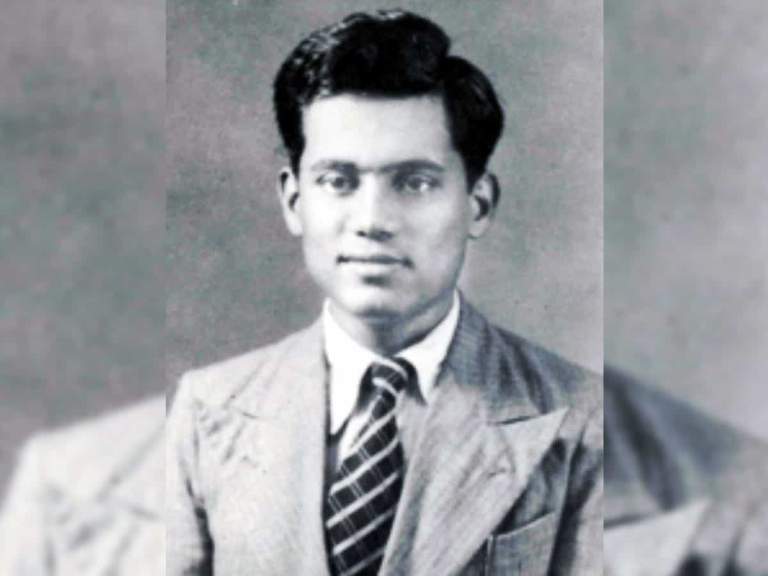
Homi Jehangir Bhabha was born on 30 October 1909 in Mumbai (then Bombay) into a wealthy and respected Parsi family. His father, Jehangir Bhabha, was a prominent lawyer and a key figure in the city’s legal and social circles. His mother, Meherbai Bhabha, came from the influential Petit family.

Belonging to a household where education, culture, and refinement were valued greatly, Bhabha grew up surrounded by books, art, and discussions about politics, philosophy, and science. The Bhabhas were a forward-thinking family who believed in liberal education and global exposure. This greatly shaped his future intellectual pursuits.
From early childhood, Bhabha demonstrated extraordinary intellectual abilities. He was quick with mathematics, fascinated by machinery and engineering, and skilled in drawing. His curiosity for how the universe works was obvious even as a young boy.
Education: From Mumbai to Cambridge
Bhabha received his school education at Cathedral and John Connon School in Mumbai, one of the most prestigious institutions of the time. He later joined Elphinstone College and then the Royal Institute of Science.
However, his academic turning point came in 1927, when he moved to the University of Cambridge to study mechanical engineering. His family initially expected him to join Tata Industries after graduation engineering, after all, was a respectable and stable career.
But Cambridge changed him.
While studying engineering, Bhabha encountered the growing field of theoretical physics, especially quantum mechanics, which was revolutionizing scientific thought. He found himself increasingly drawn to mathematics and theoretical ideas rather than mechanical design. After some persuasion, he convinced his family to allow him to switch to physics a decision that not only changed his life but also transformed India’s future.
Scientific Beginnings and Early Research
At Cambridge, Bhabha worked under some of the greatest physicists of the era. He was deeply influenced by the works of Paul Dirac, Niels Bohr, and Wolfgang Pauli.
His early research was groundbreaking. Bhabha published important papers on electron-positron scattering, now globally known as Bhabha Scattering. This discovery laid the foundation for understanding electron interactions and contributed significantly to quantum electrodynamics.
Another milestone came when he collaborated with Walter Heitler to study cosmic rays. Their work led to the Bhabha–Heitler theory, which explained the cascade process of cosmic ray showers in the atmosphere. This research strengthened Bhabha’s global reputation as a brilliant theoretical physicist.
By the time he completed his doctorate, Bhabha was already considered among the sharpest minds in contemporary physics.
Return to India: A Turning Point for the Nation
Bhabha returned to India in 1939, just as World War II began. The conflict disrupted his plans to continue working in Europe, but it opened a new chapter in Indian science.
He joined the Indian Institute of Science (IISc) in Bangalore at the invitation of Nobel laureate C.V. Raman. Here, he established the Cosmic Ray Research Unit, which soon became one of Asia’s best centres for high-energy physics.
During his time at IISc, Bhabha recognized something crucial:
India needed world-class scientific institutions to achieve technological and national progress.
This realization led him to imagine what would later become his greatest legacy.
Founding of the Tata Institute of Fundamental Research (TIFR)
In 1944, Bhabha wrote a historic letter to the industrialist J.R.D. Tata, requesting support to establish a research institute dedicated to fundamental sciences. Tata, impressed by Bhabha’s vision, agreed without hesitation.
Thus, in 1945, the Tata Institute of Fundamental Research (TIFR) was born.
TIFR quickly became India’s leading centre for physics, mathematics, computer science, and later nuclear science. Under Bhabha’s guidance, it grew into an intellectual powerhouse. He recruited the finest minds, fostered interdisciplinary research, and laid the foundation for modern scientific education in India.
Bhabha believed that without strong scientific institutions, India would lag behind developed nations. His success with TIFR proved the opposite it positioned India at the forefront of global scientific research.
Bhabha’s Vision for Nuclear Science in India
The most defining aspect of Bhabha’s legacy is his role in creating India’s nuclear programme.

After witnessing the global impact of nuclear energy during World War II, Bhabha realized that India must not remain dependent on other nations for atomic research and technology. He persistently advocated for developing nuclear capability not only for power generation but also for strategic strength.
He convinced the Government of India specifically Prime Minister Jawaharlal Nehru of the need for a centralized atomic energy body. Nehru trusted Bhabha’s intellect and leadership completely, often referring to him as the man who understood the atomic world better than anyone else in India.
Establishment of the Atomic Energy Commission
As a result of his efforts, the Atomic Energy Commission (AEC) was formed in 1948, with Bhabha as its first chairman. The commission was responsible for all nuclear-related policies, research, and development.
Under his leadership, major institutions were built:
- Atomic Energy Establishment, Trombay (AEET) – later renamed Bhabha Atomic Research Centre (BARC) in his honour
- Department of Atomic Energy (DAE) in 1954
- Multiple research reactors, including Apsara, Asia’s first nuclear reactor (1956)
- India’s first plutonium plant and reprocessing facilities
Bhabha approached nuclear science with a clear three-stage plan based on India’s limited uranium and abundant thorium reserves. This long-term strategy still forms the backbone of India’s nuclear energy program today.
Institution-Building Excellence of Homi Jehangir Bhabha
Beyond nuclear science, Bhabha had unmatched skill in institution building. His vision was always futuristic. He believed scientific progress required:
- Top-class infrastructure
- Freedom of research
- Funding without bureaucratic hurdles
- Training of young scientists
He oversaw the design of laboratories, research parks, and training centres. He focused on excellence, discipline, and global collaboration. Through TIFR and AEET/BARC, Bhabha created ecosystems where some of the world’s finest Indian scientists were trained.
His leadership style was unique he blended scientific rigour with administrative discipline, making him the ideal architect of modern Indian science.
Role in Nuclear Diplomacy and International Science
Bhabha represented India in multiple international scientific forums. He articulated India’s position on peaceful nuclear use and advocated for developing nations to have equitable access to scientific knowledge.
He presided over the first International Conference on Peaceful Uses of Atomic Energy in 1955, held in Geneva. His speeches were widely praised for their depth, clarity, and vision.
Bhabha firmly believed:
“No nation can become truly modern without mastering science and technology.”
He saw nuclear science as a tool for national power, economic development, and political independence.
Scientific Contributions and Theories
Homi Jehangir Bhabha made numerous contributions across physics:
Bhabha Scattering
A landmark in quantum electrodynamics, explaining interactions between electrons and positrons.
Bhabha–Heitler Theory
His collaboration with Heitler explained atmospheric electron showers and cosmic ray interactions.
Work on Mesons
He contributed to understanding meson theory and predicted the existence of heavier particles.
Foundations of Nuclear Reactor Design
While not trained as an engineer formally, Bhabha had the ability to design and conceptualize complex nuclear reactors long before India had industrial experience.
His intellectual versatility made him one of the few scientists who could switch effortlessly between abstract theory and engineering practicality.
Homi Jehangir Bhabha’s Passion for Art, Culture, and Architecture
Most people know Bhabha the scientist, but few know Bhabha the artist.
He was a gifted painter, a passionate music lover, and a connoisseur of architecture and modern design. He played a key role in shaping the aesthetic and architectural style of TIFR and AEET. He believed beauty enhanced creativity and insisted that research centres must be inspiring places, not cold industrial buildings.
He also promoted Indian art globally, especially the works of emerging Indian modernists.
Relationship with India’s Political Leadership
Bhabha shared a close and respectful relationship with Prime Minister Nehru. The two held similar visions of science-led progress.
Nehru trusted Bhabha completely and rarely questioned his decisions regarding nuclear programs. Bhabha, in turn, provided Nehru with scientific clarity and national strategy. Their partnership was essential in laying the foundation of India’s nuclear infrastructure.
Even after Nehru’s death, Bhabha continued to guide the nation’s atomic programme with the same authority and vision.
The Tragic and Mysterious Death of Homi Jehangir Bhabha
On 24 January 1966, Homi J. Bhabha was killed in a plane crash near Mont Blanc, France, while aboard Air India Flight 101. He was 56 years old.
His death shocked the scientific community and raised many questions. Over the years, conspiracy theories emerged some speculated sabotage due to India’s advancing nuclear program. However, no conclusive evidence ever emerged.
What is indisputable is that India lost one of its greatest minds, a scientist whose potential was far from exhausted.
Legacy of Homi Jehangir Bhabha in Modern India
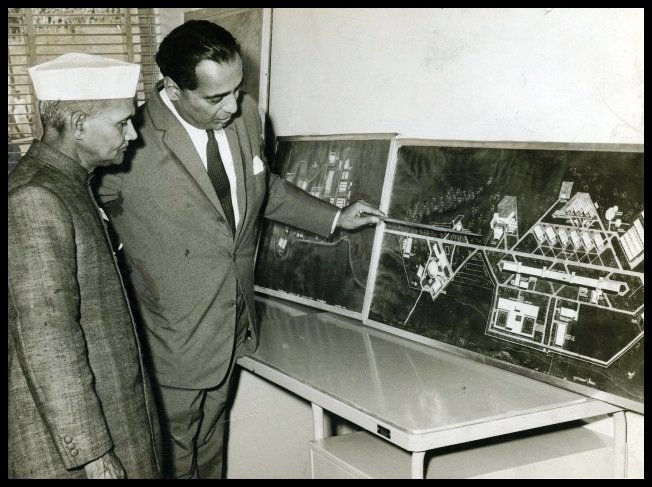
The legacy of Homi Jehangir Bhabha lives through the institutions he built and the scientific culture he nurtured:
- TIFR remains India’s premier institution for fundamental research.
- BARC leads nuclear energy, reactor design, and strategic research.
- DAE oversees India’s nuclear missions, reactors, and scientific programs.
- India’s nuclear energy and strategic capabilities rest directly on Bhabha’s long-term framework.
He also inspired countless scientists who carried forward his vision, including Vikram Sarabhai, the father of India’s space program.
Why Homi Jehangir Bhabha Matters Today
Even decades after his death, Bhabha’s relevance continues. India’s aspirations in science, defence, and energy all trace their roots to his ideas.
His story teaches crucial lessons:
1. Vision Matters
He saw the future decades before others did.
2. Self-Reliance in Science Is Essential
Bhabha advocated Atmanirbharta long before it became a national slogan.
3. Science and Culture Can Coexist
He believed a scientifically progressive nation must also be culturally rich.
4. Institutions Shape Nations
Through TIFR and DAE, he built the scientific foundations of modern India.
Final Thoughts
Homi Jehangir Bhabha was more than a physicist; he was a nation builder. His brilliance, leadership, strategic thinking, and foresight made him an unparalleled figure in Indian scientific history.
From Cambridge classrooms to cosmic rays, from nuclear theory to institution building, from scientific papers to national policy Bhabha shaped the intellectual and technological direction of a newly independent India.
His legacy is not just in reactors, laboratories, or theories it is in the idea that India can stand on its own scientific feet and be a global leader.
Must-Read Related Articles:
Vikram Sarabhai Biography, Birth Anniversary, Invention, Awards & Honors
Birsa Munda: The Architect of Tribal Resilience — Life, Rebellion and Legacy
Guru Arjan Dev Martyrdom Day 2025 — Inspiring History, Significance & Key UPSC Notes
Shivaram Rajguru — Birth Anniversary, Biography & Contribution of the Freedom Fighter
Frequently Asked Questions (FAQs)
1. Who was Homi Jehangir Bhabha?
Homi Jehangir Bhabha was an Indian nuclear physicist widely known as the Father of India’s Nuclear Programme. He founded key institutions such as TIFR and BARC and played a crucial role in establishing India’s atomic energy framework.
2. Why is Homi Jehangir Bhabha called the Father of Indian Nuclear Science?
He earned this title because he initiated, designed, and led India’s nuclear research programme, built atomic energy institutions, developed reactors, and shaped nuclear policies that still guide India today.
3. What is Bhabha Scattering?
Bhabha Scattering refers to the interaction between electrons and positrons. It is a fundamental concept in quantum electrodynamics and one of Bhabha’s most important scientific contributions.
4. What institutions did Homi Bhabha establish?
He established the Tata Institute of Fundamental Research (TIFR), the Atomic Energy Establishment Trombay (now BARC), and played a major role in forming the Atomic Energy Commission (AEC) and the Department of Atomic Energy (DAE).
5. What was Homi Bhabha’s contribution to India’s nuclear reactors?
Bhabha guided the development of India’s early nuclear reactors, including Apsara (Asia’s first research reactor), and laid the framework for India’s three-stage nuclear power programme.
6. How did Homi Jehangir Bhabha die?
He died on 24 January 1966 in an Air India plane crash near Mont Blanc, France, while travelling to an international scientific conference.
7. What was Bhabha’s educational background?
He studied engineering initially at Cambridge University but switched to theoretical physics, where he produced groundbreaking work in cosmic rays and quantum electrodynamics.
8. Did Homi Bhabha contribute outside nuclear science?
Yes. He was an institution builder, artist, musician, and architect enthusiast. He helped shape India’s scientific infrastructure, promoted Indian modern art, and influenced research culture across the country.
9. What was Homi Bhabha’s vision for India?
He envisioned India as a scientifically advanced, self-reliant nation with strong nuclear energy capability, world-class research institutions, and technological independence.
10. What is Homi Bhabha’s legacy today?
His legacy lives through institutions like TIFR, BARC, and DAE, India’s nuclear reactors, strategic research programs, and the scientific self-confidence he instilled in the nation.