


Hydrocarbon Exploration and Licensing Policy (HELP): India’s New Energy Exploration Framework

Hydrocarbon Exploration and Licensing Policy (HELP) is an important policy introduced by the Government of India to increase domestic production of oil and natural gas. India is one of the world’s largest consumers of crude oil and petroleum products. However, the country depends heavily on imports to meet its energy needs. Due to this dependence, fluctuations in global oil prices directly affect India’s economy.
To reduce import dependence and encourage investment in the oil and gas sector, the Government of India introduced the Hydrocarbon Exploration and Licensing Policy (HELP) in March 2016. This policy replaced the earlier New Exploration Licensing Policy (NELP) and brought several reforms aimed at simplifying exploration activities and attracting private and foreign investment.

What is Hydrocarbon Exploration and Licensing Policy?
Hydrocarbon Exploration and Licensing Policy (HELP) is a framework that governs the exploration and production of hydrocarbons such as crude oil, natural gas, coal-bed methane, and shale gas in India.
The policy was designed to create a transparent, investor-friendly, and efficient system for exploring India’s hydrocarbon resources. It introduced several new features such as uniform licensing, revenue sharing, pricing freedom, and open acreage licensing.
The main objective of HELP is to increase domestic oil and gas production while reducing India’s dependence on imported energy resources.
Why Was HELP Introduced?
Before HELP, India followed the New Exploration Licensing Policy (NELP). Although NELP helped increase exploration activities, it faced several challenges.
Major Problems Under NELP
| Issue | Description |
|---|---|
| Multiple Licenses | Different hydrocarbons required separate licenses. |
| Complex Rules | Exploration companies had to follow various regulations. |
| Profit-Sharing Disputes | Frequent disagreements between companies and the government regarding costs and profits. |
| Administrative Delays | Government scrutiny of expenses caused delays. |
| Limited Exploration Areas | Companies could only explore government-selected blocks. |
These issues reduced investor confidence and slowed exploration activities.
Key Features of Hydrocarbon Exploration and Licensing Policy
1. Uniform Licensing System
One of the biggest reforms under HELP is the introduction of a uniform licensing system.
Under this system, a single license allows companies to explore and produce all types of hydrocarbons, including:
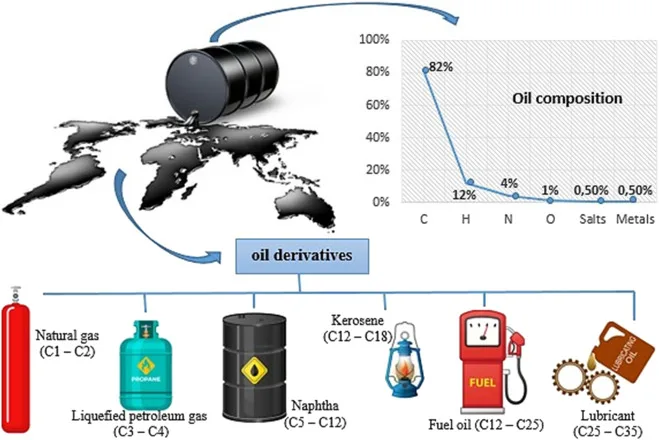
- Crude Oil
- Natural Gas
- Coal-Bed Methane
- Shale Oil
- Shale Gas
Earlier, separate licenses were required for each hydrocarbon type. This increased costs and created unnecessary complications.
2. Revenue Sharing Model
HELP replaced the profit-sharing model with a revenue-sharing model.
Under NELP
The government received a share of profits after companies recovered their costs. This required detailed monitoring of company expenditures.
Under HELP
The government receives a fixed share of gross revenue regardless of production costs.
| Profit Sharing Model | Revenue Sharing Model |
| Government monitors costs | No cost monitoring required |
| Frequent disputes | Fewer disputes |
| Administrative delays | Faster decision-making |
| Complex system | Simpler system |
This change increased transparency and reduced conflicts between companies and the government.
3. Marketing and Pricing Freedom
HELP provides greater freedom to companies in marketing and pricing oil and gas.
Earlier, government regulations often controlled pricing, which created uncertainty for investors.
With pricing freedom:
- Companies can sell production more freely.
- Investors gain confidence.
- Exploration projects become more financially attractive.
This reform supports the government’s vision of Minimum Government and Maximum Governance.
4. Open Acreage Licensing Programme (OALP)
The Open Acreage Licensing Programme (OALP) is one of the most innovative features of HELP.
Under OALP:
- Companies can identify exploration areas on their own.
- They can submit an Expression of Interest (EOI) at any time.
- The government no longer decides all exploration blocks.
This gives companies greater flexibility and encourages exploration in new regions.
Benefits of OALP
- Faster exploration activities.
- Better utilization of available resources.
- Increased investor participation.
- More competitive bidding process.
National Data Repository (NDR)
The National Data Repository (NDR) is a digital database containing exploration and production data related to India’s sedimentary basins.
The NDR supports the Digital India initiative and helps investors make informed decisions.
Functions of NDR
- Stores geological data.
- Provides exploration information.
- Improves transparency.
- Reduces information costs.
- Encourages investment.
Both Indian and foreign companies can access the data before deciding whether to invest in exploration activities.
Importance of Hydrocarbon Exploration for India
India’s energy demand is increasing rapidly because of population growth, industrial development, and urbanization.
Why Domestic Production Matters
| Benefit | Impact |
| Reduced Imports | Saves foreign exchange |
| Energy Security | Ensures stable supply |
| Economic Growth | Supports industries |
| Employment | Creates jobs |
| Investment | Attracts domestic and foreign capital |
Increasing domestic production can significantly reduce India’s dependence on imported crude oil.
Advantages of Hydrocarbon Exploration and Licensing Policy
Improved Ease of Doing Business
HELP simplifies licensing procedures and reduces regulatory hurdles.
Greater Transparency
The revenue-sharing model minimizes disputes regarding project costs and profits.
Increased Investment Opportunities
The policy encourages private and foreign companies to participate in India’s energy sector.
Better Resource Utilization
A single license allows companies to explore all hydrocarbon resources found within a block.
Reduced Government Intervention
Companies enjoy greater operational freedom while the government focuses on regulation rather than micromanagement.
Faster Exploration
Open Acreage Licensing enables quicker identification and development of potential hydrocarbon reserves.
Open Acreage Licensing Programme (OALP): Working Process
The OALP system follows a structured process.
Step 1: Data Access
Companies study available geological information through the National Data Repository.
Step 2: Expression of Interest
Interested companies submit an Expression of Interest for areas they wish to explore.
Step 3: Evaluation
The Directorate General of Hydrocarbons (DGH) evaluates the proposed areas.
Step 4: Auction
Approved areas are offered through competitive bidding.
Step 5: Exploration
Winning bidders receive exploration rights and begin operations.
This process allows exploration opportunities throughout the year instead of waiting for government-announced bidding rounds.
Challenges Facing HELP
Despite its advantages, the policy faces several challenges.
Limited Interest from Global Companies
Many major international oil companies have shown limited participation in Indian exploration projects.
Foreign investment has not reached expected levels.
Geological Risks
Exploration activities involve uncertainty. Companies may spend large amounts of money without discovering commercially viable reserves.
Regulatory Concerns
Some industry experts have raised concerns regarding discretionary powers available to regulatory authorities during area selection and bidding processes.
High Exploration Costs
Deep-water and ultra-deep-water exploration projects require advanced technology and large investments.
Global Energy Transition
The growing shift toward renewable energy sources such as solar and wind power may affect long-term investments in hydrocarbons.
Difference Between NELP and HELP
| Feature | NELP | HELP |
| Licensing | Separate licenses | Single uniform license |
| Revenue System | Profit sharing | Revenue sharing |
| Pricing | Limited freedom | Pricing freedom |
| Exploration Areas | Government selected | Company selected |
| Transparency | Lower | Higher |
| Administrative Burden | High | Lower |
| Ease of Doing Business | Moderate | Better |
Future of Hydrocarbon Exploration in India
India’s energy demand is expected to continue rising in the coming decades. Although renewable energy is expanding rapidly, oil and natural gas will remain important parts of the country’s energy mix.
The Hydrocarbon Exploration and Licensing Policy aims to strengthen domestic production, improve investor confidence, and create a more efficient exploration ecosystem.
As the National Data Repository becomes more comprehensive and exploration technologies improve, India may discover new hydrocarbon reserves that can support economic growth and energy security.
The success of HELP will depend on continuous policy improvements, investor participation, technological innovation, and effective implementation. With the right support, the policy can play a major role in reducing import dependence and strengthening India’s energy future.
FAQs
What is Hydrocarbon Exploration and Licensing Policy (HELP)?
HELP is a government policy introduced in 2016 to promote exploration and production of oil, natural gas, and other hydrocarbons in India.
Why was HELP introduced?
HELP was introduced to replace NELP and remove issues such as multiple licenses, profit-sharing disputes, and administrative delays.
What is the main benefit of uniform licensing?
A single license allows companies to explore all types of hydrocarbons within a block, reducing costs and complexity.
What is the Revenue Sharing Model?
Under this model, the government receives a share of gross revenue instead of monitoring company profits and expenses.
What is OALP?
Open Acreage Licensing Programme allows companies to choose exploration areas and submit proposals throughout the year.
What is the National Data Repository?
It is a digital database containing geological and exploration data that helps companies make informed investment decisions.
How does HELP support India’s energy security?
By encouraging domestic exploration and production, HELP helps reduce dependence on imported oil and gas.
Which policy did HELP replace?
HELP replaced the New Exploration Licensing Policy (NELP) in March 2016.