


Chit Fund in India: Meaning, Types, Benefits, Risks and Regulations

Chit Fund is one of the oldest savings and borrowing systems in India. It is widely used by people who need easy access to money and may not have access to formal banking services. Chit funds are especially popular among middle-income and lower-income families because they provide both savings and borrowing opportunities through a simple group-based system.
In India, chit funds have been operating for many decades and continue to play an important role in the financial lives of many people. However, along with genuine chit funds, there have also been cases of fraud and scams that have caused losses to investors. Therefore, understanding how chit funds work is important before investing money in them.

What is a Chit Fund?
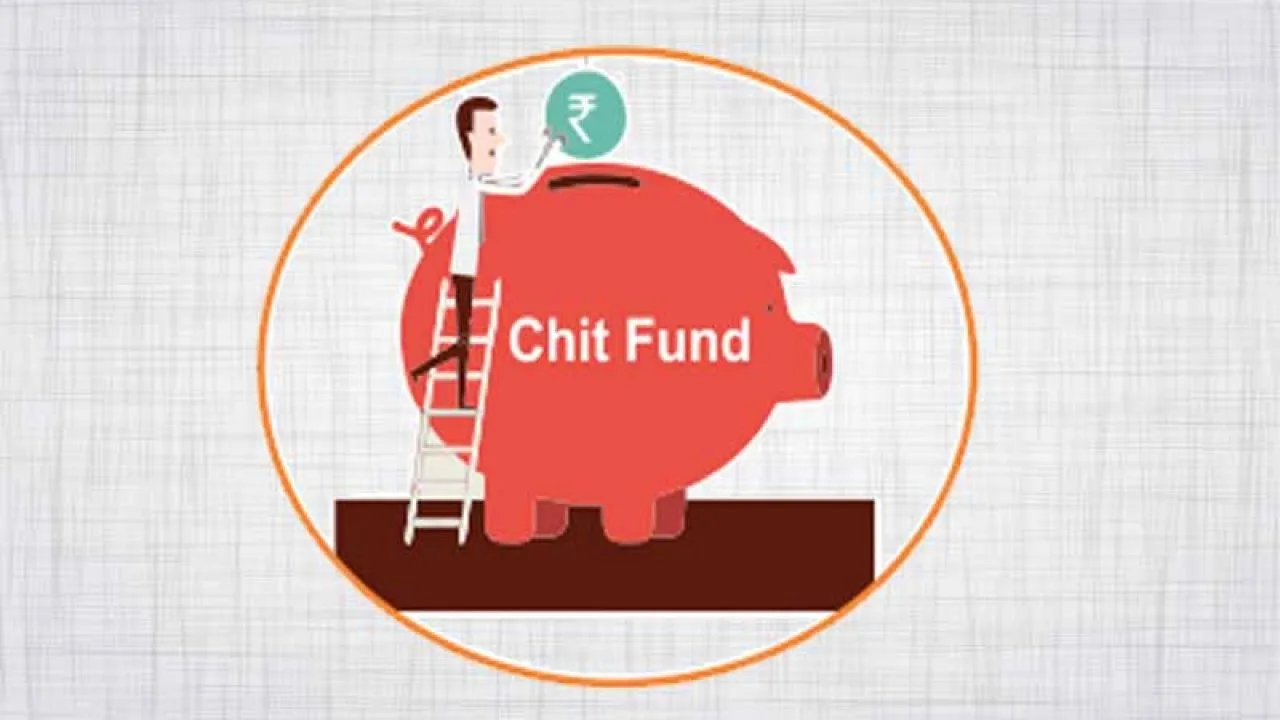
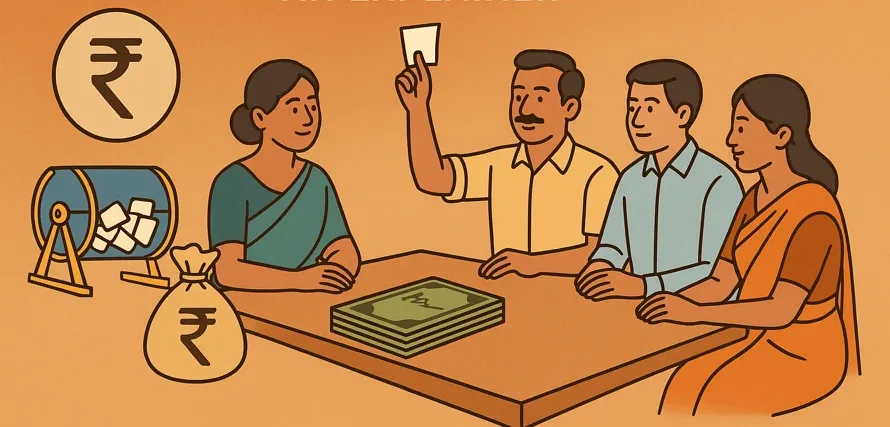
A chit fund is a financial arrangement where a group of people agrees to contribute a fixed amount of money at regular intervals, usually every month, for a specific period.
The collected money forms a common pool. During each cycle, one member receives the pooled amount through an auction or draw process. This continues until every member has received the chit amount once.
A chit fund acts as both a savings scheme and a borrowing facility. People who need money urgently can receive the amount early, while others can continue saving and receive their share later.
In India, chit funds are regulated under the Chit Funds Act, 1982. The central government provides the legal framework, while state governments are responsible for administration and supervision.
How Does a Chit Fund Work?
To understand the working of a chit fund, consider a simple example.
| Particular | Details |
|---|---|
| Number of Members | 20 |
| Monthly Contribution | ₹5,000 |
| Total Monthly Collection | ₹1,00,000 |
| Duration | 20 Months |
Every month, all 20 members contribute ₹5,000 each, creating a pool of ₹1,00,000.
An auction is conducted among members. The member who is willing to accept the lowest amount receives the money. The discount amount is shared among all members as a dividend, reducing their effective contribution.
This process continues every month until all members receive the chit amount.
Rotating Savings and Credit Association (ROSCA)
Chit funds are similar to a global financial model known as a Rotating Savings and Credit Association (ROSCA).
In a ROSCA:
- A group of individuals contributes money regularly.
- The pooled money is given to one member during each cycle.
- Every member receives the pooled amount once.
- It operates like an informal financial institution.
Such systems are found in many countries and are often used where banking facilities are limited.

Types of Chit Funds in India
There are mainly three types of chit funds operating in India.
1. State Government Chit Funds
These chit funds are managed by state governments or public sector organizations.
Features:
- Government supervision
- Better transparency
- Lower risk of fraud
- Higher trust among investors
These are generally considered safer compared to private and unregistered chit funds.
2. Private Registered Chit Funds
These are operated by private companies and financial institutions registered under the Chit Funds Act.
Features:
- Legal and regulated
- Managed by private organizations
- Moderate risk
- Popular in urban and semi-urban areas
Although they are regulated, investors should still verify the registration and reputation of the company before joining.
3. Unregistered Chit Funds
These chit funds operate without legal registration.
Features:
- Not recognized by law
- No regulatory oversight
- High risk of fraud
- Limited legal protection
Many unregistered chit funds are formed among friends, relatives, or local groups. However, participation in such schemes can be risky and should generally be avoided.
Why Do People Choose Chit Funds?
Many people prefer chit funds because they provide easy access to savings and credit.
Easy Access to Funds
Getting a bank loan often involves documentation, verification, and approval procedures. Chit funds provide a simpler alternative.
Encourages Savings
Members must contribute regularly every month, which helps develop a habit of saving money.
Useful During Emergencies
People can receive a lump sum amount when facing emergencies such as:
- Medical expenses
- Education costs
- House repairs
- Family functions
- Marriage expenses
Suitable for Small Investors
Many chit funds allow participation with relatively small monthly contributions, making them affordable for ordinary families.
Flexible Borrowing Option
Members who need money urgently can bid for the fund and obtain the amount earlier than others.
Advantages of Chit Funds
The popularity of chit funds is mainly due to their practical benefits.
Dual Benefit
A chit fund combines savings and borrowing in a single scheme.
Minimal Documentation
Unlike bank loans, chit funds usually require fewer formal procedures.
Community-Based System
Many chit funds operate within local communities, helping build trust among members.
Regular Financial Discipline
Monthly contributions encourage financial planning and disciplined spending.
Risks Associated with Chit Funds
Despite their benefits, chit funds also involve several risks.
Fraud and Scams
Many fraudulent companies have misused the chit fund model to collect money from investors and disappear.
Some famous examples include:
- Saradha Chit Fund Scam
- Rose Valley Scam
These scams caused financial losses to thousands of investors.
Lack of Transparency
Some chit fund operators do not maintain proper records or provide clear information about auctions and payouts.
Default Risk
Members may stop making contributions after receiving their share, creating financial problems for the entire group.
No Deposit Insurance
Unlike bank deposits, chit fund investments generally do not have deposit insurance protection.
Bankruptcy Risk
If a chit fund company becomes insolvent, investors may face difficulties recovering their money.
Existing Regulations for Chit Funds
India has several laws governing chit fund operations.
Chit Funds Act, 1982
This is the primary law regulating chit funds in India.
Key provisions include:
- Registration requirements
- Operational guidelines
- Security deposits
- Protection of subscribers
- State-level supervision
Role of State Governments
State governments appoint a Registrar of Chits who monitors chit fund activities within the state.
Role of RBI
The Reserve Bank of India classifies chit funds under certain categories of non-banking financial activities.
However, the RBI does not provide a separate detailed regulatory framework specifically for chit funds.
Role of SEBI
Securities and Exchange Board of India oversees securities markets and helps monitor investment-related activities to protect investors.
Chit Funds (Amendment) Bill, 2019
In 2019, Parliament passed the Chit Funds (Amendment) Bill to improve the functioning of chit funds and strengthen investor protection.
Major Objectives
| Objective | Purpose |
| Improve Transparency | Better protection for subscribers |
| Strengthen Operations | Simplify business processes |
| Investor Safety | Reduce chances of fraud |
| Modernization | Update outdated provisions |
The amendment aimed to make legal chit funds more attractive and trustworthy while discouraging illegal operators.
Why Are Stricter Regulations Needed?
Growing Financial Fraud
Fraudulent deposit schemes continue to target people with promises of unusually high returns.
Financial Illiteracy
Many investors do not fully understand financial products and become victims of misleading advertisements.
Regulatory Gaps
Some operators exploit weaknesses in supervision and enforcement mechanisms.
Weak Accountability
When companies fail, investors often struggle to recover their savings.
Rural Vulnerability
People in rural and remote areas may have limited access to banks and become more dependent on informal financial schemes.
Measures Needed for Better Protection
To make chit funds safer and more reliable, several steps can be taken.
Strong Enforcement
Authorities should strictly monitor and penalize illegal operators.
Financial Education
People should be educated about safe investment practices and warning signs of fraud.
Digital Monitoring
Technology can improve transparency and record-keeping.
Better Banking Access
Expanding banking services in rural and underserved areas can reduce dependence on risky schemes.
Quick Legal Action
Fast investigation and punishment of fraudulent operators can increase public confidence.
Importance of Financial Inclusion
One of the main reasons people join informal financial schemes is the lack of easy access to banking services.
Improving financial inclusion through:
- Bank branches
- Mobile banking
- Digital payments
- Microfinance services
- Financial awareness programs
can help people access safer financial products and reduce the risk of exploitation.
Final Thoughts
Chit funds remain an important financial tool for many Indian households. When properly regulated and operated, they can provide useful savings and borrowing opportunities. However, investors must carefully verify whether a chit fund is legally registered and trustworthy before investing.
Greater financial literacy, stronger regulations, better enforcement, and wider banking access can help ensure that chit funds continue to serve people safely while protecting them from fraud and financial losses.
FAQs
What is a chit fund?
A chit fund is a savings and borrowing scheme where a group of people contribute money regularly and one member receives the pooled amount during each cycle.
Are chit funds legal in India?
Yes, registered chit funds operating under the Chit Funds Act, 1982 are legal in India.
Who regulates chit funds in India?
Chit funds are mainly regulated by state governments through the Registrar of Chits under the Chit Funds Act.
Is investing in a chit fund safe?
Registered chit funds are generally safer than unregistered ones, but investors should always verify the company’s credentials before investing.
What is the biggest risk in chit funds?
Fraud, lack of transparency, and company failure are some of the biggest risks associated with chit funds.
Why do people prefer chit funds?
People choose chit funds because they provide easy savings, access to funds during emergencies, and fewer formalities compared to bank loans.
What is a ROSCA?
A Rotating Savings and Credit Association (ROSCA) is an informal financial system where members contribute regularly and receive the pooled amount one at a time.