


India-Africa Relations: History, Importance, Cooperation and Challenges

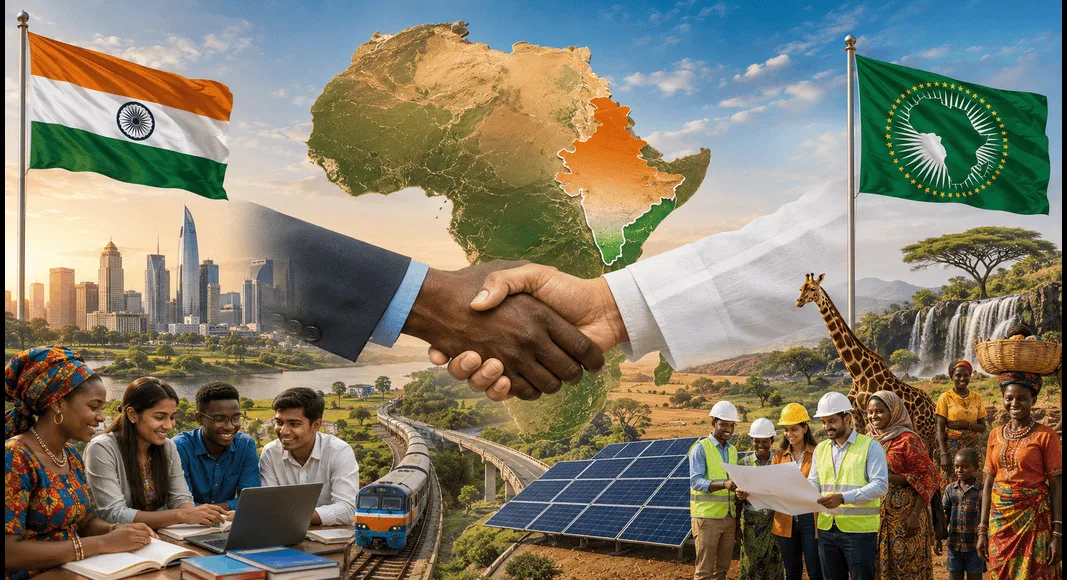
India-Africa Relations are an important part of India’s foreign policy and international cooperation. India and Africa share strong historical, cultural, political, and economic ties that have developed over many centuries. These relations are based on friendship, mutual respect, anti-colonial struggles, development cooperation, and shared goals for global peace and prosperity.
Africa is one of the fastest-growing regions in the world and is rich in natural resources, young population, and economic opportunities. India sees Africa as an important partner in trade, energy security, maritime cooperation, education, healthcare, and technology. At the same time, many African countries consider India a trusted development partner because India focuses on capacity building, affordable technology, skill development, and people-centered growth.

In recent years, India-Africa relations have expanded rapidly through diplomatic visits, trade agreements, infrastructure projects, educational partnerships, and international forums such as the India-Africa Forum Summit (IAFS). India also supports Africa in global institutions and works closely with African countries in organizations like the United Nations, BRICS, G20, and the Non-Aligned Movement (NAM).
Historical Background of India-Africa Relations
India and Africa have shared relations since ancient times. The Indian Ocean connected the eastern coast of Africa with the western coast of India through trade routes.
Ancient Trade Relations
Trade between India and Africa existed many centuries ago. Indian traders used sea routes across the Indian Ocean to exchange goods with East African coastal cities. Spices, textiles, beads, ivory, and gold were commonly traded.
An ancient Greek book called Periplus of the Erythraean Sea, written around 60 AD, mentions trade links between India and the African coast. This shows that relations between the two regions are very old.
The Swahili Coast of East Africa had strong trade connections with Indian merchants. Due to favorable winds and geographical proximity, trade became easier and more regular.
Relations During the Medieval Period
During the medieval period, contacts between India and Africa increased further through Arab traders and Islamic empires.
Travelers such as Marco Polo wrote about interactions between India and Africa. Cultural exchanges also took place during this time. Indian goods were popular in African markets, while African products reached India through maritime trade routes.
Some Africans also settled in India. The Siddi community in India is believed to have African origins. They mainly settled in Gujarat, Karnataka, and parts of Maharashtra.
Mahatma Gandhi and South Africa
One of the most important chapters in India-Africa relations is connected with Mahatma Gandhi.
Before leading India’s freedom struggle, Gandhi worked in South Africa as a lawyer. He experienced racial discrimination there and started movements against injustice.
In 1894, Gandhi established the Natal Indian Congress in South Africa to protect the rights of Indians living there. His experiences in South Africa helped shape his ideas of non-violence and civil resistance.
This created a strong emotional and political connection between India and Africa.
India’s Support for African Freedom Movements
After independence in 1947, India strongly supported African nations in their struggle against colonialism and racial discrimination.
India raised the issue of African independence in international forums such as the United Nations. It opposed apartheid in South Africa and supported the rights of black Africans.
India became an important voice for developing countries through:
- Bandung Conference (1955)
- Non-Aligned Movement (NAM)
- Group of 77 (G-77)
India believed that Asian and African nations should work together for peace, equality, and development.
Role of Non-Aligned Movement (NAM)
The Non-Aligned Movement played a major role in strengthening India-Africa relations during the Cold War.
India and many African nations did not want to join either the United States bloc or the Soviet Union bloc. They wanted independent foreign policies and peaceful cooperation.
NAM became a platform where India and African countries worked together on issues such as:
- Anti-colonialism
- Economic development
- Global equality
- Human rights
- Peaceful coexistence
This cooperation built trust between India and African nations.
Importance of Africa for India
Africa is extremely important for India for political, economic, strategic, and cultural reasons.
1. Economic Importance
Africa has a huge market with more than one billion people. Many African economies are growing rapidly.
Countries such as:
- Rwanda
- Kenya
- Tanzania
- Ethiopia
- Senegal
have shown strong economic growth in recent years.
India sees Africa as an important trading partner and investment destination.
2. Natural Resources
Africa is rich in natural resources such as:
- Oil
- Natural gas
- Gold
- Diamonds
- Copper
- Uranium
- Cobalt
India imports many of these resources to meet its industrial and energy needs.
Africa is also an important source of pulses and lentils for India.
3. Energy Security
India imports a large amount of crude oil and gas. To reduce dependence on the Middle East, India wants to diversify its energy sources.
African countries such as:
- Nigeria
- Angola
- Algeria
are important energy partners for India.
4. Strategic Importance
Africa is strategically important because of its location near important sea routes in the Indian Ocean.
India cooperates with African nations to ensure maritime security and fight against:
- Piracy
- Terrorism
- Illegal trafficking
Strong relations with Africa help India protect its maritime interests.
5. Political Support
African countries form a large voting group in international organizations like the United Nations.
India seeks African support for:
- Permanent membership in the UN Security Council
- Global governance reforms
- Climate justice
- Development issues
Indian Diaspora in Africa
A large number of people of Indian origin live in African countries such as:
- South Africa
- Kenya
- Mauritius
- Tanzania
- Uganda
- Nigeria
These communities act as a bridge between India and Africa.
Indian diaspora contributes to:
- Business
- Trade
- Education
- Healthcare
- Cultural exchange
Their presence strengthens people-to-people relations.
India’s Engagement with Africa
India engages with Africa at three levels:
- Bilateral Level
- Regional Level
- Multilateral Level
Bilateral Relations
India maintains diplomatic relations with all African countries.
Indian leaders regularly visit African nations, and African leaders also visit India.
India signs agreements with African countries in areas such as:
- Trade
- Education
- Healthcare
- Agriculture
- Defense
- Technology
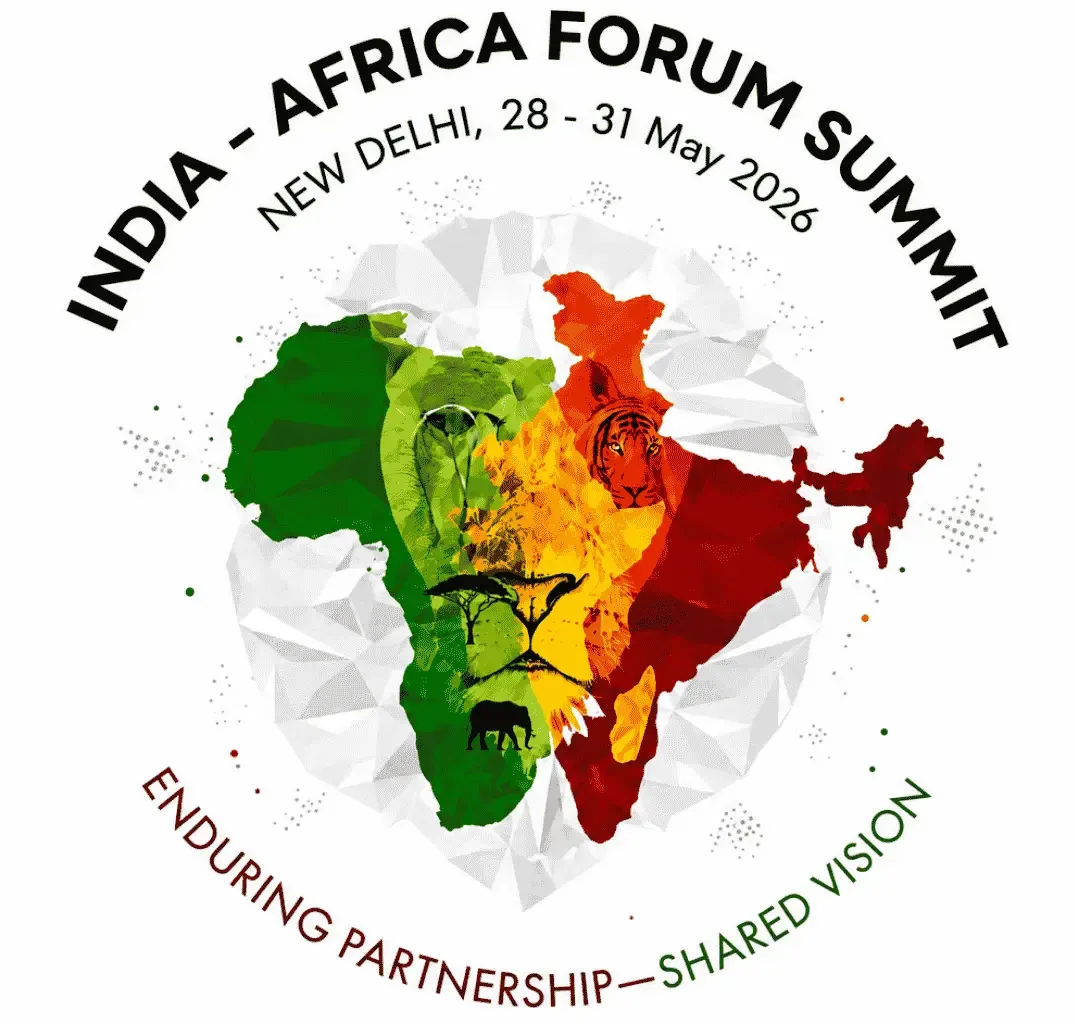
India-Africa Forum Summit (IAFS)
The India-Africa Forum Summit is the most important platform for India-Africa cooperation.
Features of IAFS
- Started in 2008
- Held every three years
- Includes participation from African Union members
Major Summits
These summits help strengthen political and economic cooperation.
Trade Relations Between India and Africa
Trade between India and Africa has increased significantly over the years.
India exports:
- Medicines
- Vehicles
- Machinery
- Textiles
- Technology products
India imports:
- Oil
- Gold
- Minerals
- Pulses
- Coal
India is among the top trading partners of Africa.
India’s Investments in Africa
Indian public and private companies have invested in many African sectors.
Major Areas of Investment
- Telecommunications
- Infrastructure
- Agriculture
- Mining
- Banking
- Healthcare
- Energy
Indian companies provide employment and technical support in African countries.
Capacity Building and Skill Development
India focuses heavily on capacity building in Africa.
Indian Technical and Economic Cooperation (ITEC)
Under ITEC, India provides:
- Training programs
- Scholarships
- Technical assistance
African students and professionals receive education and skill training in India.
This strengthens long-term relations.
Pan-African E-Network Project
India launched the Pan-African E-Network project to connect African countries digitally.
The project provides:
- Telemedicine
- Tele-education
- Digital communication
It helps bridge the digital divide in Africa.
Healthcare Cooperation
India is known for affordable medicines and healthcare services.
India supplies:
- Generic medicines
- Vaccines
- Medical equipment
During the Covid-19 pandemic, India provided vaccines and medical assistance to many African nations.
India also helps African countries improve public health systems.
Educational Cooperation
Thousands of African students study in Indian universities every year.
India offers:
- Scholarships
- Technical education
- Skill development
- Professional courses
Indian education is affordable and widely respected in Africa.
Agriculture Cooperation
Agriculture is an important area of India-Africa partnership.
India shares expertise in:
- Irrigation
- Dairy farming
- Crop management
- Agricultural technology
This helps improve food security in Africa.
Maritime Cooperation
India and African countries cooperate in maritime security in the Indian Ocean.
Areas of cooperation include:
- Anti-piracy operations
- Naval exercises
- Disaster management
- Coastal security
India supports safe and secure sea routes.
Defense and Security Cooperation
India trains military officers from African countries in Indian military academies.
India also cooperates in:
- Counter-terrorism
- Peacekeeping
- Intelligence sharing
India and African nations share concerns about terrorism and extremism.
Asian Africa Growth Corridor (AAGC)
India and Japan jointly proposed the Asian Africa Growth Corridor.
Its objectives include:
- Infrastructure development
- Connectivity
- Skill development
- Sustainable growth
The project aims to promote transparent and inclusive development.
Africa Agenda 2063 and India
Africa Agenda 2063 is the African Union’s long-term development plan.
India supports Africa’s development goals by focusing on:
- Infrastructure
- Education
- Healthcare
- Technology
- Sustainable development
India’s approach is based on partnership and mutual benefit.
Challenges in India-Africa Relations
Despite strong ties, several challenges affect India-Africa relations.
1. Political Instability
Some African countries face:
- Civil wars
- Ethnic conflicts
- Terrorism
- Weak governance
This creates risks for investment and cooperation.
2. China’s Growing Influence
China has increased its presence in Africa through:
- Large infrastructure projects
- Loans
- Trade
- Investments
China’s Belt and Road Initiative (BRI) has expanded Chinese influence across Africa.
India faces competition from China in the region.
3. Limited Connectivity
Transport and communication links between India and Africa are still limited.
Better shipping and air connectivity are needed for stronger trade relations.
4. Lack of Coordinated Policy
India’s government agencies and businesses sometimes work separately without coordination.
A stronger and more organized Africa strategy is needed.
5. Trade Imbalance
Trade relations need diversification.
India’s exports and investments are concentrated in limited sectors.
More balanced and broad-based economic cooperation is necessary.
India’s Strengths in Africa
India has several advantages in Africa compared to other global powers.
1. Historical Goodwill
India supported African freedom movements and anti-apartheid struggles. This created trust and friendship.
2. Development Partnership Model
India focuses on:
- Capacity building
- Human resource development
- Affordable technology
Unlike some countries, India emphasizes partnership rather than control.
3. Cultural Connection
Bollywood films, Indian food, yoga, and cultural exchanges are popular in Africa.
These cultural links improve people-to-people relations.
4. Affordable Technology
India provides low-cost solutions in:
- Healthcare
- Education
- Information technology
- Agriculture
This makes India a preferred development partner.
Future Opportunities in India-Africa Relations
India and Africa can cooperate more deeply in several sectors.
Renewable Energy
Africa has huge potential for solar and wind energy.
India can help through:
- Solar technology
- Investment
- Training
Digital Economy
India’s success in digital payments and e-governance can help African countries modernize their economies.
Blue Economy
Both India and Africa can cooperate in:
- Fisheries
- Marine resources
- Coastal tourism
- Ocean research
Startups and Innovation
India’s startup ecosystem can support African entrepreneurship and innovation.
Climate Change Cooperation
India and African nations face similar climate challenges.
They can work together on:
- Sustainable development
- Disaster management
- Clean energy
- Environmental protection
India’s Vision for Africa
India believes in a partnership based on:
- Equality
- Respect
- Shared development
- Mutual benefit
India does not view Africa merely as a market but as a long-term strategic partner.
India’s development projects in Africa focus on improving the lives of ordinary people.
Way Forward
India must continue strengthening relations with Africa through practical cooperation and long-term partnerships.
Some important steps include:
- Increasing trade and investments
- Improving transport connectivity
- Expanding educational exchanges
- Supporting infrastructure projects
- Strengthening healthcare cooperation
- Promoting digital partnerships
- Increasing high-level diplomatic visits
India should also ensure faster implementation of projects promised to African countries.
A coordinated Africa policy involving government, businesses, educational institutions, and civil society is necessary.
Conclusion
India-Africa Relations are based on centuries of historical interaction, shared anti-colonial struggles, political cooperation, and development partnership. Over time, these relations have grown stronger in areas such as trade, education, healthcare, security, technology, and culture.
Africa is extremely important for India because of its strategic location, natural resources, growing markets, and political significance. Similarly, India is an important partner for Africa because it provides affordable technology, skill development, healthcare support, and capacity building.
Although challenges such as political instability, connectivity issues, and competition from China exist, the future of India-Africa relations remains highly promising.
With mutual trust, stronger cooperation, and sustainable development efforts, India and Africa can build a partnership that benefits both regions and contributes to global peace and prosperity.
FAQs on India-Africa Relations
1. What are India-Africa Relations?
India-Africa Relations refer to political, economic, cultural, and strategic ties between India and African countries.
2. Why is Africa important for India?
Africa is important for India because of its natural resources, growing markets, strategic location, and energy supplies.
3. What is the India-Africa Forum Summit?
It is a major platform for cooperation between India and African countries started in 2008.
4. How does India help African countries?
India supports Africa through education, healthcare, technology, trade, training, and infrastructure projects.
5. What is the role of ITEC in Africa?
ITEC provides technical training, scholarships, and skill development programs for African professionals and students.
6. Which African countries have large Indian communities?
Countries like South Africa, Kenya, Mauritius, Uganda, and Tanzania have large Indian diaspora populations.
7. What are the major trade items between India and Africa?
India exports medicines, machinery, and textiles, while importing oil, gold, minerals, and pulses.
8. What challenges affect India-Africa Relations?
Political instability, poor connectivity, and growing Chinese influence are major challenges.
9. What is the Asian Africa Growth Corridor?
It is a development initiative by India and Japan focused on infrastructure, connectivity, and sustainable growth in Africa.
10. How can India strengthen ties with Africa?
India can improve ties through more investments, better connectivity, educational cooperation, and faster project implementation.