

India-Bhutan Relations: History, Importance, Cooperation, Challenges and Future Prospects

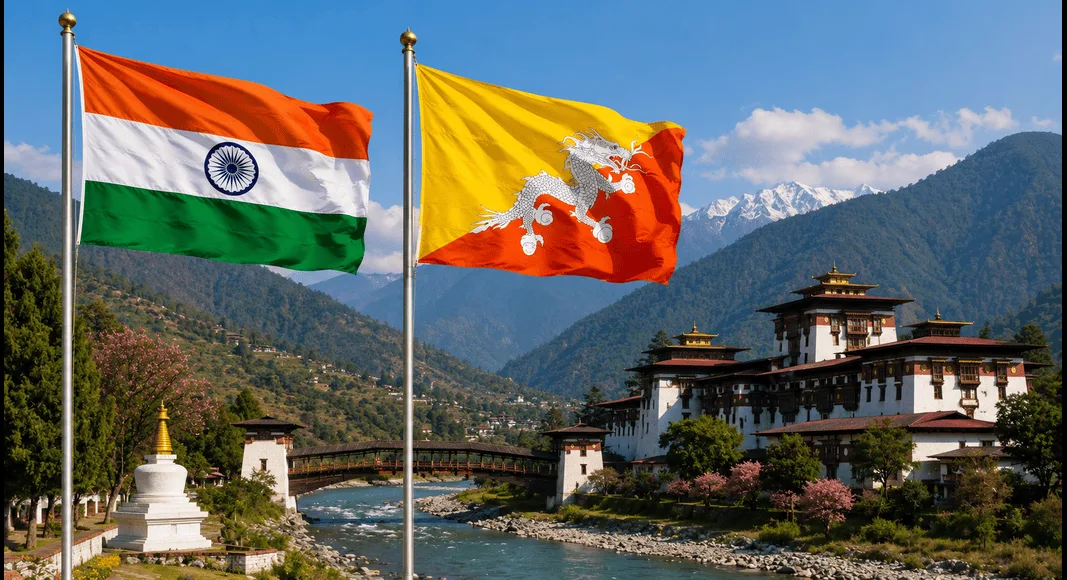
India-Bhutan Relations are among the strongest and most friendly bilateral relationships in South Asia. The two neighboring countries share deep historical, cultural, economic, and strategic ties. Their friendship is based on mutual trust, respect, and cooperation. Over the years, India and Bhutan have worked closely in areas such as trade, hydropower, education, security, infrastructure, and regional development.
Bhutan is one of India’s most reliable neighbors and an important partner in maintaining peace and stability in the Himalayan region. The relationship between the two countries is often described as a model of good neighborly relations.

In recent years, cooperation between India and Bhutan has expanded further, benefiting the people of both nations and strengthening regional connectivity and development.
Historical Background of India-Bhutan Relations
The history of India-Bhutan relations goes back many centuries. The people of both countries have shared cultural and religious links for a long time.
A major connection between India and Bhutan came through Buddhism. The great Buddhist saint Guru Padmasambhava played a key role in spreading Buddhism in Bhutan. This helped create strong cultural and spiritual bonds between the people of both countries.
In 1910, Bhutan became a protectorate of British India. Under this arrangement, the British guided Bhutan’s foreign affairs and defense matters.
After India gained independence in 1947, Bhutan was one of the first countries to recognize independent India. Since then, the friendship between the two nations has continued to grow stronger.
India established an office of its Special Representative in Bhutan’s capital, Thimphu, in 1968. Bhutan opened its office in India in 1971. Later, both offices were upgraded to full embassies in 1978, strengthening diplomatic relations.
Indo-Bhutan Treaty of Peace and Friendship
The foundation of modern India-Bhutan relations was laid through the Indo-Bhutan Treaty of Peace and Friendship, 1949.
The treaty aimed to ensure:
- Lasting peace and friendship
- Free trade and commerce
- Mutual cooperation
- Equal treatment of citizens in both countries
However, one provision of the treaty allowed India to guide Bhutan’s foreign policy. As Bhutan developed as a modern sovereign nation, the treaty was revised in 2007.
Revised Treaty of 2007
The updated treaty strengthened Bhutan’s sovereignty and independence.
Important changes included:
- Bhutan gained complete freedom in foreign policy decisions.
- Both countries agreed to cooperate on matters of national interest.
- Cultural and economic cooperation was expanded.
- Bhutan was allowed to import defense equipment while ensuring regional security.
The revised treaty reflects the modern and equal partnership between India and Bhutan.
Why Bhutan is Important for India
1. Geographical Importance
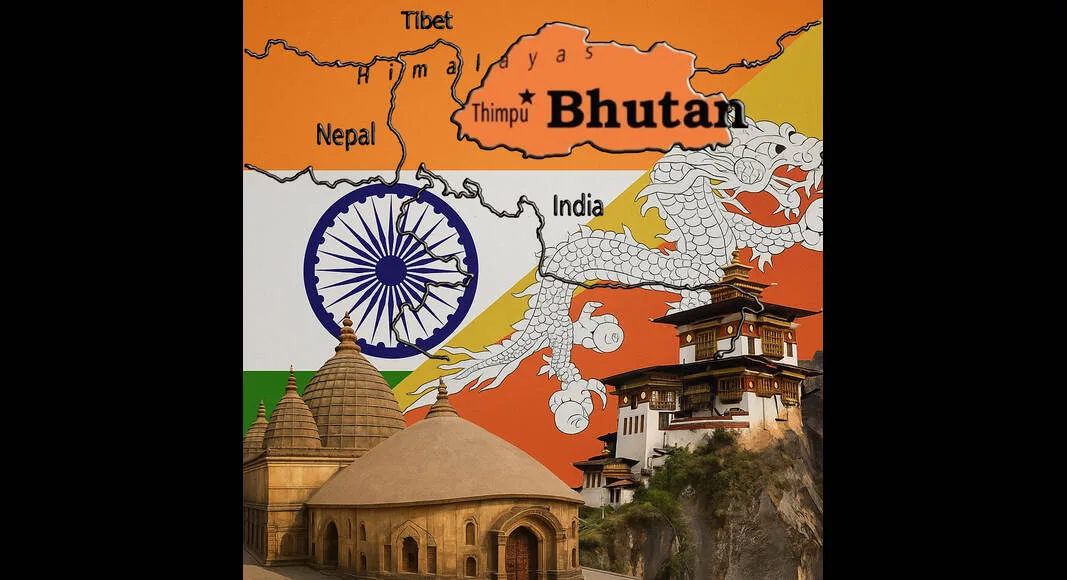
Bhutan occupies a strategic position in the Himalayan region.
It shares borders with four Indian states:
- Assam
- Arunachal Pradesh
- West Bengal
- Sikkim
Bhutan acts as a geographical buffer between India and China. Therefore, stability and security in Bhutan are extremely important for India’s national security.
The western region of Bhutan, especially areas near Doklam, has significant strategic importance because of China’s territorial claims.
2. Economic Importance
Bhutan is an important economic partner for India.
The country provides:
- A market for Indian goods
- Opportunities for Indian investments
- Access to hydropower resources
Electricity generated in Bhutan is exported to India, helping meet India’s growing energy demands.
3. Political Importance
A stable and peaceful Bhutan contributes to regional security.
Political instability in Bhutan could create opportunities for anti-national activities, insurgent groups, and illegal networks that may threaten India’s security.
Therefore, maintaining strong political relations with Bhutan remains a priority for India.
Areas of Cooperation Between India and Bhutan
Trade Relations
Trade is one of the strongest pillars of India-Bhutan relations.
The India-Bhutan Trade and Transit Agreement of 1972 governs trade between the two countries.
Key features include:
- Free trade regime
- Duty-free transit facilities
- Easy movement of goods
India is Bhutan’s largest trading partner.
Major exports from India to Bhutan include:
- Machinery
- Electrical equipment
- Mineral products
- Industrial goods
Major imports from Bhutan include:
- Electricity
- Cement
- Ferrosilicon
- Agricultural products
Trade contributes significantly to Bhutan’s economy and strengthens economic ties between the two countries.
Development Assistance
India is Bhutan’s largest development partner.
Since Bhutan launched its First Five-Year Plan in 1961, India has provided financial and technical assistance for development projects.
India has supported Bhutan in areas such as:
- Roads
- Schools
- Hospitals
- Communication systems
- Infrastructure development
Financial assistance from India has played an important role in Bhutan’s modernization and economic growth.
Hydropower Cooperation
Hydropower is one of the most successful areas of India-Bhutan cooperation.
Bhutan has abundant water resources and tremendous potential for generating hydroelectric power.
India has helped Bhutan build several hydropower projects.
Benefits of hydropower cooperation include:
For Bhutan
- Revenue generation
- Employment opportunities
- Infrastructure development
- Economic growth
For India
- Clean energy supply
- Reliable electricity imports
- Strengthened energy security
Projects developed through bilateral cooperation have become major contributors to Bhutan’s economy.
The two countries continue working together to expand hydropower capacity and improve energy cooperation.
Water Resource Management
India and Bhutan cooperate closely in water resource management.
Floods often affect areas near the shared border. To address these challenges, both countries work together through the Joint Group of Experts.
Their cooperation focuses on:
- Flood forecasting
- River management
- Disaster prevention
- Environmental protection
This cooperation helps protect lives and property in both countries.
Border Management and Security Cooperation
India and Bhutan share a long and peaceful border.
Both countries regularly coordinate on:
- Border security
- Illegal activities
- Cross-border crimes
- Insurgent movements
Special coordination mechanisms have been established to ensure effective communication between border authorities.
Security cooperation has helped maintain peace and stability along the border region.
Educational Cooperation
Education is another important area of partnership.
Many Bhutanese students study in Indian schools, colleges, and universities.
India provides:
- Scholarships
- Educational grants
- Professional training programs
These opportunities help Bhutanese students gain quality education and develop valuable skills.
Educational cooperation also strengthens people-to-people relations.
Cultural Relations
India and Bhutan share strong cultural and religious connections.
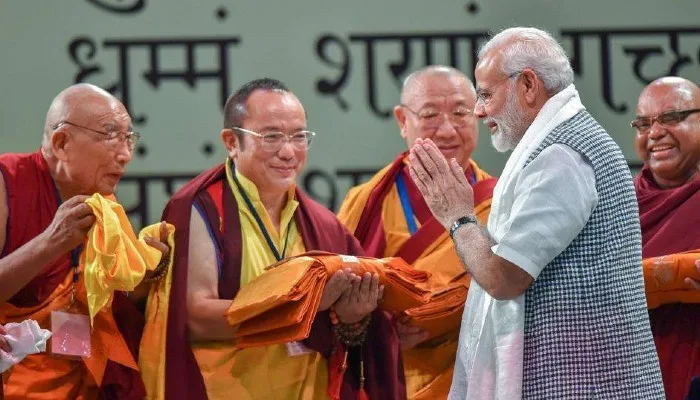
Buddhism serves as a major cultural link between the two nations.
Cultural cooperation includes:
- Exchange programs
- Festivals
- Academic interactions
- Tourism promotion
The India Bhutan Foundation, established in 2003, promotes cultural exchanges and strengthens friendship between citizens of both countries.
Such exchanges help build mutual understanding and preserve shared cultural heritage.
Indian Community in Bhutan
A large number of Indian citizens live and work in Bhutan.
Many are employed in:
- Hydropower projects
- Road construction
- Infrastructure development
- Trade and business sectors
Thousands of workers also travel daily across border towns for employment and commercial activities.
Their contributions play an important role in Bhutan’s economic development.
Cooperation in Regional Organizations
India and Bhutan work together in several regional and international organizations.
These include:
- SAARC
- BIMSTEC
- BBIN
Through these organizations, both countries promote:
- Regional connectivity
- Economic growth
- Trade cooperation
- Cultural exchanges
Challenges in India-Bhutan Relations
Despite strong ties, certain challenges exist.
Perception Issues
Some people in Bhutan feel that India occasionally becomes too involved in Bhutan’s internal affairs.
Such perceptions can create misunderstandings and require careful diplomatic handling.
Hydropower Concerns
Some Bhutanese groups believe India benefits more from hydropower projects because it purchases electricity at favorable rates.
There are also concerns about the long-term profitability of hydropower projects as renewable energy sources such as solar and wind power become more popular.
Security Challenges
Dense forests in southern Bhutan have sometimes been used by militant groups.
Although both governments actively cooperate against such threats, security remains an ongoing concern.
China’s Growing Influence
China has increased its diplomatic and economic engagement with Bhutan.
Border disputes involving areas such as Doklam and nearby regions continue to attract attention.
China’s growing influence remains an important strategic concern for India.
Future of India-Bhutan Relations
The future of India-Bhutan relations remains highly promising.
Several steps can strengthen cooperation further:
Expand New Areas of Cooperation
India and Bhutan can collaborate in:
- Digital technology
- Space technology
- Renewable energy
- Climate change management
- Tourism
- Healthcare
Improve Connectivity
Better roads, communication networks, and transportation systems will boost trade and people-to-people contact.
Strengthen Border Security
Both countries should continue working together to ensure peaceful and secure borders.
Encourage Cultural Exchanges
More educational and cultural programs can strengthen friendship between future generations.
Promote Balanced Development
Development projects should benefit people in both countries while respecting Bhutan’s unique culture and environment.
Conclusion
India-Bhutan Relations represent one of the most successful and stable partnerships in South Asia. Built on trust, mutual respect, shared culture, and strategic cooperation, the relationship has grown stronger over the decades.
From trade and hydropower to education, security, and regional cooperation, both countries continue to support each other’s development and prosperity. While challenges exist, strong political will and regular dialogue help address them effectively.
As neighboring countries with common interests and shared values, India and Bhutan are expected to deepen their partnership further and contribute to peace, stability, and sustainable development in the region for many years to come.
FAQs on India-Bhutan Relations
1. What are India-Bhutan Relations?
India-Bhutan Relations refer to the diplomatic, economic, cultural, and strategic partnership between India and Bhutan.
2. When was the Indo-Bhutan Treaty of Peace and Friendship signed?
The treaty was signed in 1949 and revised in 2007 to strengthen Bhutan’s sovereignty.
3. Why is Bhutan important to India?
Bhutan is important because of its strategic location, security significance, hydropower resources, and close friendship with India.
4. Which Indian states share a border with Bhutan?
Assam, Arunachal Pradesh, West Bengal, and Sikkim share borders with Bhutan.
5. How long is the India-Bhutan border?
India and Bhutan share a border of approximately 699 kilometers.
6. What is the main area of economic cooperation between India and Bhutan?
Hydropower development and electricity trade are the most important areas of economic cooperation.
7. Is India Bhutan’s largest trading partner?
Yes, India is Bhutan’s largest trading and development partner.
8. What is the role of the India-Bhutan Trade and Transit Agreement?
It promotes free trade and facilitates duty-free transit of Bhutanese goods through India.
9. Which regional organizations include both India and Bhutan?
Both countries are members of SAARC, BIMSTEC, and BBIN.
10. What are the major challenges in India-Bhutan Relations?
Key challenges include hydropower concerns, border security issues, China’s growing influence, and perception-related issues.