

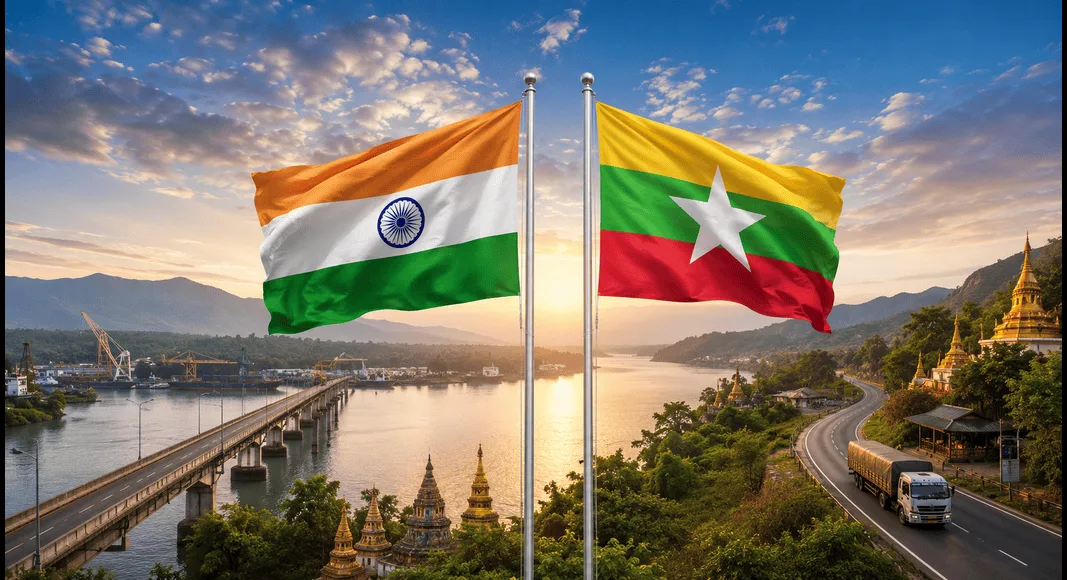
India-Myanmar Relations: Importance, Areas of Cooperation, Challenges and Future Prospects

India-Myanmar Relations are among the most important bilateral relationships in South Asia and Southeast Asia. Myanmar is India’s only land bridge to Southeast Asia and plays a crucial role in India’s foreign policy, security strategy, trade expansion, and regional connectivity plans. The relationship between the two countries is based on historical ties, cultural connections, geographical proximity, and shared strategic interests.
India and Myanmar officially established friendly relations through the Treaty of Friendship signed in 1951. Since then, both countries have worked together in various fields such as trade, connectivity, defense, development, culture, and regional cooperation. In recent years, Myanmar has become even more important for India’s Act East Policy and efforts to develop the Northeastern states.

The joint operations conducted by India and Myanmar against militant groups along the border have highlighted the importance of security cooperation between the two nations. These operations also protect major infrastructure projects such as the Kaladan Multi-Modal Transit Transport Project, which aims to improve connectivity between India’s Northeast and Southeast Asia.
Historical Background of India-Myanmar Relations
India and Myanmar share a long history that goes back thousands of years. Ancient trade routes connected the people of both regions. Buddhism, which originated in India, spread to Myanmar and became an important part of Myanmar’s culture and society.
During the colonial period, both India and Myanmar were under British rule. Myanmar was administered as a part of British India until 1937. These historical connections created strong social and cultural ties between the people of the two countries.
After gaining independence, India and Myanmar signed the Treaty of Friendship in 1951, marking the beginning of modern diplomatic relations.
Strategic Importance of Myanmar for India
Myanmar occupies a unique position in India’s foreign policy.
Gateway to Southeast Asia
Myanmar is the only Southeast Asian country that shares a land border with India. Therefore, it serves as India’s gateway to the ASEAN region and wider Southeast Asia.
India’s Act East Policy depends heavily on improved connectivity and cooperation with Myanmar.
Shared Border
India and Myanmar share a land border of approximately 1,643 kilometers.
Myanmar shares borders with four Indian states:
- Arunachal Pradesh
- Nagaland
- Manipur
- Mizoram
The two countries also share a maritime boundary in the Bay of Bengal.
Importance for Northeast India
The development of India’s Northeastern region is closely linked with Myanmar. Improved connectivity through Myanmar can provide easier access to international markets for the Northeastern states.
Security Significance
The India-Myanmar border passes through mountainous and forested regions, making it difficult to monitor. Several insurgent groups have used this border area for shelter and movement.
Cooperation with Myanmar helps India address:
- Cross-border terrorism
- Insurgent activities
- Arms trafficking
- Drug smuggling
- Human trafficking
Thus, Myanmar is a key security partner for India.
Areas of Cooperation Between India and Myanmar
1. Security and Strategic Cooperation
Security cooperation is one of the strongest pillars of India-Myanmar relations.
Several insurgent groups operating in India’s Northeast have historically used camps located near the India-Myanmar border.
To address this challenge, both countries conduct coordinated military operations and intelligence sharing.
Key areas of cooperation include:
- Border management
- Counter-terrorism efforts
- Anti-insurgency operations
- Intelligence exchange
- Prevention of arms trafficking
- Combating drug smuggling
Joint military operations have helped destroy militant camps and improve regional security.
2. Trade and Economic Cooperation
Economic cooperation between India and Myanmar has steadily increased over the years.
Trade between the two countries has grown significantly since the 1980s.
India exports:
- Pharmaceuticals
- Machinery
- Electrical equipment
- Steel products
- Automobiles
- Consumer goods
India imports:
- Pulses
- Beans
- Timber
- Agricultural products
- Minerals
Myanmar enjoys benefits under India’s duty-free tariff preference scheme for Least Developed Countries (LDCs), helping promote bilateral trade.
Indian Investments in Myanmar
Several Indian companies have invested in Myanmar, especially in the energy sector.
Major companies include:
- ONGC Videsh Limited
- GAIL
- Essar
These investments strengthen economic relations and support Myanmar’s development.
3. Connectivity Projects
Connectivity is one of the most important areas of India-Myanmar cooperation.
Kaladan Multi-Modal Transit Transport Project
This project aims to connect:
- Kolkata Port
- Sittwe Port in Myanmar
- Inland waterways through the Kaladan River
- Road networks leading to Mizoram
The project will provide an alternative route to India’s Northeast and reduce dependence on the narrow Siliguri Corridor.
India-Myanmar-Thailand Trilateral Highway
This ambitious highway project aims to connect:
- India
- Myanmar
- Thailand
The highway will strengthen trade, tourism, and people-to-people exchanges across South and Southeast Asia.
Benefits include:
- Faster movement of goods
- Improved regional trade
- Better connectivity
- Economic growth in border regions
These projects are vital for the success of India’s Act East Policy.
4. Development Assistance
India has actively supported Myanmar’s development efforts.
India has extended significant financial assistance through soft loans and grants.
Major areas of cooperation include:
Education
India has helped establish institutions such as:
- Myanmar Institute of Information Technology
- Advanced Centre for Agricultural Research and Education
- Myanmar-India Centre for Enhancement of IT Skills
Skill Development
India provides training and capacity-building programs for Myanmar’s youth and professionals.
Infrastructure Development
India supports:
- Road construction
- Power projects
- Healthcare facilities
- Agricultural development
- Rural development programs
These initiatives contribute to Myanmar’s economic growth while strengthening bilateral ties.
5. Defence Cooperation
Defence cooperation between India and Myanmar has expanded significantly.
India-Myanmar Bilateral Army Exercise (IMBAX)
IMBAX is conducted to:
- Improve military cooperation
- Enhance operational capabilities
- Share best practices
- Strengthen mutual trust
The exercise promotes better coordination between the armed forces of both countries.
Myanmar’s cooperation is particularly important for maintaining peace and stability in India’s Northeastern region.

6. Cultural Relations
India and Myanmar share deep cultural and religious ties.
Buddhist Heritage
Buddhism connects the people of both countries.
Thousands of pilgrims from Myanmar visit Buddhist sites in India, including:
- Bodh Gaya
- Sarnath
- Kushinagar
Restoration Projects
India has assisted Myanmar in preserving important cultural monuments.
One notable example is the restoration of the historic:
- Ananda Temple
Such projects strengthen cultural diplomacy and goodwill between the two nations.
7. Humanitarian Assistance
India has consistently supported Myanmar during natural disasters.
India provided assistance during:
- Cyclone Mora (2017)
- Cyclone Komen (2015)
- Earthquakes and other emergencies
Support includes:
- Relief materials
- Medical aid
- Rescue assistance
- Capacity building in disaster management
This demonstrates India’s commitment as a reliable partner.
8. Indian Community in Myanmar
A large number of people of Indian origin live in Myanmar.
Estimates suggest that between 1.5 and 2 million people of Indian origin reside in the country.
These communities contribute significantly to:
- Trade
- Education
- Business
- Healthcare
- Cultural exchanges
The Indian diaspora acts as a bridge between the two nations.
9. Multilateral Cooperation
India and Myanmar cooperate through various regional organizations.
BIMSTEC
Both countries are members of:
- BIMSTEC
BIMSTEC promotes cooperation in:
- Trade
- Transport
- Energy
- Security
- Technology
ASEAN Connectivity
Myanmar’s membership in:
- ASEAN
helps India strengthen its engagement with Southeast Asia.
Mekong-Ganga Cooperation
Both countries also cooperate through:
- Mekong-Ganga Cooperation
These platforms promote regional integration and development.
The Rohingya Issue
The Rohingya issue remains a sensitive topic in India-Myanmar relations.
The Rohingya are a Muslim minority community primarily located in Myanmar’s Rakhine State.
Violence and instability in the region have led to large-scale displacement.
India has generally balanced its approach by:
- Supporting humanitarian assistance
- Condemning terrorism and violence
- Maintaining constructive engagement with Myanmar
India aims to ensure regional stability while addressing humanitarian concerns.
Challenges in India-Myanmar Relations
Despite strong cooperation, several challenges remain.
Border Security Issues
The porous border creates opportunities for:
- Illegal migration
- Drug trafficking
- Arms smuggling
- Insurgent activities
Managing the border remains difficult due to its rugged terrain.
Slow Progress of Connectivity Projects
Major projects such as:
- Kaladan Multi-Modal Transit Project
- India-Myanmar-Thailand Trilateral Highway
have faced delays because of logistical, security, and administrative challenges.
Trade Below Potential
Although trade has grown, it remains below its full potential.
There is a need to improve:
- Transport infrastructure
- Banking cooperation
- Market access
Competition from China
China has made significant investments in Myanmar through infrastructure and economic projects.
Its growing influence presents a strategic challenge for India.
To remain competitive, India must complete projects on time and deepen economic engagement.
Trust Deficit
Delays in project implementation have occasionally created concerns regarding India’s ability to deliver commitments promptly.
Addressing these concerns is essential for strengthening bilateral trust.
Future Prospects of India-Myanmar Relations
India and Myanmar have enormous opportunities for deeper cooperation.
Strengthening Border Management
Both countries should improve:
- Joint patrols
- Intelligence sharing
- Border infrastructure
This will enhance security and reduce illegal activities.
Expanding Trade
India can increase exports in sectors such as:
- Pharmaceuticals
- Telecommunications
- Consumer goods
- Construction materials
- Healthcare services
Agricultural Cooperation
Agriculture offers huge potential for collaboration through:
- Rice research
- Modern farming techniques
- Agricultural financing
- Post-harvest technology
Infrastructure Development
Completion of connectivity projects should be a top priority.
Improved infrastructure will benefit:
- Trade
- Tourism
- Investment
- Regional development
Strengthening Act East Policy
Myanmar remains the most important link between India and Southeast Asia.
Successful cooperation with Myanmar will help India achieve the broader goals of its Act East Policy.
Conclusion
India-Myanmar Relations are built on geography, history, culture, security interests, and economic cooperation. Myanmar serves as India’s gateway to Southeast Asia and plays a vital role in the development of India’s Northeastern region. Cooperation in security, trade, connectivity, defense, culture, and regional organizations has strengthened the partnership over the years.
Despite challenges such as border security concerns, project delays, and increasing Chinese influence, the relationship continues to grow in importance. By improving connectivity, expanding economic cooperation, strengthening border management, and completing major infrastructure projects, both countries can build a stronger partnership that contributes to regional peace, stability, and prosperity.
FAQs on India-Myanmar Relations
1. What are India-Myanmar Relations?
India-Myanmar Relations refer to the diplomatic, economic, cultural, and strategic ties between India and Myanmar.
2. Why is Myanmar important for India?
Myanmar is India’s gateway to Southeast Asia and plays a key role in the Act East Policy.
3. How long is the India-Myanmar border?
India and Myanmar share a land border of about 1,643 kilometers.
4. Which Indian states share a border with Myanmar?
Arunachal Pradesh, Nagaland, Manipur, and Mizoram share borders with Myanmar.
5. What is the Kaladan Multi-Modal Transit Transport Project?
It is a connectivity project linking Kolkata to Myanmar and India’s Northeast through road, river, and sea routes.
6. What is the India-Myanmar-Thailand Trilateral Highway?
It is a highway project connecting India, Myanmar, and Thailand to improve trade and connectivity.
7. What is IMBAX?
IMBAX is the India-Myanmar Bilateral Army Exercise conducted to strengthen military cooperation.
8. How do India and Myanmar cooperate in security matters?
They work together against terrorism, insurgency, arms trafficking, and drug smuggling along their border.
9. What cultural ties connect India and Myanmar?
Both countries share strong Buddhist heritage, historical links, and people-to-people connections.
10. What are the major challenges in India-Myanmar Relations?
Border security issues, project delays, low trade volume, and growing Chinese influence are major challenges.