
Indian Painting History and Art Forms in India (Part-I)

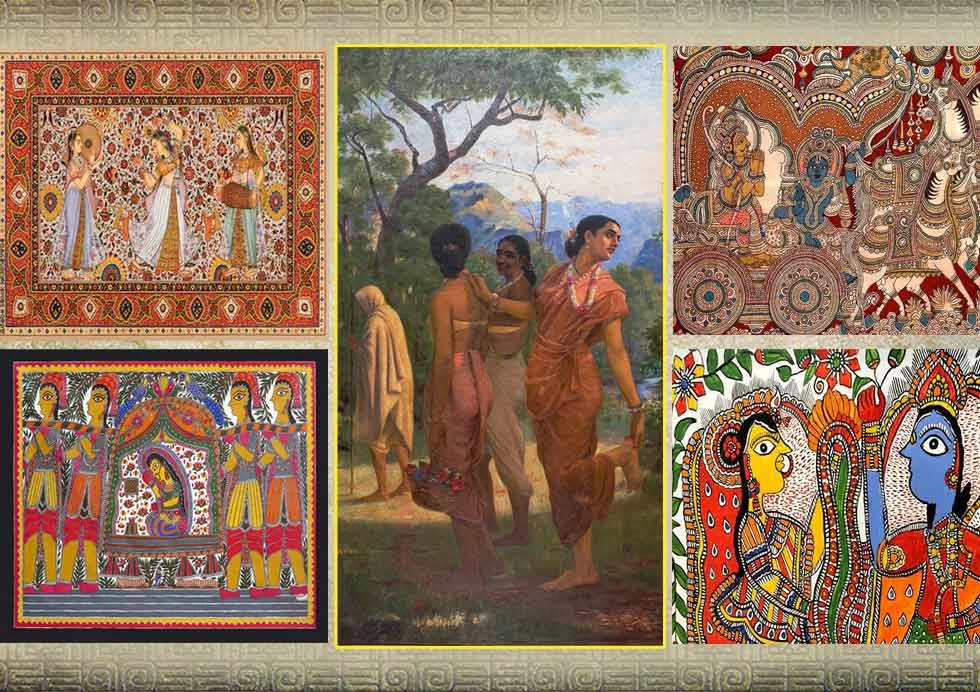
Indian Painting History and Art Forms in India show the rich cultural heritage and creativity of the country from ancient times to the modern period. Painting in India is not only a form of decoration but also a way to express religion, traditions, emotions, history, and social life. From prehistoric cave paintings to modern abstract art, Indian paintings reflect the thoughts, beliefs, and lifestyle of people from different ages.
India has a very old tradition of painting. The earliest paintings can be seen on cave walls and rocks made by prehistoric humans. Over time, different styles of painting developed in different parts of India. Kings, emperors, temples, and religious groups supported the growth of painting. Buddhist, Jain, Hindu, Mughal, Rajput, and modern artists all contributed greatly to Indian art.

Indian paintings are famous around the world for their bright colours, detailed designs, religious themes, and artistic beauty. They also help historians understand the social and cultural life of ancient India.
Principles of Indian Painting
Ancient Indian artists followed certain rules and principles while creating paintings. In the 3rd century AD, a scholar named Vatsyayana mentioned six important principles of painting in his famous book Kamasutra. These principles are called Shadanga or the six limbs of painting.
Six Principles of Painting
1. Rupabheda – Variety of Forms
This principle explains the different shapes and forms found in nature and human life. Artists should understand different forms before painting them.
2. Sadrisyan – Likeness
The painting should look similar to the original subject. The artist must correctly represent the person, animal, or object.
3. Bhava – Expression of Emotions
A painting should show emotions clearly. Happiness, sadness, anger, devotion, and love should be visible through expressions and colours.
4. Varnikabhanga – Use of Colours
This principle focuses on proper colour mixing and shading techniques to create beauty and realism.
5. Pramanam – Proportion
All parts of the painting should have correct proportions and measurements.
6. Lavanyayoganam – Grace and Beauty
The final painting should appear attractive, graceful, and pleasing to the eyes.
These principles became the foundation of traditional Indian painting styles.
Prehistoric Paintings in India
The earliest paintings in India were made by prehistoric humans on cave walls and rocks. These paintings are called rock paintings or petroglyphs.
Features of Prehistoric Paintings
- Made on rocks and cave walls
- Natural colours were used from minerals and plants
- Mostly showed animals, hunting scenes, and daily life
- Red, white, yellow, and green colours were common
These paintings help historians understand early human life.
Bhimbetka Rock Paintings
One of the most famous prehistoric painting sites in India is Bhimbetka Rock Shelters.
Location and Importance
Bhimbetka is located near Bhopal in Madhya Pradesh. It contains more than 500 rock shelters and thousands of paintings. It became a UNESCO World Heritage Site in 2003.
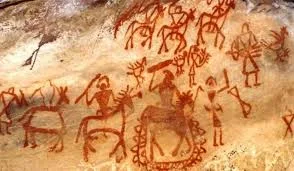
The paintings are believed to be around 30,000 years old.
Main Themes
The paintings mainly show:
- Hunting scenes
- Dancing
- Music
- Community life
- Animals like elephants, deer, tigers, and bison
- War scenes and celebrations
These paintings clearly show the social life of prehistoric humans.
Phases of Prehistoric Paintings
Upper Paleolithic Period
This period lasted from around 40,000 BC to 10,000 BC.
Features
- Large animal figures
- Use of red and green colours
- Hunters and dancers painted on cave walls
Mesolithic Period
This period lasted from 10,000 BC to 4,000 BC.
Features
- Smaller paintings
- Group hunting scenes
- Human activities became more important
- Mostly red colour was used
Chalcolithic Period
This period lasted from 3500 BC to 1000 BC.
Features
- Battle scenes became common
- Green and yellow colours increased
- Social and cultural life became more visible
Mural Paintings in India
Murals are paintings made on walls, ceilings, and large surfaces. Ancient Indian mural paintings are famous for their size, beauty, and religious themes.
They were mostly found in:
- Caves
- Temples
- Monasteries
Buddhism, Jainism, and Hinduism all used mural paintings for religious storytelling.
Ajanta Cave Paintings
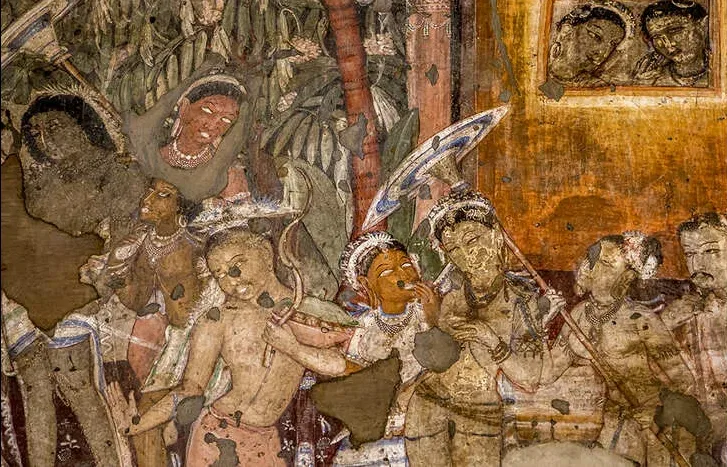
Ajanta Caves are among the greatest examples of Indian mural art.
Features of Ajanta Paintings
- Created between the 2nd century BC and 6th century AD
- Mainly based on Buddhist themes
- Show stories from the life of Buddha
- Rich use of colours and expressions
- Painted using tempera technique
The paintings are admired for their realistic emotions and graceful human figures.
Ellora Cave Paintings
Ellora Caves contain beautiful mural paintings connected with Hinduism, Buddhism, and Jainism.
Features
- Found mainly in Kailasa Temple
- Show Hindu gods and goddesses
- Mixture of Indian and Gujarati painting styles
- Rich decorative patterns
Armamalai Cave Paintings
Armamalai Cave is an important Jain painting site.
Features
- Jain religious themes
- Bright colours
- Depictions of deities protecting different directions
Jogimara Cave Paintings
Jogimara Cave contains ancient paintings and inscriptions.
Features
- Love story inscriptions in Brahmi script
- Decorative wall paintings
- One of the earliest examples of theatre decoration
Miniature Paintings in India
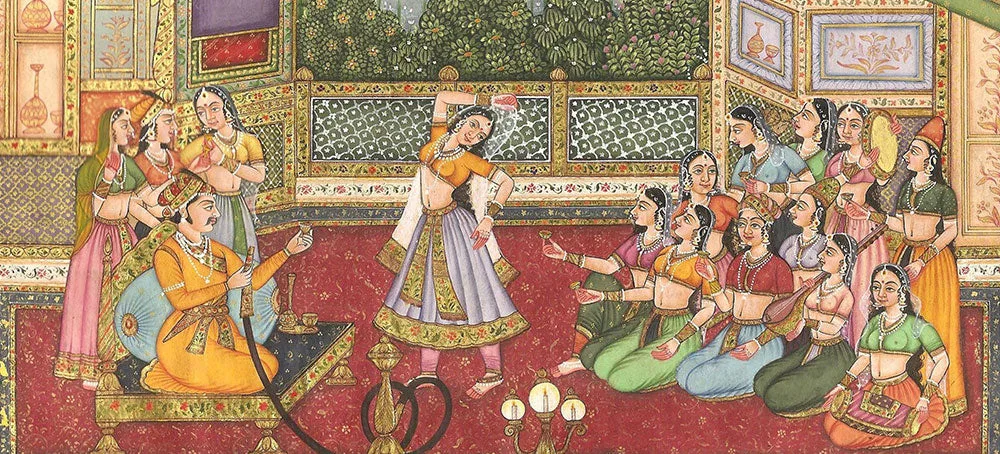
Miniature paintings are small and highly detailed paintings. The word “miniature” comes from the Latin word Minium.
Features of Miniature Paintings
- Small in size
- Fine brushwork
- Bright colours
- Detailed decoration
- Mostly painted on paper, cloth, or palm leaves
Miniature paintings became highly popular in medieval India.
Early Schools of Miniature Painting
Pala School of Art
The Pala School of Art developed in eastern India between 750 AD and 1150 AD.
Features
- Buddhist themes
- Painted on palm leaves
- Soft colour tones
- Delicate lines
Apabhramsa School of Art
The Apabhramsa School of Art developed in Gujarat and Rajasthan.
Features
- Jain religious themes
- Bold lines
- Bright colours
- Decorative designs
Miniature Paintings During Delhi Sultanate
The arrival of Muslims brought Persian influence into Indian painting.
Important Features
- Combination of Persian and Indian styles
- Decorative borders
- Court scenes and royal themes
One important work of this period was Nimatnama, a famous illustrated book on cooking.
Mughal Paintings
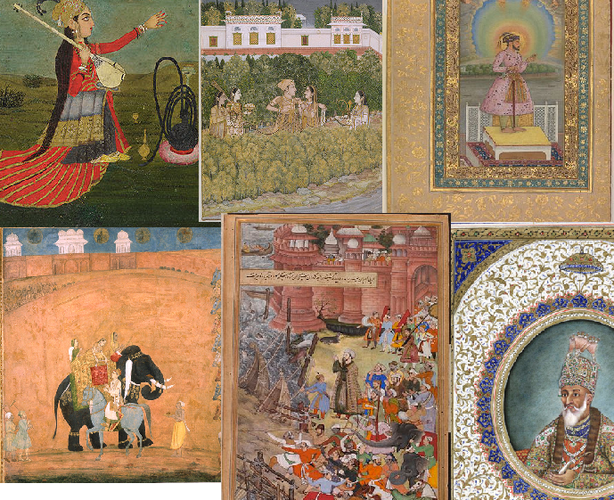
Mughal paintings became one of the finest painting traditions in India.
The Mughal rulers brought Persian artistic traditions and mixed them with Indian styles.
Features of Mughal Paintings
- Realistic human figures
- Royal court scenes
- Hunting scenes
- Nature and animal studies
- Fine detailing
- Use of perspective and shading
Mughal Emperors and Painting
Babur
Encouraged Persian painting traditions.
Humayun
Brought Persian artists to India.
Akbar
Established the famous painting workshop called Tasvir Khana.
Important works:
- Hamzanama
- Tutinama
Jahangir
Mughal painting reached its peak during his rule.
He loved:
- Birds
- Flowers
- Animals
- Nature paintings
Shah Jahan
Used gold and silver colours in paintings.
Aurangzeb
Did not support painting, causing decline in Mughal art.
Rajasthani School of Painting
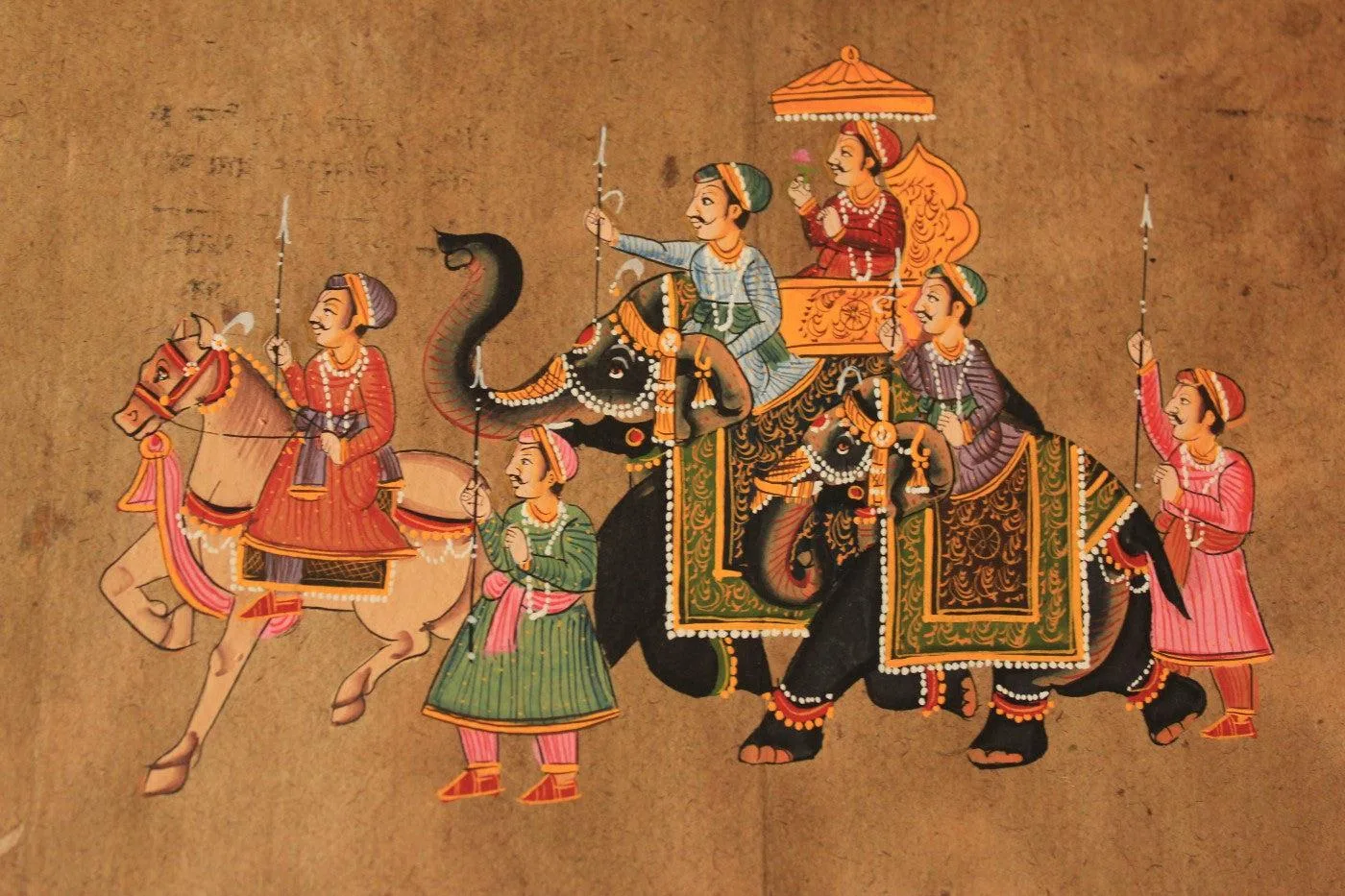
The Rajput kingdoms developed colourful painting traditions known as Rajasthani paintings.
Features
- Bright colours
- Religious themes
- Stories from Ramayana and Mahabharata
- Romantic themes
- Decorative backgrounds
Mewar School of Painting
The Mewar School of Painting became famous because of artist Sahibdin.
Themes
- Ramayana
- Bhagavata Purana
- Court life
- Festivals
Kishangarh School of Painting
The Kishangarh School of Painting is famous for romantic paintings.
Bani Thani
The painting called Bani Thani is one of the most famous Indian paintings.
It is often called the “Indian Mona Lisa.”
Pahari Paintings
Pahari paintings developed in the Himalayan hill regions.
Main Schools
Basholi School
Features:
- Bold colours
- Large expressive eyes
- Religious themes
Kangra School
Features:
- Natural beauty
- Romantic themes
- Emotional expressions
The Kangra style is famous for paintings based on Radha and Krishna.
Ragamala Paintings
Ragamala Paintings combine music, poetry, and painting.
Features
- Each raga is shown as a human character
- Different moods and seasons are represented
- Hindu gods and goddesses are included
These paintings show the connection between Indian classical music and visual art.
South Indian Miniature Paintings
South Indian painting traditions were different because of heavy use of gold decoration and religious themes.
Tanjore Paintings
Tanjore Painting is one of the most famous South Indian painting styles.
Features
- Gold leaf decoration
- Rich colours
- Religious themes
- Use of gemstones and glass pieces
These paintings mostly show Hindu gods and goddesses.
Mysore Paintings
Mysore Painting developed under Mysore rulers.
Features
- Soft colours
- Use of gesso paste
- Religious themes
- Elegant and simple designs
Modern Indian Paintings
Modern Indian painting developed during British rule and after independence.
Artists started mixing Indian traditions with Western styles.
Company Paintings
Company paintings developed when British officers employed Indian artists.
Features
- Combination of Indian and European styles
- Use of water colours
- Linear perspective and shading
- Paintings of Indian plants, animals, and people
Bazaar Paintings
Bazaar paintings became popular in Bengal and Bihar.
Features
- European influence
- Everyday market scenes
- Dance performances
- Religious themes
Bengal School of Art
The Bengal School of Art was started to promote Indian culture and reduce Western influence.
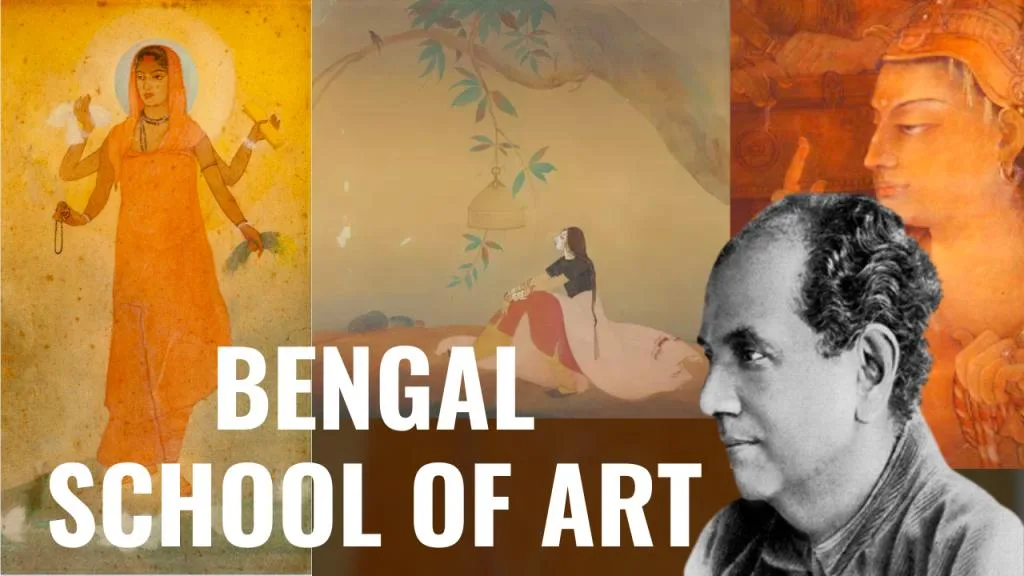
Abanindranath Tagore
Abanindranath Tagore was the founder of the Bengal School.
His famous painting:
- Bharat Mata
Nandalal Bose
Nandalal Bose decorated the original Constitution of India.
Rabindranath Tagore
Rabindranath Tagore also contributed to painting with unique black line artworks.
Cubist Style in India
The Cubist style came from Europe.
Features
- Objects broken into shapes
- Abstract forms
- Balance between line and colour
One famous Indian cubist artist was M. F. Husain.
Progressive Artists Group
The Progressive Artists Group introduced bold and modern themes in Indian art.
Important members:
- F. N. Souza
- S. H. Raza
- M. F. Husain
Raja Ravi Verma
Raja Ravi Varma is considered one of the greatest Indian painters.
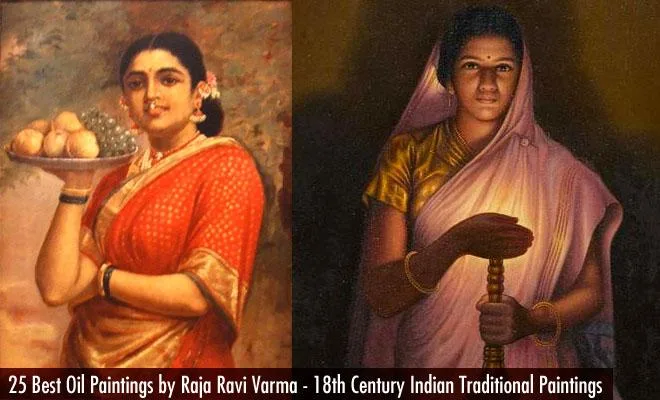
He is often called the “Raphael of the East.”
Features of His Paintings
- Combined Indian themes with Western techniques
- Realistic human figures
- Beautiful use of colours and shading
Famous Paintings
- Lady in the Moonlight
- Mother India
- Ravana Kidnapping Sita
A film called Rang Rasiya was also made on his life.
Importance of Indian Paintings
Indian paintings are important because they:
- Preserve Indian culture and traditions
- Show historical events and social life
- Express religious beliefs
- Promote creativity and beauty
- Help historians understand ancient civilizations
Indian paintings are not just artworks; they are mirrors of India’s rich history and civilization.
Conclusion
Indian Painting History and Art Forms in India reflect the artistic brilliance and cultural richness of the country from prehistoric times to the modern age. From the cave paintings of Bhimbetka to the elegant Mughal miniatures and modern paintings of Raja Ravi Varma and M.F. Husain, Indian painting has continuously evolved while preserving its traditional roots.
Different schools of painting developed across India, each with unique styles, themes, and techniques. These paintings not only beautified temples, palaces, and manuscripts but also recorded the emotions, beliefs, customs, and social life of different periods.
Today, Indian paintings continue to inspire artists and art lovers around the world. Protecting and preserving this heritage is important so that future generations can learn about India’s glorious artistic traditions.
FAQs
What are the six principles of Indian painting?
The six principles are Rupabheda, Sadrisyan, Bhava, Varnikabhanga, Pramanam, and Lavanyayoganam.
What are Bhimbetka rock paintings?
Bhimbetka rock paintings are prehistoric cave paintings found in Madhya Pradesh showing hunting, dancing, and daily life scenes.
Which Mughal emperor supported painting the most?
Akbar and Jahangir greatly supported Mughal paintings.
What is special about Tanjore paintings?
Tanjore paintings are famous for gold leaf decoration, bright colours, and religious themes.
Who is known as the Raphael of the East?
Raja Ravi Varma is known as the Raphael of the East.
What is the Bengal School of Art?
It was an Indian art movement started to promote traditional Indian styles and reduce Western influence.