


Chandrayaan-3 Hop Experiment Boosts Future Moon Missions

Chandrayaan-3 Hop Experiment became one of the most important achievements of India’s lunar mission after ISRO successfully tested the Vikram lander’s ability to lift off and land again on the Moon. The experiment showed that India is moving closer to advanced lunar exploration and future human missions.
Chandrayaan-3 Mission and Vikram Lander
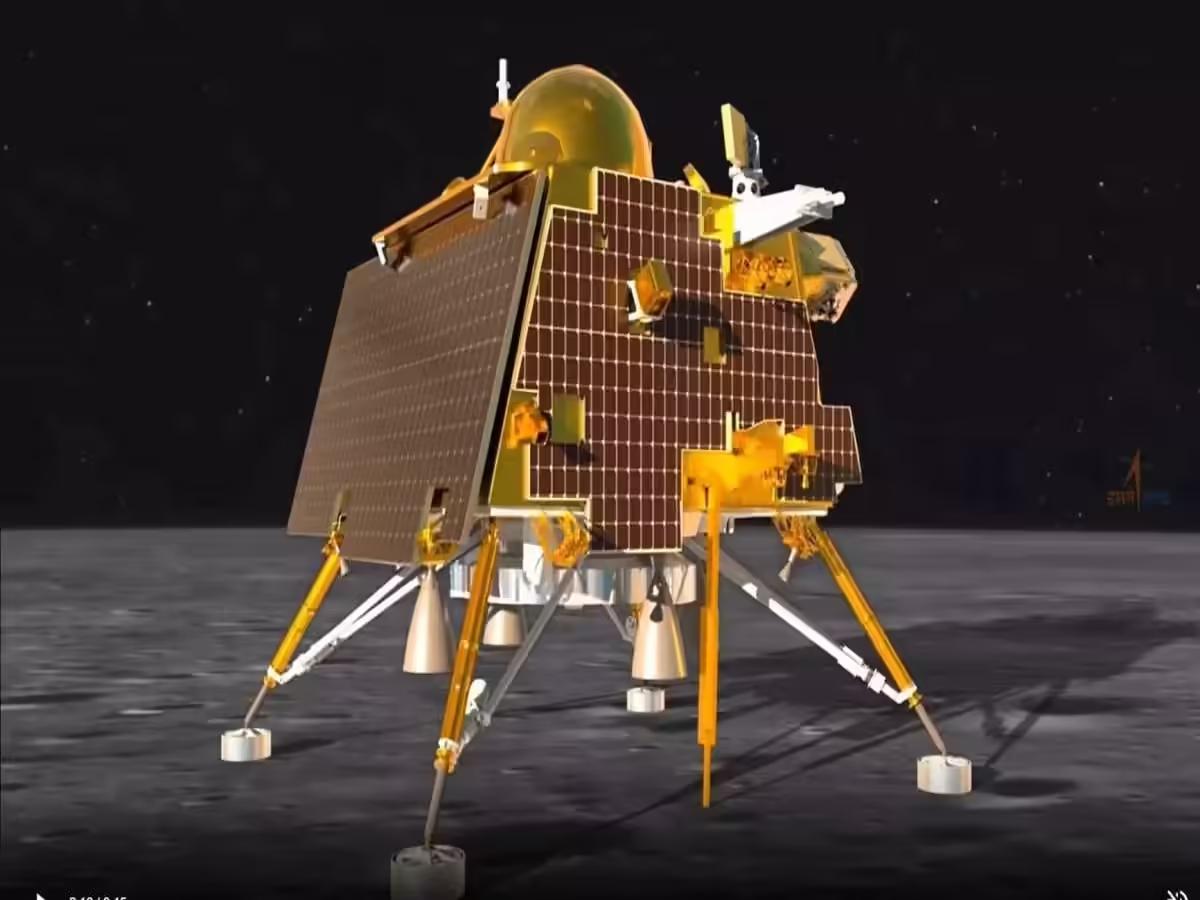
Indian Space Research Organisation successfully launched Chandrayaan-3 to explore the Moon’s south polar region. The mission included the Vikram lander and Pragyan rover, which landed safely on the lunar surface in August 2023.

After completing its main objectives, ISRO carried out the Chandrayaan-3 Hop Experiment as an additional test to study the lander’s movement capability on the Moon.
How the Controlled Hop Worked
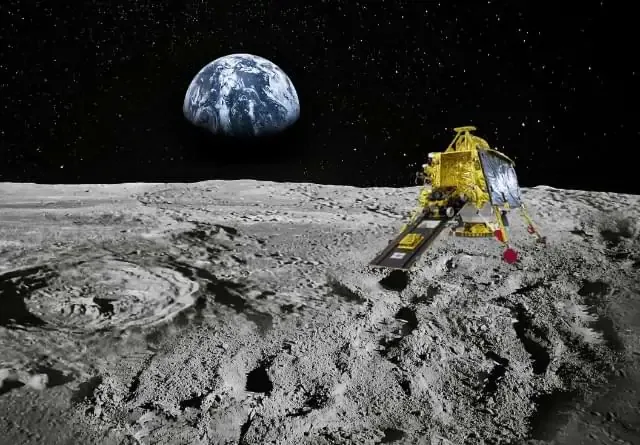
During the experiment, the Vikram lander fired its engines on command and rose nearly 40 cm above the lunar surface. It then made a soft landing about 30–40 cm away from its original position.
Before the hop, ISRO safely retracted the ramp, ChaSTE, and ILSA instruments. After the manoeuvre, these instruments were deployed again without affecting the lander’s condition. The successful test proved that the lander remained fully operational even after moving on the Moon.
Scientific Findings from the Experiment
The Chandrayaan-3 Hop Experiment also provided valuable information about the Moon’s surface. Data collected by ChaSTE showed that the lunar regolith contains two different layers within a few centimetres of depth.
The engine plume removed nearly 3 cm of loose lunar dust and revealed a harder and denser layer underneath. Scientists study lunar regolith to understand landing safety, rover movement, and future sample collection missions.
Key Details About the Lunar Instruments
Vikram is the lander module of Chandrayaan-3. ChaSTE stands for Chandra’s Surface Thermophysical Experiment, while ILSA means Instrument for Lunar Seismic Activity. These instruments helped scientists study temperature and seismic activity on the Moon.
The Moon’s regolith is the loose outer layer made of dust, soil, and broken rock fragments covering the lunar surface.
Importance for Future Moon Missions
The Chandrayaan-3 Hop Experiment is considered an important step for future lunar exploration. The successful lift-off and landing capability may support future sample return missions, advanced robotic operations, and human missions to the Moon.
ISRO believes this experiment can help develop technology for lunar ascent systems and surface mobility in upcoming space missions.