Integration of Princely States After Independence

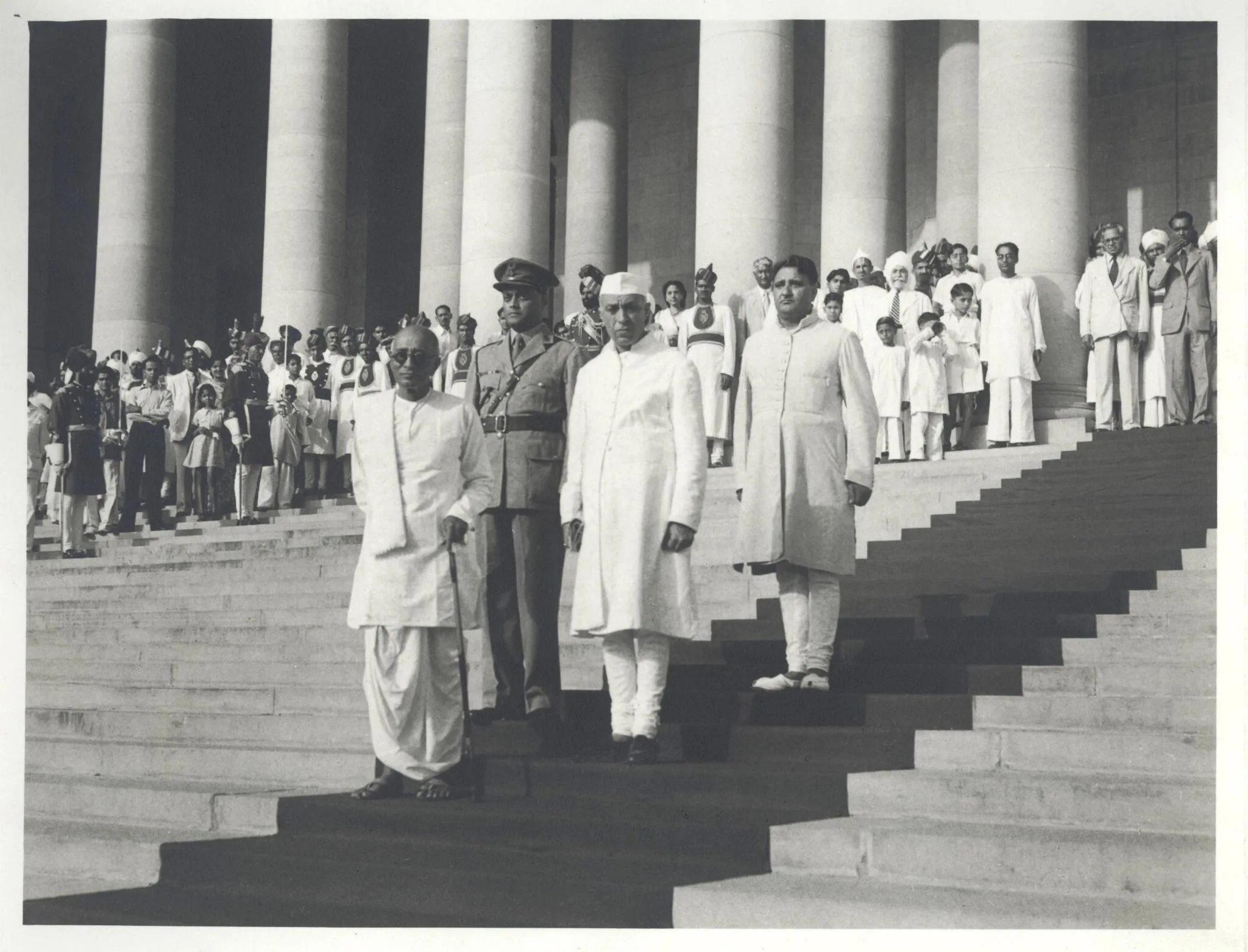
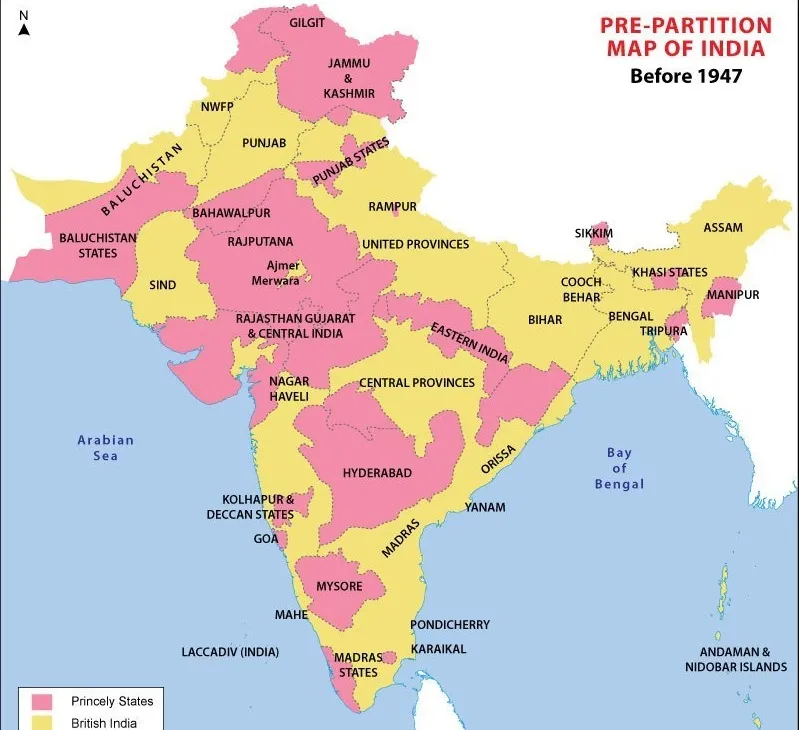
Integration of Princely States After Independence is one of the most important chapters in the making of modern India. When India became free on 15 August 1947, it was not a fully united country. Along with British India, there were more than 500 princely states that were ruled by kings, nawabs, and princes. These states were not directly controlled by the British government, but they were under British influence.
Thank you for reading this post, don't forget to subscribe!At the time of independence, these princely states covered about 48% of the land area and had around 28% of the population of India. The future of these states was uncertain. They were given three choices:
- Join India
- Join Pakistan
- Remain independent
This situation created a huge challenge for the newly independent country. If these states had chosen independence, India would have been divided into hundreds of small nations. This could have led to chaos, conflict, and instability.
The responsibility to unite these states was given to Sardar Vallabhbhai Patel, India’s first Deputy Prime Minister and Home Minister. He worked closely with V. P. Menon, the Secretary of the Ministry of States.
Through strong leadership, diplomacy, and sometimes force, they successfully integrated most of the princely states into India. Because of this great achievement, Sardar Patel is often called the “Iron Man of India.”
Background of Princely States
Before independence, India was divided into two main parts:
- British India (directly ruled by the British)
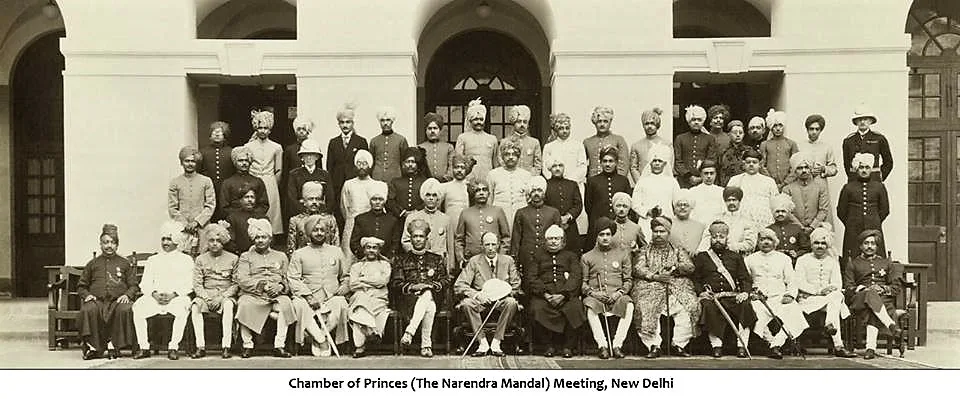
- Princely States (ruled by Indian kings under British control)
The princely states had internal freedom, but the British controlled their external affairs, defence, and communications. The rulers depended on the British for protection and support.
With the passing of the Indian Independence Act 1947, British rule ended, and the princely states became legally independent. This created confusion and uncertainty.
Some rulers wanted to become independent countries, while others wanted to join Pakistan. This was a dangerous situation for the unity of India.
Role of Sardar Patel and V.P. Menon
Sardar Vallabhbhai Patel played the most important role in uniting India. He used a mix of:
- Persuasion
- Diplomacy
- Pressure
He appealed to the rulers’ sense of patriotism and warned them about the dangers of remaining independent.
V. P. Menon helped Patel in designing the legal process of integration. Together, they introduced the Instrument of Accession, a legal document through which states agreed to join India.
They also introduced the concept of privy purses, which were payments given to royal families in return for giving up their power.
Because of their efforts, most princely states joined India peacefully.
Early Success: States That Joined India Quickly
Some states understood the importance of unity and joined India without much resistance. Important among them were:
- Bikaner
- Baroda
- Many states of Rajasthan
These early accessions helped build momentum and encouraged other states to follow.
Challenging Cases of Integration
While many states joined easily, some created serious challenges. Let us study these important cases in detail.
Travancore
Travancore was a rich and strategically important state in southern India. It had valuable mineral resources like monazite, which was important for nuclear development.
The Dewan of Travancore, C. P. Ramaswami Iyer, wanted the state to remain independent. He even planned to sign treaties with other countries.
There were also reports that Britain supported an independent Travancore to gain access to its mineral resources.
However, things changed after an assassination attempt on the Dewan in July 1947. Realizing the risks, Travancore decided to join India.
On 30 July 1947, Travancore officially became part of India.
Jodhpur
Jodhpur was a surprising case. Although it had a Hindu ruler and population, its king Hanwant Singh considered joining Pakistan.
The leader of Pakistan, Muhammad Ali Jinnah, offered attractive benefits, including:
- Free access to Karachi port
- Military support
- Economic advantages
This was a serious threat because Jodhpur was located near the Indian border.
Sardar Patel quickly acted and convinced the king by offering:
- Trade and transport facilities
- Military support
- Food supply during famines
Finally, on 11 August 1947, Jodhpur signed the Instrument of Accession and joined India.
Bhopal
Bhopal was ruled by Hamidullah Khan, who wanted to remain independent.
He was close to the Muslim League and did not support the Indian National Congress.
However, as more states joined India, he realized that independence was not practical. With increasing pressure and isolation, Bhopal finally agreed to join India in 1947.
Hyderabad
Hyderabad was the most difficult case.
It was ruled by Mir Osman Ali Khan, one of the richest rulers in the world. Although most of the population was Hindu, the ruler was Muslim.
The Nizam wanted Hyderabad to remain independent. He even:
- Strengthened his army
- Imported weapons from Europe
- Took support from Pakistan
A group called the Razakars started violent attacks against the people, especially Hindus.
After many failed attempts at negotiation, India decided to take military action.
In September 1948, India launched Operation Polo.
Within four days, the Indian army defeated the Nizam’s forces, and Hyderabad became part of India.
Junagadh
Junagadh was another complex case.
It had a Hindu majority population but was ruled by a Muslim Nawab, Muhammad Mahabat Khanji III.
In September 1947, the Nawab decided to join Pakistan, even though the state was not geographically connected to it.
This decision caused unrest in the region.
India responded by:
- Cutting off supplies
- Sending troops
- Supporting local protests
The Nawab fled to Pakistan, and India took control.
A plebiscite (public vote) was held in February 1948, and almost all people voted to join India.
Thus, Junagadh became part of India.
Kashmir
Jammu and Kashmir was the most complicated and sensitive case.
It was ruled by Hari Singh, a Hindu king, while most of the population was Muslim.
Initially, he wanted to remain independent and signed a standstill agreement with Pakistan.
However, in October 1947, tribal fighters from Pakistan invaded Kashmir.
The Maharaja asked India for help. India agreed on the condition that Kashmir must join India.
On 26 October 1947, the Maharaja signed the Instrument of Accession.
Indian troops were sent, and war began between India and Pakistan.
Later developments included:
- Formation of government under Sheikh Abdullah
- Special status under Article 370
- Final accession confirmed in 1954
In 2019, the Government of India removed the special status of Jammu and Kashmir through a constitutional order.
Importance of Integration
The integration of princely states was crucial for India because:
1. National Unity
It prevented India from breaking into small independent countries.
2. Political Stability
A strong central government became possible.
3. Economic Development
Unified markets and policies helped economic growth.
4. Security
It strengthened India’s defence system.
Methods Used for Integration
Sardar Patel used different methods depending on the situation:
1. Diplomacy
Most states were convinced peacefully.
2. Incentives
Privy purses were offered to rulers.
3. Legal Tools
Instrument of Accession ensured a smooth process.
4. Military Action
Used only when necessary (Hyderabad).
Challenges Faced
The process was not easy. Major challenges included:
- Religious differences
- Political ambitions of rulers
- Foreign influence
- Fear of losing power
Despite all these problems, India succeeded in uniting the states.
Conclusion
Integration of Princely States After Independence was a historic achievement that shaped modern India. Without this process, India would not have become a strong and united nation.
The leadership of Sardar Vallabhbhai Patel and the administrative skill of V. P. Menon played a key role in this success.
Their efforts ensured that India remained united, stable, and strong.
This chapter of history teaches us the importance of unity, leadership, and national interest above personal power.
FAQs
1. What was the main aim of integrating princely states?
To unite India into a single nation after independence.
2. Who was responsible for integration?
Sardar Vallabhbhai Patel and V. P. Menon.
3. How many princely states were there?
More than 500.
4. What was the Instrument of Accession?
A legal document through which states joined India.
5. Which was the toughest state to integrate?
Hyderabad and Kashmir were the most challenging.