



Ocean Energy: Power from the Sea for a Greener Future

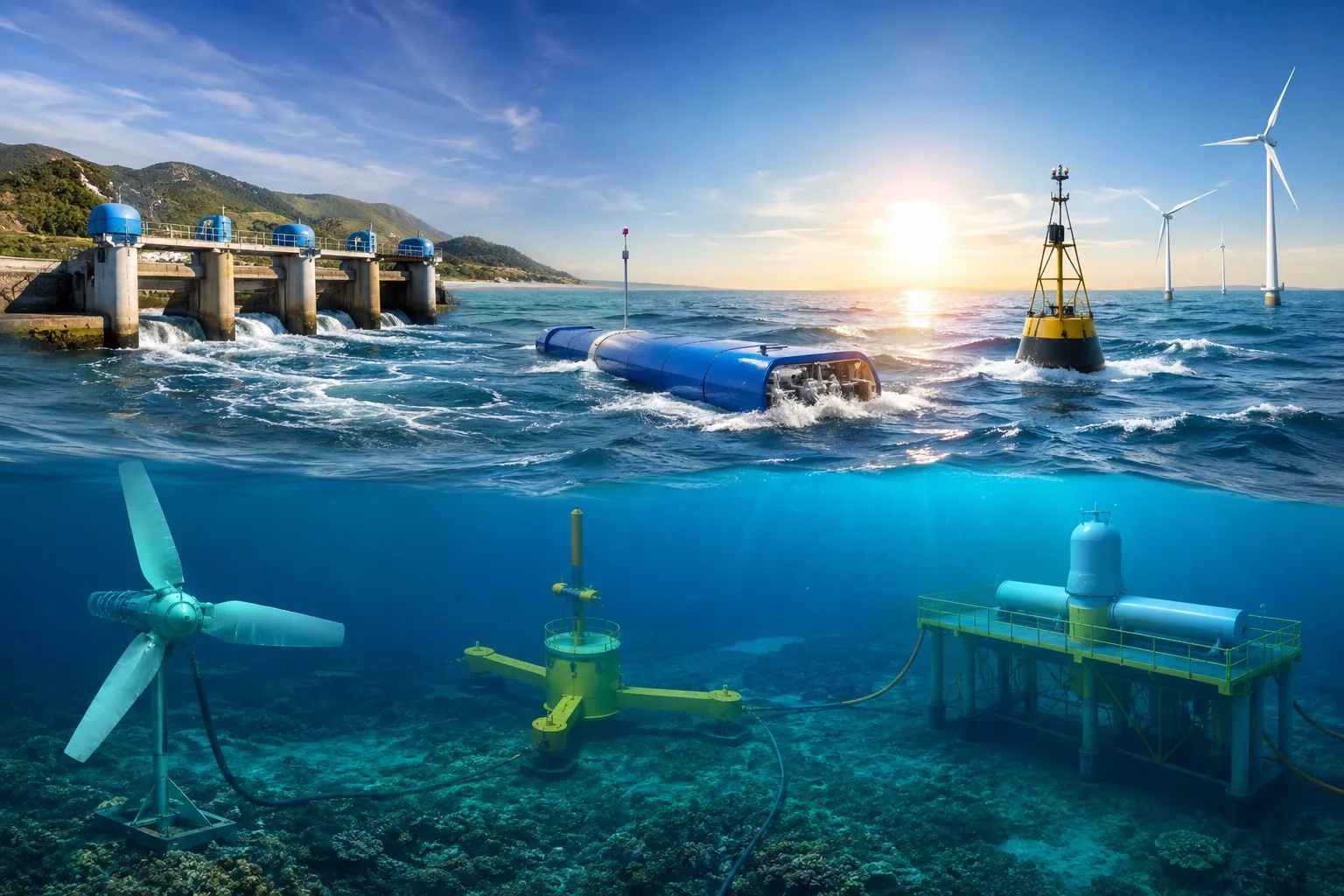
Ocean Energy is one of the most promising sources of renewable energy in the modern world. As the demand for electricity continues to rise, countries are searching for clean and sustainable energy sources. Oceans cover nearly 70% of Earth’s surface, and the movement, temperature, and chemical properties of ocean water can be used to produce electricity. Because of this, ocean energy is becoming an important part of future energy planning.
Thank you for reading this post, don't forget to subscribe!Recently, India’s Ministry of New and Renewable Energy (MNRE) officially declared ocean energy as a renewable energy source. This includes all major forms of ocean-based energy such as tidal energy, wave energy, ocean current energy, ocean thermal energy, and salinity gradient energy. This step is important because it allows ocean energy projects to help meet India’s Renewable Purchase Obligations (RPO), especially in the non-solar category.
What is Ocean Energy?
Ocean energy refers to the energy generated from the natural movement and thermal properties of seawater. The oceans constantly move because of tides, waves, currents, and temperature differences. These movements store a large amount of kinetic energy (energy of motion) and thermal energy (heat energy), which can be converted into electricity.
Ocean energy mainly comes from the following sources:
- Tidal Energy
- Wave Energy
- Ocean Current Energy
- Ocean Thermal Energy
- Osmotic Energy
Each type works differently but aims to produce clean electricity without depending on fossil fuels like coal or petroleum.
Types of Ocean Energy
1. Tidal Energy
Tidal energy is produced by the rise and fall of sea levels caused by the gravitational pull of the Moon and Sun. Tides happen regularly every day, making them highly predictable.
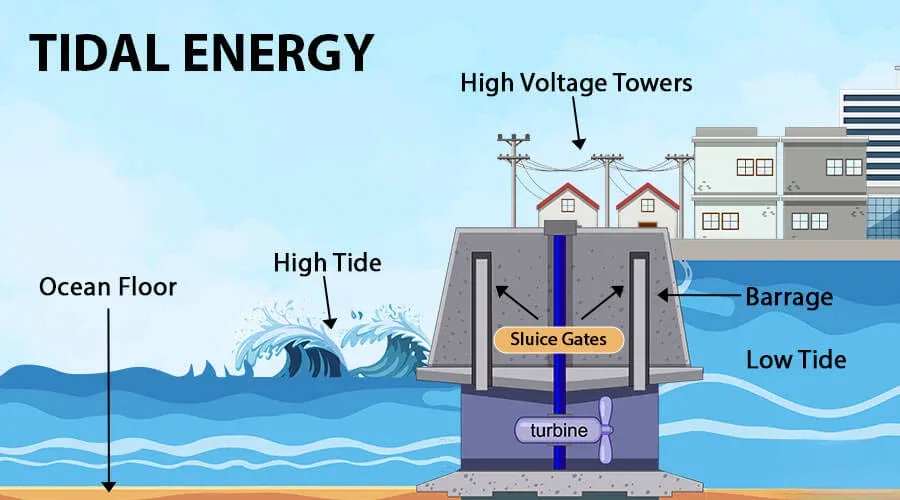
Power plants for tidal energy are often built near river estuaries or coastal areas. These plants use dams or barrages to store water during high tide. When the water is released during low tide, turbines spin and generate electricity.
India has an estimated tidal energy potential of around 9,000 MW, making it an important resource for future energy production.
2. Wave Energy
Wave energy comes from the movement of waves on the ocean surface. Waves are mainly created by wind blowing over water.
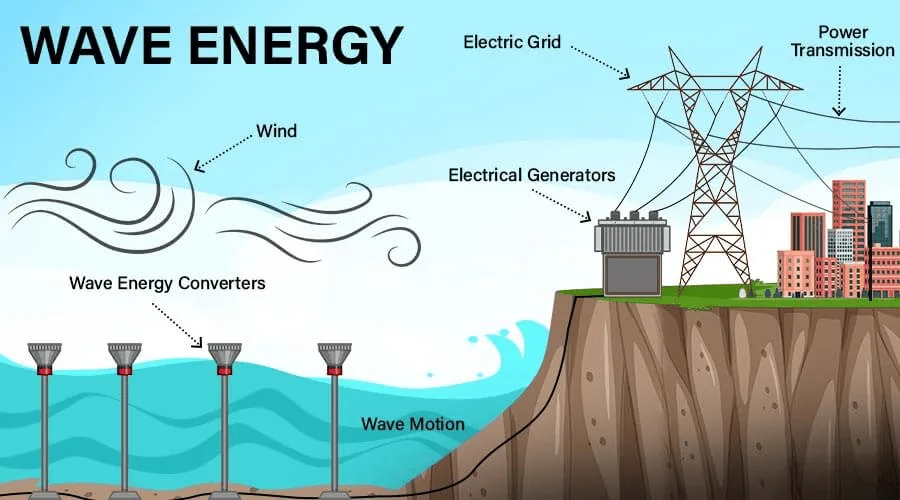
Special devices are placed on the ocean surface or attached to the sea floor. As waves move these devices up and down, mechanical energy is created and converted into electricity.
Wave energy is considered a clean energy source because it produces no harmful gases during operation.
3. Ocean Current Energy
Ocean current energy is similar to wind energy, but it works underwater. Strong water currents in the ocean move continuously over long distances.
Large underwater turbines, which look like wind turbines, are placed on the seabed. As ocean currents flow through them, the turbine blades rotate and generate electricity.
According to the Intergovernmental Panel on Climate Change (IPCC), large-scale ocean currents have strong potential for future power generation if technology continues to improve.
About IPCC
The Intergovernmental Panel on Climate Change was created in 1988 by the World Meteorological Organization (WMO) and the United Nations Environment Programme (UNEP).
Important facts about IPCC:
| Feature | Details |
|---|---|
| Established | 1988 |
| Headquarters | Geneva, Switzerland |
| Members | 195 countries |
| Purpose | Provides scientific information about climate change |
IPCC helps governments make climate policies and regularly publishes reports on climate change and renewable energy.
4. Ocean Thermal Energy
Oceans absorb huge amounts of heat from the Sun. Surface water is warm, while deep ocean water remains cold. This temperature difference can be used to generate electricity.
This process is called Ocean Thermal Energy Conversion (OTEC).
Since oceans store heat even after sunset, this energy source can provide power 24 hours a day, unlike solar energy which depends on sunlight.
Ocean Thermal Energy Conversion (OTEC)
OTEC uses the temperature difference between warm surface water and cold deep water from depths greater than 1,000 meters.
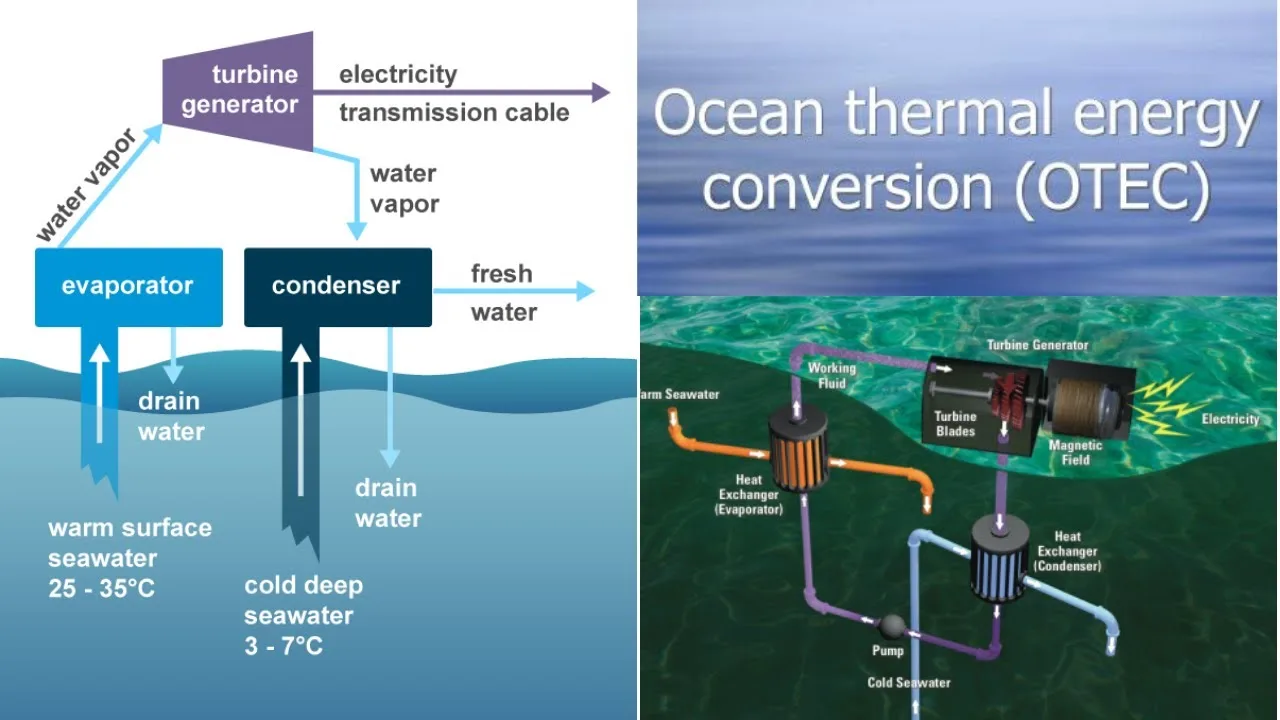
There are two main OTEC methods:
Closed Cycle Method
In this method:
- A liquid such as ammonia is used as a working fluid
- Warm surface water heats the fluid and turns it into vapor
- The vapor spins a turbine
- Cold deep-sea water cools the vapor back into liquid
- The cycle repeats
Open Cycle Method
In this method:
- Warm seawater enters a vacuum chamber
- Low pressure causes it to turn into steam
- The steam spins a turbine
- Cold deep water condenses the steam back into water
Benefits of OTEC
- Around 94% capacity factor, meaning reliable energy generation
- Works day and night
- No harmful air pollution
- Low maintenance after installation
Though the initial setup cost is high, long-term benefits make OTEC attractive.
5. Osmotic Energy
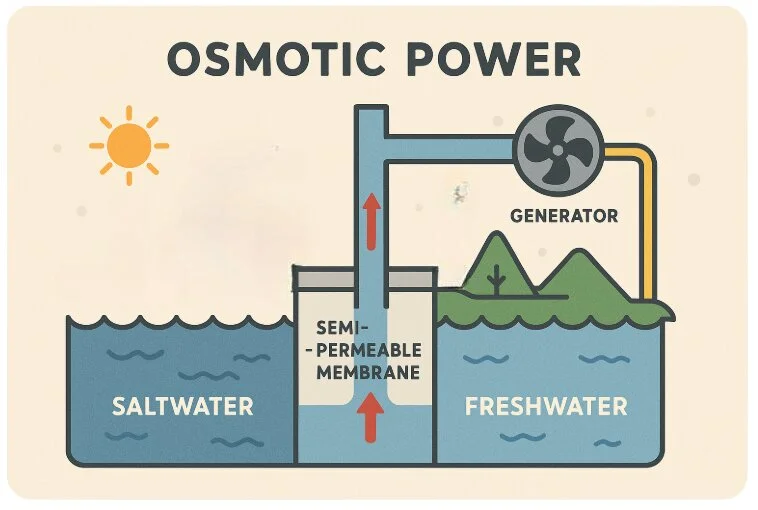
Osmotic energy is also called Salinity Gradient Energy.
It is produced when freshwater and saltwater are separated by a special membrane. Water naturally moves across the membrane because of salt concentration differences. This movement creates pressure, which can generate electricity.
This technology is still developing but has good future potential.
Major Features of Ocean Energy
Predictable and Reliable
Unlike solar and wind energy, many forms of ocean energy are highly predictable. Tides and currents follow natural cycles.
Available Worldwide
Most countries with coastlines can use ocean energy. Tidal streams and currents are present in many parts of the world.
High Energy Density
Water is about 800 times denser than air. Because of this, moving water carries much more energy than moving wind.
Large Usable Area
Land is limited and often expensive. Ocean energy systems can be installed offshore, reducing pressure on land resources.
Objectives of Ocean Energy Development in India
India aims to develop ocean energy for multiple reasons:
- Improve renewable energy production
- Reduce dependence on fossil fuels
- Solve electricity shortages
- Support clean energy goals
- Encourage public and private investment
- Promote research and development
The government has opened this sector to both public and private companies to speed up innovation.
Limitations of Ocean Energy
Despite its advantages, ocean energy faces several challenges.
Limited Deployment
Ocean energy technology is still not widely used in India. Many projects remain at testing or pilot stages.
High Initial Cost
Building ocean power plants requires expensive equipment and advanced technology.
Technical Challenges
Seawater causes corrosion because of its salt content. This can damage machines and reduce efficiency.
Difficult Maintenance
Maintaining equipment in deep water is difficult and costly.
Environmental Concerns
Ocean energy projects may affect:
- Marine life
- Fish migration
- Coastal landscapes
- Fishing activities
These concerns need careful planning.
Ocean Energy Potential in India
India has a long coastline of more than 7,500 km, giving it huge potential for ocean energy.
Estimated Potential
| Type of Energy | Estimated Potential |
| Tidal Energy | 12,455 MW |
| Wave Energy | 40,000 MW |
| OTEC | 180,000 MW |
Important tidal energy locations in India include:
- Gulf of Khambat
- Gulf of Kutch
- Large coastal backwaters
These areas are suitable for large-scale energy projects.
Ocean energy can help India reduce carbon emissions while creating jobs in coastal and industrial sectors.
Suggestions for Better Development
India can improve ocean energy production by focusing on these steps:
Increase Research
More research is needed to improve efficiency and reduce costs.
Use Coastal Resources
India’s long coastline, estuaries, and gulfs offer excellent locations for ocean energy projects.
Promote Innovation
Universities, research institutes, and industries should work together.
Improve Infrastructure
Ports, transmission lines, and maintenance facilities must be strengthened.
National Institute of Ocean Technology (NIOT)
The National Institute of Ocean Technology (NIOT) plays an important role in ocean energy research.
| Feature | Details |
| Established | 1993 |
| Type | Autonomous Society |
| Under | Ministry of Earth Sciences |
| Location | Chennai |
NIOT develops indigenous technologies for using both living and non-living ocean resources in India’s Exclusive Economic Zone.
Final Thoughts
Ocean energy can become a major clean energy source for India in the future. It offers reliable power, reduces pollution, and supports sustainable development. With better technology, stronger research, and proper investment, India can use its vast ocean resources to generate large amounts of electricity.
Ocean energy can also boost economic growth, create new jobs, and help neighboring countries facing energy shortages. As the world moves toward cleaner energy solutions, the oceans may become one of humanity’s strongest power sources.
FAQs on Ocean Energy
Q1. What is ocean energy?
Ocean energy is renewable energy generated from the ocean’s tides, waves, currents, temperature differences, and salinity.
Q2. Why is ocean energy important?
Ocean energy is important because it provides clean electricity, reduces pollution, and helps lower dependence on fossil fuels.
Q3. What are the main types of ocean energy?
The main types are:
- Tidal Energy
- Wave Energy
- Ocean Current Energy
- Ocean Thermal Energy
- Osmotic Energy
Q4. What is tidal energy?
Tidal energy is electricity produced using the rise and fall of sea levels caused by the Moon and Sun.
Q5. What is OTEC?
OTEC stands for Ocean Thermal Energy Conversion. It uses the temperature difference between warm surface water and cold deep-sea water to generate electricity.
Q6. What are the advantages of ocean energy?
Advantages include:
- Clean energy source
- Predictable power generation
- Low carbon emissions
- Huge energy potential
Q7. What are the challenges of ocean energy?
Major challenges include:
- High installation cost
- Difficult maintenance
- Corrosion from seawater
- Impact on marine ecosystems
Q8. What is India’s ocean energy potential?
India has strong potential in tidal, wave, and thermal ocean energy because of its long coastline of over 7,500 km.