


Desertification: Causes, Effects, and Prevention

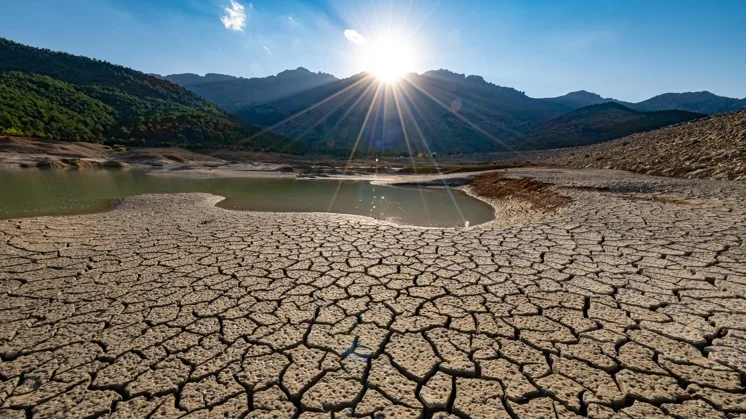
Desertification is becoming one of the biggest environmental problems in the world today. It happens when fertile land slowly loses its productivity and becomes dry, barren, and less useful for farming or supporting plants and animals. Desertification mainly affects dry areas such as arid and semi-arid regions. It does not mean that existing deserts are expanding, but it means that healthy land is turning into desert-like land because of natural and human activities.
Thank you for reading this post, don't forget to subscribe!Recently, desertification has gained global attention because it affects food production, water availability, biodiversity, and human life. India also hosted the 14th Conference of Parties (COP14) under the United Nations Convention to Combat Desertification, showing the importance of this issue. Every year, World Day to Combat Desertification and Drought is observed on 17 June to spread awareness and encourage land protection.
What is Desertification?
Desertification is the process in which land in dry regions loses its biological productivity. This means the soil becomes weak and cannot support crops, trees, or natural vegetation properly. As the land degrades, farming becomes difficult and local ecosystems suffer.
This problem can happen due to both human actions and natural causes.
Causes of Desertification
There are many reasons behind desertification. These can be divided into two main groups: human-made causes and natural causes.
Human-Made Causes
1. Overgrazing
Overgrazing happens when too many animals feed on the same land for a long time. This removes grass and vegetation faster than it can grow back. Without plant cover, soil becomes loose and can be easily blown away by wind or washed away by water.
Overgrazing reduces land productivity and damages biodiversity. In India, around 31% of grasslands were lost between 2005 and 2015.
2. Deforestation
Forests play an important role in protecting land. Trees hold soil together and help maintain moisture. They also absorb carbon dioxide from the atmosphere.
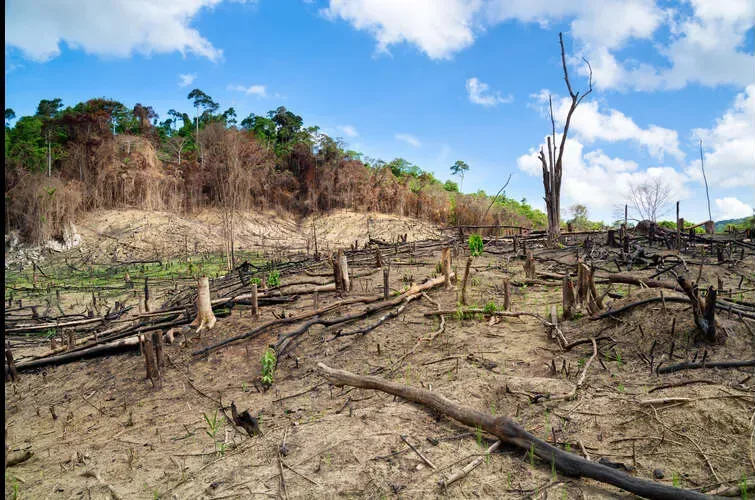
When forests are cut down, the soil becomes exposed. This increases soil erosion and reduces land quality. Deforestation also increases greenhouse gases, which contribute to climate change.
3. Poor Farming Practices
Unsustainable farming methods can damage soil quality. Some harmful practices include:
- Slash-and-burn farming
- Heavy tilling of land
- Excessive irrigation
- Overuse of chemical fertilizers
These practices remove nutrients from the soil and make it weak over time.
4. Urbanization
As cities grow, more land is used for buildings, roads, and industries. This increases pressure on natural resources like water, forests, and soil.
Urban expansion often leaves surrounding lands degraded and vulnerable to desertification.
5. Climate Change
Climate change is making desertification worse. Rising temperatures, irregular rainfall, stronger winds, and long dry periods reduce soil moisture and increase land degradation.
Frequent droughts also damage farming and natural vegetation.
6. Overuse of Natural Resources
Population growth increases demand for land, water, and food. When resources are used faster than nature can restore them, land becomes degraded and less productive.
Natural Causes of Desertification
1. Natural Disasters
Natural disasters such as floods, droughts, and landslides can damage fertile land. They remove topsoil and reduce the land’s ability to support life.
2. Soil Erosion
Soil erosion happens when the upper fertile layer of soil gets removed.
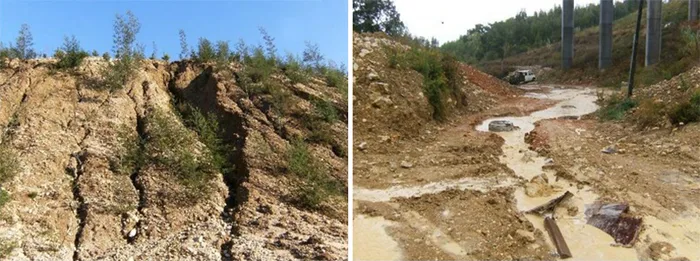
There are two main types:
Water Erosion
Heavy rainfall or floods can wash away fertile soil. Over time, this creates uneven land called badland topography, which is an early sign of desertification.
Wind Erosion
Strong winds can carry away dry soil particles. In dry regions, wind can also bring sand that covers fertile land and reduces its productivity.
Effects of Desertification
Desertification affects the environment, economy, society, and even politics.
Environmental Effects
Desertification causes serious environmental damage such as:
- Destruction of vegetation
- Loss of fertile soil
- Increased soil erosion
- Land degradation
- Water pollution
- Loss of biodiversity
- Extinction of plant and animal species
When land becomes degraded, it becomes more vulnerable to floods, droughts, and other natural disasters.
Economic Effects
Desertification directly affects economic growth.
Main economic impacts include:
- Reduced agricultural productivity
- Crop failure
- Increased drought and flood losses
- Reduced income for farmers
- Rising poverty
- Lower overall economic productivity
Since agriculture supports millions of people, damaged land creates major financial problems.
Social Effects
Desertification also creates social challenges.
These include:
- Food shortages
- Famine
- Poverty
- Social conflict over resources
- Forced migration
When farming fails, many people leave villages and move to cities in search of work. This is called environmental migration.
Food security also becomes a serious concern.
Political Effects
When poverty, migration, and resource shortages increase, political instability can also rise.
Governments may face challenges such as:
- Resource conflicts
- Rural unrest
- Pressure on urban infrastructure
- Policy failures in land management
Status of Desertification in India
India is one of the countries seriously affected by land degradation.
Important facts about India:
- Around 96 million hectares, nearly 29% of India’s land, is under degradation.
- Total degraded land is over 105 million hectares, about 32% of India’s area.
- Desertification increased in 26 out of 29 states between 2003–05 and 2011–13.
- More than 80% of degraded land lies in only nine states.
This shows that land degradation is a major environmental issue in India.
Steps Taken by India to Control Desertification
India has launched several programs to fight desertification.
Command Area Development Programme
Started in 1974, this program improves irrigation efficiency and helps farmers use water properly for better crop production.
Integrated Watershed Management Programme
Started in 1989-90, this program focuses on conserving water and restoring degraded natural resources.
It later became part of Pradhan Mantri Krishi Sinchai Yojana.
Desert Development Programme
Started in 1995, this program aims to reduce drought effects and improve desert land.
It mainly covers desert regions of:
Soil Conservation Programmes
These programmes improve damaged soils and help restore crop productivity in river valleys and flood-prone areas.
National Afforestation Programme
Started in 2000, this program promotes tree plantation on degraded forest land.
Planting more trees helps reduce soil erosion and improve land quality.
National Action Programme to Combat Desertification
Prepared in 2001, this plan focuses on reducing land degradation and improving sustainable land management.
Fodder and Feed Development Scheme
Started in 2010, this scheme improves grasslands and vegetation cover in difficult soils like saline and acidic land.
National Mission for Green India
This mission is part of India’s climate action plan.
Its goal is to:
- Protect forests
- Restore damaged forests
- Increase green cover
Desertification and Land Degradation Atlas of India
Released by Indian Space Research Organisation in 2016, this atlas helps monitor degraded land across India.
Global Efforts to Stop Desertification
Many global initiatives are working to reduce land degradation.
The Bonn Challenge
This global effort aims to restore:
- 150 million hectares by 2020
- 350 million hectares by 2030
Sustainable Development Goals (SDG 2030)
Goal 15 focuses on protecting land ecosystems and stopping land degradation.
United Nations Convention to Combat Desertification (UNCCD)
Established in 1994, this is the only international agreement focused on sustainable land management and fighting desertification.
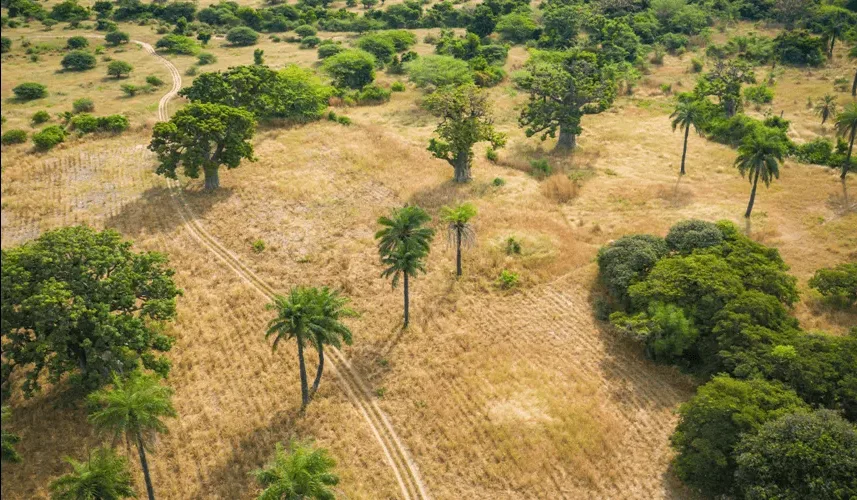
Great Green Wall
This project in Africa aims to restore degraded land across the Sahel-Saharan region by planting trees and reviving vegetation.
Steps Needed to Prevent Desertification
Everyone can help reduce desertification by following better environmental practices.
Important steps include:
Sustainable Land Use
Land should be used carefully to prevent overexploitation.
Protect Vegetation
Plants and trees protect soil from erosion.
Better Farming Methods
Farmers should adopt sustainable agriculture techniques such as:
- Crop rotation
- Organic farming
- Efficient irrigation
Eco-Forestry
Regular tree plantation and forest conservation can greatly improve land quality.
Resource Conservation
Using resources wisely can reduce pressure on land.
Examples:
- Save water
- Reduce waste
- Use recycled paper
Public Awareness
People need education about land degradation and environmental protection.
Schools, governments, and communities all have a role.
Final Thoughts
Stopping desertification is essential for protecting our future. Healthy land gives us food, water, forests, and biodiversity. If land continues to degrade, climate change, poverty, and food shortages will become worse.
Protecting forests, using land wisely, and promoting sustainable development are necessary for a healthier planet. Governments and citizens must work together to ensure fertile land remains productive for future generations.
FAQs
Q1. What is desertification?
Desertification is the process where fertile land becomes dry, barren, and less productive due to natural or human activities.
Q2. Does desertification mean deserts are expanding?
No, desertification does not mean existing deserts are expanding. It means healthy land is turning into desert-like land.
Q3. What are the main causes of desertification?
The main causes include overgrazing, deforestation, poor farming practices, climate change, soil erosion, and overuse of natural resources.
Q4. How does desertification affect humans?
It reduces crop production, causes food shortages, increases poverty, and forces people to migrate to other places.
Q5. Which areas in India are most affected by desertification?
States like Rajasthan, Gujarat, Haryana, and dry regions of western India are highly affected.
Q6. How can desertification be prevented?
It can be prevented through tree plantation, sustainable farming, water conservation, and protecting forests.
Q7. Why is World Day to Combat Desertification observed?
It is observed on 17 June every year to spread awareness about land degradation and drought.