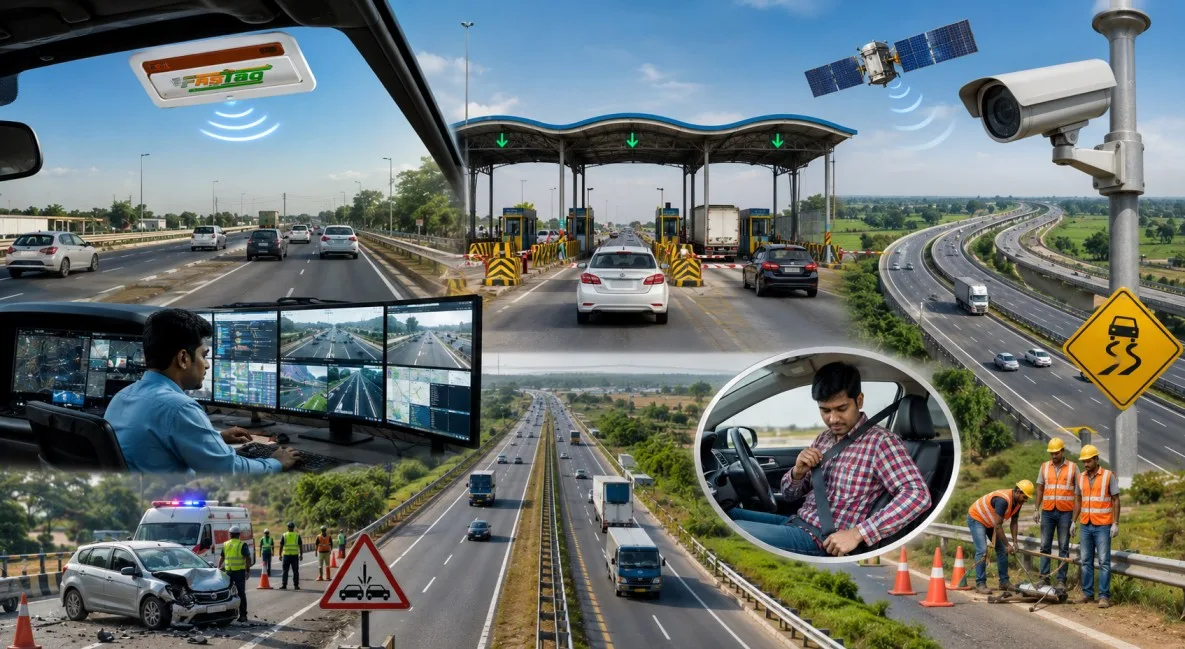

Road Transport 2019 was an important year for India’s transport and highway sector. The Government of India introduced several reforms to improve road safety, make toll collection faster, reduce traffic congestion, and modernize transport services. The Ministry of Road Transport and Highways focused on using technology to create a better travel experience while also reducing road accidents.
Thank you for reading this post, don't forget to subscribe!Some of the biggest initiatives included the National Electronic Toll Collection (NETC) programme, mandatory FASTag implementation, the Motor Vehicles (Amendment) Act, 2019, the Integrated Road Accident Database (IRAD), and several road safety measures.
These reforms not only improved the road transport system in 2019 but also laid the foundation for major developments that continued in the following years.
Ministry of Road Transport and Highways
The Ministry of Road Transport and Highways (MoRTH) is responsible for planning, developing, and maintaining India’s road transport network. It manages national highways, road safety programmes, vehicle regulations, and transport policies.
The ministry also works to improve road infrastructure, encourage digital transport services, and reduce road accidents across the country.
India has one of the largest road networks in the world, covering more than 6 million kilometres. Roads carry nearly 65% of freight traffic and around 90% of passenger traffic, making them the backbone of the country’s economy.
National Electronic Toll Collection (NETC)
One of the biggest achievements of Road Transport 2019 was the expansion of the National Electronic Toll Collection (NETC) programme.
NETC was developed by the National Payments Corporation of India (NPCI) in 2016. It uses FASTag technology to allow vehicles to pay toll charges electronically without stopping at toll plazas.
The main objective was to reduce waiting time, save fuel, decrease pollution, and improve traffic movement on highways.
What is FASTag?
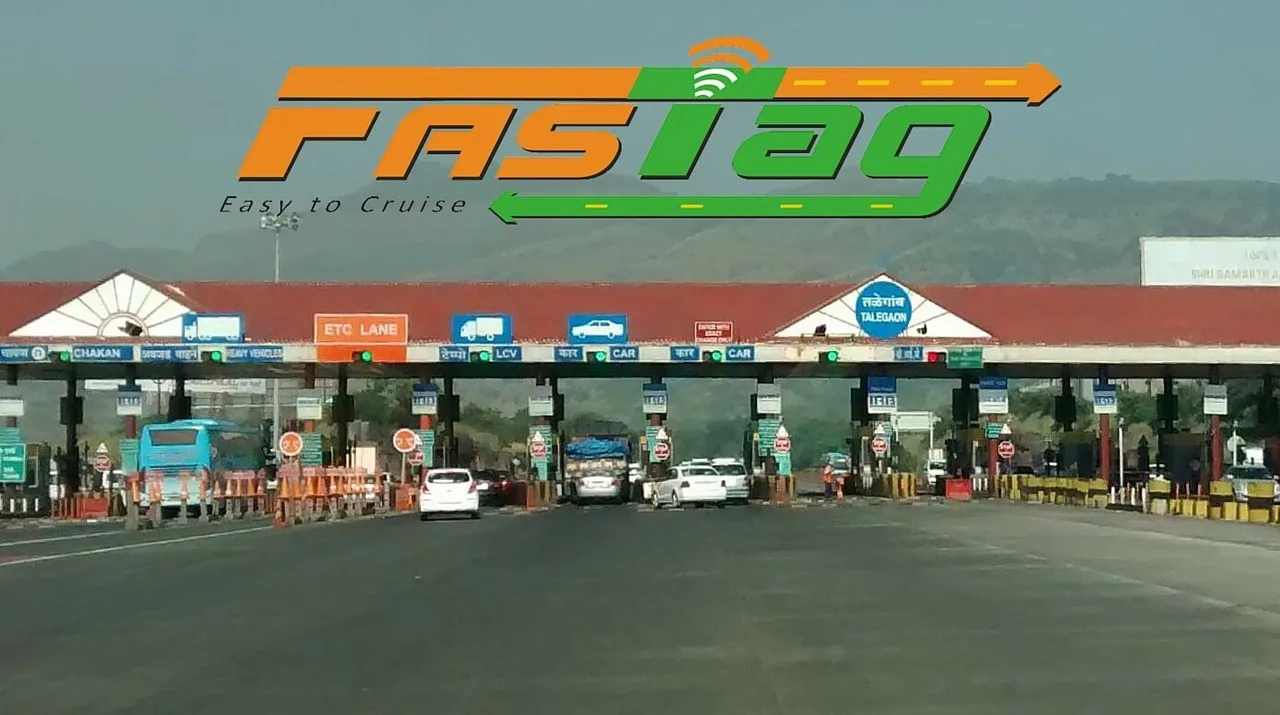
FASTag is a small sticker fixed on the windshield of a vehicle.
It contains a Radio Frequency Identification (RFID) chip that communicates with sensors installed at toll plazas.
When a vehicle passes through a toll lane:
- The RFID reader scans the FASTag.
- The toll amount is deducted automatically from the linked bank account or wallet.
- The vehicle continues moving without stopping.
This makes toll collection much faster and smoother.
Benefits of FASTag
The FASTag system offers several benefits:
- Reduces waiting time at toll plazas
- Saves fuel
- Reduces air pollution
- Minimizes traffic jams
- Supports digital payments
- Increases transparency in toll collection
- Reduces cash handling
- Improves highway efficiency
RFID Technology Explained
RFID stands for Radio Frequency Identification.
It is a wireless technology used for identifying and tracking objects.
In road transport, RFID helps identify vehicles automatically through radio signals without requiring physical contact.
Besides toll collection, RFID is widely used in logistics, warehouses, airports, retail stores, and inventory management.
Integrated Road Accident Database (IRAD)
Road accidents remain one of India’s biggest public safety challenges.
To reduce accidents and improve emergency response, the government introduced the Integrated Road Accident Database (IRAD) project.
The objective of IRAD is to create a complete digital database of road accidents across the country.
Every accident is recorded using geo-tagging, which helps authorities identify accident-prone locations.
The collected information includes:
- Exact accident location
- Time and date
- Road conditions
- Vehicle details
- Driver information
- Weather conditions
- Cause of accident
This data helps governments plan better road safety measures.
Why IRAD is Important
The database helps authorities:
- Identify accident hotspots
- Improve road engineering
- Strengthen traffic enforcement
- Plan better emergency response
- Reduce accident deaths
- Improve road design
The long-term target announced in 2019 was to reduce road accident fatalities by 25% by 2024.
IT-Based Road Safety Infrastructure
The government also proposed installing intelligent road safety systems on highways.
These include:
- CCTV surveillance
- Incident detection systems
- Traffic monitoring
- Emergency response systems
- Digital communication networks
- Highway control centres
Such systems help detect accidents quickly and allow emergency services to respond faster.
Motor Vehicles (Amendment) Act, 2019
One of the most important reforms of Road Transport 2019 was the Motor Vehicles (Amendment) Act, 2019.
The original Motor Vehicles Act came into force in 1988.
After three decades, increasing traffic, rising accidents, and technological changes made reforms necessary.
The amended Act aimed to improve road safety, increase transparency, simplify transport services, and introduce modern technologies.
Major Features of the Motor Vehicles (Amendment) Act
Higher penalties
Traffic violations now attract much higher fines.
The purpose is to discourage dangerous driving and improve road discipline.
Digital governance
Many transport services became available online.
Citizens can now:
- Apply for driving licences
- Renew licences
- Register vehicles
- Access transport documents digitally
This reduces paperwork and corruption.
Protection for Good Samaritans
The Act gives legal protection to people who help road accident victims.
Good Samaritans cannot be forced into unnecessary legal procedures simply for helping an injured person.
This encourages more people to assist accident victims.
Better insurance and compensation
The Act improved compensation rules for road accident victims.
It also introduced provisions for quicker settlement of insurance claims.
Cashless treatment
The government proposed providing cashless treatment for road accident victims during the critical emergency period.
This can help save lives by ensuring immediate medical care.
Support for Divyang persons
The law made it easier for persons with disabilities to drive specially modified vehicles.
It also simplified approval procedures for adapted vehicles.
Encouraging new technology
The Act allows testing of advanced vehicle technologies, including:
- Connected vehicles
- Intelligent transport systems
- Driver assistance technologies
- Future autonomous vehicle research
These provisions support innovation in India’s automobile sector.
Road Safety Initiatives
The Ministry introduced several measures to improve road safety.
National Road Safety Policy
The policy focuses on:
- Road safety awareness
- Better enforcement
- Safer highways
- Improved vehicle standards
- Scientific accident investigation
- Intelligent transport systems
Its main objective is to reduce road accident deaths across the country.
National Road Safety Council
The National Road Safety Council serves as the highest advisory body on road safety.
It recommends policies and coordinates efforts between the Central Government and State Governments.
Road Accident Dashboard
The Ministry launched a digital dashboard that allows citizens and policymakers to access:
- State-wise accident statistics
- National accident trends
- Road safety information
- Comparative performance data
This promotes transparency and better decision-making.
VAHAN and SARATHI
To improve transport services, the Ministry expanded two major digital platforms.
VAHAN
VAHAN is an online vehicle registration system.
It maintains digital records of registered vehicles across India.
SARATHI
SARATHI is the online driving licence management system.
It allows citizens to:
- Apply for learner licences
- Book driving tests
- Renew licences
- Download digital licences
These platforms reduce delays and improve transparency.
Setu Bharatam Programme
The Setu Bharatam Programme was launched to remove railway level crossings on National Highways.
Railway crossings often cause:
- Traffic congestion
- Delays
- Accidents
The programme replaces these crossings with:
- Road overbridges
- Road underbridges
This improves safety and reduces travel time.
Progress After 2019 (2020-2025)
The reforms introduced in 2019 continued to grow over the next few years.
FASTag became mandatory
From February 2021, FASTag became mandatory for almost all vehicles using national highways.
Today, electronic toll collection has become the standard system across India.
Millions of vehicles use FASTag daily.
Expansion of IRAD
The Integrated Road Accident Database has been implemented in many states.
Digital accident reporting now helps authorities identify dangerous road stretches and plan corrective measures.
Digital transport services
Most Regional Transport Offices (RTOs) now provide online services through VAHAN and SARATHI.
People can complete many transport-related tasks without visiting government offices.
National Highway Expansion
India continued to expand its highway network under programmes like:
- Bharatmala Pariyojana
- Economic Corridors
- Expressway Development
Thousands of kilometres of highways and expressways were completed between 2020 and 2025.
Road Safety Campaigns
The government increased awareness programmes on:
- Helmet use
- Seat belts
- Drunk driving
- Speed limits
- Safe driving habits
Technology-based enforcement using cameras and automated systems also increased.
Electric Mobility Support
Road transport policies also began supporting electric vehicles through better charging infrastructure and improved regulations.
This contributes to cleaner transportation and lower pollution.

Challenges
Despite significant improvements, India still faces several challenges.
Some of them include:
- High number of road accidents
- Poor driving discipline
- Over-speeding
- Drunk driving
- Inadequate road maintenance in some areas
- Traffic congestion in cities
- Delay in emergency medical response
Continuous investment and public awareness remain essential.
The Way Forward
India’s road transport system is becoming smarter with the help of digital technology, better highways, electronic toll collection, and improved road safety policies.
Future priorities include:
- Building safer highways
- Strengthening accident response systems
- Expanding intelligent transport systems
- Promoting electric mobility
- Improving public transport
- Using Artificial Intelligence for traffic management
- Reducing road accident deaths
With continued reforms and public cooperation, India can build a transport system that is safer, faster, cleaner, and more efficient.
Conclusion
Road Transport marked an important turning point in India’s transport sector. Initiatives like FASTag, NETC, IRAD, the Motor Vehicles (Amendment) Act, VAHAN, SARATHI, and Setu Bharatam modernized road transport and improved governance.
The progress made after 2019 shows that digital technology and better infrastructure can transform transportation. While challenges remain, the reforms introduced during this period continue to strengthen India’s road network, improve road safety, and support economic growth across the country.
FAQs
1. What is Road Transport 2019?
Road Transport 2019 refers to the major schemes, policies, and reforms introduced by the Ministry of Road Transport and Highways to improve road infrastructure, digital toll collection, and road safety.
2. What is FASTag?
FASTag is an electronic toll payment system that uses RFID technology to automatically deduct toll charges from a linked bank account or wallet while a vehicle passes through a toll plaza.
3. What is the National Electronic Toll Collection (NETC) Programme?
NETC is a nationwide electronic toll collection system developed by NPCI that enables cashless toll payments through FASTag, reducing waiting time and traffic congestion.
4. What is RFID technology?
RFID (Radio Frequency Identification) is a wireless technology used to identify and track objects. In FASTag, it helps toll plazas automatically detect vehicles and collect toll fees.
5. What is the Integrated Road Accident Database (IRAD)?
IRAD is a digital system that records geo-tagged road accident data to help authorities identify accident-prone areas and improve road safety planning.
6. What are the key features of the Motor Vehicles (Amendment) Act, 2019?
The Act introduced higher traffic fines, digital transport services, protection for Good Samaritans, better compensation for accident victims, support for adapted vehicles, and promotion of modern vehicle technologies.
7. What is the purpose of the National Road Safety Policy?
The National Road Safety Policy aims to reduce road accidents through better infrastructure, awareness campaigns, strict law enforcement, and improved traffic management.
8. What are VAHAN and SARATHI?
VAHAN is an online vehicle registration system, while SARATHI is an online platform for driving licence services such as applications, renewals, and learner licences.
9. What is the Setu Bharatam Programme?
Setu Bharatam is a government programme that aims to eliminate railway level crossings on National Highways by constructing road overbridges and underpasses.
10. What progress was made after 2019?
Between 2020 and 2025, FASTag became mandatory on national highways, digital transport services expanded, highway construction accelerated, IRAD implementation increased, and road safety initiatives were strengthened.