



Watershed Management and Water Conservation

Watershed Management plays a major role in protecting water resources and maintaining environmental balance. Water is one of the most important natural resources for life. Humans, animals, and plants all depend on water. However, due to pollution, overuse, and climate change, water resources are under pressure. This is why watershed management has become very important.
Thank you for reading this post, don't forget to subscribe!Watershed management helps in conserving water, preventing soil erosion, improving agriculture, and protecting the environment. It is especially useful in rural and drought-prone areas where water shortage is common.
What is a Watershed?
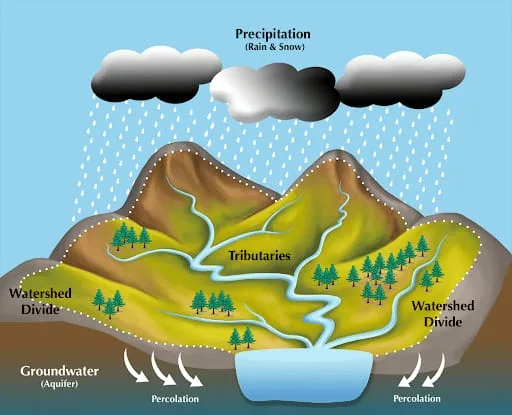
A watershed, also called a drainage basin or catchment area, is an area of land where all rainwater and surface water flow toward a common water body such as:
- River
- Lake
- Pond
- Stream
- Reservoir
In simple words, a watershed collects rainwater and directs it to one place.
Each watershed is separated by natural boundaries such as hills or ridges. These boundaries are called water divides.
A watershed works like a natural water collection system.
Types of Watersheds
Watersheds are classified based on their size.
| Type | Area Covered |
|---|---|
| Macro Watershed | More than 50,000 hectares |
| Sub-Watershed | 10,000–50,000 hectares |
| Milli-Watershed | 1,000–10,000 hectares |
| Micro Watershed | 100–1,000 hectares |
| Mini Watershed | 1–100 hectares |
Different watershed sizes require different management strategies.
What is Watershed Management?
Watershed management means using proper land and water management practices to protect and improve water quality and natural resources inside a watershed.
Its main goal is to ensure that water and land resources are used wisely and remain available for future generations.
It includes activities like:
- Soil conservation
- Rainwater harvesting
- Tree plantation
- Groundwater recharge
- Preventing pollution
- Managing agriculture properly
In short, watershed management helps maintain balance between humans and nature.
Objectives of Watershed Management
Watershed management has several important goals.
Pollution Control
It helps reduce pollution in rivers, lakes, and groundwater by managing waste and controlling harmful runoff.
Prevent Overuse of Resources
Natural resources like water and soil should not be used excessively. Watershed management ensures proper use.
Water Storage and Flood Control
Rainwater can be stored using ponds, dams, and reservoirs. This reduces flooding and helps during drought.
Soil Erosion Prevention
Heavy rainfall can wash away fertile topsoil. Watershed management helps prevent this loss.
Groundwater Recharge
It helps rainwater move underground and refill wells and aquifers.
Wildlife Protection
Healthy watersheds support forests, birds, animals, and biodiversity.
Components of Watershed Management Programmes
A successful watershed programme includes many activities.
| Component | Purpose |
| Soil and Water Conservation | Prevent erosion and water loss |
| Plantation | Increase green cover |
| Agronomical Practices | Improve farming methods |
| Livestock Management | Better animal care |
| Renewable Energy | Reduce environmental pressure |
| Institutional Development | Strengthen community systems |
All these together improve environmental sustainability.
Integrated Watershed Development Programme (IWMP)
The Integrated Watershed Development Programme (IWMP) was launched by the Department of Land Resources under the Ministry of Rural Development in 2009-10.
Its goal was to improve 55 million hectares of rain-fed land by 2027.
India has one of the largest watershed programmes in the world. The IWMP is considered the second largest watershed programme after China.
The programme focuses on restoring ecological balance by conserving:
- Soil
- Water
- Vegetation
- Degraded land
The scheme is implemented in all states of India.
Funding ratio:
| Government | Share |
| Central Government | 90% |
| State Government | 10% |
Benefits of IWMP
The programme helps in:
- Preventing soil runoff
- Regenerating natural vegetation
- Harvesting rainwater
- Recharging groundwater
- Improving agriculture
It also supports:
- Multi-cropping
- Agro-based activities
- Better rural livelihoods
In 2015, IWMP was merged into Pradhan Mantri Krishi Sinchayee Yojana along with:
- On-Farm Water Management (OFWM)
- Accelerated Irrigation Benefit Programme (AIBP)
Other Watershed Initiatives in India
Haryali Project
Haryali is a watershed development project supported by the Central Government.
Its goal is to help rural people conserve water for:
- Drinking
- Irrigation
- Fisheries
- Afforestation
This project is carried out by Gram Panchayats with community participation.
Neeru-Meeru Programme
The Neeru-Meeru (Water and You) programme in Andhra Pradesh focuses on water conservation through public participation.
Structures built under this include:
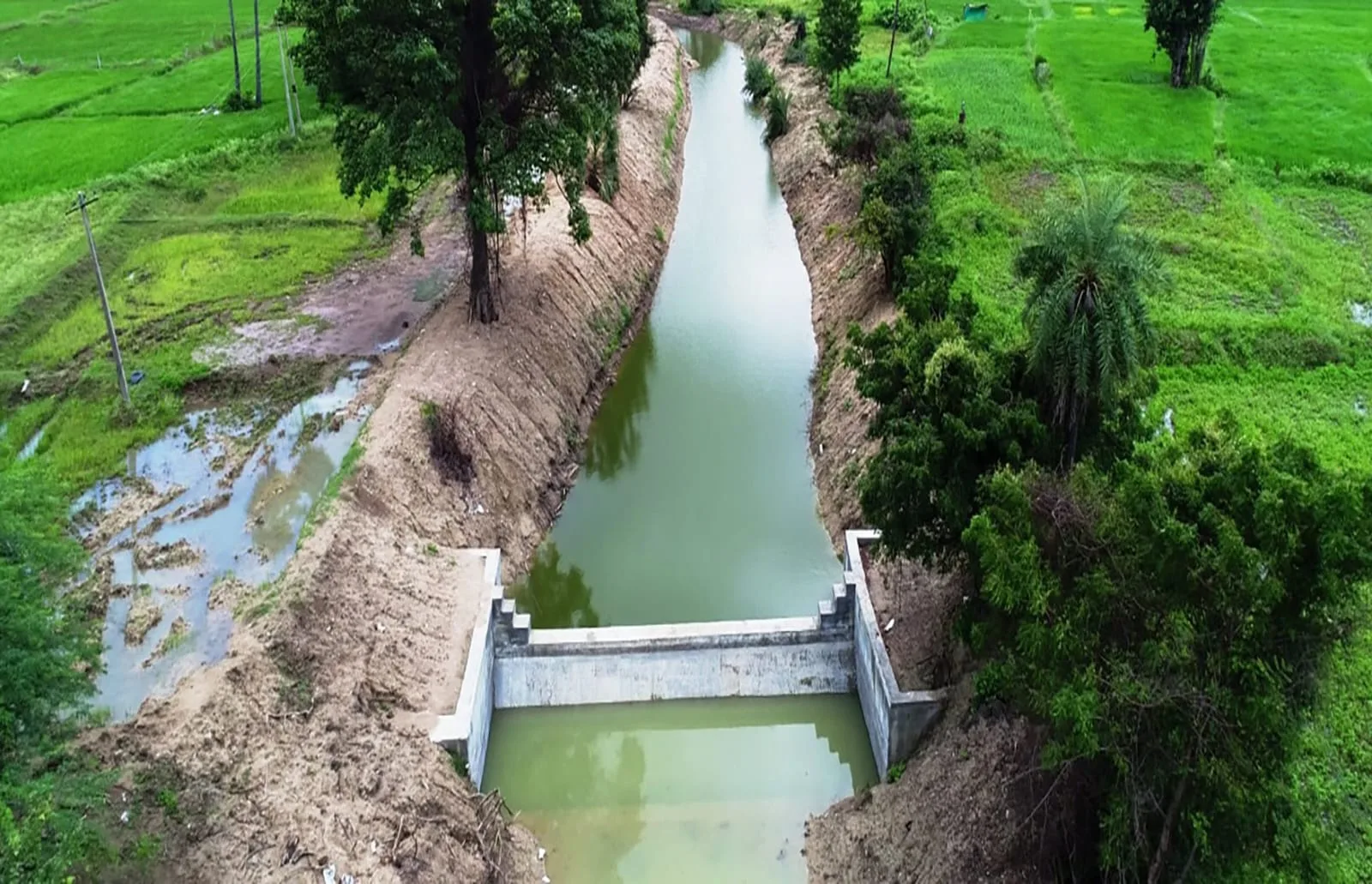
- Percolation tanks
- Ponds
- Check dams
Arvary Pani Sansad
This initiative in Rajasthan promotes water harvesting through community efforts.
Traditional structures like Johads are used to store water.
Rainwater Harvesting in Tamil Nadu
Tamil Nadu made rainwater harvesting mandatory in houses.
No building can be constructed without water harvesting structures.
This has greatly improved groundwater levels.
Importance of Watershed Management
Watershed management offers many benefits.
Controls Pollution
Rainwater runoff can carry pollutants into rivers and lakes.
These pollutants include:
- Chemicals
- Plastic waste
- Fertilizers
- Industrial waste
Watershed management reduces such pollution.
Identifies Harmful Activities
Activities inside a watershed affect water quality.
Examples include:
- Deforestation
- Mining
- Overgrazing
- Improper farming
Watershed planning identifies these harmful activities and helps reduce their impact.
Improves Cooperation
Watershed management encourages cooperation among:
- Government agencies
- Farmers
- Villagers
- NGOs
- Local communities
This partnership increases success.
Supports Inclusive Growth
Inclusive growth means economic growth that benefits everyone.
Watershed management improves rural life by increasing water availability and agricultural productivity.
Benefits to farmers include:
| Benefit | Result |
| More Water | Better irrigation |
| Better Soil | Higher crop yield |
| Crop Diversity | More income sources |
In drought-prone areas, watershed management can even double agricultural productivity.
Problems in Watershed Management Programmes
Despite many benefits, several challenges remain.
Project Design Issues
Some projects fail because of:
- Outdated methods
- Poor planning
- Lack of funds
- Short implementation period
Without proper design, outcomes remain weak.
Weak Policy Support
Many countries have environmental policies, but specific watershed policies are often missing.
This creates problems in long-term planning.
Lack of:
- National strategies
- Clear policies
- Action plans
reduces programme success.
Weak Institutional Support
In many areas, institutions created during watershed projects become weak after project completion.
Reasons include:
- Lack of training
- Poor financial support
- Weak management
Self Help Groups are also not fully integrated.
Strong institutions are needed for sustainability.
Limited Forest Inclusion
Reserved forests are often excluded from watershed development plans.
This creates challenges because forests play a major role in water conservation.
Poor coordination between:
- Forest Department
- Rural Development Department
slows progress.
Way Forward
Better strategies are needed to improve watershed management.
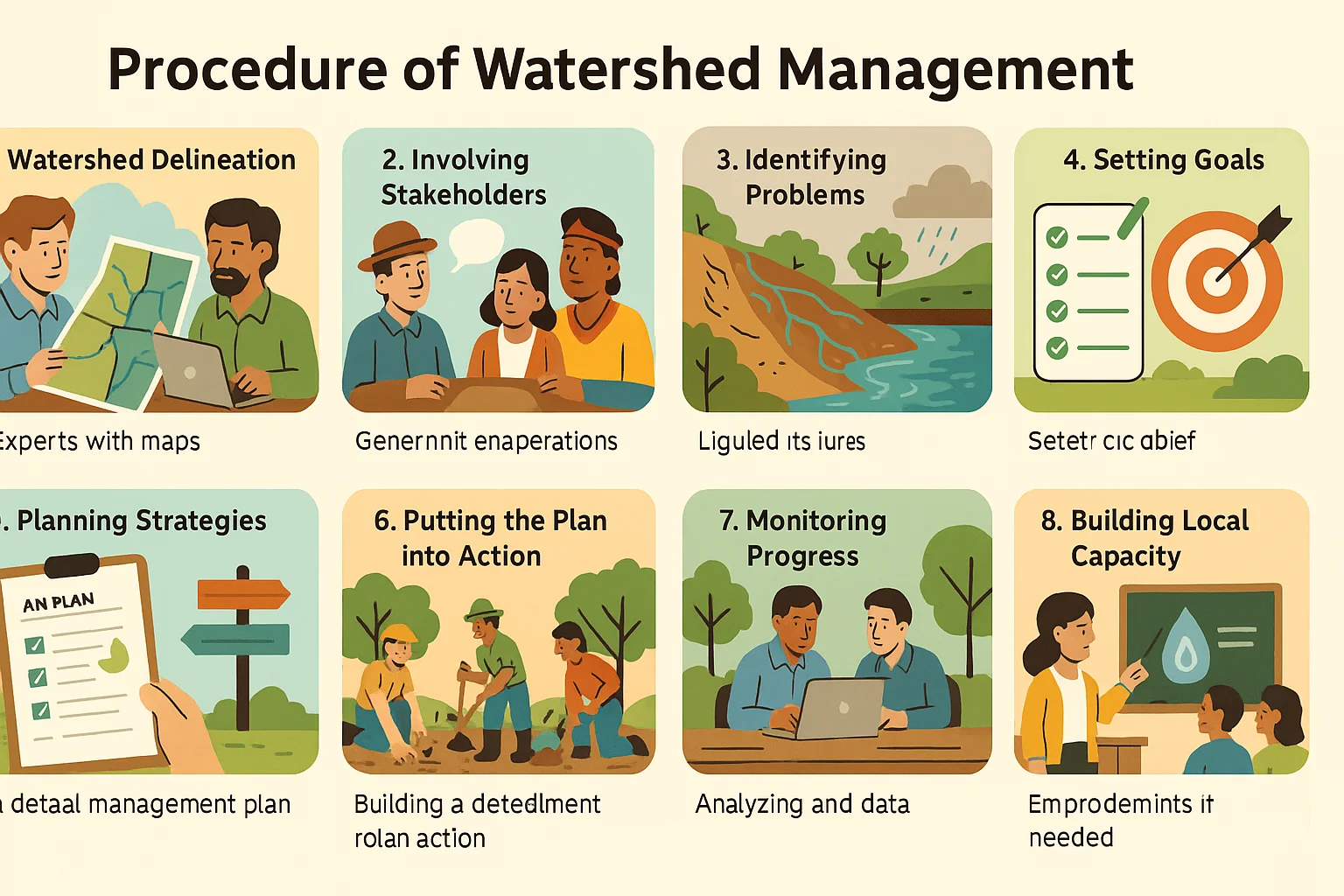
Build Local Partnerships
Local participation is essential.
When communities participate:
- Awareness increases
- Conflicts reduce
- Responsibility improves
People become active in protecting resources.
Set Priorities
Not every problem can be solved at once.
Watershed plans should identify:
- Most polluted areas
- Water-scarce regions
- High-risk zones
These should get priority.
Educational Programmes
Public awareness is very important.
People should learn about:
- Water conservation
- Rainwater harvesting
- Pollution control
- Sustainable farming
Education creates responsible citizens.
Schools, colleges, and community groups can help spread awareness.
Effective Implementation
Planning alone is not enough.
Proper implementation requires:
- Regular monitoring
- Progress evaluation
- Follow-up actions
Watershed management should be flexible and adaptive to changing conditions.
Final Thoughts
Watershed management is essential for water conservation and environmental protection. It improves water availability, reduces pollution, prevents soil erosion, and supports agriculture. With better planning, strong policies, and public participation, watershed management can help create a sustainable future for coming generations.
FAQs
1. What is a watershed?
A watershed is an area of land where water drains into a common river, lake, or water body.
2. What is watershed management?
It is the process of managing land and water resources to conserve water and protect the environment.
3. Why is watershed management important?
It helps control pollution, prevent soil erosion, and improve water availability.
4. What are examples of watershed activities?
Rainwater harvesting, check dams, tree plantation, and soil conservation.
5. Which scheme supports watershed management in India?
Pradhan Mantri Krishi Sinchayee Yojana supports watershed-related development in India.