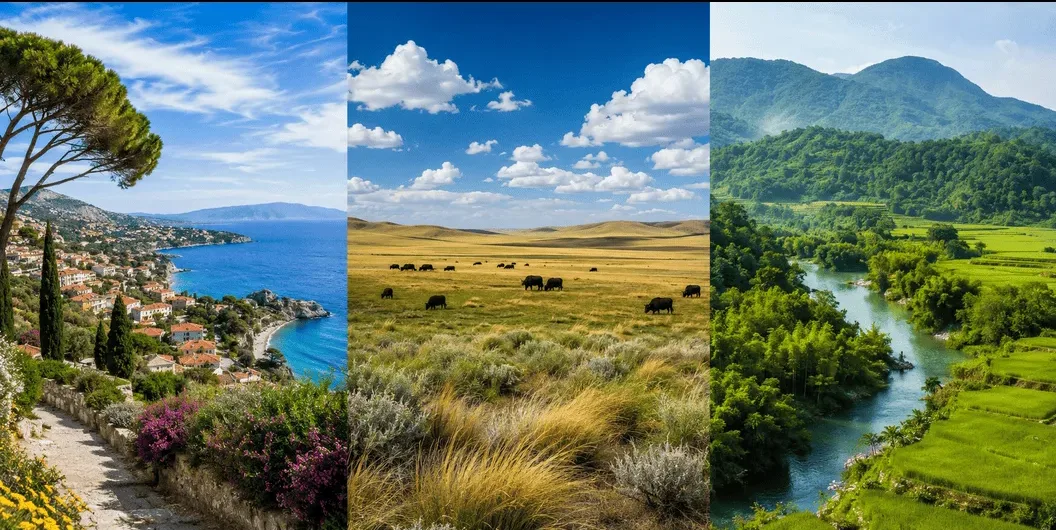
Climatic Regions of World (Part II)

Climatic regions of the world are areas that share similar weather conditions such as temperature, rainfall, winds, and natural vegetation. These regions help us understand how people live, what crops they grow, and how the environment behaves in different parts of the Earth. In here, we will study three important climatic regions, they are:
Thank you for reading this post, don't forget to subscribe!- Warm Temperate Western Margin (Mediterranean) Climate
- Temperate Continental (Steppe) Climate
- Warm Temperate Eastern Margin (China Type) Climate
Each region has its own unique features, distribution, vegetation, and economic importance.
Warm Temperate Western Margin (Mediterranean) Climate
Distribution
This climate is mainly found on the western sides of continents between 30° and 45° latitude in both the Northern and Southern Hemispheres. It develops because of the shifting of wind belts throughout the year.
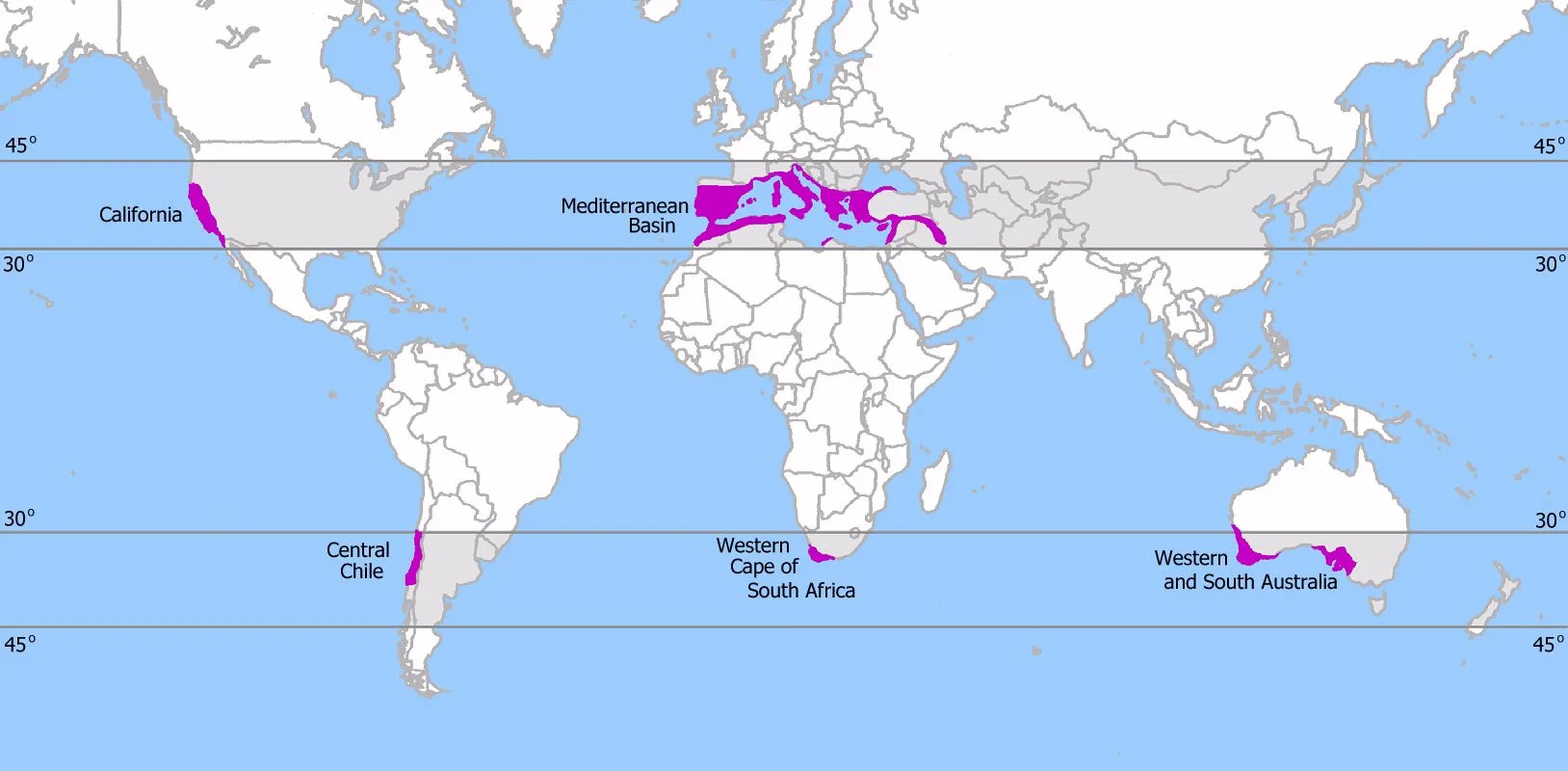
Major regions include:
- Around the Mediterranean Sea
- Central Chile
- California (near San Francisco)
- South-western Africa (Cape Town region)
- Southern Australia (Adelaide and nearby areas)
- South-west Australia
Among all these, the Mediterranean region shows the best example of this climate.
Climate Features
Hot and Dry Summers
Summers in this region are:
- Very hot
- Dry
- Sunny
This happens because the trade winds blow from land to sea, so they do not bring rain. As a result:
- Rainfall is almost absent
- Droughts are common
- Days are very hot
- Nights are cooler
Mild and Wet Winters
Winters are:
- Cool
- Pleasant
- Rainy
Rainfall mainly occurs in winter because the westerly winds shift towards the equator and bring moisture from the ocean. Rain usually comes in:
- Short heavy showers
- Followed by bright sunshine
Bright Sunshine
This region receives a lot of sunlight:
- Skies are mostly clear
- Sunshine is abundant
- Weather is pleasant for tourism
Local Winds
Some important local winds affect this region:
Sirocco
- A hot and dusty wind from the Sahara Desert
- Blows towards the Mediterranean Sea
- Can damage crops like grapes and olives
- Sometimes brings red dust causing “blood rain”
Mistral
- A cold wind from the north
- Blows through the Rhone Valley
- Very strong and fast
Other winds include:
- Bora
- Tramontana
- Gregale
Natural Vegetation
Vegetation in this region is adapted to dry conditions.
Key Features:
- Trees are short and widely spaced
- Leaves are small to reduce water loss
- Plants are drought-resistant (xerophytic)
Types of Vegetation
Evergreen Forests
- Includes oak trees (especially cork oak)
- Cork is used to make bottle stoppers
Coniferous Trees
- Pine, fir, cedar, and cypress
- Needle-shaped leaves
Shrubs and Bushes
- Laurel, rosemary, lavender
- Often aromatic plants
Grass
- Not very suitable for grazing
- Cattle farming is limited
Economic Activities
Orchard Farming
This region is known as the world’s orchard land.
Major fruits:
- Oranges
- Lemons
- Grapes
- Olives
These plants have deep roots to survive dry summers.
Crop Cultivation
Main crops:
- Wheat (especially hard winter wheat)
- Rice (in some areas like Italy and California)
Farms are usually small, but large farms called haciendas also exist.
Wine Production
- This region produces about 75% of the world’s wine
- Grapes are the main crop
- Around 85% of grapes are used for wine-making
Temperate Continental (Steppe) Climate
Distribution
This climate is found in the interior parts of continents, far away from the sea.
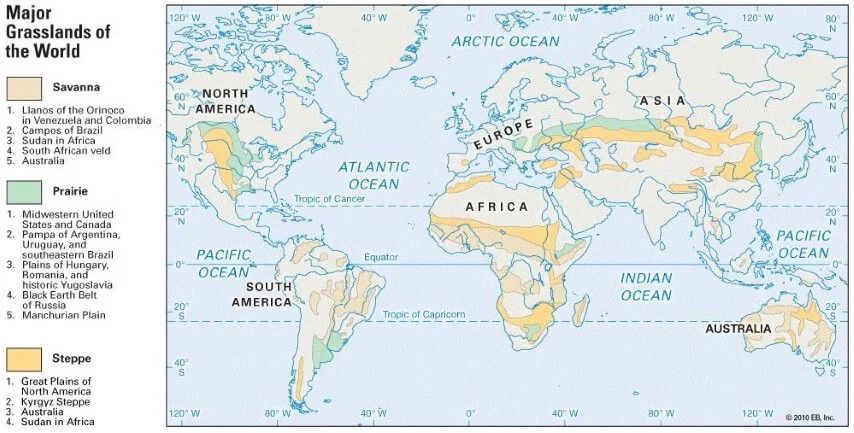
It includes regions like:
- Eurasian steppes
- North American prairies
- South American pampas
These areas are often called grasslands.
Climate Features
Temperature
- Summers are hot
- Winters are very cold
- Large difference between summer and winter temperatures
This is because these areas are far from the ocean, so they do not get moderate temperatures.
Rainfall
- Rainfall is low
- Most precipitation occurs in winter
- Snowfall is common
Chinook Wind
- A warm wind in North America
- Can raise temperature very quickly
- Helps melt snow
- Good for farmers
Natural Vegetation
Grasslands
- Very few trees
- Short grasses
- Can survive drought
Towards the desert, grasses become shorter and more scattered.
Economic Activities
Wheat Farming
These regions are called the “granaries of the world” because:
- Large-scale wheat farming is done
- Modern machines are used
Pastoral Farming
- Rearing of cattle and sheep
- Production of:
- Meat
- Milk
- Wool
Nomadic Herding
Earlier, people moved from place to place with animals. Examples:
- Kirghiz
- Kazakhs
Now this practice is decreasing.
Meat Industry
- Large ranches called estancias
- Meat processing industries developed
- Export of beef and mutton
Warm Temperate Eastern Margin (China Type) Climate
Distribution
This climate is found on the eastern sides of continents between 20° and 35° latitude.
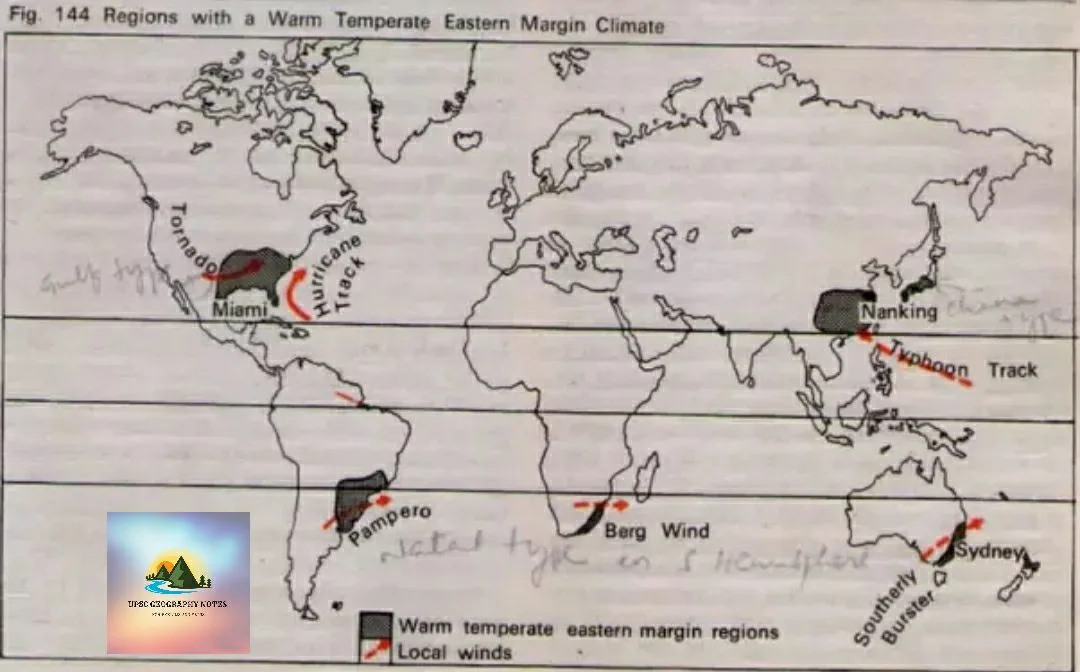
Major areas include:
- China
- Japan
- South-eastern USA
- South-eastern Brazil
- Eastern Australia
Climate Features
Seasonal Winds (Monsoon Type)
This region experiences:
- Warm, moist summers
- Cool, dry winters
Temperature
- Average range: 4°C to 25°C
- Winters can be cold
- Summers are warm and humid
Rainfall
- Moderate rainfall (60–150 cm)
- Rainfall occurs throughout the year
- More rain in summer
Storms
- Typhoons and hurricanes are common
- These can cause damage to crops and houses
Types of This Climate
China Type
- Strong monsoon effect
- Heavy summer rainfall
Gulf Type
- Less strong monsoon
- Hurricanes occur
Natal Type
- Rainfall throughout the year
- Strong ocean influence
Natural Vegetation
Vegetation is rich and dense.
Types:
- Evergreen trees
- Deciduous trees
- Coniferous trees in highlands
Important trees:
- Oak
- Pine
- Eucalyptus
- Camphor
Economic Activities
Agriculture
This region is very fertile and supports many crops.
Corn (Maize)
- Grown in large amounts
- Used mainly to feed animals
- Major production in the USA
Cotton
- Needs warm temperature and long growing season
- Grown in Gulf regions
Tobacco
- Grown in humid and warm climate
- Famous in regions like Virginia
Forestry
- Timber is an important resource
- Used for construction and industries
Conclusion
Climatic regions of the world play a very important role in shaping human life, agriculture, and economic activities. The Mediterranean climate supports fruit and wine production, the Steppe climate is known for wheat and livestock, and the China type climate is ideal for crops like corn, cotton, and tobacco.
Understanding these regions helps us learn how climate affects natural vegetation, farming, and human lifestyle. It also helps in planning agriculture and protecting the environment.
FAQs
1. What is Mediterranean climate known for?
It is known for hot dry summers and mild wet winters, along with fruit and wine production.
2. Why are steppe regions called granaries of the world?
Because they produce large amounts of wheat using modern farming methods.
3. What type of vegetation is found in Mediterranean regions?
Mostly drought-resistant plants, small trees, and shrubs.
4. What is Chinook wind?
It is a warm wind in North America that raises temperature quickly and melts snow.
5. Which crops are grown in the China type climate?
Main crops include corn, cotton, and tobacco.
6. Why is rainfall low in steppe climate?
Because these regions are far from oceans and receive little moisture.
7. What are the main features of eastern margin climate?
Warm wet summers, cool dry winters, and moderate rainfall.
8. Why is Mediterranean region good for tourism?
Because of its sunny weather, mild winters, and beautiful landscapes.
9. What is xerophytic vegetation?
Plants that can survive in dry conditions with very little water.
10. What is transhumance?
It is the seasonal movement of people with their animals for grazing.