



Rusty-spotted Cat in Chambal Sanctuary: Rare Wild Cat Recorded in Uttar Pradesh

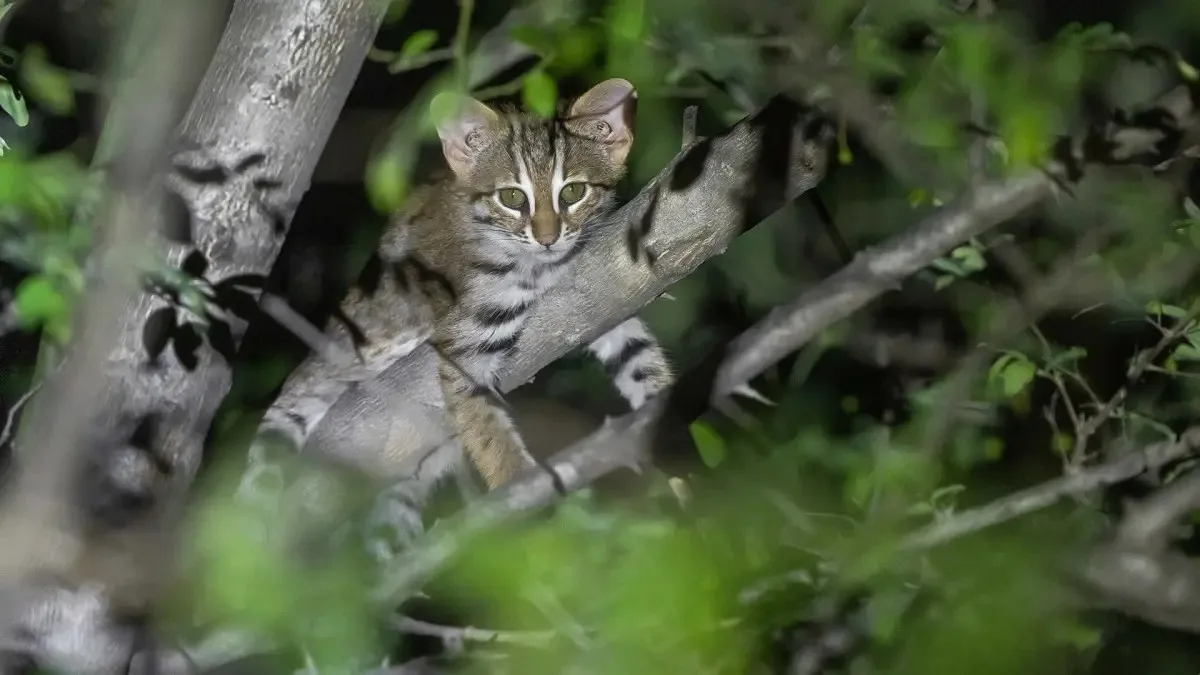
Rusty-spotted Cat in Chambal Sanctuary has become an important wildlife news topic after the rare species was recorded for the first time in Uttar Pradesh’s National Chambal Sanctuary in May 2026. This discovery has attracted the attention of wildlife researchers and conservationists because it expands the known range of one of Asia’s smallest wild cats.
The sighting is considered a positive sign for biodiversity conservation in the Chambal region. Experts believe that the presence of this rare cat indicates a healthy ecosystem that can support different wildlife species.

First-Ever Record in Southern Uttar Pradesh
Researchers recently documented the Rusty-spotted Cat inside the National Chambal Sanctuary. This is the first confirmed record of the species in southern Uttar Pradesh. Until now, there had been no verified evidence of the animal’s presence in this part of the state.
The discovery adds a new location to the distribution map of the species in India. Wildlife experts say such findings are important because they help authorities understand where rare animals live and what steps are needed to protect them.
The finding comes at a time when wildlife conservation is receiving increased attention across India. Many states are strengthening efforts to protect natural habitats and reduce threats to endangered species.
About the Rusty-spotted Cat
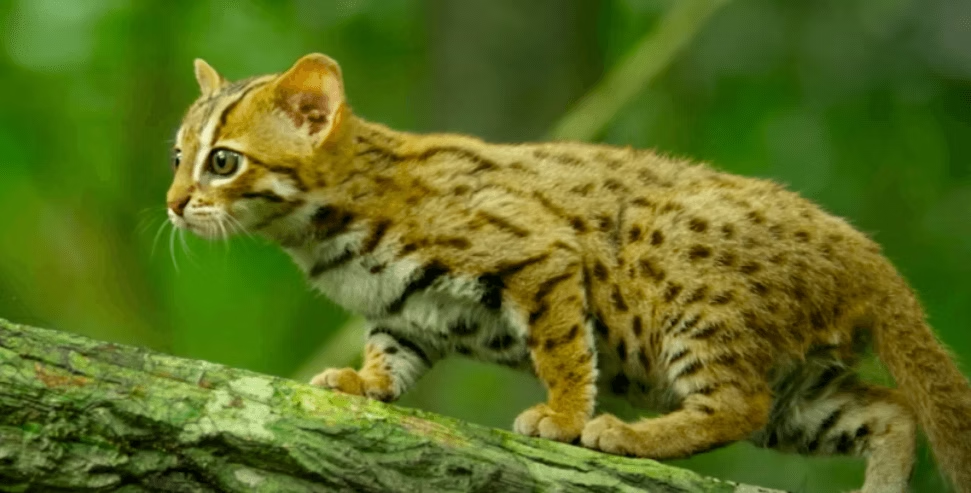
The Rusty-spotted Cat (Prionailurus rubiginosus) belongs to the cat family, Felidae. It is known as one of the smallest wild cats in the world.
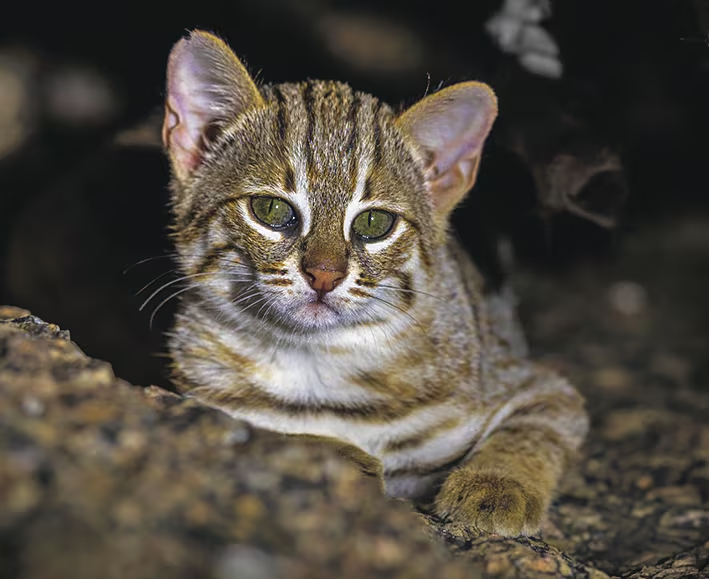
Some key features of the species include:
- Small body size
- Short greyish-brown coat
- Distinct rusty-colored spots on the body
- Large eyes and rounded ears
- Agile movement and excellent hunting ability
The cat mainly feeds on small birds, rodents, insects, and reptiles. It is usually active during the night and prefers to remain hidden, making sightings very rare.
Because of its secretive nature, many populations remain poorly studied. Every new record provides valuable information for wildlife researchers.
National Chambal Sanctuary: A Rich Wildlife Habitat
The National Chambal Sanctuary is one of India’s most important protected river ecosystems. It stretches across Uttar Pradesh, Madhya Pradesh, and Rajasthan along the Chambal River.
The sanctuary is famous for protecting several rare and threatened species. Some of the notable animals found here include:
- Gharial
- Mugger crocodile
- Gangetic river dolphin
- Indian skimmer
- Various migratory birds
The region contains riverbanks, ravines, grasslands, and forest patches that create suitable habitats for different animals. The recent discovery of the Rusty-spotted Cat highlights the ecological richness of this protected landscape.
How the Cat Was Documented
The Rusty-spotted Cat was recorded during wildlife field surveys conducted by researchers from the Wildlife Institute of India.
During the survey, experts:
- Photographed the animal
- Recorded GPS coordinates
- Collected field observations
- Compared physical features with scientific descriptions
The documentation was carried out following standard wildlife research methods. The collected evidence helped confirm the identity of the species.
Modern conservation projects increasingly use technologies such as camera traps, GPS mapping, and digital monitoring systems. These tools are helping scientists discover species that often remain hidden in remote habitats.
Why This Discovery Matters
The confirmed presence of the Rusty-spotted Cat in the Chambal landscape is significant for several reasons.
Expands Known Distribution
The discovery increases the known geographical range of the species in Uttar Pradesh and provides new information about its habitat preferences.
Supports Biodiversity Research
New wildlife records help scientists understand species distribution and population patterns. Such information is useful for future conservation planning.
Highlights Habitat Importance
The finding shows that the Chambal ecosystem supports not only aquatic species but also rare land mammals.
Encourages Further Surveys
Researchers may now conduct additional studies in nearby regions to determine whether more populations of the species exist in central and northern India.
Conservation Challenges
Although the discovery is encouraging, the Rusty-spotted Cat still faces several threats.
Habitat Loss
Expansion of roads, settlements, and agricultural activities can reduce natural habitats.
Road Accidents
Small mammals are often vulnerable to vehicle collisions, especially in fragmented landscapes.
Human Disturbance
Increased human activity near wildlife habitats can affect animal movement and breeding patterns.
Lack of Data
Since the species is rarely seen, information about its population size and distribution remains limited.
Conservation experts emphasize the need for continued monitoring and habitat protection to ensure the long-term survival of the species.
Growing Focus on Wildlife Conservation in India
India has recently increased efforts to protect wildlife through habitat restoration, biodiversity surveys, and improved monitoring systems. Several conservation programs are focusing on lesser-known species in addition to famous animals such as tigers and elephants.
The discovery of the Rusty-spotted Cat in the National Chambal Sanctuary demonstrates the value of scientific fieldwork and protected areas. It also reminds us that many rare species may still be living unnoticed in India’s diverse ecosystems.
As research continues, wildlife experts hope that more information about this elusive wild cat will help strengthen conservation measures and improve understanding of India’s rich biodiversity.