US Micro Reactor Test Marks New Era in Rapid Nuclear Deployment

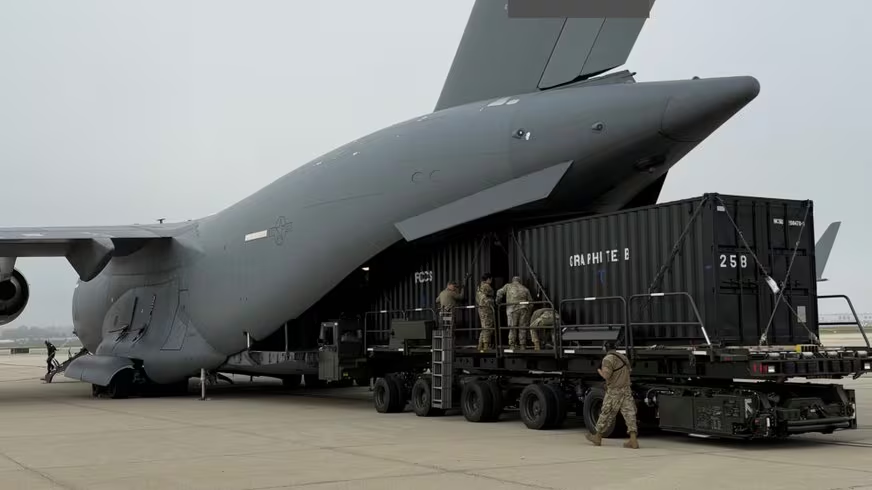
The US Micro Reactor Test has become a landmark moment in the history of advanced nuclear energy and national security planning. For the first time, the United States has successfully carried out an air transport of a micro nuclear reactor using a military cargo aircraft. This rare demonstration highlights how compact nuclear systems could be moved quickly to strategic or remote locations, changing how energy is supplied during emergencies, military operations, and future civilian needs.
Thank you for reading this post, don't forget to subscribe!The test was carried out jointly by the US Department of Energy and the Department of Defense, showing strong cooperation between civilian energy authorities and the military. The reactor transported was a Ward microreactor developed by Valar Atomics, a California-based company working on next-generation nuclear technologies.
First-Ever Airlift of a Micro Nuclear Reactor
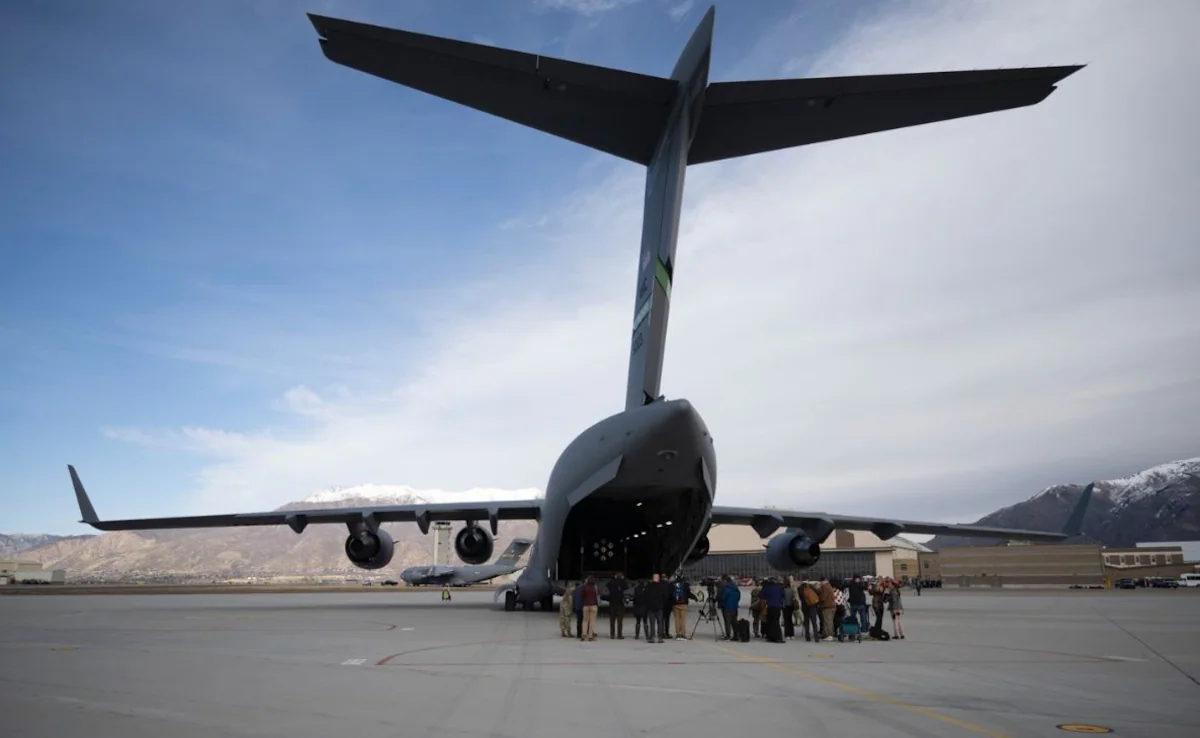
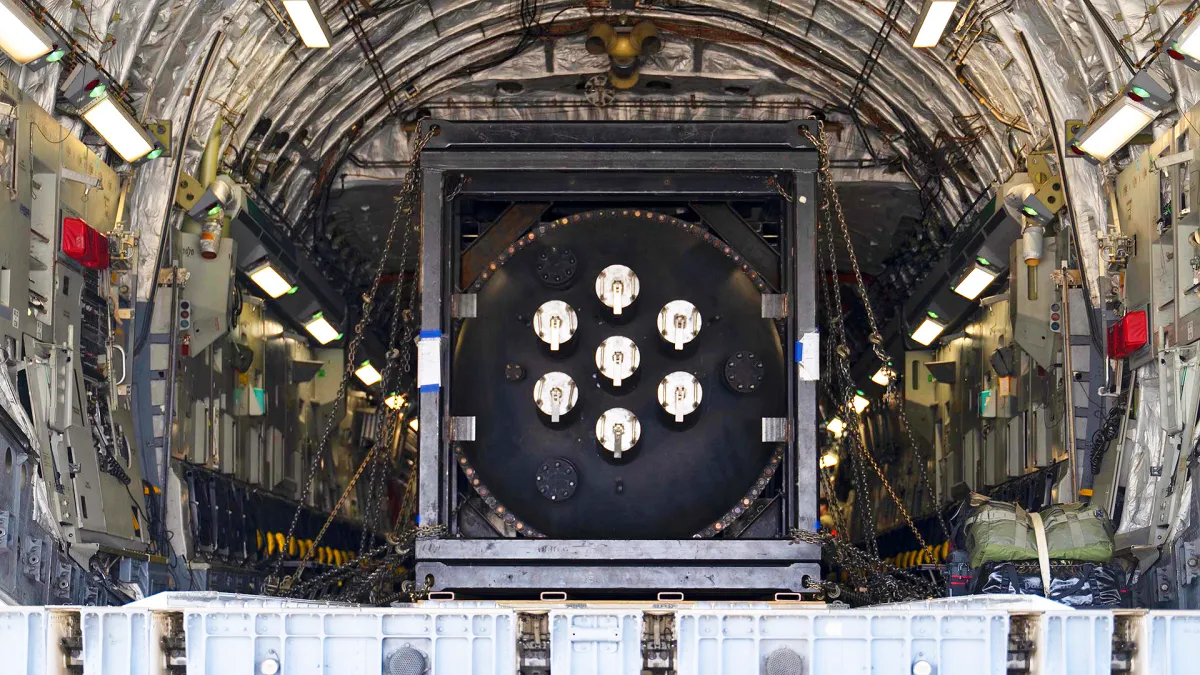
During the US Micro Reactor Test, the Ward microreactor was flown from California to Hill Air Force Base using a C-17 Globemaster III. The reactor was transported without nuclear fuel, ensuring safety while proving that such systems can be moved efficiently by air.
This successful flight is important because it shows that microreactors are not fixed installations like traditional nuclear plants. Instead, they can be relocated when needed. For military planners, this means reliable power could be delivered to forward bases or disaster-hit areas without depending on long fuel supply lines.
Why the US Is Investing in Microreactors
The US Micro Reactor Test reflects a wider strategic push by Washington to strengthen domestic energy production. Under the administration of Donald Trump, small nuclear reactors were identified as a key tool to meet rising electricity demand from defence systems, data centres, and artificial intelligence infrastructure.
Microreactors are seen as especially useful because they are compact, factory-built, and designed for quick deployment. Unlike large nuclear plants that take many years to build, these smaller units can be installed faster and in locations where traditional power plants are not practical.
The US Department of Energy has supported this effort by awarding grants and technical assistance to companies developing small modular reactors and microreactors. At the same time, the US Department of Defense views these reactors as a way to improve energy security for military operations.
Understanding the Ward Microreactor
At the center of the US Micro Reactor Test is the Ward microreactor. Slightly larger than a minivan, it is designed to produce up to five megawatts of electricity. At full output, this is enough power to supply around 5,000 homes.
The reactor will not start at full capacity immediately. Instead, it is scheduled to begin operations at 100 kilowatts in July, gradually increasing to 250 kilowatts later in the year. Full-scale operation is planned in the coming years as testing and regulatory checks continue.
Fuel for the reactor will be transported separately from the Nevada National Security Site, a major center for US nuclear research and testing. This step-by-step approach is meant to ensure safety and build confidence in the technology.
Commercial Plans and Future Use
Valar Atomics has announced plans to begin limited commercial power sales by 2027, with full commercialisation expected by 2028. If successful, microreactors could serve a wide range of users, from remote communities and industrial sites to military bases and emergency response zones.
Supporters of the technology say microreactors could replace diesel generators in isolated areas. Diesel fuel is expensive to transport and vulnerable to supply disruptions. A microreactor, once installed, could provide steady power for years with minimal refuelling needs.
This potential makes the US Micro Reactor Test more than just a military experiment. It is also a signal to investors and policymakers that advanced nuclear energy could play a larger role in the country’s energy mix.
Cost Concerns and Economic Debate
Despite the excitement, the US Micro Reactor Test has also revived debate over costs. Critics argue that electricity produced by microreactors may be much more expensive than power from large nuclear plants or renewable sources like wind and solar.
Building and maintaining nuclear systems involves strict safety standards, specialised materials, and long approval processes. These factors can push up costs, especially for small-scale reactors that do not benefit from economies of scale.
Some energy analysts warn that without strong government support or guaranteed buyers, microreactors may struggle to compete in open electricity markets.
Nuclear Waste and Environmental Questions
Another major issue linked to the US Micro Reactor Test is nuclear waste management. Even though microreactors are smaller, they still produce radioactive waste that must be stored safely for long periods.
The United States has yet to establish a permanent national solution for nuclear waste disposal. Federal authorities are reportedly in talks with several states, including Utah, about possible options such as fuel reprocessing or long-term storage facilities.
Public acceptance will play a big role in the future of microreactors. Communities may support the promise of reliable power but remain concerned about safety, waste, and environmental impact.
What This Test Means Going Forward
The US Micro Reactor Test clearly shows that the technology is moving from theory to real-world demonstration. By proving that a microreactor can be safely transported by air, the United States has taken a step toward flexible nuclear energy deployment.
Whether microreactors become a common feature of the energy landscape will depend on many factors. Regulatory approvals, cost competitiveness, waste solutions, and public trust will all shape the next phase. What is certain is that this test has placed microreactors firmly into the national and global energy discussion.