


Environmental Conventions: Climate and Pollution Treaties(Part-II)

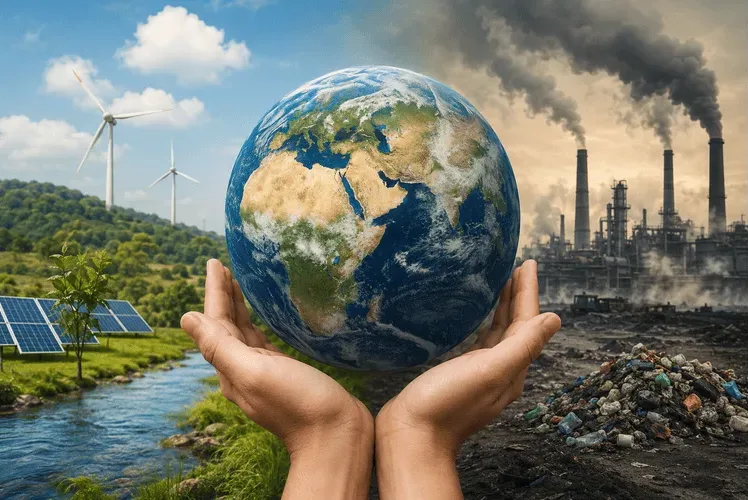
Environmental Conventions are important international agreements made by countries to protect the environment from serious global problems like climate change, pollution, biodiversity loss, ozone depletion, and hazardous waste. These conventions help countries work together because environmental problems do not stop at national borders. Pollution created in one country can affect air, water, land, and human health in many other countries.
Thank you for reading this post, don't forget to subscribe!Today, the world is facing many environmental challenges. Rising temperatures, melting glaciers, extreme weather events, loss of forests, polluted rivers, and toxic chemicals are threatening life on Earth. Because of these problems, countries across the world have signed several agreements to reduce environmental damage and promote sustainable development.
What are International Environmental Conventions?
An international environmental convention is a legally binding agreement between governments. These agreements are made so countries can jointly take action against global environmental threats.
Since environmental issues affect everyone, no single country can solve them alone. That is why these conventions are necessary. They create common rules, targets, and responsibilities for all participating nations.
Why are Environmental Conventions Important?
Environmental conventions are important for many reasons:
- They reduce pollution and protect ecosystems.
- They improve public health by controlling harmful chemicals.
- They help protect food security and water resources.
- They encourage sustainable economic development.
- They support cooperation among countries.
- They create common environmental standards for industries.
These agreements also prevent unfair competition. Without common rules, some countries may ignore environmental protection to reduce industrial costs. Conventions help create a level playing field.
Environmental Conventions Related to Climate Change
United Nations Framework Convention on Climate Change (UNFCCC)
The United Nations Framework Convention on Climate Change (UNFCCC) is one of the most important climate agreements in the world.
It was signed in 1992 during the Earth Summit in Rio de Janeiro, Brazil. The convention officially came into force in 1994. Today, nearly every country in the world is part of this agreement.
The main objective of UNFCCC is to stabilize greenhouse gas concentrations in the atmosphere to prevent dangerous climate change.
Greenhouse gases such as:
- Carbon dioxide (CO₂)
- Methane (CH₄)
- Nitrous oxide (N₂O)
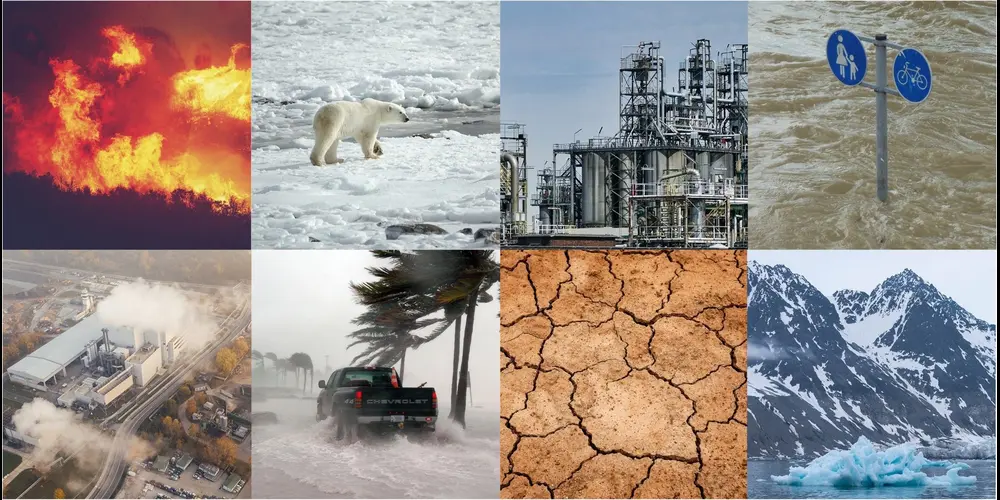
trap heat in the atmosphere and increase global temperatures.
Main Goals of UNFCCC
- Reduce greenhouse gas emissions
- Prevent dangerous climate change
- Allow ecosystems to adapt naturally
- Support sustainable development
The UNFCCC is the parent treaty of two major climate agreements:
| Parent Treaty | Major Agreements |
|---|---|
| UNFCCC | Kyoto Protocol |
| UNFCCC | Paris Agreement |
The UN climate secretariat is located in Bonn, Germany.
India has played an important role in global climate discussions. India is among the few countries to host the COP meetings of all three Rio conventions:
- Climate Change
- Biodiversity
- Desertification
Kyoto Protocol
The Kyoto Protocol is an international agreement linked to the UNFCCC.
It was adopted in Kyoto, Japan in 1997 and came into force in 2005.
The protocol recognized an important principle: developed countries are mainly responsible for historical greenhouse gas emissions because of over 150 years of industrial growth.
Therefore, developed nations were given legally binding emission reduction targets.
Kyoto Protocol Targets
| Phase | Period | Target |
| Phase 1 | 2005–2012 | 5% emission reduction |
| Phase 2 | 2013–2020 | At least 18% reduction |
The detailed implementation rules were finalized in Marrakesh, Morocco in 2001. These rules are called the Marrakesh Accords.
The Kyoto Protocol was a major step in climate action, but it had limitations because some large emitters did not fully participate.
Paris Agreement
The Paris Agreement is one of the most significant global climate deals.
It was adopted in 2015 during COP 21 in Paris, France.
This agreement replaced the Kyoto Protocol as the main global framework for climate action.
Main Goal of Paris Agreement
The goal is to keep global temperature rise:
- Well below 2°C above pre-industrial levels
- Preferably limited to 1.5°C
Scientists believe that crossing 1.5°C significantly increases climate risks such as:
- Heatwaves
- Floods
- Cyclones
- Droughts
- Sea level rise
Key Features of Paris Agreement
1. Emission Reduction
Countries submit plans to reduce carbon emissions.
2. Climate Finance
Developed countries support developing countries with funding.
3. Adaptation Support
Help vulnerable countries adapt to climate impacts.
4. National Commitments
Each country submits climate targets called:
NDCs (Nationally Determined Contributions)
India has also submitted strong climate commitments under the Paris Agreement.
India focuses on:
- Renewable energy
- Solar power
- Green hydrogen
- Electric mobility
- Carbon reduction
Major Environmental Summits
Earth Summit (UNCED)
The United Nations Conference on Environment and Development (UNCED) is also called the Earth Summit.
It was held in Rio de Janeiro, Brazil from 3–14 June 1992.
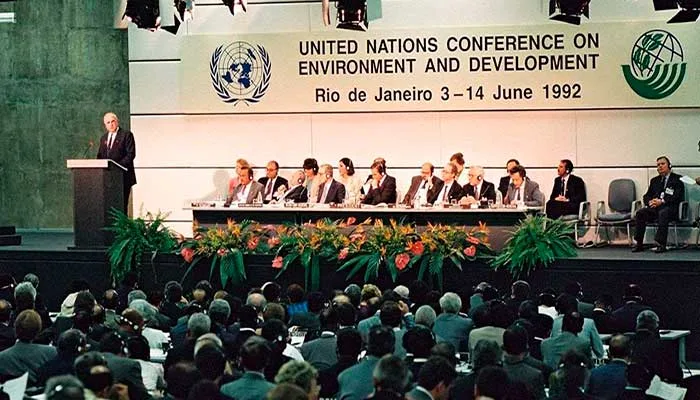
This summit changed the global discussion on environment and development.
It highlighted that:
- Economic growth
- Social progress
- Environmental protection
must go together.
Major Outcomes of Earth Summit
The summit produced five important documents:
| Major Outcome | Purpose |
| UNFCCC | Climate action |
| CBD | Biodiversity protection |
| Rio Declaration | Environmental principles |
| Forest Principles | Forest conservation |
| Agenda 21 | Sustainable development plan |
The summit promoted the idea of sustainable development, meaning development that meets present needs without harming future generations.
UN World Summit 2005
The 2005 World Summit was held at United Nations Headquarters in New York.
More than 170 world leaders attended.
The summit focused on:
- Poverty reduction
- Sustainable development
- Trade reforms
- Global cooperation
Countries committed more financial support to achieve development goals and environmental sustainability.
Environmental Conventions Related to Pollution
Stockholm Convention
The Stockholm Convention protects human health and the environment from dangerous chemicals called Persistent Organic Pollutants (POPs).
It was signed in 2001 in Stockholm, Sweden and became effective in 2004.
What are POPs?
POPs are toxic chemicals that:
- Stay in the environment for a long time
- Spread across borders
- Build up in living organisms
- Cause serious health problems
Examples include:
- DDT
- Dioxins
- Furans
- PCBs
Objectives of Stockholm Convention
- Ban dangerous POPs
- Promote safer alternatives
- Clean old chemical stockpiles
- Reduce toxic waste
India ratified this convention in 2006.
Convention on Biological Diversity (CBD)
The Convention on Biological Diversity (CBD) came into force in 1993.
It is a global treaty for protecting biodiversity.
Three Main Goals of CBD
- Conservation of biodiversity
- Sustainable use of biological resources
- Fair sharing of benefits from genetic resources
Biodiversity includes:
- Plants
- Animals
- Microorganisms
- Ecosystems
India implemented the Biological Diversity Act, 2002 to support CBD.
The CBD Secretariat is based in Montreal, Canada
Cartagena Protocol
The Cartagena Protocol on Biosafety was adopted in 2000 and came into force in 2003.
Its main purpose is to protect biodiversity from risks created by genetically modified organisms (GMOs).
Nagoya Protocol
The Nagoya Protocol was adopted in 2010 in Nagoya, Japan.
It became effective in 2014.
This protocol ensures fair sharing of benefits from genetic resources.
For example, if a company uses medicinal plants from indigenous communities to create medicine, benefits should be shared fairly.
Basel Convention
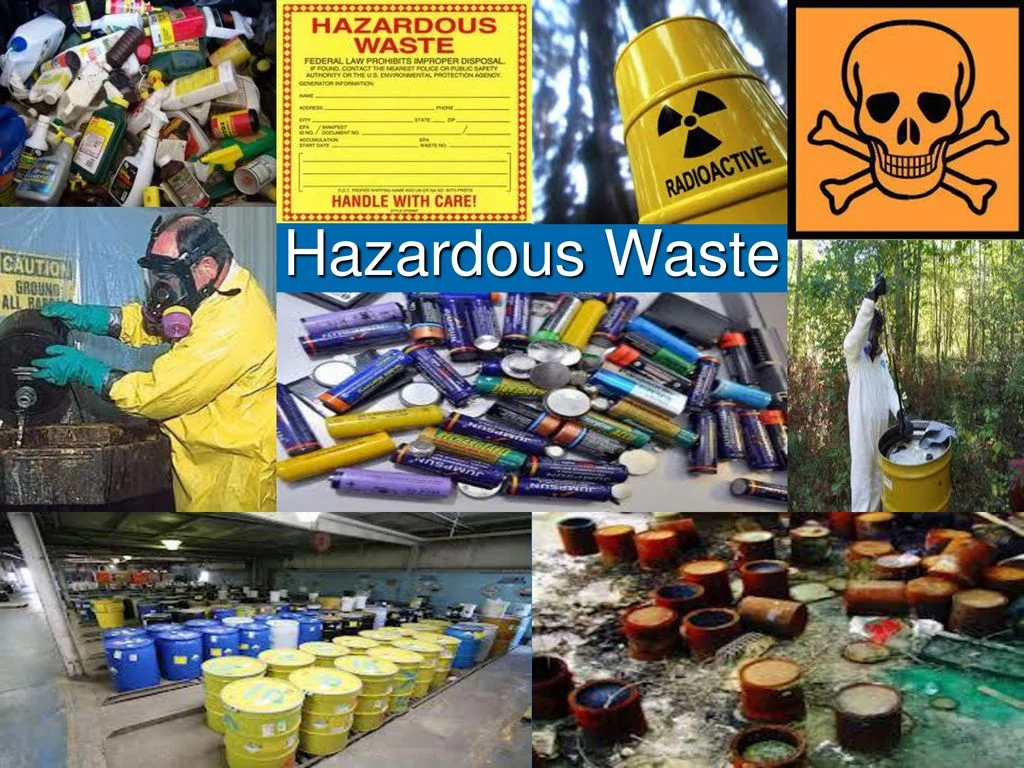
The Basel Convention was adopted in 1989 and entered into force in 1992.
It focuses on hazardous waste management.
Main Objective
Reduce movement of hazardous waste between countries, especially from developed to developing countries.
Examples of hazardous waste:
- Chemical waste
- Toxic industrial waste
- Electronic waste (e-waste)
- Medical waste
This convention promotes safe disposal methods.
Minamata Convention on Mercury
The Minamata Convention protects human health and the environment from mercury pollution.
It was agreed in 2013 in Geneva, Switzerland.
Mercury is a toxic metal that can damage:
- Brain
- Nervous system
- Kidneys
Children and pregnant women are especially vulnerable.
Areas Covered
The convention controls:
- Mercury mining
- Mercury trade
- Mercury-containing products
- Industrial emissions
- Waste disposal
India has ratified this convention.
The convention was named after Minamata, a city in Japan, where severe mercury poisoning occurred due to industrial pollution.
Rotterdam Convention
The Rotterdam Convention was adopted in 1998 in Rotterdam, Netherlands.
It became effective in 2004.
This convention controls international trade of hazardous chemicals and pesticides.
Main Objectives
- Promote shared responsibility
- Protect human health
- Improve chemical information sharing
- Regulate import/export decisions
It uses a system called Prior Informed Consent (PIC).
This means a country must be informed before receiving hazardous chemicals.
Vienna Convention and Montreal Protocol
Vienna Convention
The Vienna Convention for the Protection of the Ozone Layer was signed in 1985.
It recognized the need to protect the ozone layer.
Why is Ozone Important?
The ozone layer protects Earth from harmful ultraviolet (UV) radiation from the sun.
Without ozone, risks increase for:
- Skin cancer
- Eye damage
- Crop loss
- Marine ecosystem damage
Montreal Protocol
The Montreal Protocol was adopted in 1987.
It is one of the most successful environmental agreements ever made.
Its goal is to eliminate ozone-depleting substances (ODS) such as:
- CFCs
- HCFCs
- Halons
These chemicals were commonly used in:
- Refrigerators
- Air conditioners
- Aerosol sprays
- Foam products
Because of global cooperation, the ozone layer is slowly recovering.
Kigali Amendment
The Kigali Amendment was adopted in 2016.
It aims to reduce Hydrofluorocarbons (HFCs).
Although HFCs do not damage ozone much, they are powerful greenhouse gases and contribute heavily to global warming.
Reducing HFCs helps fight climate change.
Challenges in Implementing Environmental Conventions
Even though many agreements exist, implementation remains difficult.
Major challenges include:
| Challenge | Impact |
| Lack of funds | Poor countries struggle |
| Weak enforcement | Rules not followed properly |
| Political differences | Slow decision making |
| Industrial pressure | Resistance to strict laws |
| Technology gap | Developing countries need support |
Many developing countries require:
- Financial assistance
- Technology transfer
- Capacity building
Without support, implementation becomes difficult.
India’s Role in Environmental Protection
India actively participates in global environmental conventions.

Major initiatives by India include:
- International Solar Alliance
- National Clean Air Programme
- Renewable energy expansion
- Mission LiFE
- Green Hydrogen Mission
India is balancing:
- Economic development
- Energy needs
- Environmental protection
India’s climate strategy focuses on sustainable growth and clean energy transition.
Environmental protection is no longer optional. It is necessary for the survival of future generations. Global cooperation through environmental conventions remains one of the strongest tools to fight climate change, pollution, biodiversity loss, and ecological degradation. These agreements show that when countries work together, meaningful environmental progress becomes possible.
FAQs
1. What are Environmental Conventions?
Environmental Conventions are international agreements between countries to protect the environment from pollution, climate change, and ecological damage.
2. What is the main goal of the Paris Agreement?
Its goal is to keep global warming below 2°C and preferably within 1.5°C.
3. What is the Kyoto Protocol?
It is an international climate agreement that set legally binding emission reduction targets for developed countries.
4. What is the Stockholm Convention?
It is a treaty to control harmful chemicals called Persistent Organic Pollutants (POPs).
5. Why is the Montreal Protocol important?
It helps protect the ozone layer by reducing ozone-depleting chemicals like CFCs.