

Human Resource Development in India: Education Reforms

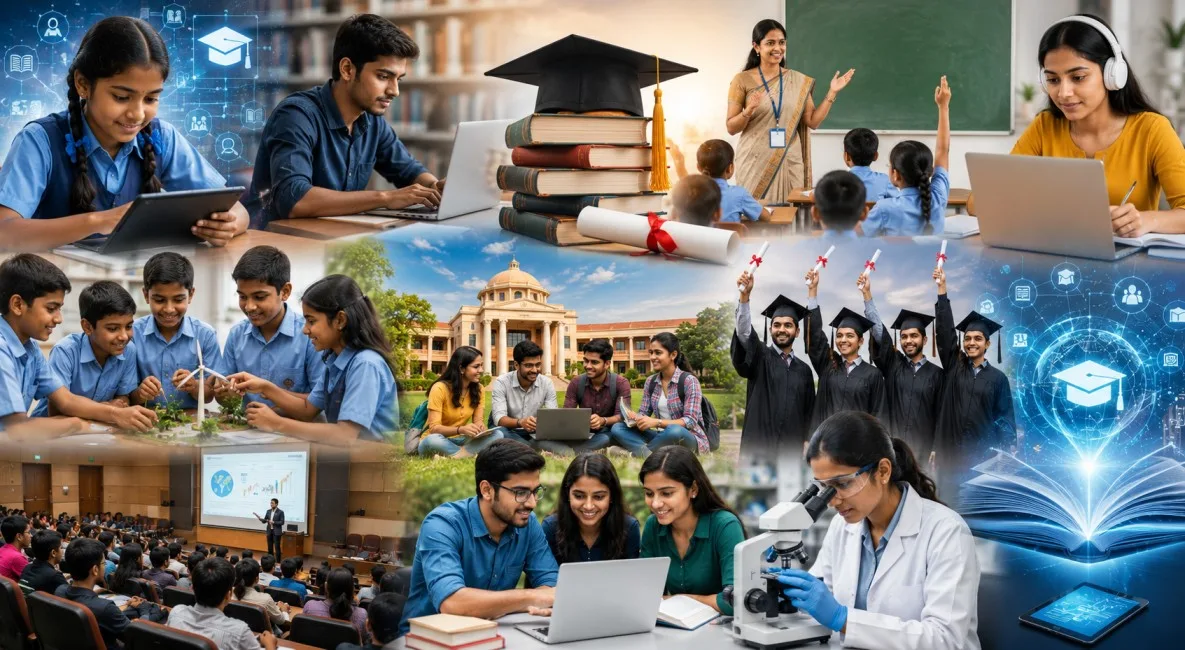
Human Resource Development in India is one of the most important pillars of the country’s growth. A well-educated and skilled population helps a nation become stronger economically, socially, and technologically. The Ministry of Human Resource Development (MHRD), now known as the Ministry of Education since 2020, has introduced several schemes and policies to improve school education, higher education, digital learning, teacher training, and research.
Thank you for reading this post, don't forget to subscribe!The Year End Review 2019 highlighted many important programmes launched to improve the quality of education across India. These initiatives focused on making education more accessible, affordable, inclusive, and skill-oriented. Since then, several reforms, including the implementation of the National Education Policy (NEP) 2020, digital education platforms, skill development programmes, and technology-driven learning initiatives, have transformed India’s education system.
Importance of Human Resource Development
Human Resource Development (HRD) means improving the knowledge, skills, abilities, and productivity of people through education and training.
A strong education system helps to:
- Improve literacy.
- Develop skilled workers.
- Increase employment opportunities.
- Promote innovation.
- Strengthen the economy.
- Reduce poverty.
- Build responsible citizens.
- Improve research and development.
India’s goal is to create a knowledge-based society where every student receives quality education.
Draft National Education Policy (NEP) 2019
The Draft National Education Policy 2019 laid the foundation for major educational reforms, which later became the National Education Policy (NEP) 2020.
Its main objective was to improve:
- Access
- Equity
- Quality
- Affordability
- Accountability
across the education system.
Major Recommendations
Universal Education
The policy proposed extending the Right to Education (RTE) to children between 3 and 18 years instead of only 6 to 14 years.
This would include:
- Early Childhood Care and Education (ECCE)
- Primary education
- Secondary education
No Detention Policy
Instead of failing students up to Class 8, schools should continuously assess learning and provide support to improve academic performance.
Student Assessments
The policy recommended conducting examinations for Classes 3, 5, and 8 to monitor learning outcomes and improve teaching methods.
Board Examination Reforms
Board examinations should test:
- Conceptual understanding
- Critical thinking
- Problem-solving
- Practical application
rather than memorization.
Higher Education Reforms
The policy proposed three types of institutions:
Research Universities
These focus equally on teaching and research.
Teaching Universities
These mainly focus on teaching while also conducting research.
Colleges
These primarily offer undergraduate education.
National Higher Education Regulatory Authority
The policy proposed creating a single regulator to improve transparency and reduce multiple regulatory bodies in higher education.
National Education Policy (NEP) 2020
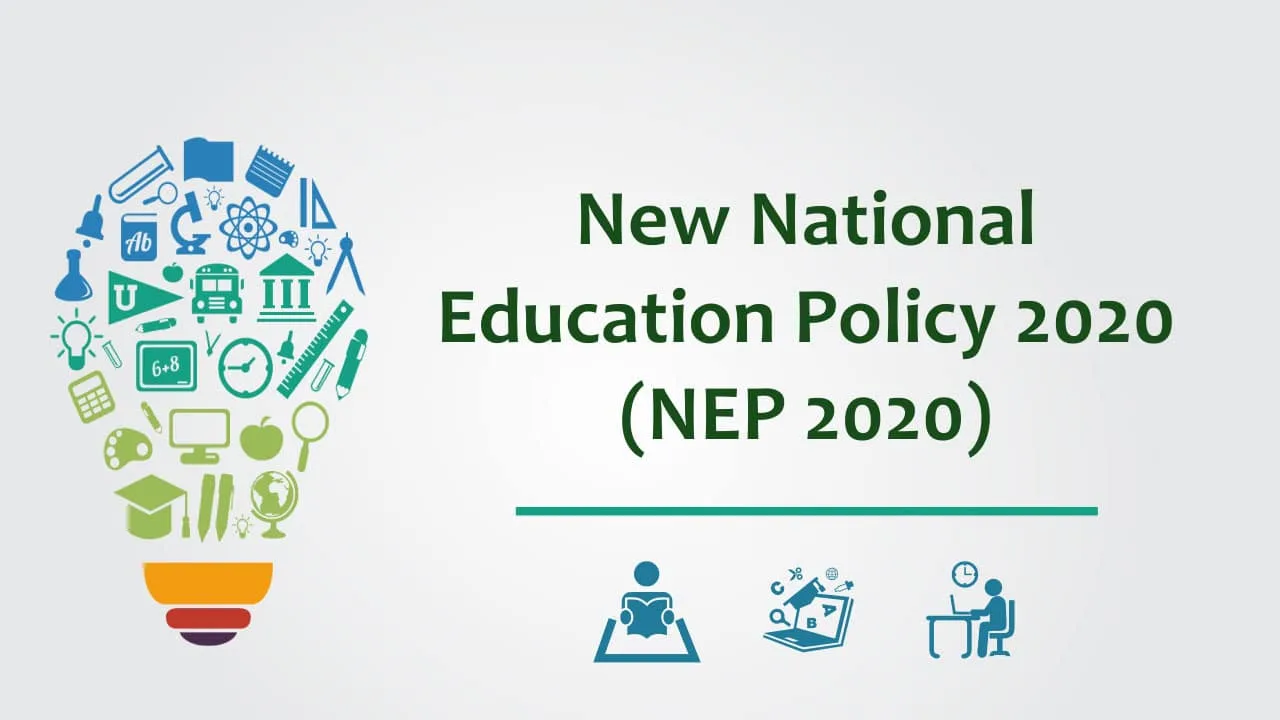
In 2020, the Government approved the National Education Policy (NEP) 2020, replacing the old education policy of 1986.
Major Features
- 5+3+3+4 school structure
- Foundational literacy and numeracy
- Mother tongue as medium of instruction in early classes
- Multidisciplinary higher education
- Academic Bank of Credits
- Multiple entry and exit options
- Four-year undergraduate programmes
- Greater use of technology
- Skill-based education
- Flexible subject choices
NEP 2020 is considered one of India’s biggest education reforms.
Pradhan Mantri Innovative Learning Programme (DHRUV)
The DHRUV Programme identifies talented students across the country and provides them with opportunities to improve their scientific and leadership skills.
Its objectives include:
- Encouraging innovation
- Developing leadership
- Promoting creativity
- Supporting gifted students
NISHTHA
NISHTHA (National Initiative for School Heads’ and Teachers’ Holistic Advancement) is one of India’s largest teacher training programmes.
Its objectives are:
- Improve classroom teaching.
- Enhance learning outcomes.
- Train school principals.
- Upgrade teaching methods.
- Promote modern educational practices.
Education Quality Upgradation and Inclusion Programme (EQUIP)
EQUIP is a five-year plan to improve higher education.
Its goals include:
- Better quality education.
- Greater inclusion.
- Increased employability.
- Improved research.
- Stronger institutions.
Deeksharambh
Deeksharambh is a student induction programme introduced for newly admitted college students.
The programme helps students:
- Adjust to campus life.
- Understand institutional values.
- Build confidence.
- Improve communication skills.
PARAMARSH Scheme
PARAMARSH helps higher education institutions obtain accreditation from the National Assessment and Accreditation Council (NAAC).
The scheme encourages:
- Better governance.
- Quality education.
- Institutional improvement.
- Academic excellence.
Institutions of Eminence (IoE)
The Government selected top public and private universities as Institutions of Eminence.
Objectives include:
- Improving global rankings.
- Promoting research.
- Encouraging innovation.
- Achieving international standards.
Public institutions receive financial support for development.
STARS Programme
The Scheme for Transformational and Advanced Research in Sciences (STARS) promotes research in important scientific fields.
Research areas include:
- Physics
- Chemistry
- Biology
- Nanoscience
- Mathematics
- Data Science
- Earth Science
The programme encourages research that directly benefits India.
Rashtriya Uchchatar Shiksha Abhiyan (RUSA)
RUSA supports state universities and colleges through financial assistance.
Its objectives include:
- Better infrastructure.
- Quality education.
- Faculty development.
- Institutional reforms.
- Improved governance.
IMPRESS Scheme
The Impactful Policy Research in Social Science (IMPRESS) scheme supports research that helps policymakers solve social and economic problems.
Research topics include:
- Education
- Health
- Employment
- Agriculture
- Governance
- Social justice
SWAYAM 2.0
SWAYAM is India’s online learning platform.
SWAYAM 2.0 introduced several improvements:
- Online degree programmes.
- Better assessment tools.
- More courses.
- Regional language support.
- Improved student experience.
- Higher scalability.
Students across India can access quality education free of cost.
SWAYAM PRABHA
SWAYAM PRABHA provides educational content through 24×7 DTH television channels.
It benefits:
- Rural students.
- Distance learners.
- Students without internet access.
SHREYAS Scheme
The Scheme for Higher Education Youth in Apprenticeship and Skills (SHREYAS) connects graduates with industries.
Its objectives include:
- Industry training.
- Skill development.
- Internship opportunities.
- Better employment.
Students also receive practical work experience.
National Educational Alliance for Technology (NEAT)
NEAT is a Public-Private Partnership between the Government and educational technology companies.
It promotes:
- Artificial Intelligence-based learning.
- Personalized education.
- Digital classrooms.
- Affordable educational technology.
Special attention is given to students from economically weaker sections.
STRIDE Scheme
The Scheme for Trans-disciplinary Research for India’s Developing Economy (STRIDE) supports quality research in higher education institutions.
Objectives include:
- Interdisciplinary research.
- Innovation.
- Research culture.
- National development.
Shagun Portal
The Shagun Portal integrates multiple education-related websites into one platform.
Benefits include:
- Easy access to information.
- Better coordination.
- Digital governance.
- Improved monitoring.
UDISE+
The Unified District Information System for Education Plus (UDISE+) collects school education data.
It provides information on:
- Schools.
- Teachers.
- Students.
- Infrastructure.
- Enrolment.
- Dropout rates.
GIS mapping also helps policymakers improve educational planning.
DIKSHA Platform
The Digital Infrastructure for Knowledge Sharing (DIKSHA) is a digital learning platform for teachers and students.
Features include:
- Digital textbooks.
- Teacher training.
- Interactive learning.
- QR-code based content.
- Online courses.
The platform became extremely important during the COVID-19 pandemic.
Performance Grading Index (PGI)
The Performance Grading Index (PGI) measures the quality of school education in different states and Union Territories.
It evaluates:
- Learning outcomes.
- Infrastructure.
- Governance.
- Teacher education.
- Equity.
This encourages healthy competition among states.
Operation Digital Board
Operation Digital Board aims to modernize classrooms with smart teaching facilities.
Objectives include:
- Smart classrooms.
- Interactive learning.
- Digital teaching tools.
- Better classroom experiences.
Higher Education Financing Agency (HEFA)
HEFA provides financial support for developing educational infrastructure.
It finances:
- Universities.
- IITs.
- NITs.
- AIIMS.
- Kendriya Vidyalayas.
- Navodaya Vidyalayas.
HEFA has significantly improved higher education infrastructure across India.
Digital Education After COVID-19
The COVID-19 pandemic accelerated digital education across India.
Major developments include:
- Expansion of DIKSHA.
- Growth of SWAYAM courses.
- Online examinations.
- Virtual classrooms.
- Digital teacher training.
Technology has become an essential part of education.
Skill Development and Employability
Recent education reforms focus on practical learning.
Students are encouraged to gain:
- Vocational skills.
- Coding knowledge.
- Entrepreneurship skills.
- Financial literacy.
- Internship experience.
- Industry exposure.
These skills improve employability.
National Research Foundation (NRF)
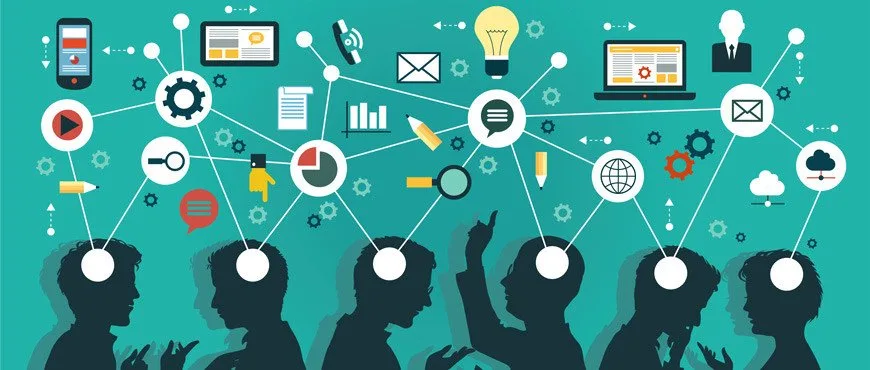
The National Education Policy proposes establishing the National Research Foundation to strengthen research across universities.
Objectives include:
- Funding research.
- Promoting innovation.
- Encouraging collaboration.
- Supporting young researchers.
Academic Bank of Credits (ABC)
The Academic Bank of Credits allows students to store academic credits digitally.
Benefits include:
- Flexible learning.
- Multiple entry and exit options.
- Easier transfer between institutions.
- Lifelong learning opportunities.
Importance of Educational Reforms
Educational reforms help India by:
- Improving literacy.
- Reducing dropout rates.
- Increasing digital learning.
- Supporting innovation.
- Developing skilled youth.
- Creating employment.
- Strengthening research.
- Improving global competitiveness.
Education remains one of the strongest foundations for India’s future development.
Conclusion
Human Resource Development in India has undergone major changes in recent years. Programmes such as NISHTHA, SWAYAM, DIKSHA, RUSA, NEAT, SHREYAS, PARAMARSH, and STARS have improved the quality of education and promoted innovation across the country.
The implementation of the National Education Policy 2020 has further transformed India’s education system by introducing flexible learning, multidisciplinary education, digital platforms, skill development, and research-oriented teaching. Initiatives such as the Academic Bank of Credits, National Research Foundation, and expanded digital education platforms are preparing students for the future.
As of 2026, India continues to invest heavily in education, technology, research, and skill development. These reforms aim to create an inclusive, modern, and globally competitive education system that equips every learner with the knowledge and skills needed to contribute to the nation’s growth.
FAQs on Human Resource Development in India
1. What is Human Resource Development in India?
Human Resource Development (HRD) in India focuses on improving people’s knowledge, skills, education, and abilities to support personal growth and national development.
2. What is the National Education Policy (NEP) 2020?
NEP 2020 is India’s latest education policy that introduced the 5+3+3+4 school structure, multidisciplinary learning, skill-based education, and flexible higher education.
3. What is NISHTHA?
NISHTHA (National Initiative for School Heads’ and Teachers’ Holistic Advancement) is a teacher training programme that improves teaching quality and student learning outcomes.
4. What is SWAYAM?
SWAYAM is the Government of India’s online learning platform that offers free courses and degree programmes from top educational institutions.
5. What is DIKSHA?
DIKSHA (Digital Infrastructure for Knowledge Sharing) is a digital platform that provides teachers and students with e-books, training materials, and online learning resources.
6. What is RUSA?
Rashtriya Uchchatar Shiksha Abhiyan (RUSA) is a centrally sponsored scheme that provides financial support to improve the quality of higher education institutions across India.
7. What is the NEAT initiative?
The National Educational Alliance for Technology (NEAT) is a public-private partnership that uses Artificial Intelligence to provide personalized digital learning to students.
8. What is the Academic Bank of Credits (ABC)?
The Academic Bank of Credits is a digital system that stores students’ academic credits, allowing flexible learning and easier transfer between institutions.
9. What is the Higher Education Financing Agency (HEFA)?
HEFA is a government-backed financial institution that funds infrastructure development in universities, IITs, NITs, AIIMS, and other educational institutions.
10. Why are education reforms important for India?
Education reforms improve learning quality, promote digital education, develop skills, encourage research, increase employability, and prepare students for future careers.