


Ozone Layer: Importance, Depletion, Causes and Effects

Ozone Layer is one of the most important protective shields of our planet. It protects all living things on Earth from harmful rays coming from the Sun. Without ozone, life on Earth would become very difficult. Ozone is a gas made of three oxygen atoms (O₃). It exists naturally in the Earth’s atmosphere.
Thank you for reading this post, don't forget to subscribe!Ozone can be both helpful and harmful depending on where it is found in the atmosphere. In the upper atmosphere, ozone protects us from dangerous ultraviolet (UV) rays. But near the Earth’s surface, ozone becomes a harmful air pollutant that affects health and nature.
What is Ozone?
Ozone is a special type of oxygen gas made of three oxygen atoms instead of two. It occurs naturally in the atmosphere and plays different roles in different layers.
There are mainly two places where ozone is found:
| Layer | Type of Ozone | Effect |
|---|---|---|
| Stratosphere | Good Ozone | Protects Earth from UV rays |
| Troposphere | Bad Ozone | Causes pollution and health problems |
This difference makes ozone both a friend and an enemy.
Good Ozone: Ozone in the Stratosphere
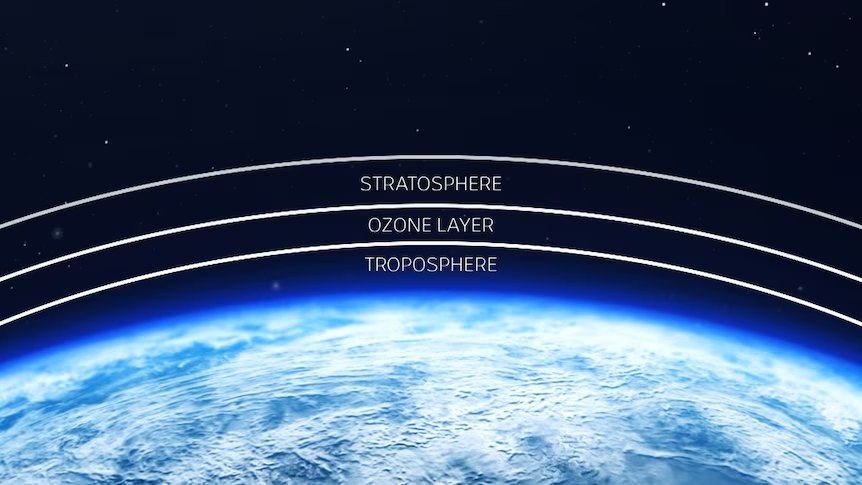
The stratosphere is the layer of the atmosphere above the troposphere. It starts about 10 km above Earth and extends up to around 50 km.
The ozone present here forms the ozone layer.
This ozone layer absorbs most of the harmful ultraviolet radiation coming from the Sun. These UV rays can damage skin, eyes, plants, and animals.
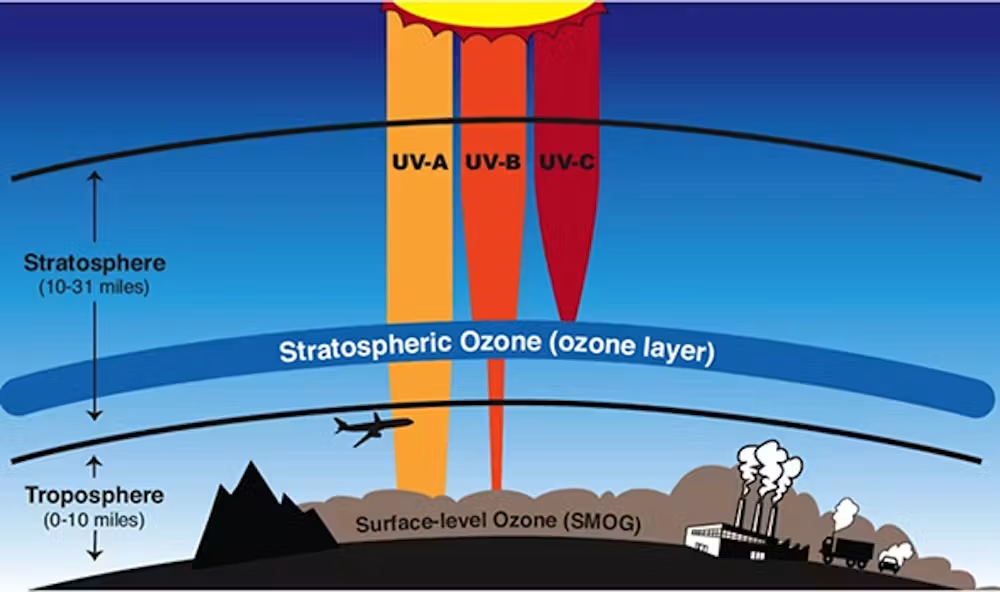
Because of this protection, stratospheric ozone is called good ozone.
Without the ozone layer:
- Skin cancer cases would increase
- Eye diseases like cataracts would rise
- Crop production would reduce
- Ocean life would suffer
- Human immunity would weaken
Bad Ozone: Ground-Level Ozone
The troposphere is the lowest layer of the atmosphere where humans live. Ozone in this layer is called ground-level ozone or bad ozone.
This ozone is harmful because it acts as a pollutant.
Ground-level ozone is a major part of smog, which is common in polluted cities.
It damages:
- Human lungs
- Crops
- Trees
- Forests
- Natural ecosystems
Why is the Ozone Layer Depleting?
The ozone layer is becoming thinner because of human-made chemicals called Ozone Depleting Substances (ODS).
These chemicals include:
- Chlorofluorocarbons (CFCs)
- Hydrochlorofluorocarbons (HCFCs)
- Halons
- Methyl bromide
- Carbon tetrachloride
- Methyl chloroform
These chemicals were widely used in:
- Refrigerators
- Air conditioners
- Foam production
- Fire extinguishers
- Aerosol sprays
- Solvents
- Pesticides
When these substances are released into the air, they slowly move upward into the stratosphere.
There, strong UV rays break them down and release chlorine and bromine atoms.
These atoms destroy ozone molecules.
Scientists say that one chlorine atom can destroy around 100,000 ozone molecules.
This is why even small amounts of these chemicals can cause major damage.
Effects of Ozone Layer Depletion
When the ozone layer becomes thinner, more harmful UV rays reach Earth.
This creates many serious problems.
1. Effects on Human Health
More UV exposure can cause:
- Skin cancer
- Sunburn
- Cataracts
- Weak immune system
- Early skin aging
One dangerous type of skin cancer is melanoma, which can be life-threatening.
Long exposure to strong sunlight increases the risk.
2. Effects on Agriculture
Too much UV radiation can damage crops.
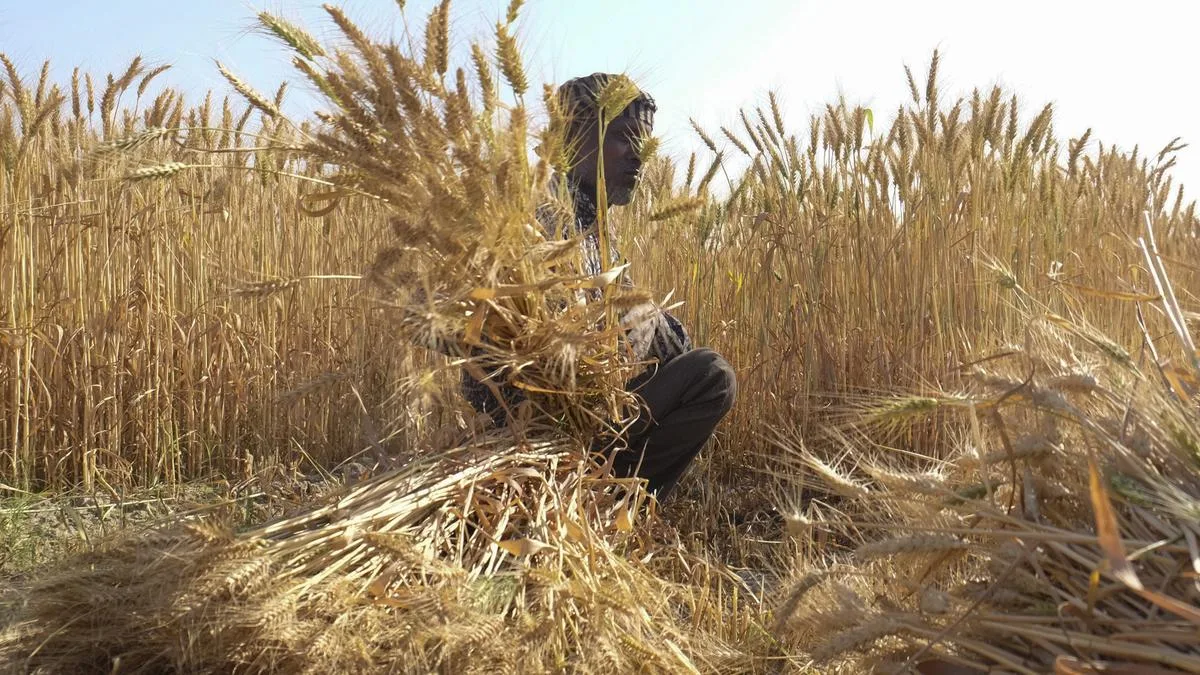
Sensitive crops include:
- Soybeans
- Wheat
- Rice
- Vegetables
This can reduce crop production and affect food supply.
Farmers may suffer losses because damaged crops grow poorly.
3. Effects on Marine Life
Tiny organisms called phytoplankton live in oceans.
They form the base of the marine food chain.
UV radiation can damage them.
If phytoplankton decrease, fish populations may also fall.
This affects:
- Ocean ecosystems
- Fishing industries
- Human food supplies
Global Efforts to Protect the Ozone Layer
Countries around the world understood the danger of ozone depletion.
In 1987, more than 180 countries agreed to a treaty called the Montreal Protocol.
Its goal was to reduce and stop the production of ozone-depleting chemicals.
This agreement became one of the most successful environmental treaties in history.
Because of this treaty, many harmful chemicals were banned or reduced.
Kigali Amendment
In 2016, countries adopted the Kigali Amendment.
It aims to reduce Hydrofluorocarbons (HFCs).
HFCs do not damage ozone much, but they are strong greenhouse gases that increase global warming.
Reducing them helps both:
- Ozone protection
- Climate change control
India’s Efforts to Protect Ozone
India joined the Montreal Protocol in 1992.
India has taken many important steps to protect the ozone layer.
These include:
- Using eco-friendly technologies
- Promoting energy-efficient systems
- Reducing harmful industrial chemicals
- Phasing out HCFCs
India successfully phased out HCFC-141b, a chemical used in foam manufacturing.
This chemical was one of the major ozone-depleting substances.
India is now moving toward cleaner technologies with lower global warming potential.
What Causes Ground-Level Ozone?
Ground-level ozone is not directly released into the air.
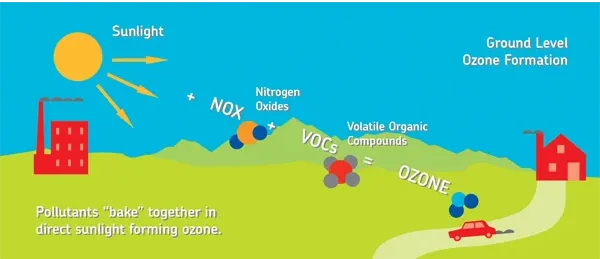
It forms through chemical reactions involving:
- Nitrogen oxides (NOx)
- Volatile Organic Compounds (VOC)
- Sunlight
Major sources include:
- Vehicle exhaust
- Factory emissions
- Power plants
- Gasoline vapors
- Chemical solvents
When these pollutants react under strong sunlight, ozone forms near the ground.
This is why ozone pollution becomes worse during summer.
Why Does Ozone Pollution Increase in Summer?
During summer:
- Sunlight is stronger
- Temperature is higher
- Chemical reactions happen faster
This leads to more ground-level ozone.
Cities and suburban areas often face serious ozone pollution.
But rural areas can also be affected because wind carries pollutants far away.
Effects of Ground-Level Ozone
Ground-level ozone harms both humans and nature.
1. Health Problems
Breathing polluted air with ozone can cause:
- Chest pain
- Coughing
- Throat irritation
- Breathing difficulty
- Asthma attacks
It also reduces lung function.

Repeated exposure can permanently damage lung tissue.
People at higher risk include:
- Children
- Elderly people
- Outdoor workers
- Athletes
- People with asthma
Even healthy people may feel breathing discomfort during high ozone days.
2. Damage to Plants and Forests
Ground-level ozone harms vegetation.
Its effects include:
- Lower crop yield
- Reduced forest growth
- Weak tree seedlings
- Increased plant diseases
- Greater pest attacks
It also damages leaves of trees and plants.
This affects forests, parks, farms, and natural beauty.
Steps to Reduce Ground-Level Ozone
Governments are taking steps to reduce ozone pollution.
In India, surface ozone levels in many places remain above safe limits.
To control this, several actions have been taken.
Major Measures in India
| Initiative | Purpose |
| BS-VI Vehicles | Reduce vehicle pollution |
| Garbage Burning Ban | Reduce toxic smoke |
| GRAP | Emergency pollution control |
| NCAP | Improve air quality nationwide |
| Monitoring Stations | Track pollution levels |
India has also set up air quality monitoring networks across hundreds of cities.
These help authorities measure pollution and take action.
How Can Individuals Help?
Every person can help protect the ozone layer and reduce pollution.
Simple steps include:
- Use public transport
- Reduce vehicle use
- Save electricity
- Avoid harmful aerosol sprays
- Maintain ACs and refrigerators properly
- Plant more trees
Small actions by millions of people can create big change.
The ozone layer is slowly recovering because of global efforts. However, continued awareness and responsible behavior are still necessary. Protecting the ozone layer means protecting life on Earth, human health, agriculture, forests, and future generations.
FAQs
Q1. What is the ozone layer?
The ozone layer is a protective layer in the Earth’s stratosphere made of ozone gas (O₃). It protects life by absorbing harmful ultraviolet (UV) rays from the Sun.
Q2. Why is the ozone layer important?
The ozone layer is important because it protects humans, animals, and plants from harmful UV radiation that can cause skin cancer, eye damage, and crop loss.
Q3. What causes ozone depletion?
Ozone depletion happens mainly because of human-made chemicals like CFCs, HCFCs, halons, and other ozone-depleting substances released into the atmosphere.
Q4. What is ground-level ozone?
Ground-level ozone is harmful ozone found near the Earth’s surface. It is formed when pollutants react with sunlight and causes air pollution.
Q5. How does ground-level ozone affect human health?
Ground-level ozone can cause coughing, chest pain, throat irritation, breathing problems, and can worsen asthma and lung diseases.
Q6. What is the Montreal Protocol?
The Montreal Protocol is a global agreement signed in 1987 to reduce and eliminate ozone-depleting substances.
Q7. How is India helping protect the ozone layer?
India is reducing harmful chemicals, promoting cleaner technologies, using BS-VI fuel standards, and following international ozone protection agreements.
Q8. Can the ozone layer recover?
Yes, scientists say the ozone layer is slowly recovering due to global efforts like banning harmful chemicals and using safer alternatives.