

Poverty in India: Causes, Effects, Government Schemes and Solutions

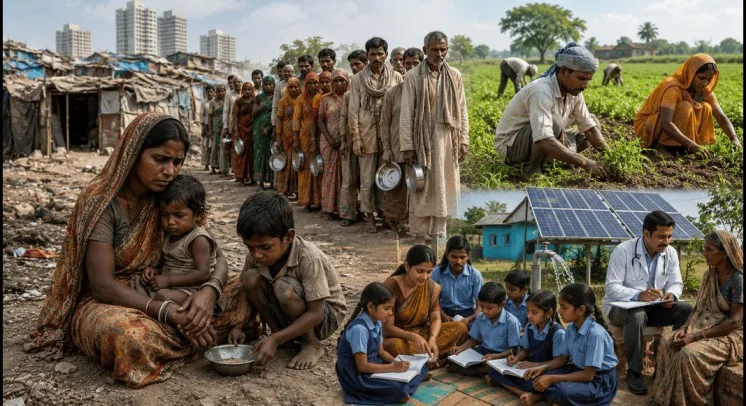
Poverty in India remains one of the biggest social and economic challenges faced by the country. Poverty is a condition in which a person or family does not have enough income or resources to meet basic needs such as food, clothing, shelter, education, healthcare, and clean drinking water.
Thank you for reading this post, don't forget to subscribe!The World Bank defines poverty as a serious lack of well-being. It includes low income, poor health, limited education, lack of employment opportunities, inadequate housing, poor sanitation, and limited access to essential services.
Poverty is not just about a shortage of money. It also means a lack of opportunities and the inability to live a dignified life. A poor person may struggle to get quality education, proper healthcare, and secure employment.
India has made significant progress in reducing poverty over the years. However, millions of people still face economic hardship, especially in rural and underdeveloped areas. Eliminating poverty is essential for achieving inclusive growth and improving the quality of life of all citizens.
What is Poverty?
Poverty refers to a situation where people cannot satisfy their minimum basic requirements for survival and development.
These basic needs include:
- Nutritious food
- Safe drinking water
- Shelter
- Healthcare
- Education
- Clothing
- Employment opportunities
People living in poverty often face hunger, disease, illiteracy, and social exclusion.
Types of Poverty
Poverty is generally classified into two main categories.
1. Absolute Poverty
Absolute poverty occurs when a person’s income is too low to meet basic needs such as food, clothing, and shelter.
People living in absolute poverty struggle to survive daily. They may suffer from hunger, malnutrition, and lack of access to essential services.
The World Bank uses an international poverty line to measure extreme poverty. People living below this level are considered extremely poor.
2. Relative Poverty
Relative poverty is measured by comparing a person’s income with the average income of society.
A person may have enough food and shelter but still be considered poor if their income is much lower than the average income in their community.
Relative poverty highlights inequality within society.
Poverty Estimation in India
India measures poverty through consumption expenditure rather than income.
The National Sample Survey Office (NSSO) collects data on household spending. Based on this information, experts determine a poverty line.
A family spending below the poverty line is considered poor.
Important Committees on Poverty Estimation
Alagh Committee (1979)
This committee linked poverty to minimum calorie requirements.
- Rural areas: 2400 calories per day
- Urban areas: 2100 calories per day
Lakdawala Committee (1993)
It improved the methodology for estimating poverty and included state-specific poverty lines.
Tendulkar Committee (2009)
This committee considered expenditure on education, health, and other essential services while measuring poverty.
Rangarajan Committee (2014)
The committee recommended new poverty lines based on monthly expenditure.
- Rural areas: ₹972 per person per month
- Urban areas: ₹1407 per person per month
Major Causes of Poverty in India
1. Population Growth
India has one of the largest populations in the world.
A rapidly growing population increases demand for food, housing, education, healthcare, and jobs. When economic growth cannot keep pace with population growth, poverty increases.
Large families often struggle to provide proper nutrition and education to all members.
2. Low Agricultural Productivity
Agriculture is the main source of livelihood for many Indians.
However, agricultural productivity remains low because of:
- Small landholdings
- Lack of irrigation
- Dependence on monsoon rains
- Poor farming techniques
- Limited access to modern technology
- Inadequate storage facilities
As a result, farmers earn low incomes and remain trapped in poverty.
3. Unemployment
Unemployment is a major cause of poverty.
Many people who are willing to work cannot find suitable jobs. Even those who are employed often receive low wages.
Young people face difficulties finding jobs that match their qualifications and skills.
4. Underemployment
Many workers do not get enough work throughout the year.
This is especially common in rural areas where agricultural work is seasonal.
People may be employed but earn too little to meet their basic needs.
5. Slow Economic Development
For several decades after independence, India’s economic growth remained slow.
Limited industrial development and low investment resulted in fewer employment opportunities and lower income levels.
Although economic growth has improved significantly in recent decades, its benefits have not reached everyone equally.
6. Rising Prices
Inflation or rising prices affects poor families the most.
When prices of food, fuel, medicines, and essential goods increase, poor households find it difficult to meet their daily needs.
Their purchasing power decreases, pushing them deeper into poverty.
7. Lack of Capital and Entrepreneurship
Economic growth requires investment and business development.
Many poor people lack access to:
- Bank loans
- Financial support
- Business training
- Market opportunities
This limits their ability to start businesses and improve their economic condition.
8. Social Factors
Several social factors contribute to poverty in India.
These include:
- Caste discrimination
- Gender inequality
- Illiteracy
- Social exclusion
- Traditional practices
Marginalized communities often have fewer opportunities for education and employment.
9. Colonial Exploitation
During British rule, India’s traditional industries suffered greatly.
Many local handicrafts and textile industries were destroyed, leading to unemployment and economic hardship.
The effects of colonial exploitation continued even after independence.
10. Natural Disasters
Floods, droughts, cyclones, and earthquakes frequently affect several parts of India.
These disasters destroy crops, homes, and livelihoods, pushing many families into poverty.
States such as Bihar, Odisha, Assam, Jharkhand, and Uttar Pradesh are often affected by natural calamities.
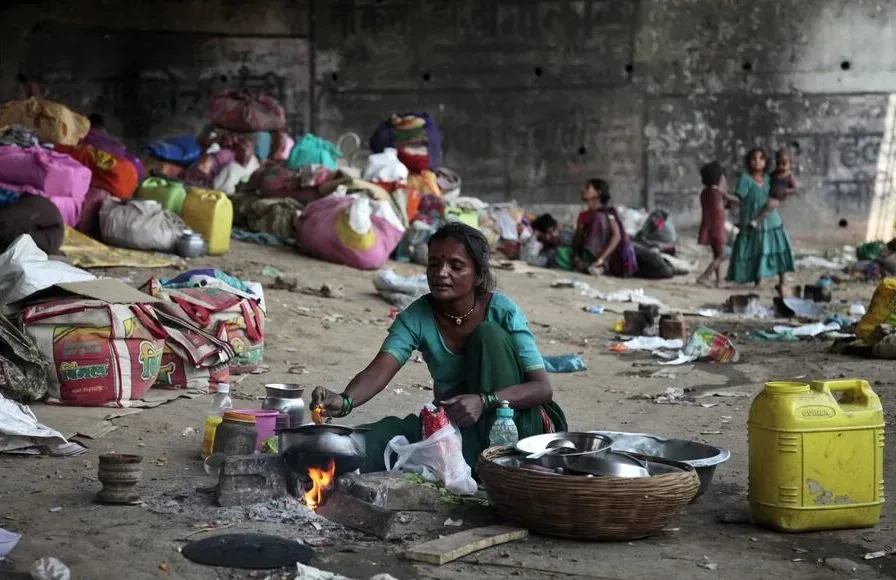
Poverty Trap
A poverty trap is a situation where poor people remain poor because they lack the resources needed to improve their lives.
For example:
- Lack of money prevents education.
- Lack of education limits job opportunities.
- Poor jobs result in low income.
- Low income leads to continued poverty.
This cycle continues generation after generation unless effective support and opportunities are provided.
Effects of Poverty
Poverty has serious consequences for individuals and society.
Hunger and Malnutrition
Poor families often cannot afford nutritious food, leading to malnutrition and poor health.
Poor Health
Lack of healthcare services results in higher rates of disease and mortality.
Illiteracy
Children from poor families may drop out of school due to financial difficulties.
Child Labour
Many children are forced to work to support their families.
Crime and Social Problems
Extreme poverty can contribute to crime, exploitation, and social unrest.
Low Economic Growth
A large poor population reduces productivity and slows national development.
Poverty Alleviation Programmes in India
The Government of India has introduced several schemes to reduce poverty.
Integrated Rural Development Programme (IRDP)
Launched to provide financial assistance and employment opportunities to poor rural families.
Jawahar Rozgar Yojana (JRY)
Aimed at creating employment opportunities and building rural infrastructure.
Indira Awaas Yojana (IAY)
Provided housing assistance to poor families in rural areas.
The scheme has now evolved into Pradhan Mantri Awas Yojana.
Food for Work Programme
Provided food grains as wages in return for labour.
It aimed to improve food security and generate employment.
National Old Age Pension Scheme (NOAPS)
Provides financial assistance to elderly citizens from poor families.
Annapurna Scheme
Offers free food grains to eligible senior citizens who are not covered under pension schemes.
Sampoorna Gramin Rozgar Yojana (SGRY)
Focused on generating employment and creating rural infrastructure.
Mahatma Gandhi National Rural Employment Guarantee Act (MGNREGA)
One of India’s most important poverty reduction programmes.
Key features include:
- 100 days of guaranteed employment annually
- Employment for rural households
- Special focus on women workers
- Creation of rural assets and infrastructure
National Rural Livelihood Mission (NRLM)
Promotes self-help groups and livelihood opportunities for rural poor families.
National Urban Livelihood Mission (NULM)
Helps urban poor people gain skills, employment, and self-employment opportunities.
Pradhan Mantri Kaushal Vikas Yojana (PMKVY)
Provides skill training to youth and improves employability.
Pradhan Mantri Jan Dhan Yojana (PMJDY)
Promotes financial inclusion by providing bank accounts and access to financial services.
Government Efforts to Reduce Poverty
The government is taking various measures to fight poverty, including:
- Expanding employment opportunities
- Promoting skill development
- Improving education
- Strengthening healthcare services
- Supporting farmers
- Expanding financial inclusion
- Developing rural infrastructure
- Providing social security benefits
These efforts aim to improve living standards and reduce inequality.
Challenges in Poverty Reduction
Despite progress, several challenges remain.
Unequal Distribution of Growth
Economic growth has not benefited all sections of society equally.
Regional Disparities
Some states have developed rapidly while others remain poor.
Lack of Quality Education
Many poor children still lack access to quality education.
Inadequate Healthcare
Healthcare facilities remain insufficient in many rural areas.
Climate Change
Increasing natural disasters threaten livelihoods and agricultural production.
Informal Employment
A large number of workers remain in low-paying informal jobs without social security.
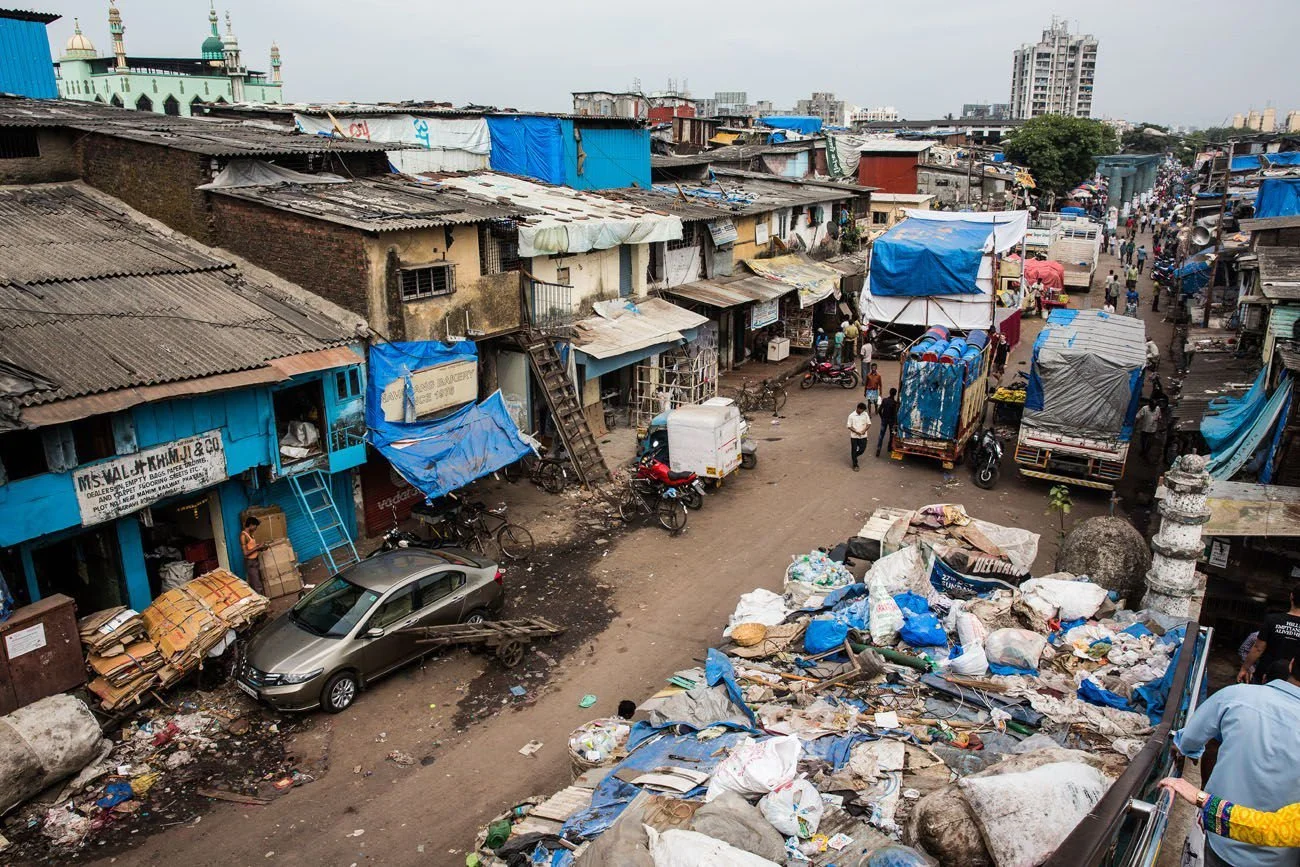
Way Forward
To eliminate poverty effectively, India must adopt a comprehensive approach.
Improve Education
Quality education should be accessible to every child.
Generate More Jobs
Labour-intensive industries and entrepreneurship should be encouraged.
Strengthen Agriculture
Modern farming techniques, irrigation facilities, and market access should be improved.
Expand Skill Development
Youth should receive training according to industry needs.
Improve Healthcare
Affordable healthcare services should reach all sections of society.
Promote Financial Inclusion
Access to banking, credit, and insurance should be expanded.
Empower Women
Women’s education, employment, and participation in decision-making should be encouraged.
Focus on Rural Development
Infrastructure, roads, electricity, and internet connectivity should be improved in rural areas.
Conclusion
Poverty in India has reduced significantly over the past few decades, but it remains a major challenge. Millions of people still struggle to access food, education, healthcare, housing, and employment opportunities. Poverty is caused by a combination of economic, social, historical, and environmental factors.
Government schemes such as MGNREGA, PMJDY, PMKVY, NRLM, and various welfare programmes have helped improve the lives of many people. However, poverty cannot be eliminated through welfare schemes alone. Sustainable economic growth, quality education, employment generation, agricultural development, and social inclusion are equally important.
A poverty-free India can be achieved only when every citizen gets equal opportunities to live a healthy, educated, and dignified life.
FAQs on Poverty in India
1. What is poverty?
Poverty is a condition in which a person does not have enough income or resources to meet basic needs such as food, shelter, clothing, education, and healthcare.
2. What are the main causes of poverty in India?
The main causes include population growth, unemployment, low agricultural productivity, lack of education, social inequality, and inadequate economic opportunities.
3. What is absolute poverty?
Absolute poverty refers to a situation where people cannot afford the minimum necessities required for survival, such as food, shelter, and clothing.
4. What is relative poverty?
Relative poverty is measured by comparing a person’s income or living standard with the average standard of society.
5. How is poverty measured in India?
Poverty in India is measured using consumption expenditure data collected through surveys and analyzed by government agencies.
6. What is the poverty line?
The poverty line is the minimum level of income or expenditure needed to meet basic living requirements.
7. What is a poverty trap?
A poverty trap is a cycle where poor people remain poor because they lack access to education, healthcare, jobs, and resources needed to improve their lives.
8. What is MGNREGA?
MGNREGA is a government scheme that guarantees 100 days of wage employment every year to rural households.
9. How does education help reduce poverty?
Education improves skills, increases employment opportunities, raises income levels, and helps people achieve a better standard of living.
10. What can be done to reduce poverty in India?
Poverty can be reduced through quality education, job creation, agricultural development, skill training, financial inclusion, and effective implementation of welfare schemes.