


Socio-Religious Reform Movements in India (Part II)

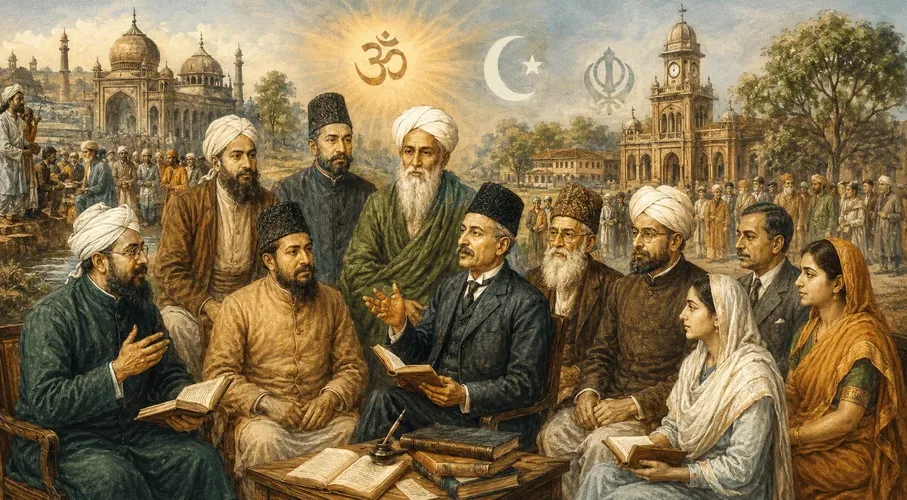
Socio-Religious Reform Movements (Part II) explains how different communities in India tried to improve their society and religion during the 18th and 19th centuries. These movements played an important role in shaping modern India. They aimed to remove social evils, promote education, and bring people back to the true values of their religions. At the same time, they also helped people think in a more modern and scientific way.
Thank you for reading this post, don't forget to subscribe!Wahabi or Walliullah Movement
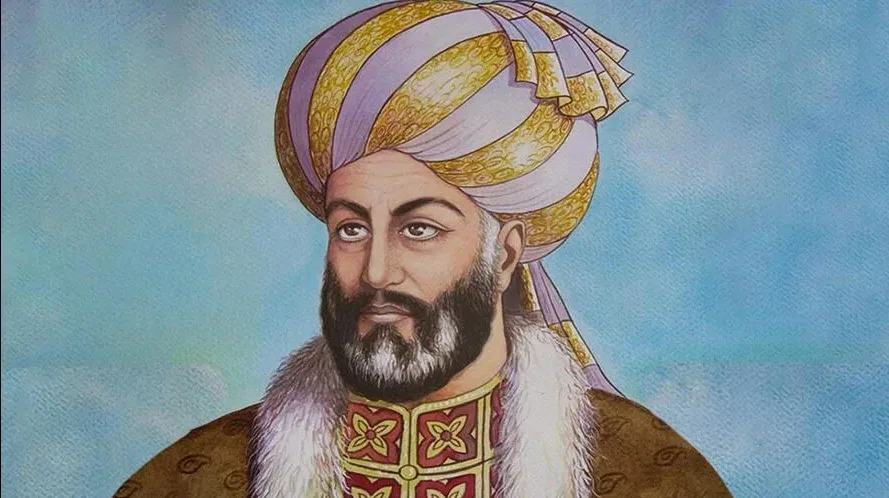
The Wahabi or Walliullah Movement was inspired by the teachings of Abdul Wahab of Arabia and Shah Waliullah in India. It was a revivalist movement that developed as a response to Western influence and the decline of moral and religious values among Indian Muslims. The main aim was to bring Muslims back to the true spirit of Islam.
Shah Waliullah was the first important Muslim leader in 18th century India to organise people around clear religious ideas. He wanted unity among Muslims and believed that religion should be understood in a practical and thoughtful way.
Key Ideas and Features
- The movement gradually declined in the 1870s due to strong military action by the British.
- The movement aimed to revive the true teachings of Islam and remove corruption in religious practices.
- It was influenced by the teachings of Abdul Wahab and the reforms suggested by Shah Waliullah.
- Shah Waliullah emphasized unity among the four schools of Muslim law and tried to combine their best teachings.
- He supported the idea that individuals should use their own understanding (conscience) when interpreting the Quran and Hadith.
- The movement strongly opposed un-Islamic practices that had entered Muslim society over time.
- The teachings were later spread by Shah Abdul Aziz and Syed Ahmed Barelvi.
- Syed Ahmed Barelvi gave a political direction to the movement and encouraged Muslims to return to pure Islam.
- He wanted society to follow the model of early Islamic life during the time of Prophet Muhammad.
- India was considered as Dar-ul-Harb (land of non-believers), and there was an aim to convert it into Dar-ul-Islam (land of Islam).
- At first, the movement was directed against the Sikhs in Punjab.
- After the British annexed Punjab in 1849, the movement turned against British rule.
- During the Revolt of 1857, the Wahabis played an important role in spreading anti-British feelings.
Titu Mir’s Movement
- Titu Mir, whose real name was Mir Nithar Ali, was a follower of Syed Ahmed Barelvi, the founder of the Wahabi Movement.
- He accepted the ideas of Wahabism and supported the strict following of Sharia (Islamic law).
- Titu Mir organised poor Muslim farmers in Bengal.
- He raised his voice against the exploitation by landlords (mostly Hindus) and British indigo planters.
- His movement mainly focused on social and economic justice for peasants.
- It was not very violent in the beginning, despite what British records claimed.
- Only in the last year of his life did direct conflict happen between his followers and the British police.
Faraizi Movement
- The Faraizi Movement was started by Haji Shariatullah in 1818 in East Bengal. The name “Faraizi” comes from “Faraiz,” which means the basic duties of Islam.
- The main aim of the movement was to make Muslims follow their religious duties properly and remove un-Islamic practices that had entered society over time.
- It focused on purifying Islam and guiding people to live according to the Quran and Islamic teachings.
- After Haji Shariatullah, his son Dudu Miyan became the leader and gave a new direction to the movement.
- From 1840 onwards, under Dudu Miyan, the movement became more active and took a strong political and social form.
- He built a well-organized system from village level to provincial level. Each area had a leader called a khalifa who guided people.
- The movement also formed a group of followers like a paramilitary force. They used simple weapons like sticks to fight against oppressive zamindars and indigo planters.
- Most of these landlords were Hindus, but there were also some Muslim landlords involved in exploitation.
- Dudu Miyan advised people not to pay rent to unfair landlords, which was a bold step against injustice.
- The movement even created its own local courts to solve disputes among people.
- Due to his strong actions, Dudu Miyan was arrested many times by the British.
- His arrest in 1847 weakened the movement greatly. After his death in 1862, the movement lost its political strength and continued only as a religious movement.
Ahmadiyya Movement
- The Ahmadiyya Movement was founded by Mirza Ghulam Ahmad in 1889 in India.
- It is a sect of Islam that developed in India and was based on modern and liberal ideas.
- The movement described itself as a supporter of Islamic revival and compared its ideas with movements like Brahmo Samaj, focusing on universal religion for all humanity.
- It strongly opposed the idea of jihad as a war and instead promoted peace, tolerance, and unity among people.
- The followers believed that Mirza Ghulam Ahmad was the promised Messiah who came to end religious conflicts and bring peace, morality, and justice.
- The movement encouraged Western education among Muslims and supported modern thinking.
- It believed in separating religion from politics, meaning the mosque and the state should function independently.
- It also supported human rights, equality, and religious tolerance.
- However, some critics said that the movement was too philosophical and influenced by mysticism, which limited its wider acceptance.
Aligarh Movement
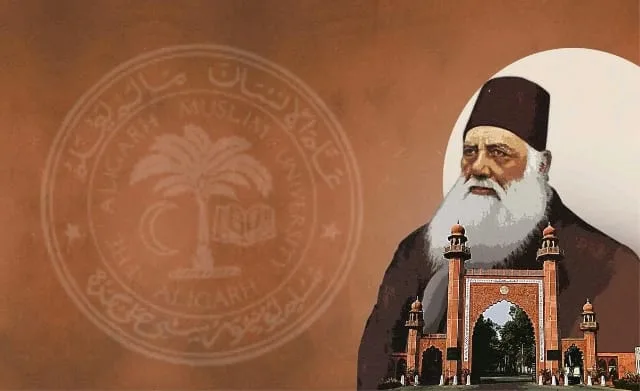
- The Aligarh Movement was started by Sir Syed Ahmad Khan to improve the condition of Muslims in India.
- He believed that Muslims could progress only by adopting modern education, especially Western science and English language.
- The movement aimed to reform social, political, and educational life of Muslims.
- Sir Syed tried to combine modern scientific knowledge with Islamic teachings. He believed that the Quran should be understood using reason and science.
- He said that religion must change with time, otherwise it would become outdated.
- He encouraged people to think critically and not blindly follow traditions.
- In 1864, he established the Scientific Society in Aligarh to translate Western books into Indian languages and spread scientific thinking.
- He also published a magazine called Aligarh Institute Gazette to spread modern ideas.
- In 1877, he founded the Muhammadan Anglo-Oriental College, which later became Aligarh Muslim University.
- The movement helped unite Muslims through a common language, Urdu.
- Sir Syed also worked for social reforms. He opposed practices like purdah, polygamy, and easy divorce.
- He supported democracy, freedom of speech, and rational thinking.
- His magazine Tahzebul Akhlaq helped raise awareness about social and religious issues.
- Overall, the Aligarh Movement played a major role in modernizing Muslim society.
Deoband Movement
- The Deoband Movement started in 1866 at Darul Uloom Deoband in Uttar Pradesh.
- It was founded by Muhammad Qasim Nanautavi and Rashid Ahmad Gangohi.
- The movement aimed to spread pure teachings of Islam based on the Quran and Hadith.
- It also aimed to keep alive the spirit of resistance against foreign rule.
- Unlike the Aligarh Movement, it did not support Western education. Instead, it focused on traditional Islamic education.
- The main goal was moral and religious reform of Muslims.
- On the political side, the Deoband leaders supported the Indian National Congress.
- In 1888, they issued a fatwa against organizations supported by Sir Syed Ahmad Khan.
- Some historians believe that their support to nationalism was partly due to their opposition to Sir Syed.
- Later, Mahmud Hasan Deobandi gave a nationalist and intellectual direction to the movement.
- He combined Islamic ideas with Indian nationalism.
- The Jamiat Ulema-e-Hind worked to protect the rights of Muslims within a united India.
- Shibli Nomani supported the inclusion of English and modern subjects in education.
- He founded Nadwat-ul-Ulama in Lucknow and promoted Hindu-Muslim unity.
Reform Movements among Parsis
- Religious reform among Parsis began in Mumbai in the mid-19th century.
- Leaders like Dadabhai Naoroji and Nauroji Furdonji started the Rahnumai Mazdayasnan Sabha in 1851.
- They also published a journal called Rast Goftar to spread reform ideas.
- The movement aimed to remove orthodox practices and modernize Parsi society.
- It focused strongly on education, especially for girls.
- It worked to improve women’s rights, marriage practices, and social status.
- Due to these efforts, Parsis became one of the most educated and modern communities in India.
Reform Movements among Sikhs
- Sikh reform movements began in the late 19th century with the Singh Sabha Movement.
- The establishment of Khalsa College in Amritsar in 1892 helped promote Sikh education and Punjabi language.
- These institutions helped preserve Sikh culture and religious identity.
- In the 1920s, the Akali Movement started in Punjab.
- Its main aim was to take control of Gurudwaras from corrupt priests who treated them as private property.
- In 1925, a law was passed that gave control of Gurudwaras to the Shiromani Gurdwara Parbandhak Committee.
- This movement strengthened Sikh institutions and religious management.
Theosophical Movement
- While it increased cultural pride, it sometimes also encouraged blind admiration of outdated traditions.
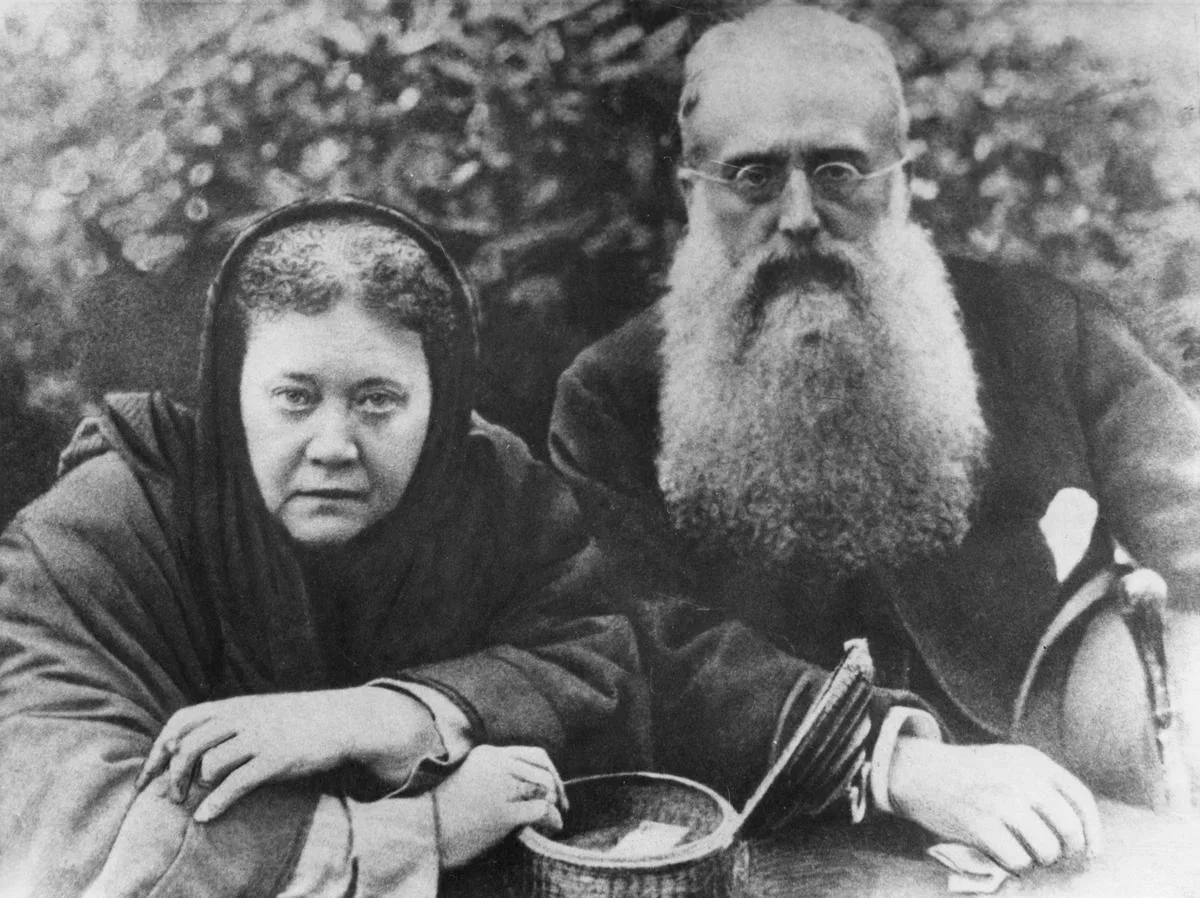
- The Theosophical Movement was started in 1875 in the USA by Helena Blavatsky and Henry Steel Olcott.
- In 1882, its headquarters shifted to Adyar in India.
- The movement believed in a strong connection between the human soul and God through prayer and meditation.
- It accepted Hindu ideas like karma, reincarnation, and philosophical teachings of the Upanishads, Yoga, and Vedanta.
- Its main aim was to promote universal brotherhood without discrimination based on caste, religion, gender, or race.
- It also tried to explore hidden powers of humans and the mysteries of nature.
- The movement supported social reforms like ending child marriage, caste discrimination, and improving the condition of widows.
- A major leader was Annie Besant, who came to India in 1893.
- She founded the Central Hindu College in Banaras in 1898, which later became part of Banaras Hindu University.
- She also worked for women’s education.
- The movement helped Indians feel proud of their culture and traditions.
- However, its ideas were sometimes seen as unclear and too philosophical, so its impact was limited to educated people.
Significance of Socio-Religious Reform Movements
These movements had a strong impact on Indian society.
First, they helped people think freely. People started questioning blind beliefs and traditions. They also reduced the power of priests who controlled religion.
Second, these movements promoted education and rational thinking. They encouraged the use of science and logic in daily life.
Third, they helped develop a sense of unity and national identity. People began to feel proud of their culture and started opposing British rule.
Fourth, these movements improved social conditions. They worked against caste discrimination, child marriage, and inequality.
Finally, they helped India connect with the modern world and move towards progress.
Limitations of Reform Movements
Despite their achievements, these movements had some weaknesses.
Most movements were limited to educated and urban people. Poor and rural people did not benefit much.
Some reformers focused too much on ancient traditions and religious texts. This sometimes stopped the growth of scientific thinking.
These movements also increased divisions among communities like Hindus, Muslims, Sikhs, and Parsis.
Sometimes, they created a sense of pride in the past without accepting its flaws. This made it difficult to bring real change.
Also, they did not give enough importance to areas like science, technology, art, and culture.
Conclusion
Socio-Religious Reform Movements (Part II) shows how different communities in India tried to improve their society during a time of change. These movements removed many social evils, promoted education, and encouraged rational thinking.
Although they had some limitations, their overall contribution was very important. They helped India move from a traditional society to a modern one. They also played a key role in developing national consciousness and preparing people for the freedom struggle.
In the end, these movements helped create a new India that values equality, education, and progress.
FAQs
1. What are socio-religious reform movements?
They are movements that aimed to improve society and religion by removing bad practices and promoting modern ideas.
2. Who started the Aligarh Movement?
The Aligarh Movement was started by Sir Syed Ahmad Khan.
3. What was the aim of the Wahabi Movement?
It aimed to bring Muslims back to the pure teachings of Islam and remove wrong practices.
4. Who founded the Ahmadiyya Movement?
It was founded by Mirza Ghulam Ahmad in 1889.
5. What was the main goal of the Deoband Movement?
Its goal was to spread true Islamic teachings and train religious scholars.
6. Why are reform movements important?
They helped remove social evils, promote education, and develop modern thinking in society.