



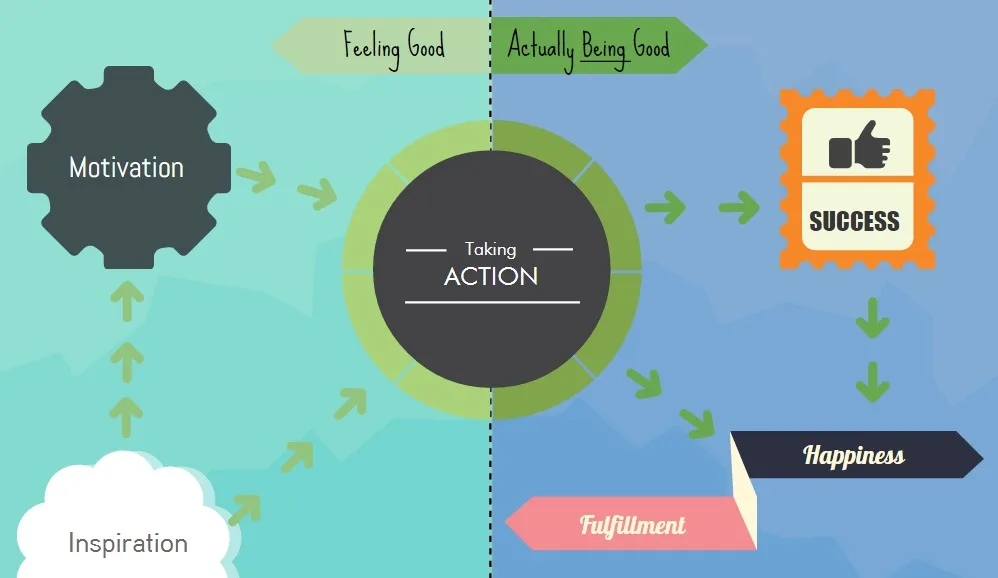
Motivation is the invisible force that pushes us to act, achieve, and persist. Whether it’s studying for exams, pursuing a career goal, or maintaining relationships, motivation plays a crucial role in shaping our behavior. The psychology of motivation explores why we do what we do, how our desires influence actions, and what keeps us going even in difficult situations. Understanding this concept not only helps improve productivity but also enhances personal growth and well-being.
Thank you for reading this post, don't forget to subscribe!Table of Contents
What is Motivation?
Motivation refers to the internal and external factors that stimulate desire and energy in individuals to be continually interested and committed to a task. Psychologists often divide motivation into two main types:
- Intrinsic Motivation: Driven by internal satisfaction (e.g., learning for enjoyment)
- Extrinsic Motivation: Driven by external rewards (e.g., money, recognition)
Both types are essential and often work together in real-life situations.
Key Theories in the Psychology of Motivation
1. Maslow’s Hierarchy of Needs
This theory suggests that human needs are arranged in a hierarchy:
- Physiological needs (food, water)
- Safety needs
- Love and belonging
- Esteem
- Self-actualization
- People are motivated to fulfill lower-level needs before moving to higher ones.
2. Self-Determination Theory (SDT)
This theory emphasizes three basic psychological needs:
- Autonomy – Control over one’s actions
- Competence – Mastery of skills
- Relatedness – Connection with others
- When these needs are satisfied, motivation becomes stronger and more sustainable.
3. Expectancy Theory
This theory explains motivation based on three factors:
- Expectation of success
- Value of the reward
- Belief that effort leads to performance
- If people believe their effort will lead to success and rewards, they are more motivated.
4. Drive Reduction Theory
This theory suggests that people are motivated to reduce discomfort or tension (like hunger or thirst). Once the need is fulfilled, motivation decreases.
Factors Influencing Motivation
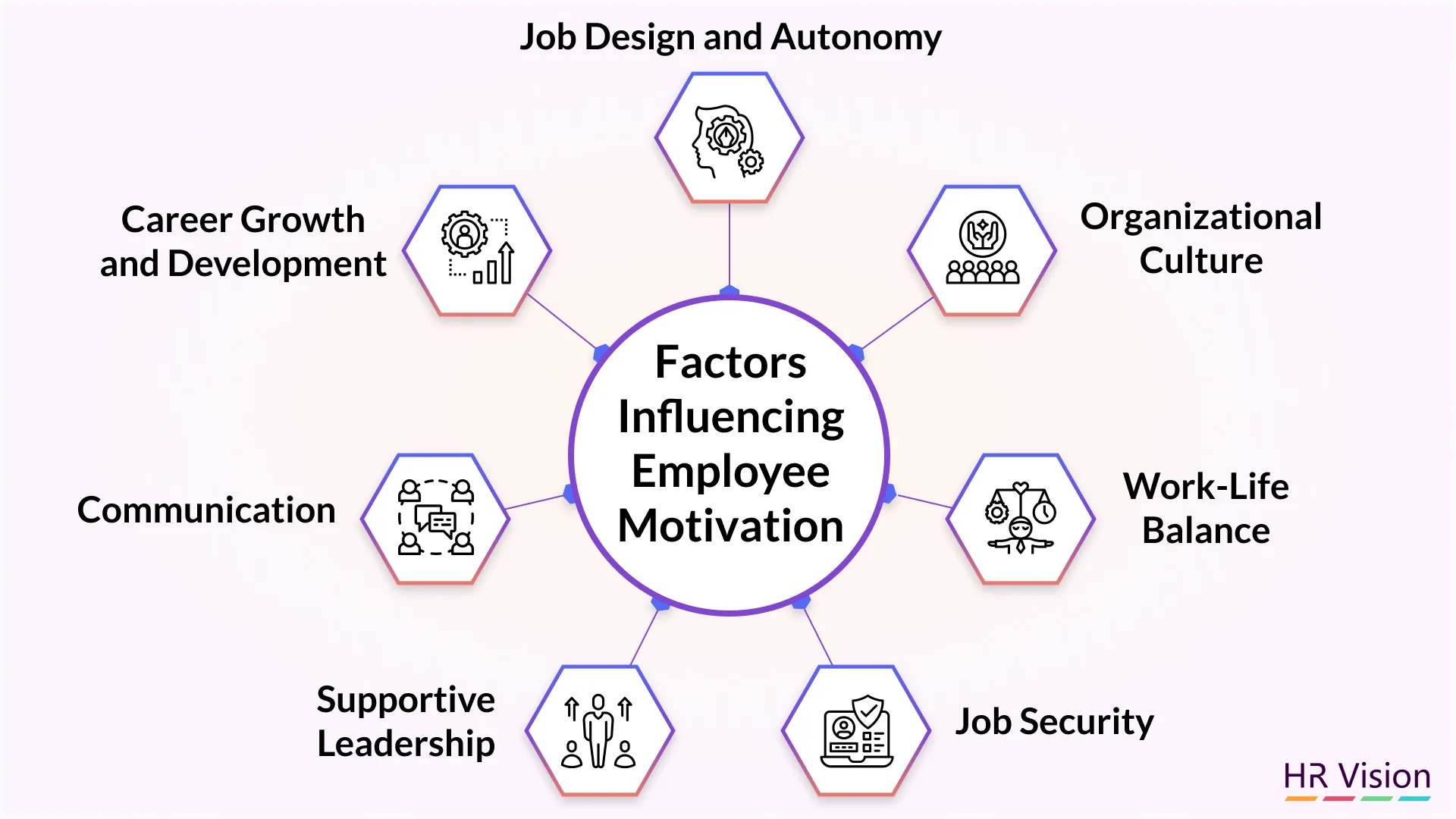
1. Biological Factors
Brain chemicals like dopamine play a key role in motivation. Higher dopamine levels often increase the desire to pursue rewards.
2. Emotional Factors
Emotions such as fear, happiness, and curiosity strongly influence motivation. Positive emotions encourage action, while negative emotions can either motivate or discourage.
3. Social Environment
Family, peers, and culture impact motivation. Encouragement, competition, and social expectations can push individuals to perform better.
4. Personal Goals
Clear and meaningful goals significantly boost motivation. When goals align with personal values, motivation becomes stronger.
Intrinsic vs Extrinsic Motivation: Which is Better?
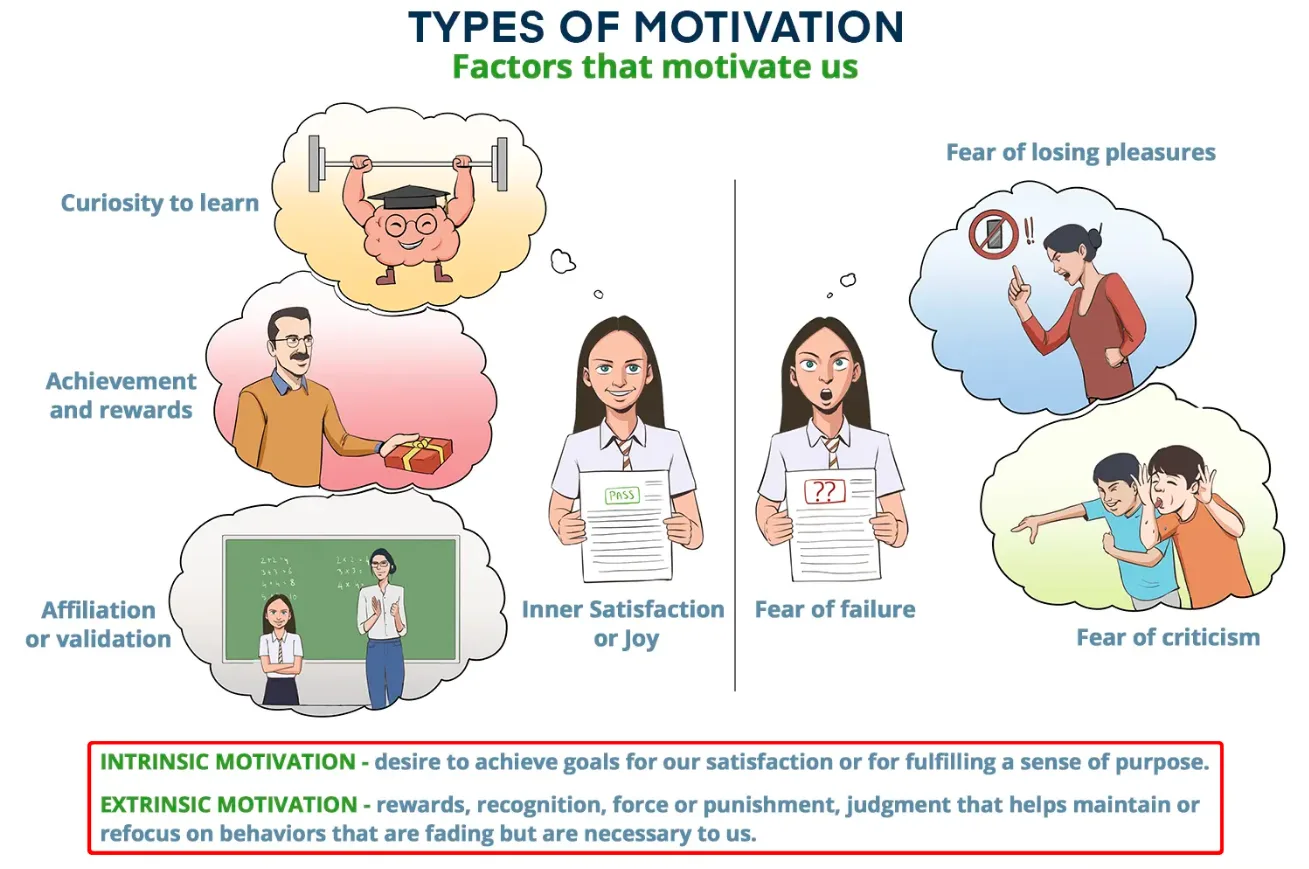
While extrinsic rewards like money or grades can be effective in the short term, intrinsic motivation is more powerful for long-term success. For example, a student who studies out of curiosity will likely retain knowledge better than one who studies only for marks.
However, a balance of both types often works best in real-life scenarios.
How to Improve Motivation?
1. Set Clear Goals
Break big goals into smaller, achievable steps. This creates a sense of progress and keeps motivation high.
2. Find Your “Why.”
Understanding the purpose behind your actions strengthens intrinsic motivation.
3. Build Positive Habits
Consistency creates discipline, which supports motivation even when enthusiasm fades.
4. Reward Yourself
Small rewards after completing tasks can boost motivation and reinforce positive behavior.
5. Surround Yourself with Positivity
Being around motivated people can inspire and encourage you to stay focused.
Some Common Motivation Challenges are:
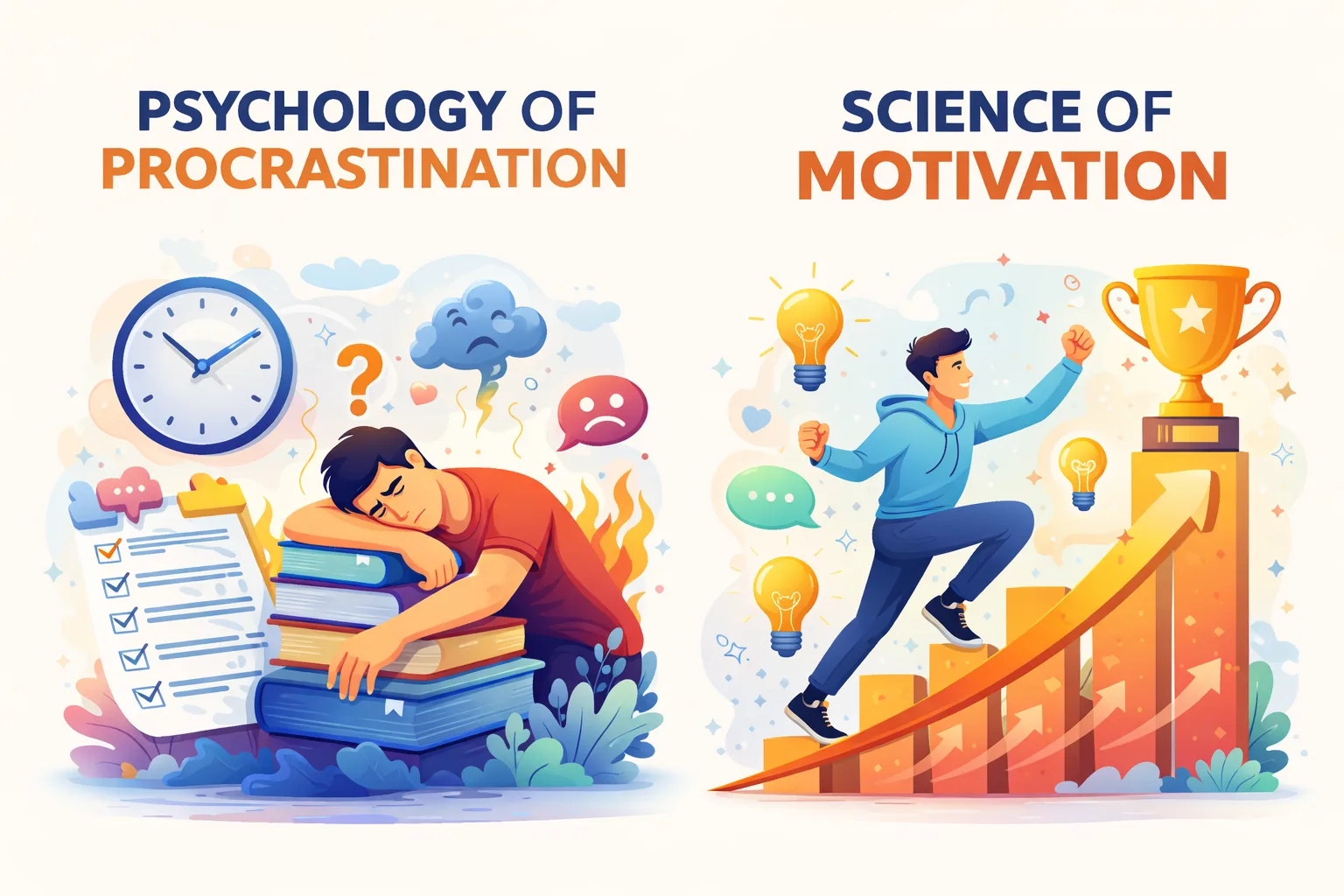
- Procrastination – Delaying tasks due to lack of urgency or fear
- Burnout – Loss of motivation due to overwork
- Lack of Direction – Unclear goals reduce motivation
- Fear of Failure – Prevents people from taking action
- Understanding these challenges helps in overcoming them effectively.
Conclusion
The psychology of motivation reveals that a complex mix of internal desires and external influences drives human behavior. By understanding different motivational theories and factors, we can better control our actions, improve productivity, and achieve personal goals. Motivation is not constant; it fluctuates, but with the right strategies, it can be nurtured and sustained over time.
FAQs
1. What is the psychology of motivation?
It is the study of what drives people to act, including internal desires and external rewards.
2. What is the difference between intrinsic and extrinsic motivation?
Intrinsic motivation comes from within (interest, enjoyment), while extrinsic motivation comes from external rewards (money, praise).
3. Why do people lose motivation?
People lose motivation due to burnout, unclear goals, fear of failure, or negative environments.
4. How can I stay motivated daily?
Set small goals, maintain routines, stay positive, and remind yourself of your purpose.
5. Which motivation theory is most important?
There is no single “most important” theory. Each provides unique insights into human behavior.