Partition of Bengal: Lord Curzon’s Legacy in Colonial India

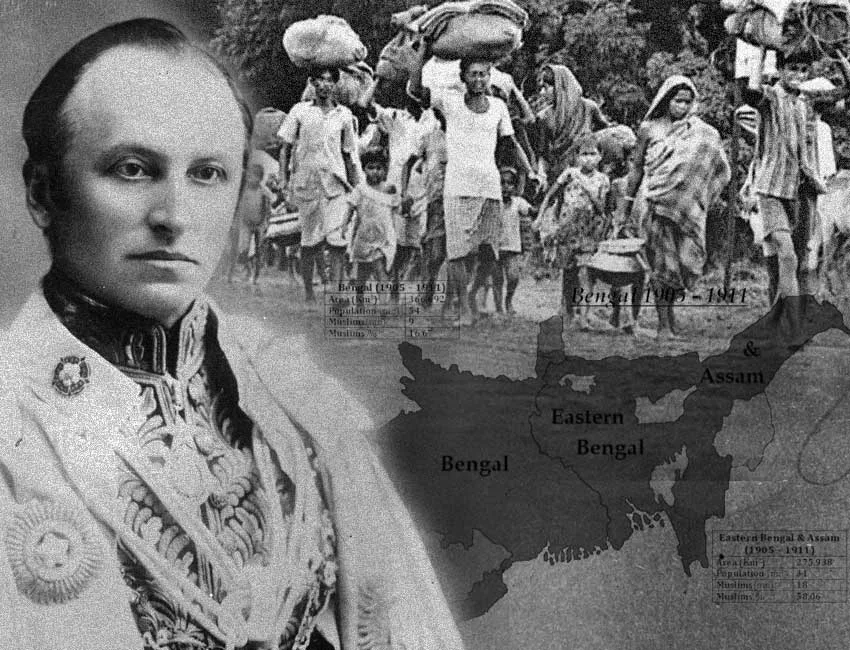
The Partition of Bengal in 1905 stands as one of the most defining and controversial moments in Indian colonial history. Orchestrated by Lord Curzon, the Viceroy of India from 1899 to 1905, this decision not only reshaped the political geography of the subcontinent but also ignited a nationwide resistance that would fundamentally alter the course of India’s freedom struggle. To understand the full impact of this pivotal event, we must first understand the man behind it George Nathaniel Curzon and the administrative machinery he built during his tenure.
Thank you for reading this post, don't forget to subscribe!Who Was Lord Curzon?
George Nathaniel Curzon (11 January 1859 – 20 March 1925), born in Kedleston Hall, England, was a British statesman who succeeded Lord Elgin as India’s Viceroy in 1899. At just 39 years of age, he became the youngest Viceroy India had ever seen, and arguably one of the most consequential.
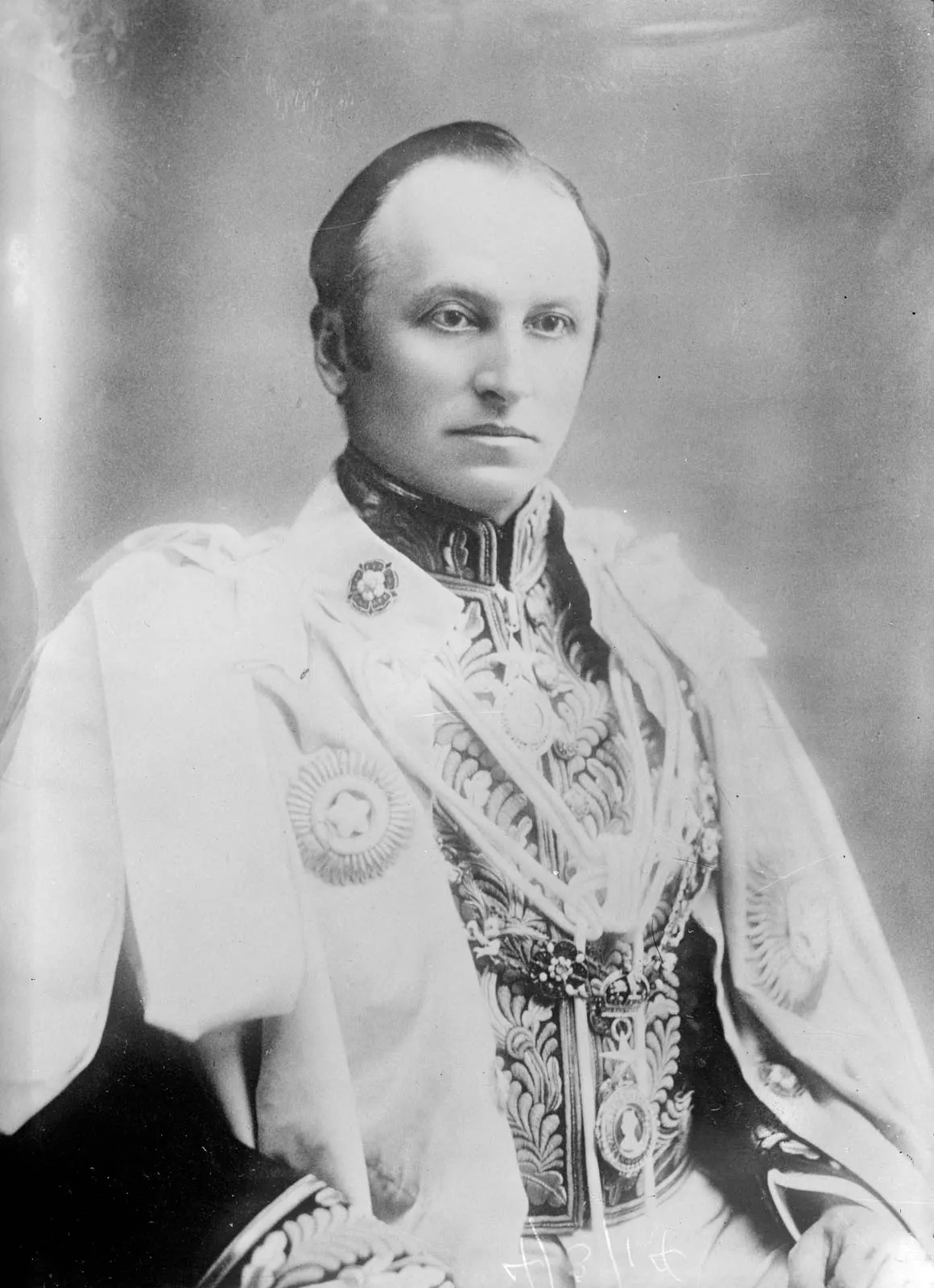
Before taking office, Curzon had visited India four times, along with Ceylon, Afghanistan, China, Persia, Turkestan, Japan, and Korea. No other governor general had gathered such extensive knowledge of the East before assuming the role. Yet despite this worldly exposure, Curzon remained deeply entrenched in imperial ideology. He was a firm believer in Britain’s so-called “civilising mission” in India, and infamously described Indians as having “extraordinary inferiority in character, honesty and capacity.” This worldview would colour every policy he enacted none more so than the Partition of Bengal.
Curzon’s Foreign Policies
Before turning to the domestic front, Curzon busied himself with securing British imperial interests across the region through a series of calculated foreign policies.
North-West Frontier Policy
- Unlike his predecessors, Curzon pursued a policy of consolidation and security in the north-west.
- He kept Chitral under British control and constructed a road connecting Peshawar and Chitral for better military access.
- He strategically withdrew small British troops from the Khyber Pass, Khur Valley, and Waziristan, reducing friction with tribal communities while cutting costs significantly.
Afghan Policy
- Curzon’s approach to Afghanistan was shaped by fear of Russian expansion in Central Asia.
- An agreement was negotiated with Afghan Amir Abdur Rahman, under which Britain committed to financial assistance to Afghanistan, securing the frontier from internal Afghan tensions.
Policy Towards Persia
- Recognising the strategic importance of the Persian Gulf, Curzon personally visited the region in 1903 to protect British interests against encroachments from Russia, France, and Turkey.
Tibet Policy
- A trade agreement had been signed with Tibet in 1890, but by Curzon’s time, these relations had completely broken down.
- Through diplomatic pressure, Curzon revived trade relations and compelled Tibet to pay a substantial indemnity to the British, strengthening British influence in the Himalayan region.
Administrative Reforms Under Curzon
Curzon was a firm believer in centralised government and a powerful bureaucracy. His tenure witnessed sweeping reforms across multiple sectors some progressive in intent, others deeply regressive in practice.
Economic Reforms
- In 1899, the British pound was declared equivalent to fifteen Indian rupees, standardising currency exchange.
- The rate of salt tax was reduced from two-and-a-half rupees per maund to one-and-a-third rupees per maund.
- Income tax payers received relaxation, and individuals with annual earnings above Rs. 500 were brought under a revised tax framework.
- Curzon supported financial decentralisation and abolished the practice of the Central Government absorbing provincial savings, restoring provinces’ incentive to manage finances efficiently.
Famine Relief
- When Curzon arrived in India, the country was in the grip of a devastating famine affecting south, central, and western India.
- He organised relief work on a payment basis, giving affected communities means of income.
- Cultivators were exempted from revenue payments during the crisis.
- After the famine subsided in 1900, Curzon appointed a Commission to study its causes and recommend preventive measures.
Agricultural Reforms
- The Co-operative Credit Societies Act of 1904 encouraged communities to form deposit and loan societies, protecting peasants from exploitative money-lenders.
- The Punjab Land Alienation Act of 1900 restricted the transfer of peasant lands to money-lenders in cases of debt default.
- Curzon set three guiding principles for revenue administration: gradual increase of revenue, protection of agriculture during collection, and immediate relief for peasants in times of drought or natural disaster.
Railway Development
- A Railway Commission was appointed in 1901 under Mr. Robertson to assess and improve India’s rail network.
- Following the Commission’s recommendations, railway lines were expanded, and railway management was transferred from the Public Works Department to a dedicated Railway Board with three members.
- The railway department was reorganised on a commercial basis, with profit as its primary motive.
Education Reforms
- In 1901, Curzon convened an education conference at Shimla, followed by the appointment of the University Commission in 1902.
- The Indian Universities Act of 1904 was passed on the Commission’s recommendations, bringing universities under direct government supervision.
- The Act was widely despised by the Indian public. Calcutta High Court judge Gurudas Banerjee, himself a Commission member, formally dissented from the report, reflecting the deep unease among Indian intellectuals.
Military Reforms
- Lord Kitchener arrived as Commander-in-Chief in 1902 and reorganised the Indian Army into two commands Northern and Southern.
- Every division comprised three brigades: two Indian battalions and one British.
- Factories were established across India to produce guns, gunpowder, and rifles, equipping the army with modern weaponry.
- A rigorous evaluation system known as the “Kitchener Test” was introduced to improve soldier efficiency.
Judiciary and Heritage
- The number of Calcutta High Court judges was increased, and salaries across the High Courts and subordinate courts were enhanced.
- The Indian Code of Civil Procedure was revised for greater efficiency.
- The Ancient Monument Preservation Act of 1904 established an Archaeological Department responsible for the repair, restoration, and protection of historical monuments a legacy that endures to this day through the Archaeological Survey of India.
The Partition of Bengal: A Nation-Altering Decision
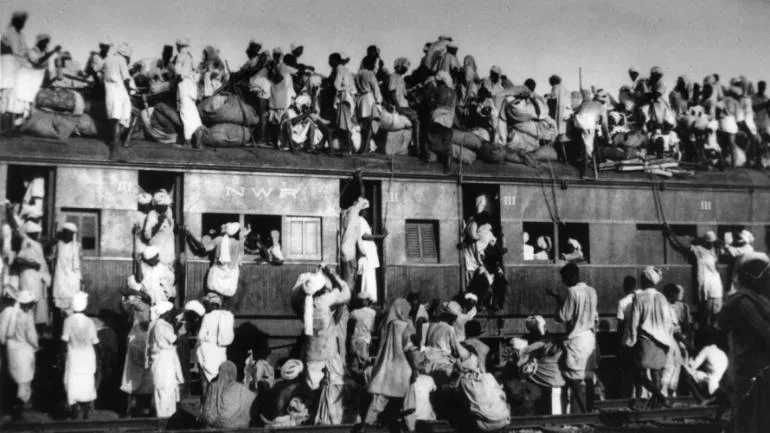
Of all Curzon’s actions, the Partition of Bengal was undoubtedly the most consequential and the most condemned. It became the spark that intensified India’s national movement beyond anything the British had anticipated.
The Context
Bengal was India’s most populous province, home to approximately 8 crore people. It was a vast territory encompassing present-day West Bengal, Bihar, parts of Chhattisgarh, Odisha, Assam, and present-day Bangladesh. It was also the intellectual and political heartland of India, producing some of the most articulate voices against British rule.
The Decision
In July 1905, Curzon announced the division of undivided Bengal into two separate provinces. A new province of East Bengal and Assam was created with a population of 3.1 crore, with a Muslim-to-Hindu ratio of 3:2. The western portion remained predominantly Hindu. The British officially justified the move on administrative grounds the province was simply too large to govern effectively. But no thinking Indian believed that explanation for a moment.
The Real Motive
The true intent behind the Partition of Bengal was unmistakably political. Curzon sought to:
- Weaken the growing political consciousness of Bengal’s educated class.
- Drive a wedge between the Hindu and Muslim communities by creating a Muslim-majority province in the east.
- Dilute the organisational strength of the Indian National Congress, which was most active in Bengal.
- Suppress the rising tide of nationalist sentiment in a province that had become a breeding ground for political resistance.
The Backlash: Swadeshi and Beyond
The Partition of Bengal did not silence Indian voices it amplified them to a pitch the British had never encountered before.
Immediate Reactions
- All sections of the Indian National Congress both the moderate and radical factions united in opposition to the partition.
- Mass demonstrations, marches, and public meetings broke out across Bengal and spread to other parts of India.
- Protesters chanted and sang Vande Mataram, making it the battle cry of Indian nationalism.
The Swadeshi Movement
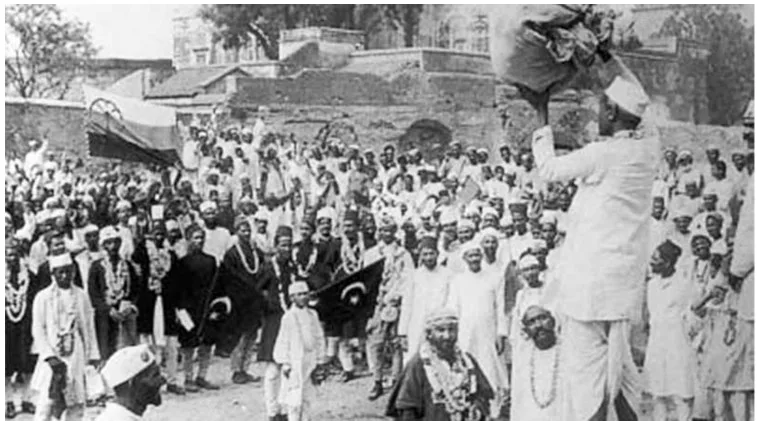
- The anti-partition struggle gave birth to the powerful Swadeshi movement a campaign to boycott British goods, particularly textiles, and promote domestically produced alternatives.
- In Andhra, a parallel movement emerged under the name Vandemataram Movement, illustrating how the Partition of Bengal resonated far beyond its geographic borders.
- Samitis volunteer organisations emerged throughout Bengal, mobilising thousands of ordinary citizens.
Cultural Resistance
- Rabindranath Tagore played a central role in the resistance, leading protest marches and composing deeply moving patriotic songs.
- His composition Amar Sonar Bangla (My Golden Bengal), written during this period, later became the national anthem of Bangladesh.
- Jatras popular theatrical performances became powerful vehicles for spreading the message of Bengali nationalism and patriotic defiance.
Long-Term Political Impact
- Curzon left India in 1905, but the agitation he had ignited burned on for years.
- In 1911, Lord Hardinge reversed the Partition of Bengal in the face of unrelenting nationwide opposition.
- The Swadeshi movement grew into a nationwide phenomenon, providing a template for future mass mobilisations in the independence struggle.
- The Indian National Congress, which Curzon had dismissively referred to as “tottering to its fall,” emerged from the crisis stronger, more radical, and more deeply rooted in public life than ever before.
Curzon’s Contradictory Legacy
In his book Lion and the Tiger: The Rise and Fall of the British Raj, 1600–1947, historian Denis Judd captured the central irony of Curzon’s tenure: Curzon had intended to bind India permanently to British rule. Instead, his Partition of Bengal and the fierce controversy it generated did more to revitalize the Congress than almost any other event. Curzon had once dismissed Congress as “tottering to its fall.” When he left India, Congress was more active, more unified, and more determined than it had ever been.
This contradiction defines Curzon’s legacy. Measured purely by administrative efficiency, initiative, and organizational reform, he was among the most capable Viceroys British India ever saw. His contributions to railways, agriculture, heritage preservation, and famine relief were real and lasting. But his autocratic temperament, his deep-seated racism, and his political miscalculation with the Partition of Bengal ensured that history would judge him as a man who, in trying to preserve an empire, helped bring about its eventual end.
Conclusion
Lord Curzon remains one of British India’s most paradoxical figures. His administrative reforms in railways, agriculture, heritage conservation, and famine relief demonstrated genuine capacity for governance. Yet his autocratic instincts and racial arrogance blinded him to the consequences of his most fateful decision. The Partition of Bengal, intended to weaken Indian nationalism, achieved precisely the opposite. It united a fractured opposition, birthed the Swadeshi movement, and breathed new life into the Congress. As historian Denis Judd aptly observed, Curzon had hoped to bind India permanently to the British Raj but in trying to do so, he accelerated its undoing.
Frequently Asked Questions (FAQs)
Q1. What was the Partition of Bengal and when did it happen?
The Partition of Bengal was the division of the undivided Bengal Presidency into two separate provinces by Lord Curzon in July 1905. The move created a new province of East Bengal and Assam, and was officially justified on administrative grounds, though its real motive was widely understood to be political to weaken Indian nationalism and create communal division.
Q2. Who was Lord Curzon and what was his role in Indian history?
Lord Curzon was the Viceroy of India from 1899 to 1905. He was the youngest viceroy ever appointed, taking office at age 39. While he introduced several administrative reforms in railways, agriculture, education, and heritage conservation, he is most remembered for the controversial Partition of Bengal, which triggered a nationwide resistance movement.
Q3. What was the real reason behind the Partition of Bengal?
Although the British government officially cited administrative convenience as the reason, the actual motives were deeply political. Curzon aimed to weaken Bengal’s politically active educated class, divide Hindu and Muslim communities by creating a Muslim-majority eastern province, and suppress the growing influence of the Indian National Congress in the region.
Q4. What was the Swadeshi Movement and how was it connected to the Partition of Bengal?
The Swadeshi Movement emerged directly as a response to the Partition of Bengal. Indians across the country boycotted British goods, especially textiles, and promoted locally made products. The movement spread beyond Bengal in Andhra it was known as the Vandemataram Movement and became one of the first major organised mass resistance campaigns against British rule.
Q5. What role did Rabindranath Tagore play in the anti-partition protests?
Rabindranath Tagore was one of the most prominent voices of resistance against the Partition of Bengal. He led protest marches, wrote patriotic poetry and songs, and composed Amar Sonar Bangla (My Golden Bengal) during this period, which later became the national anthem of Bangladesh. He used culture and literature as powerful tools of nationalist expression.
Q6. When and why was the Partition of Bengal reversed?
The Partition of Bengal was reversed in 1911 by Lord Hardinge, six years after it was implemented. The decision was made in response to sustained and intense nationwide opposition that showed no signs of subsiding. The reversal was announced during the Delhi Durbar of 1911, coinciding with the transfer of India’s capital from Calcutta to Delhi.