


FRB 20240304B: Scientists Detect a 10-Billion-Year-Old Radio Signal from Deep Space

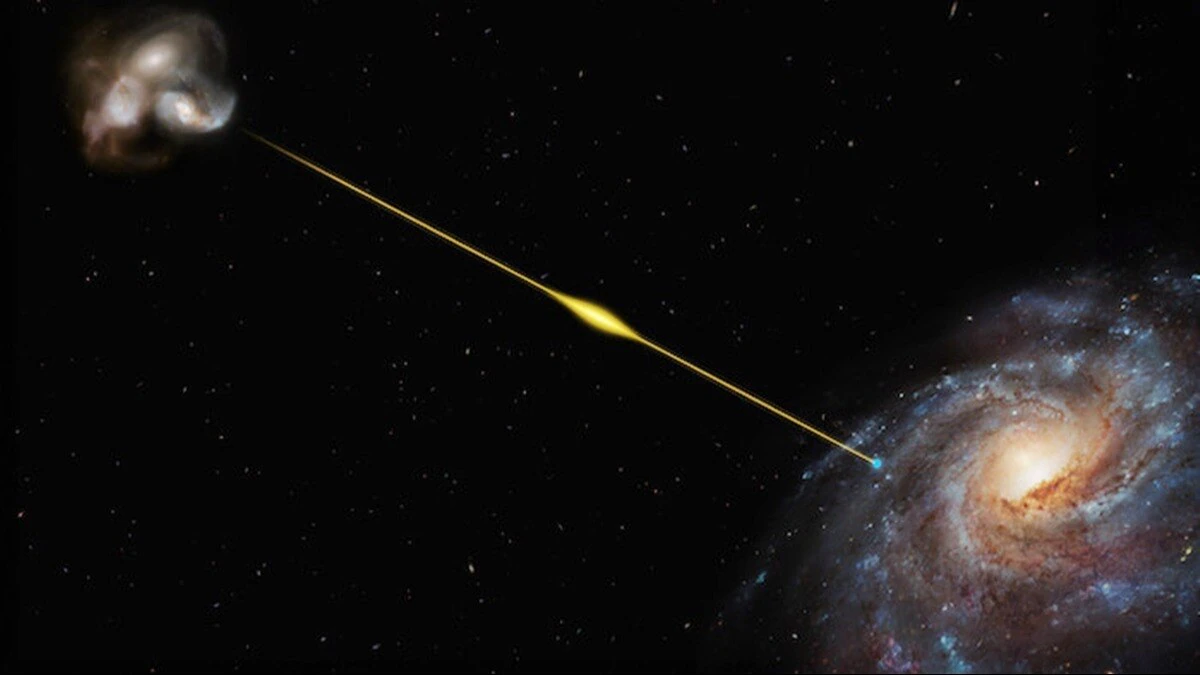
FRB 20240304B has become one of the most exciting discoveries in modern astronomy. Scientists recently confirmed that this powerful radio signal traveled for nearly 10 billion years before finally reaching Earth. The discovery is helping researchers understand how the universe looked billions of years ago and provides new clues about the formation of galaxies and stars.
The signal was first detected on March 4, 2024, by the MeerKAT radio telescope located in South Africa. After detailed observations, astronomers identified the source of the signal using the James Webb Space Telescope. The findings have attracted global attention because the signal comes from a period when the universe was much younger than it is today.

What is FRB 20240304B?
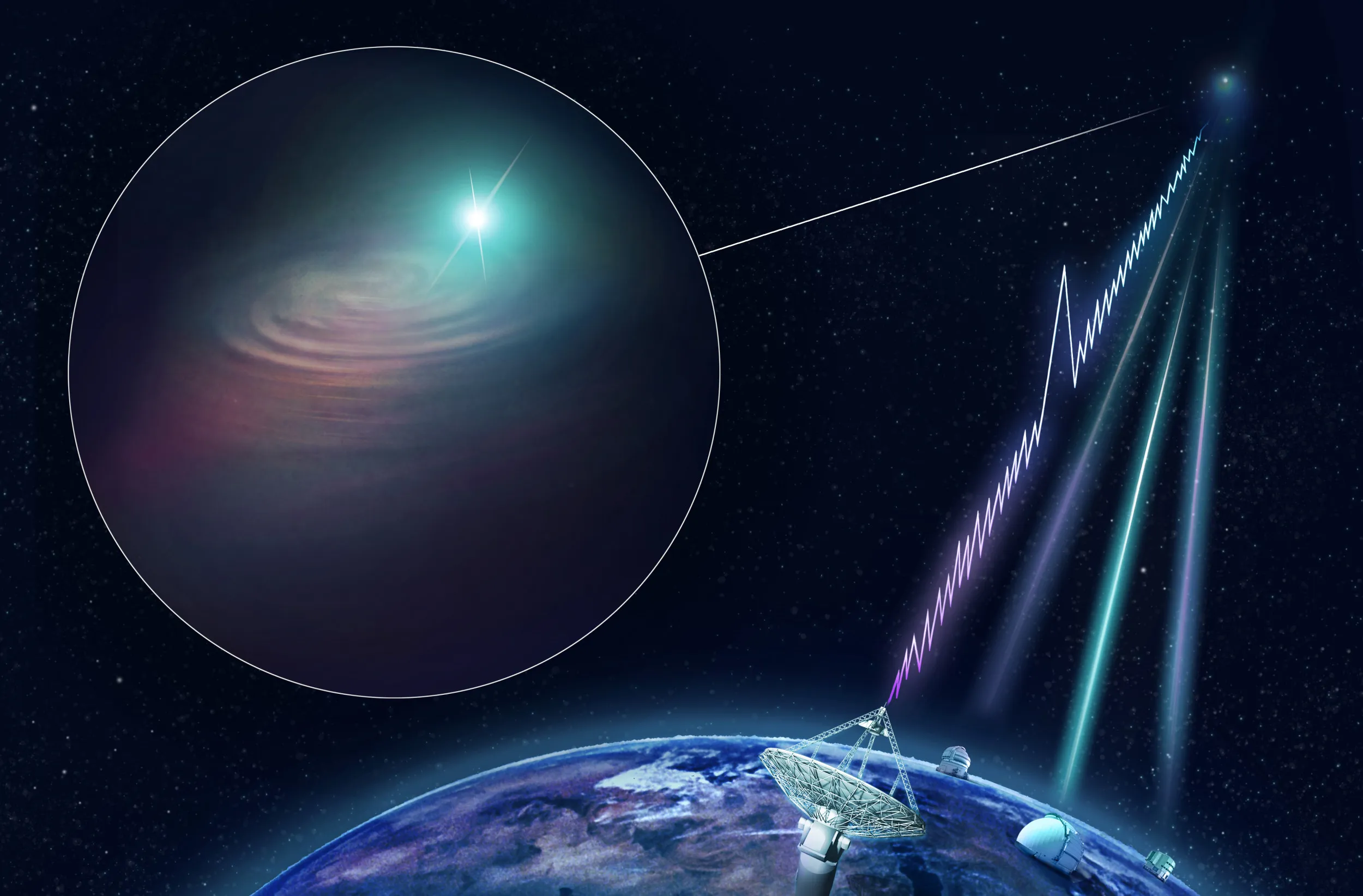
FRB 20240304B is a Fast Radio Burst (FRB), which is a short but extremely powerful burst of radio waves coming from deep space. These signals usually last for only a fraction of a second, but they can release a huge amount of energy during that brief moment.
Scientists have been studying fast radio bursts for several years because their exact origins remain one of astronomy’s biggest mysteries. Some researchers believe that highly magnetized neutron stars, known as magnetars, may produce at least some of these signals.
The newly discovered FRB 20240304B stands out because it traveled a much greater distance than most previously localized fast radio bursts.
A Journey Across 10 Billion Years
The radio signal began its journey around 10 billion years ago. This means the burst occurred when the universe was only about 3 billion years old.
By the time the signal reached Earth, it had crossed enormous cosmic distances. Studying such ancient signals allows scientists to look back in time and learn about the early stages of the universe.
This discovery has significantly expanded the distance range at which astronomers can study localized fast radio bursts. It also demonstrates the growing power of modern telescopes and space observatories.
Discovery During Cosmic Noon
Scientists found that FRB 20240304B originated during a period known as Cosmic Noon.
Cosmic Noon refers to the time when the universe experienced its highest rate of star formation. This period occurred roughly 2 to 3 billion years after the Big Bang. During this era, galaxies were producing stars at a much faster rate than they do today.
Because FRB 20240304B comes from this important period, researchers can use it to study conditions that existed when galaxies were rapidly growing and evolving.
The Host Galaxy
Using the James Webb Space Telescope, researchers traced the radio burst to a small dwarf galaxy.
This galaxy is described as:
- Low in mass
- Rich in star formation
- Irregular and clumpy in structure
- Located billions of light-years away
The finding suggests that powerful fast radio bursts can occur in small galaxies and not only in large, well-developed ones.
Understanding the environments where FRBs occur may help scientists solve the mystery of what creates these energetic bursts.
Role of the MeerKAT Radio Telescope
The MeerKAT radio telescope played a major role in detecting the signal.
Located in South Africa, MeerKAT consists of multiple radio dishes working together to observe the universe at radio wavelengths. It is one of the world’s most advanced radio astronomy facilities.
MeerKAT has contributed to several major discoveries in recent years, including studies of black holes, galaxies, and mysterious radio emissions from deep space.
The detection of FRB 20240304B further highlights the importance of radio astronomy in exploring the universe.
James Webb Space Telescope’s Contribution
The James Webb Space Telescope helped scientists identify the host galaxy of the radio burst.
Since its launch, the telescope has transformed astronomy by providing highly detailed infrared observations of distant cosmic objects.
Its powerful instruments allow researchers to study:
- Ancient galaxies
- Star-forming regions
- Planetary systems
- Black holes
- Cosmic evolution
The telescope’s observations were crucial in determining where FRB 20240304B originated.
Growing Interest in Fast Radio Bursts
Fast radio bursts have become one of the hottest topics in space science.
Every new detection provides valuable information about:
- The structure of the universe
- Intergalactic matter
- Galaxy formation
- Extreme cosmic events
Scientists use measurements such as redshift and dispersion to estimate how far these bursts have traveled and what materials they passed through on their journey.
The discovery of FRB 20240304B has doubled the redshift range of localized FRBs, opening new opportunities for future research.
Another Major Radio Discovery
Astronomers recently made another important observation involving a giant radio structure around the galaxy cluster known as SpARCS1049.
Using the Low Frequency Array (LOFAR), researchers detected a radio mini-halo extending more than one million light-years across. The structure is located approximately 10 billion light-years from Earth.
Galaxy clusters are the largest gravitationally bound structures in the universe, and discoveries like these help scientists understand how matter is distributed across cosmic scales.
The combination of findings from FRB 20240304B and distant galaxy clusters is providing a clearer picture of the early universe.
Why This Discovery Matters Today
In 2026, astronomy is entering a new era of exploration. Advanced observatories such as MeerKAT, LOFAR, and the James Webb Space Telescope are allowing scientists to observe parts of the universe that were previously beyond reach.
The discovery of FRB 20240304B demonstrates how modern technology can detect signals that have traveled for billions of years. These observations are helping researchers investigate the history of galaxies, the behavior of matter in space, and the evolution of the universe itself.
As more powerful telescopes come online in the coming years, scientists expect to detect even older and more distant radio signals, bringing humanity closer to understanding the deepest mysteries of space.