


e-Commerce in India: Growth, Benefits, Challenges and Government Initiatives

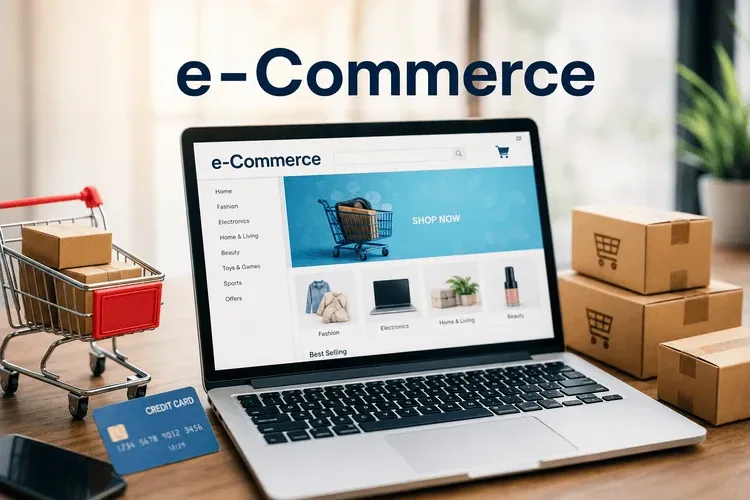
e-Commerce in India has become one of the fastest-growing sectors in the country. Today, millions of people buy and sell products online using smartphones, laptops, and tablets. From clothes and electronics to groceries and medicines, almost everything can now be purchased through online platforms.
Thank you for reading this post, don't forget to subscribe!Electronic commerce, commonly called e-commerce, is a business model where goods and services are bought and sold through the internet. It allows businesses and customers to connect directly without needing a physical store.
With the rapid growth of smartphone users, better internet services, digital payments, and rising income levels, e-commerce has expanded quickly in India. The launch of 4G and now 5G networks has made online shopping easier and faster, even in small towns and rural areas.
The Indian e-commerce market has shown massive growth over the last decade. It was valued at around US$ 38.5 billion in 2017 and is expected to reach nearly US$ 200 billion by 2026. Experts also believe that India may become the world’s second-largest e-commerce market by 2034, surpassing many developed nations.
What is e-Commerce?
E-commerce means conducting business transactions online. This includes buying products, selling goods, making digital payments, booking services, and even providing online education or entertainment.
There are different types of e-commerce:
- Business to Consumer (B2C): Companies sell directly to customers.
- Business to Business (B2B): One business sells products or services to another business.
- Consumer to Consumer (C2C): Customers sell products to other customers.
- Consumer to Business (C2B): Individuals provide services or products to companies.
Popular Indian e-commerce platforms include Amazon India, Flipkart, Myntra, and Meesho.

Growth of e-Commerce in India
Several factors have contributed to the rapid growth of e-commerce in India:
1. Rising Smartphone Usage
India has hundreds of millions of smartphone users. Affordable smartphones have allowed more people to access online shopping apps.
2. Cheap Internet Services
Low-cost mobile data has made internet access affordable for people from different income groups.
3. Digital Payment Systems
Online payments have become safer and easier with systems like Unified Payments Interface (UPI), net banking, and mobile wallets.
4. Better Logistics and Delivery
Improved delivery networks help companies deliver products quickly, even in remote areas.
5. Changing Consumer Behavior
People now prefer shopping from home because it saves time and offers more choices.
Advantages of e-Commerce
1. Convenience for Customers
One of the biggest benefits of e-commerce is convenience. Customers can shop anytime, anywhere. Online stores are available 24 hours a day.
2. More Product Choices
Customers can compare products, prices, features, and reviews from different sellers before buying.
3. Lower Transaction Costs
Online shopping often reduces costs such as travel expenses and time spent visiting stores.
4. Global Market Access
E-commerce allows businesses to sell products across cities, states, and even countries. Small sellers can now reach global customers.
5. Direct Connection Between Seller and Buyer
E-commerce reduces middlemen in the supply chain. Producers can directly connect with customers, making the process more transparent.
6. Easy Business Setup
Starting an online business is easier and cheaper compared to opening a physical store. Even small entrepreneurs can begin with limited investment.
7. Support for MSMEs
Micro, Small and Medium Enterprises (MSMEs) have benefited greatly from e-commerce. Online platforms help them gain customers, improve sales, and grow their business.
8. Employment Generation
The growth of e-commerce creates jobs in:
- Warehousing
- Packaging
- Delivery services
- Customer support
- Digital marketing
- Software development
This boosts employment across multiple sectors.
9. Better Customer Experience
Online platforms offer personalized recommendations based on customer preferences, improving shopping experiences.
Disadvantages of e-Commerce
Despite many benefits, e-commerce also has several challenges.
1. Product Quality Issues
Sometimes products delivered do not match the pictures or descriptions shown online. This creates customer dissatisfaction.
2. Lack of Accountability
Some sellers may provide poor-quality goods or delay deliveries. Resolving complaints can also take time.
3. Dependence on Internet and Technology
E-commerce depends heavily on internet connectivity, servers, and digital systems. Technical failures can affect business operations.
4. Cyber Fraud and Security Risks
Online transactions carry risks such as:
- Payment fraud
- Fake websites
- Data theft
- Hacking
Sensitive financial information can be stolen if security measures are weak.
5. Privacy Concerns
E-commerce companies collect customer data like names, phone numbers, addresses, and shopping preferences. Misuse of this data can harm privacy.
6. Legal and Regulatory Challenges
Rules for e-commerce are still evolving in many countries. Weak regulations can create unfair competition and consumer risks.
7. Intellectual Property Concerns
Online platforms may face problems related to copyright and trademark misuse. Fake products and duplicate brands remain major concerns.
8. Impact on Traditional Retail
Local shops often struggle to compete with large online platforms that offer discounts and fast delivery.
Government Initiatives for e-Commerce in India
The Government of India has introduced several steps to support and regulate the e-commerce sector.
1. National e-Commerce Policy
In 2019, the government prepared a draft National e-Commerce Policy. This policy focuses on major areas such as:
- Online marketplaces
- Infrastructure development
- Data protection
- Regulatory issues
- Export promotion
- Domestic digital economy
The goal is to create a balanced system for both businesses and consumers.
2. Think Tank for e-Commerce Framework
The Department of Commerce created a think tank and task force to study challenges in digital commerce and recommend solutions.
These groups focus on:
- Market fairness
- Consumer rights
- Competition policies
- Trade regulations
3. RBI Support for Digital Payments
Reserve Bank of India (RBI) has played a major role in strengthening digital payments.
It allowed interoperability among prepaid payment instruments such as:
- Digital wallets
- Prepaid cards
- Cash coupons
This improves payment flexibility for users.
4. UPI Expansion
The growth of Unified Payments Interface has transformed online payments in India. It enables instant money transfers between bank accounts through mobile apps.
UPI has made online shopping more secure and convenient.
5. FDI in e-Commerce
The government allows up to 100% Foreign Direct Investment (FDI) in certain e-commerce marketplace models, especially B2B operations.
This attracts foreign companies and investments into India’s digital economy.
6. Government e-Marketplace (GeM)
Government e-Marketplace (GeM) helps government departments buy goods and services online in a transparent and paperless way.
It improves efficiency and reduces corruption in public procurement.
7. BharatNet Project
The government allocated major funding to the BharatNet project to provide broadband connectivity to rural India.
This project aims to connect over 150,000 gram panchayats with high-speed internet.
Better rural internet access means more people can participate in e-commerce.
8. 5G Infrastructure Development
India’s investment in 5G and fiber networks will further improve:
- Internet speed
- Video shopping
- Digital payments
- Customer experience
This will support future e-commerce growth.
Challenges Ahead for e-Commerce in India
Although the sector is growing rapidly, several issues still need attention.
Consumer Protection
Customers need stronger protection against fraud, fake products, and misleading advertisements.
Fair Competition
Large companies dominate the market. Policymakers must ensure smaller businesses also get fair opportunities.
Tax and Trade Policies
Cross-border e-commerce requires clear rules on taxes, customs, and trade regulations.
Data Security
Strong cybersecurity laws are needed to protect consumer information.
Rural Inclusion
Many rural areas still lack strong internet connectivity and digital awareness.
Future of e-Commerce in India
The future of e-Commerce in India looks highly promising. Increasing internet penetration, digital literacy, secure payment systems, and better infrastructure will continue to drive growth.
New technologies like:
- Artificial Intelligence (AI)
- Machine Learning
- Voice Search
- Drone Delivery
- Augmented Reality
will make online shopping smarter and faster.
India is also actively participating in international discussions on digital trade through organizations like World Trade Organization, BRICS, and Regional Comprehensive Economic Partnership.
A strong and balanced policy framework is important to ensure healthy growth of the sector. The right policies can protect consumers, support businesses, and help India become a global leader in digital commerce.
As India moves toward a digital future, e-commerce will remain a key part of economic growth, business innovation, and consumer convenience.
FAQs on e-Commerce in India
Q1. What is e-Commerce in India?
e-Commerce in India refers to buying and selling goods and services online through websites, mobile apps, and digital platforms using the internet.
Q2. Why is e-commerce growing rapidly in India?
E-commerce is growing due to increased smartphone usage, affordable internet, digital payments, better logistics, and rising consumer demand.
Q3. What are the main advantages of e-commerce?
The major advantages include 24/7 shopping, wider product choices, lower costs, easy price comparison, and global market access.
Q4. What are the disadvantages of e-commerce?
Some disadvantages include cyber fraud, privacy concerns, fake products, delivery delays, and dependence on internet connectivity.
Q5. How does e-commerce help small businesses?
E-commerce helps small businesses reach more customers, reduce operating costs, and expand beyond local markets.
Q6. What is the role of the government in e-commerce?
The government supports e-commerce through digital infrastructure, internet expansion, payment systems, and policy regulations.
Q7. What is UPI in e-commerce?
Unified Payments Interface (UPI) is a digital payment system in India that allows instant money transfer between bank accounts, making online payments easier.
Q8. What is the future of e-Commerce in India?
The future looks strong with technologies like AI, 5G, voice search, and faster delivery systems improving online shopping experiences.