


UN Climate Action Summit 2019: Global Fight Against Climate Change

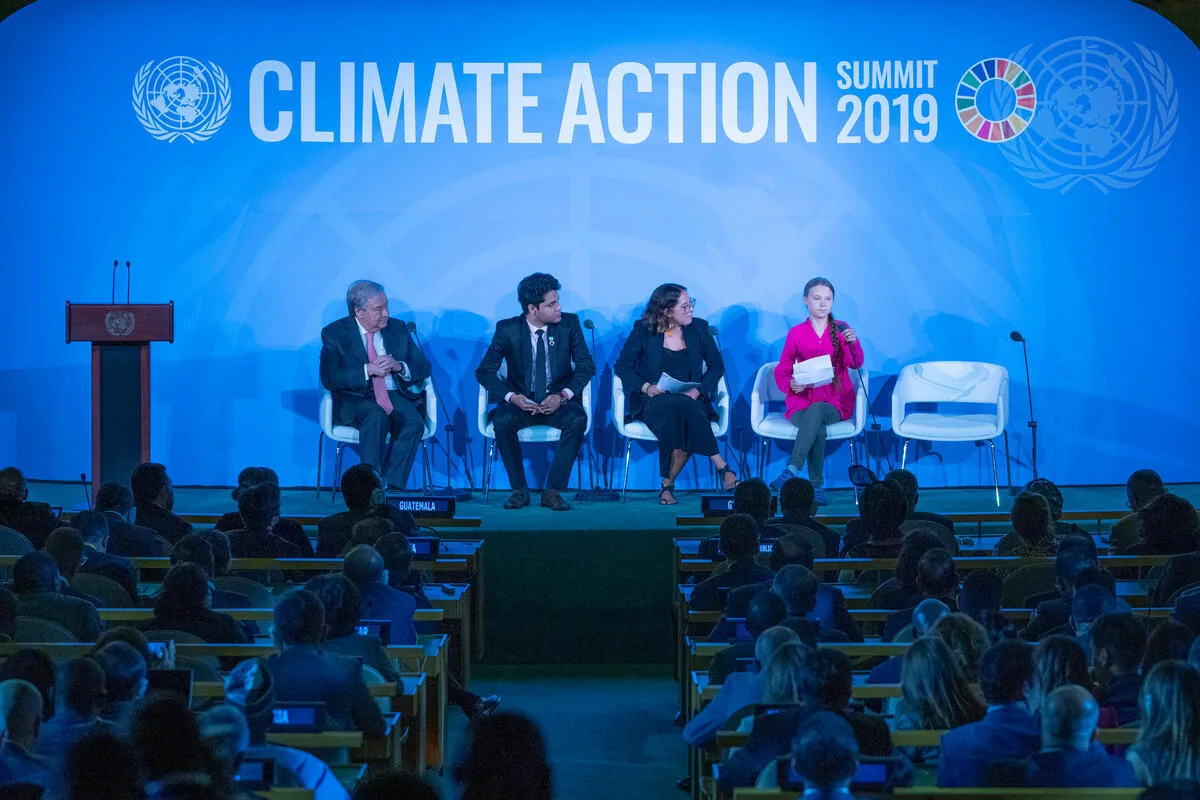
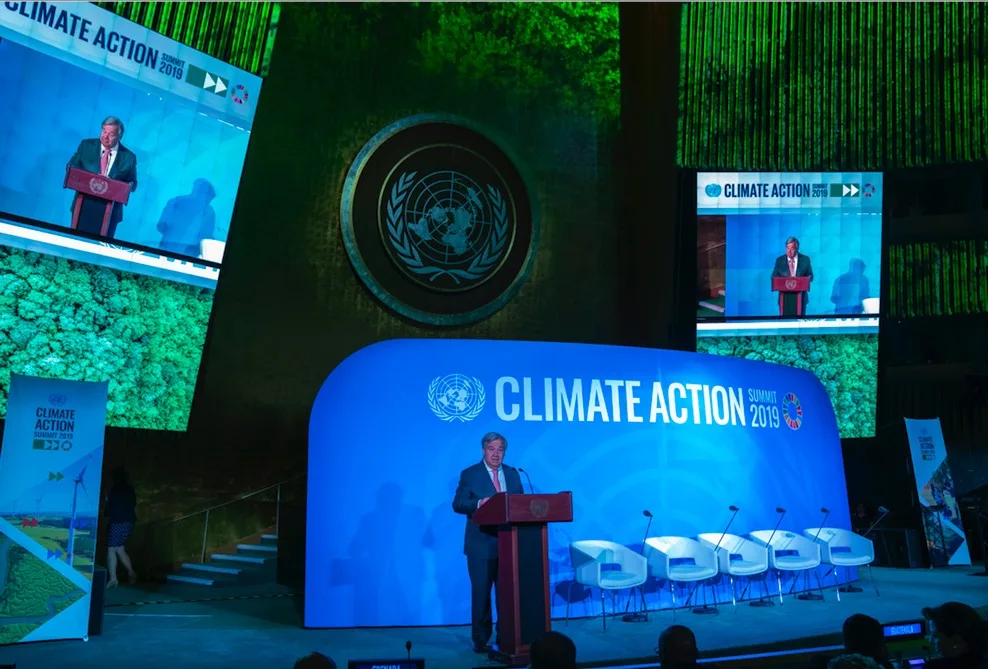
UN Climate Action Summit 2019 was an important global meeting held in New York City, United States, where world leaders came together to discuss one of the biggest problems facing humanity climate change. The summit was called by the United Nations Secretary-General to encourage all member countries to take stronger action against rising global temperatures and environmental damage.
Thank you for reading this post, don't forget to subscribe!The main goal of the summit was to push countries to create realistic plans to reduce greenhouse gas emissions and protect the planet for future generations.
The Paris Agreement already provides a framework to fight climate change. Its aim is to keep global warming well below 2°C above pre-industrial levels and try to limit it to 1.5°C. However, because the agreement is mostly voluntary, many countries are not doing enough to meet these goals.
Background of Climate Change Negotiations
Climate change has become a serious issue because pollution and greenhouse gas emissions are increasing every year. Human activities such as burning coal, oil, and gas release large amounts of carbon dioxide (CO₂) into the atmosphere. These gases trap heat and make Earth warmer.
Some major environmental concerns include:
| Climate Issue | Impact |
|---|---|
| Rising CO₂ Emissions | Increases global warming |
| Higher Global Temperature | Causes heatwaves and melting ice |
| Rising Sea Levels | Threatens coastal cities |
| Air Pollution | Damages human health |
| Food Insecurity | Affects agriculture and food supply |
According to the International Energy Agency, global energy-related CO₂ emissions increased by 1.7% in 2018, reaching 33.1 gigatons, the highest level ever recorded.
The last four years before the summit were among the hottest years in history. The Arctic has warmed rapidly, with winter temperatures rising by around 3°C since 1990.
Sea levels are also rising due to melting glaciers and polar ice. This creates serious risks for islands and coastal regions. Climate change also affects human health through:
- Heatwaves
- Air pollution
- Water shortages
- Spread of diseases
- Food shortages
The United Nations warned that the world needs to increase its climate efforts by three to five times to achieve the goals of the Paris Agreement.
Major Highlights of the Summit
The summit focused on six major action areas that could greatly reduce greenhouse gas emissions and help achieve climate goals.
1. Energy Transition
Energy production is one of the largest sources of pollution. Moving from fossil fuels to clean energy is essential.
Improving energy efficiency alone could provide nearly 40% of the required emission reductions. However, many countries still lack strong policies in this area.
At the summit, a new initiative called the Three Percent Club was launched. This group includes governments and organizations committed to increasing global energy efficiency by 3% every year.
India joined the Three Percent Club and also promised to increase renewable energy capacity to more than 175 GW by 2022.
Renewable energy sources include:
- Solar energy
- Wind energy
- Hydropower
- Biomass
These sources produce less pollution and help reduce dependence on fossil fuels.
2. Nature-Based Solutions
Nature can play a major role in fighting climate change.
The summit supported new plans created by the Nature-Based Solutions Coalition, co-led by China and New Zealand.
These solutions include:
- Protecting forests
- Restoring damaged land
- Conserving oceans
- Promoting sustainable farming
- Greening supply chains
Forests absorb carbon dioxide from the atmosphere. That is why stopping deforestation and planting more trees are powerful climate solutions.
Governments were also encouraged to include environmental value in economic and financial planning.
3. Cities and Local Action
Cities are extremely important in climate action because they consume more than two-thirds of the world’s energy.
Large cities produce high emissions due to:
- Transport
- Buildings
- Industries
- Waste generation
At the same time, cities are among the first places to feel climate impacts such as:
- Floods
- Heatwaves
- Water shortages
- Air pollution
The summit encouraged cities to adopt:
- Low-emission buildings
- Better public transport
- Cleaner urban infrastructure
- Climate protection for poor communities
Developing eco-friendly cities is necessary for a sustainable future.
4. Resilience and Adaptation
Even if emissions are reduced today, climate change impacts are already happening. That is why countries must improve their ability to adapt.
Adaptation means preparing for climate risks such as:
- Drought
- Floods
- Storms
- Crop failure
- Water scarcity
The Intergovernmental Panel on Climate Change (IPCC) warned that urgent adaptation is needed to handle rising temperatures.
India announced a major investment of around $50 billion for the Jal Jeevan Mission.
This mission aims to:
- Conserve water
- Harvest rainwater
- Improve water resources
- Provide better water access
Water security is becoming increasingly important in a warming world.
5. Industry Transition
Heavy industries release massive greenhouse gas emissions.
Industries such as:
- Steel
- Cement
- Aluminium
- Aviation
- Shipping
are expected to release 15.7 gigatons of greenhouse gases by 2050.
To address this issue, many countries including India formed a Leadership Group for Industry Transition.
Its goal is to reduce emissions from heavy industries and support low-carbon development.
The long-term target is achieving net-zero carbon emissions by 2050, meaning emissions produced are balanced by emissions removed.
This target was discussed at the Costa Rica Pre-Summit to COP25.
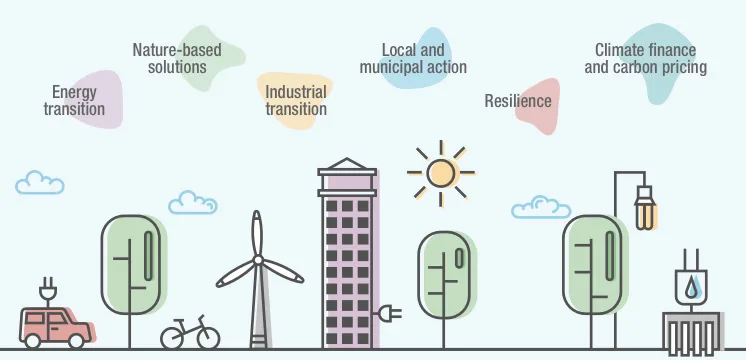
6. Climate Finance
Fighting climate change requires huge investments.
Governments alone cannot solve the problem. Private companies, banks, and investors also need to support green projects.
The summit focused on increasing finance for:
- Clean energy
- Sustainable transport
- Green industries
- Climate adaptation projects
Climate finance helps countries move toward a net-zero economy.
Additional Focus Areas
The summit also highlighted three important areas.
Mitigation Strategy
Countries were encouraged to improve their Nationally Determined Contributions (NDCs).
NDCs are national climate plans showing how each country will reduce emissions.
Stronger NDCs are necessary to meet Paris Agreement targets.
Youth Engagement
Young people are playing a major role in climate awareness.
Students and youth movements have pressured governments to act faster.
The summit emphasized giving youth a stronger voice in climate decision-making.
Social and Political Action
Climate policies should also improve people’s lives.
This includes:
- Reducing air pollution
- Creating green jobs
- Protecting workers
- Supporting vulnerable communities
Climate action should benefit society, not harm it.
Way Forward
The future depends on faster and stronger climate action.
New technologies are making clean energy cheaper than fossil fuels. Today, solar and onshore wind are among the cheapest sources of electricity in many countries.
The International Solar Alliance is an important step toward promoting solar energy worldwide.
Another important solution is carbon pricing.
Carbon pricing makes polluters pay for emissions. This encourages industries to reduce pollution and adopt cleaner technology.
The world can also learn from Costa Rica, which is a leading example in climate action.
Important achievements of Costa Rica:
| Achievement | Details |
|---|---|
| Renewable Energy | Over 98% clean energy |
| Forest Cover | More than 53% |
| Renewable Power Record | 300 days in 2017 |
This shows that strong environmental policies can create real change.
ActNow Campaign
ActNow is a global campaign launched by the United Nations to encourage individual climate action.
The campaign mainly uses online platforms and social media to educate people.
It encourages simple actions like:
- Saving electricity
- Reducing waste
- Using public transport
- Eating sustainably
- Recycling
The campaign also uses Artificial Intelligence (AI) to encourage positive behavior change.
Its message is clear: small actions by millions of people can create big impact.
Fridays For Future
Fridays for Future began in Sweden in 2018 by climate activist Greta Thunberg.
She started protesting outside the Swedish parliament to demand stronger climate action.
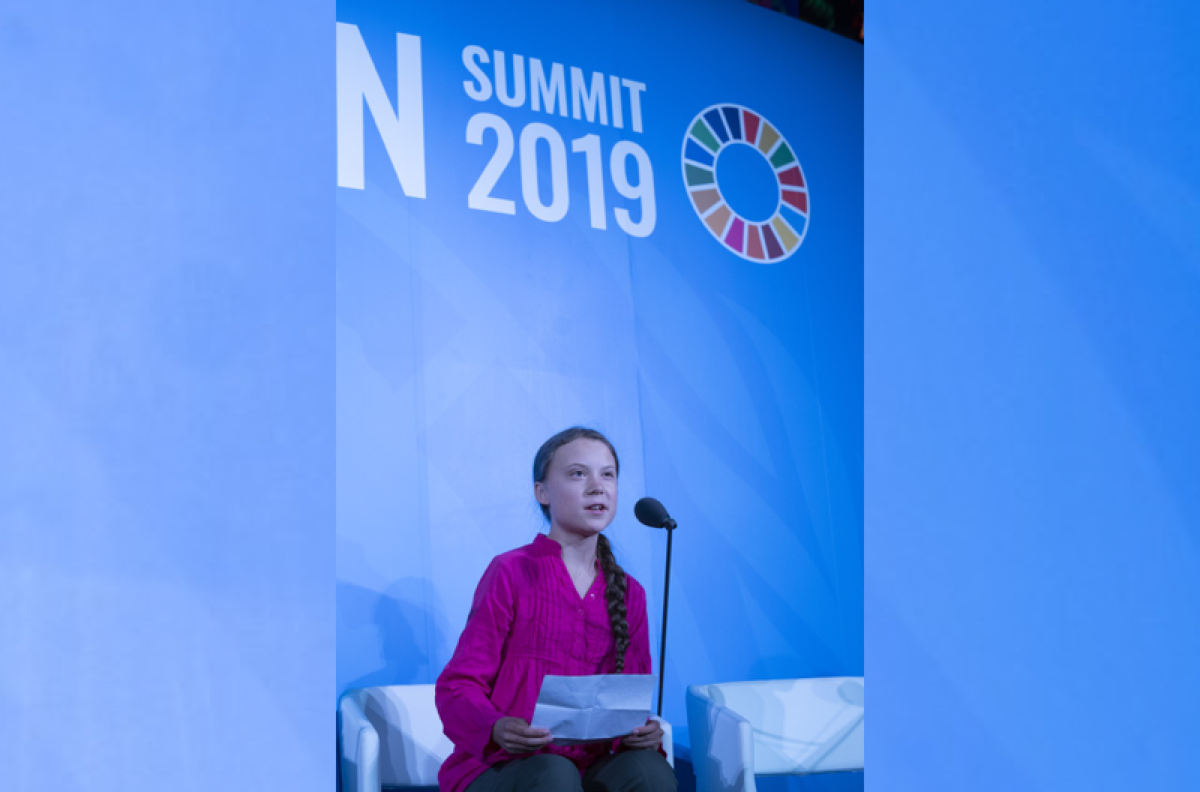
Soon, millions of students and adults joined worldwide.
Popular hashtags included:
- #FridaysForFuture
- #ClimateStrike
The movement demands:
- Less fossil fuel use
- Climate justice
- Faster government action
It has become one of the largest environmental movements in history.
Importance of COP 25
The COP25, also known as the Santiago Climate Change Conference, was expected to continue the momentum created by the UN Climate Action Summit 2019.
COP 25 focused on:
- Sharing climate solutions
- Improving adaptation strategies
- Accelerating decarbonization
- Building resilient economies
The world must act quickly because climate change is no longer a future threat it is already affecting lives today. Strong policies, clean energy, better technology, and public participation are essential to build a safer and healthier planet for future generations.
FAQs
1. What is the UN Climate Action Summit 2019?
The UN Climate Action Summit 2019 was a global meeting organized by the United Nations in New York City to encourage countries to take stronger action against climate change.
2. Why was the UN Climate Action Summit important?
The summit was important because it pushed countries to reduce greenhouse gas emissions and make stronger climate plans to limit global warming.
3. What is the main goal of the Paris Agreement?
The Paris Agreement aims to keep global temperature rise below 2°C and try to limit it to 1.5°C above pre-industrial levels.
4. What are greenhouse gases?
Greenhouse gases are gases like carbon dioxide and methane that trap heat in Earth’s atmosphere and cause global warming.
5. What is the Three Percent Club?
The Three Percent Club is a global initiative launched during the summit to improve energy efficiency by 3% every year.
6. How does climate change affect human life?
Climate change causes heatwaves, floods, droughts, rising sea levels, food shortages, and health problems due to pollution.
7. What is ActNow?
ActNow is a campaign by the United Nations that encourages people to take simple daily actions to reduce climate change.
8. Who started Fridays for Future?
Greta Thunberg started Fridays for Future in Sweden in 2018 to demand stronger climate action.