
Important Role of Members of Parliament in Building a Strong Nation

Did you know that India has 788 Members of Parliament representing more than 1.4 billion people? That means one MP speaks for around 18 lakh citizens. That’s a huge responsibility.
Thank you for reading this post, don't forget to subscribe!If you’re preparing for competitive exams or trying to understand how Indian democracy works, you may have felt confused about the role of Members of Parliament. Many books make it too simple, while others use difficult legal language that’s hard to remember. This makes last-minute revision stressful.
What you really need is something balanced. Content that is easy to understand, yet strong enough for exams like UPSC, SSC, or State PSC. That’s exactly what this guide aims to give you.
After carefully studying the Indian Constitution, how Parliament functions, and common exam questions, this guide explains the role of Members of Parliament in plain and clear English. No heavy legal words. No boring explanations. Just straight, exam-ready information.
By the end of this guide, you’ll clearly understand what Members of Parliament do, how they are elected, what powers they have, and why they are so important to Indian democracy. You won’t need to make extra notes. This will work as your final revision material before the exam.
What is the Role of Members of Parliament?
The role of Members of Parliament is to represent the people of India in the country’s highest law-making body, the Parliament of India. MPs are elected to speak on behalf of citizens, raise their problems, and take part in important national decisions.
Members of Parliament help make laws, approve government spending, and check the work of the government. They discuss national issues, ask questions to ministers, and make sure government policies are working properly for the public.
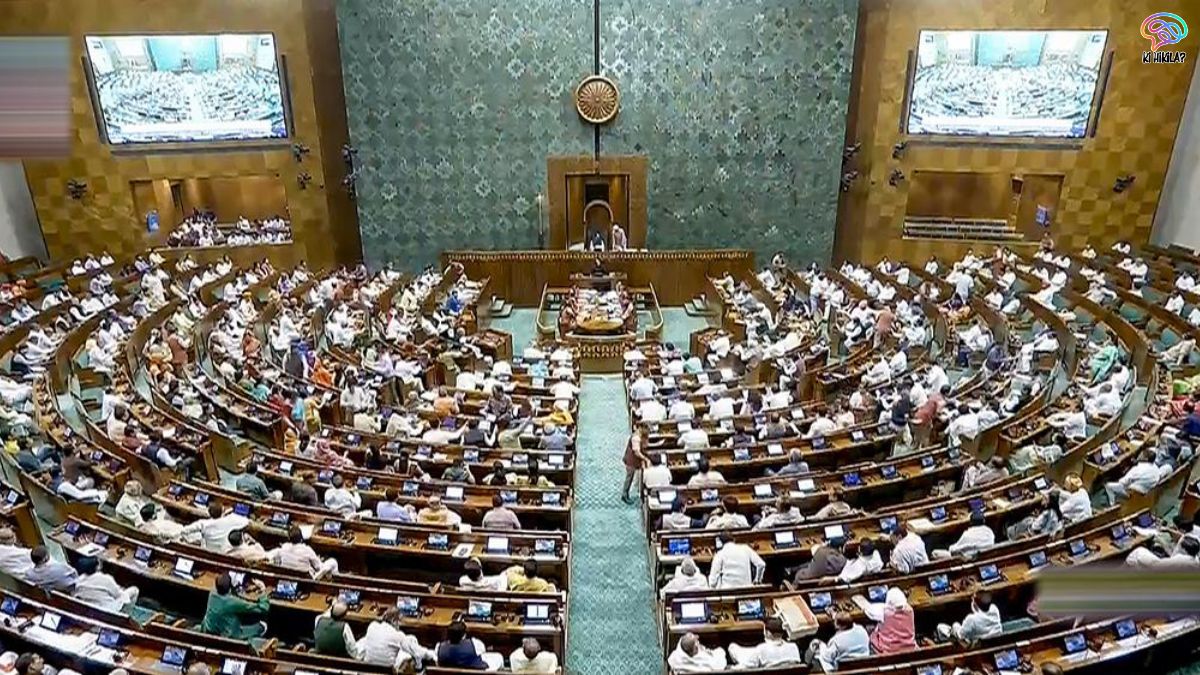
There are two Houses of Parliament where MPs work. One is the Lok Sabha, also called the House of the People. The other is the Rajya Sabha, known as the Council of States.
Together, these 788 Members of Parliament form the legislative branch of the Indian government. Their main duty is to protect democracy by ensuring that laws are fair, money is spent responsibly, and the government remains answerable to the people.
This is why understanding the role of Members of Parliament is very important for both citizens and competitive exam aspirants.
What is the Indian Parliament?
The Indian Parliament is the supreme legislative body responsible for creating, amending, and overseeing laws that govern the nation. It operates under a parliamentary democracy, where citizens elect representatives to make decisions on their behalf. The Parliament consists of two houses:
- Lok Sabha (House of the People): The lower house, where Members of Parliament are directly elected by the public.
- Rajya Sabha (Council of States): The upper house, representing states and union territories, with Members of Parliament elected indirectly or nominated.
These houses work together to ensure laws reflect the needs of India’s diverse population, from urban centres to rural villages.
The Two Houses of Parliament
India’s Parliament has two houses where Members of Parliament work.
The Lok Sabha has 545 members who are elected directly by the people. Each Lok Sabha MP represents a specific area called a constituency. Every Indian citizen above 18 years of age has the right to vote and choose their Lok Sabha MP. This house reflects the direct will of the people.
The Rajya Sabha has 243 members who represent India’s states and union territories. Most Rajya Sabha MPs are elected by state legislative assemblies, not directly by citizens. This house plays a key role in protecting the interests of states while national laws are made.
Together, both houses ensure balance between the voice of the people and the voice of the states in national decision-making.
Constitutional Foundation of MPs
The Constitution of India gives legal authority to Members of Parliament. Parliament is created under Articles 79 to 122 of the Constitution.
Article 79 clearly states that Parliament consists of the President of India and the two houses, the Lok Sabha and the Rajya Sabha. All powers, duties, privileges, and responsibilities of MPs come directly from these constitutional provisions.
This means MPs do not work on personal power. Their authority comes from the Constitution itself, which makes their role both strong and accountable.
Why the Role of Members of Parliament Matters in 2026
India’s democracy depends on how well MPs perform their duties. If MPs are inactive or careless, laws will suffer, public money may be misused, and citizens’ problems may never reach the national level.
In 2026, the role of Members of Parliament has become even more demanding. Technology has changed how citizens connect with MPs. Through social media and digital platforms, people can now directly question their representatives. This has increased transparency and public pressure.
MPs today also handle complex issues like artificial intelligence laws, climate change, cybersecurity, and digital privacy. These topics were not imagined when the Constitution was written. MPs must learn fast and take informed decisions that affect millions of lives.
The quality of MPs directly affects your daily life. They decide how tax money is spent, what laws protect your rights, and which government schemes receive funding. Understanding the role of Members of Parliament helps you become a more aware citizen and a stronger participant in India’s democracy.
Understanding How MPs Get Elected and Qualified
Not everyone can become a Member of Parliament. The role of Members of Parliament is very important, so the Constitution of India sets clear rules to make sure only eligible and responsible people enter Parliament.
These rules help ensure that MPs have the maturity, legal capacity, and public trust needed to represent citizens at the national level.
Qualifications for Becoming an MP
To contest a Lok Sabha election, a person must be at least 25 years old. For the Rajya Sabha, the minimum age is 30 years. This age limit exists because MPs are expected to handle serious national matters.
An MP must also be an Indian citizen and a registered voter in India. Without citizenship and voting rights, a person cannot represent the people.
There are also disqualifications. A person cannot become an MP if:
- They hold an office of profit under the government (with some legal exceptions)
- They are declared mentally unsound by a court
- They are an undischarged bankrupt
- They have been convicted of certain serious crimes
These conditions protect Parliament from misuse of power and help maintain public trust. Understanding these rules is essential for exams because questions on the eligibility and disqualification of MPs are asked frequently.
The Election Process of Members of Parliament
The role of Members of Parliament begins with how they are elected, and the process is different for the two houses of Parliament.
Election of Lok Sabha MPs
Members of the Lok Sabha are chosen through direct elections. India is divided into 543 constituencies, and voters in each constituency elect one MP.
The election follows the first-past-the-post system. This means the candidate who gets the highest number of votes wins, even if they do not get more than 50 percent of the votes. Earlier, two Anglo-Indian members could be nominated, but this provision ended in 2020.
This system ensures direct representation of people in the Lok Sabha.
Election of Rajya Sabha MPs
Members of the Rajya Sabha are elected indirectly. Citizens do not vote for them directly.
Instead, elected members of state legislative assemblies vote to choose Rajya Sabha MPs. The election uses proportional representation with a single transferable vote. Simply put, this system ensures that political parties get seats based on their strength in state assemblies, allowing fair representation.
This method protects the interests of states in national law-making.
Term Duration of MPs
Term of Lok Sabha MPs
Lok Sabha MPs serve a five-year term, unless the house is dissolved earlier. All members are elected together during general elections.
If the Lok Sabha is dissolved before completing five years, fresh elections are held.
Term of Rajya Sabha MPs
Rajya Sabha MPs serve a six-year term. However, one-third of the members retire every two years.
Because of this rotating system, the Rajya Sabha never dissolves completely. It is called a permanent house, which provides stability and continuity in Parliament.
Understanding the election process and term duration is essential for exams, as these topics are frequently asked in Polity and General Studies papers.
Legislative Powers: How MPs Make Laws
Making laws is the main role of Members of Parliament. Almost every law in India must be approved by Parliament before it can be applied to citizens. Without MPs debating and voting on laws, the legal system cannot function properly.
This law-making power shapes how the country is governed, how rights are protected, and how responsibilities are defined.
The Law-Making Process in Parliament
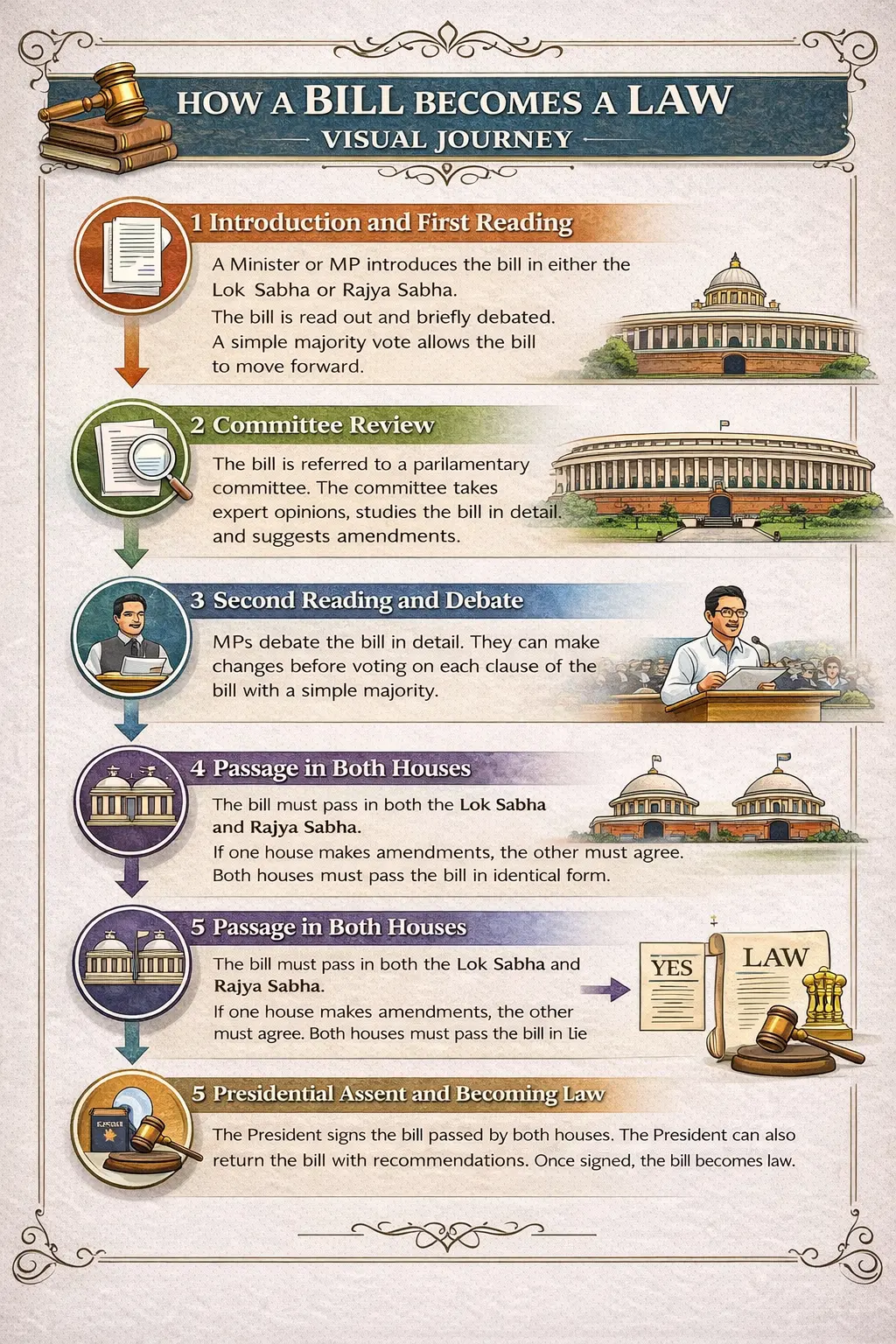
Any MP can introduce a bill, which is a proposed law, in Parliament. Bills are discussed and decided inside the Parliament of India.
There are different types of bills, such as:
- Ordinary Bills
- Money Bills
- Financial Bills
- Constitutional Amendment Bills
Each type follows a specific procedure, which is important for exams.
A normal bill becomes a law through three readings:
- First Reading – The bill is introduced. No discussion happens at this stage.
- Second Reading – Detailed discussion takes place. MPs debate each clause, suggest changes, and vote on amendments.
- Third Reading – Final discussion and voting. If the bill is passed, it moves forward.
After both houses approve a bill, it is sent to the President of India for assent. Only then does it become a law.
Different Types of Bills and the Role of MPs
Ordinary Bills
Ordinary bills can be introduced in either house of Parliament. After one house passes the bill, it goes to the other house for approval.
If the two houses disagree, a joint sitting is called. MPs from both houses sit together and vote, and the majority decision is final.
Money Bills
Money bills deal with taxes, government spending, and borrowing. Only MPs of the Lok Sabha can introduce money bills.
The Rajya Sabha can only suggest changes and must return the bill within 14 days. The Lok Sabha can accept or reject those suggestions. This gives Lok Sabha MPs stronger control over financial matters.
This is a very important topic for exams.
Constitutional Amendment Bills
These bills change the Constitution of India, so the process is stricter.
Such a bill must be passed by:
- A two-thirds majority of MPs present and voting
- A majority of the total membership of the house
Some amendments also need approval from at least half of the state legislatures.
This ensures that constitutional changes are not made casually.
Private Member Bills vs Government Bills
Ministers introduce most laws. These are called government bills and usually pass because the ruling party supports them.
However, MPs who are not ministers can introduce private member’s bills. These bills rarely become law, but they remain important nonetheless.
Private member bills allow MPs to raise issues that the government may be ignoring. They prove that every MP has the right to participate in law-making, regardless of party or position.
This highlights the democratic nature of the role of Members of Parliament.
Financial Control: MPs as Guardians of Public Money
One of the most important parts of the role of Members of Parliament is controlling how the government spends money. Not a single rupee can be spent by the government without Parliament’s approval.
This power protects taxpayer money and prevents misuse of public funds. It also forces the government to remain answerable to elected representatives.
Budget Approval Process
Every year, the Finance Minister of India presents the Union Budget in the Lok Sabha.
The budget explains:
- How the government will collect money (taxes, loans, etc.)
- How the government will spend money (schemes, salaries, development)
MPs carefully examine the budget through a process called budget scrutiny.
The discussion happens in stages:
- General discussion – MPs debate the overall budget policy
- Demand for grants – Each ministry asks for money
- Voting – MPs can reduce or reject demands, but cannot increase them
This gives MPs strong control over government spending.
The Power of the Purse
The Constitution gives Parliament full control over money matters.
According to Article 265 of the Constitution of India, no tax can be imposed or collected without Parliament’s approval.
Also, money cannot be withdrawn from the Consolidated Fund of India unless Parliament allows it. This approval is given through the Appropriation Bill, passed after budget discussions.
This is why MPs are often called the guardians of public money.
Examining Government Spending
MPs don’t just approve spending. They also check how money was actually used.
The Comptroller and Auditor General of India audits government accounts and submits reports to Parliament.
These reports are examined by the Public Accounts Committee (PAC). By tradition, this committee is chaired by an opposition MP, which strengthens transparency.
The PAC investigates cases of:
- Wasted money
- Misuse of funds
- Spending without approval
Many major scams have been exposed through PAC reports. This shows the real power of MPs beyond speeches.
Control Over the Executive: Keeping the Government Accountable
India follows a parliamentary system, where the government is formed from Parliament and remains answerable to it.
MPs use several tools to control the executive.
Question Hour: Direct Accountability
The first hour of every parliamentary sitting is Question Hour.
During this time, MPs ask questions to ministers about:
- Government policies
- Decisions taken
- Failures or delays
Ministers must answer.
There are three types of questions:
- Starred questions – Oral answers with follow-up questions
- Unstarred questions – Written answers
- Short notice questions – For urgent matters
Question Hour is one of the strongest tools in the role of Members of Parliament. A sharp question can expose serious problems and force action.
Zero Hour and Special Mentions
After Question Hour comes Zero Hour (it actually starts around noon).
During Zero Hour, MPs can raise urgent issues without prior notice, such as:
- Natural disasters
- Public grievances
- Sudden national problems
Ministers may not reply immediately, but the issue becomes part of official records and gets public attention.
Motions and Resolutions
MPs can move different motions to control government actions.
- No-confidence motion – If passed, the government must resign
- Adjournment motion – Stops normal work to discuss urgent issues
- Censure motion – Shows Parliament’s disapproval of government policies
MPs can also pass resolutions, which express Parliament’s opinion. Though not legally binding, they carry strong political and moral pressure.
This financial and executive control shows why the role of Members of Parliament is central to Indian democracy. MPs don’t just make laws. They watch, question, approve, and correct the government.
Parliamentary Committees: Where Real Oversight Happens
A large part of the role of Members of Parliament happens outside the main Parliament hall. Much of the serious work is done in parliamentary committees, where MPs study issues calmly and in detail.
These committees work away from cameras and shouting debates. That’s why they are often more effective.
Types of Parliamentary Committees
Standing Committees
Standing Committees are permanent committees. They continue even when a new Parliament is formed.
Important standing committees include:
- Public Accounts Committee (PAC)
- Estimates Committee
- Committee on Public Undertakings
These committees closely examine government spending and financial performance. They play a key role in protecting public money.
Departmental Standing Committees
These committees are linked to specific government ministries.
For example:
- Home Affairs Committee
- Education Committee
- Agriculture Committee
MPs in these committees study one ministry in depth. Over time, they become subject experts, which improves the quality of laws and policies.
Select and Joint Committees
Select Committees and Joint Committees are temporary. They are created to examine:
- A specific bill
- A major national issue
These committees:
- Call experts
- Question officials
- Study the evidence carefully
Their reports often shape the final version of laws passed by Parliament.
How Parliamentary Committees Work
Committees usually work cooperatively. MPs from ruling and opposition parties sit together and try to reach common ground.
Committees have strong powers. They can:
- Summon officials and experts
- Ask for government documents
- Visit project sites
For example, if a committee is examining a dam project, MPs may visit the dam. If they are studying education reform, they may call teachers, researchers, and ministry officials.
Committee reports are respected because they are based on a detailed study and cross-party agreement. This makes committees a powerful part of the role of Members of Parliament.
Representing Constituents: MPs as the People’s Voice
MPs don’t only work in Parliament. They also represent real people with real problems.
This representational duty connects citizens directly to national power.
Constituency Work of MPs
Each Lok Sabha MP represents around 15–20 lakh people. That’s a huge responsibility.
People expect their MP to:
- Raise local problems
- Bring development projects
- Help with government schemes
MPs usually maintain constituency offices where citizens can submit complaints and requests.
Common issues include:
- Delay in welfare schemes
- Infrastructure problems
- Administrative harassment
Effective MPs visit their constituencies often. This ground-level experience helps them speak more strongly in Parliament.
Local Area Development Scheme (MPLADS)
Under the Members of Parliament Local Area Development Scheme, each MP gets ₹5 crore every year.
This fund is used for:
- Roads and bridges
- Schools and classrooms
- Drinking water projects
- Health facilities
MPs do not directly spend the money. They recommend projects, and the district administration carries them out. Still, MPLADS gives MPs direct influence over local development.
Raising Constituency Issues in Parliament
MPs can raise local problems at the national level.
They do this through:
- Debates
- Question Hour
- Zero Hour
For example:
- If a drought affects farmers, the MP can question the Agriculture Minister
- If a factory shuts down, the MP can raise unemployment issues with the Labour Ministry
This connection between local problems and national policy is a key part of the role of Members of Parliament. It ensures that laws and schemes reflect real ground realities.
This shows that MPs are not just lawmakers. They are watchdogs, problem-solvers, and the voice of the people.
Special Powers and Privileges of MPs
To perform the role of Members of Parliament honestly and fearlessly, MPs are given certain special powers and privileges. These are not personal benefits. They exist to protect democracy and ensure that MPs can speak and act independently.
Freedom of Speech in Parliament
Article 105 of the Constitution of India gives MPs full freedom of speech inside Parliament.
This means:
- MPs cannot be taken to court for anything they say during parliamentary debates
- They can speak openly without fear of defamation cases or criminal action
This protection allows MPs to raise sensitive issues and expose wrongdoing.
However, this freedom:
- Applies only inside Parliament
- Does not protect statements made outside
- Must follow parliamentary rules
The Speaker of Lok Sabha or Chairman of Rajya Sabha can remove unparliamentary words from official records.
Parliamentary Privileges of MPs
MPs enjoy some additional privileges so that Parliament can function smoothly.
- MPs cannot be arrested in civil cases
- 40 days before a session
- During the session
- 40 days after the session
This prevents the misuse of arrest to block MPs from attending Parliament.
- MPs are exempt from jury duty
- MPs are not required to appear as witnesses when Parliament is in session
These privileges ensure that legislative work is not interrupted.
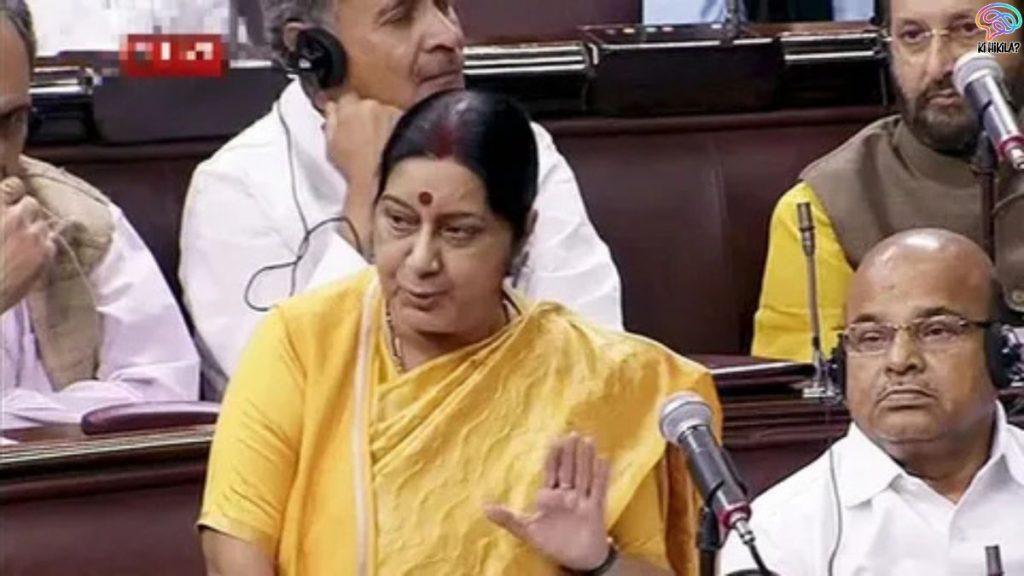
Right to Access Government Information
MPs have the right to demand information from government departments.
- Ministers must answer questions during Question Hour
- Parliamentary committees can:
- Call officials and experts
- Demand documents
- Summon any person for evidence
Refusing to appear before a parliamentary committee is considered a breach of privilege, and Parliament can take action.
This power strengthens the oversight role of Members of Parliament.
Disqualification and Resignation of MPs
MPs are powerful, but they are also accountable. The Constitution clearly explains when an MP can lose their seat.
Grounds for Disqualification
According to Article 102 (for MPs) of the Constitution of India, an MP can be disqualified if they:
- Hold an office of profit under the government
- Are declared mentally unsound by a court
- Are an undischarged bankrupt
- Lose Indian citizenship or accept foreign citizenship
- Are disqualified under any law made by Parliament
These rules protect Parliament from conflict of interest and misuse of power.
Anti-Defection Law
The Anti-Defection Law is given in the Tenth Schedule of the Constitution.
An MP can be disqualified if they:
- Voluntarily give up party membership
- Vote against their party’s direction on important matters without permission
This law was created to stop MPs from changing parties for personal gain.
However, critics say it:
- Weakens MPs’ freedom
- Forces them to follow party orders even against their conscience
Disqualification decisions are made by the Speaker of Lok Sabha or the Chairman of Rajya Sabha, and can only be challenged in court.
Resignation Process of MPs
MPs can resign voluntarily.
- Lok Sabha MP → writes to the Speaker
- Rajya Sabha MP → writes to the Chairman
The resignation becomes effective once it is accepted.
If the presiding officer feels the resignation is:
- Forced
- Given under pressure
- Influenced by bribery
They can investigate before accepting it.
These powers and restrictions together ensure balance. They allow MPs to work freely, but also hold them accountable. This balance is at the heart of the role of Members of Parliament in a healthy democracy.
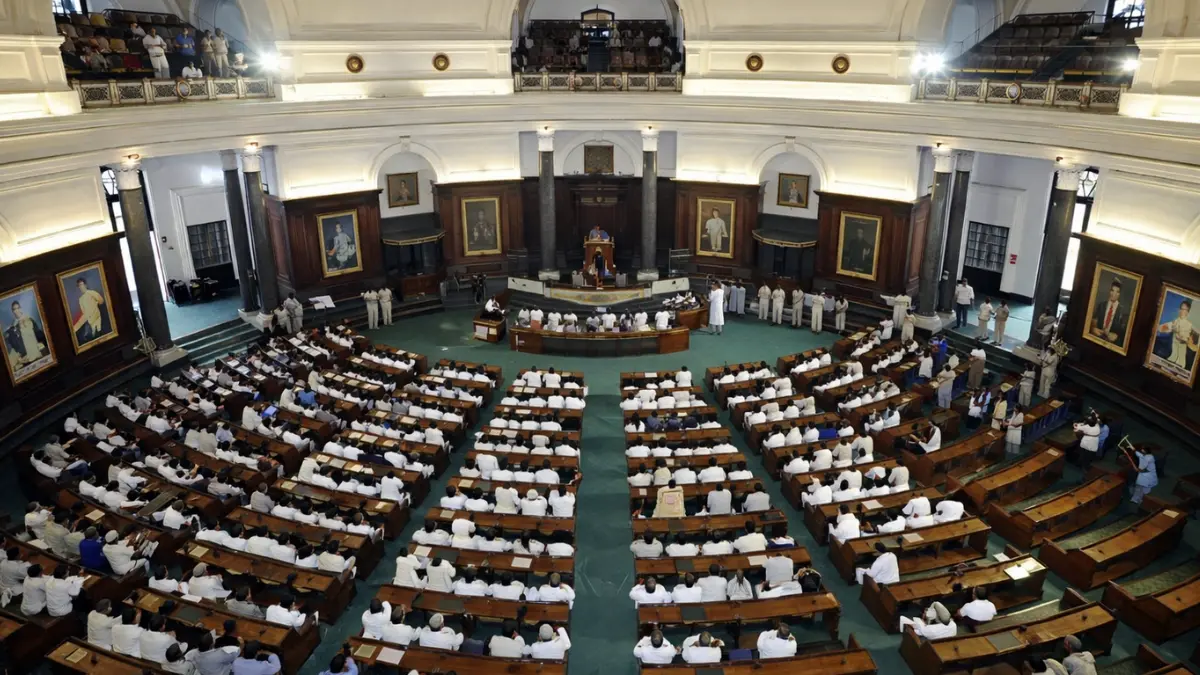
Differences Between Lok Sabha and Rajya Sabha MPs
Although both houses are part of Parliament, the role of Members of Parliament in the Lok Sabha and Rajya Sabha is not the same. Understanding these differences is extremely important for exams.
Composition and Election
Lok Sabha MPs are elected through direct elections. This means you vote for them directly. Because of this, Lok Sabha MPs are more directly answerable to the people.
Rajya Sabha MPs are elected indirectly by state legislative assemblies. Their role is to represent states and Union Territories at the national level. This helps protect India’s federal structure.
The President of India also nominates 12 Rajya Sabha members. These members are chosen for their special knowledge in:
- Literature
- Science
- Art
- Social service
They add expert knowledge to parliamentary discussions.
Powers and Functions
Both houses have equal power when it comes to ordinary bills.
However, there are important differences:
- Money Bills
- Only Lok Sabha MPs can introduce and pass them
- Rajya Sabha can only suggest changes
- Lok Sabha can accept or reject those suggestions
- Control over Government
- Only the Lok Sabha can pass a no-confidence motion
- The Council of Ministers is responsible only to the Lok Sabha
- This makes Lok Sabha MPs more powerful in controlling the executive
Rajya Sabha also has special powers:
- It must approve the creation of new All-India Services
- It can allow Parliament to make laws on state subjects in the national interest
These powers protect federalism and state interests.
Term and Dissolution
- Lok Sabha
- Term: 5 years
- Can be dissolved early
- All MPs must face elections again
- Rajya Sabha
- Term: 6 years
- One-third retire every two years
- The house never dissolves
This permanent nature gives the Rajya Sabha stability and experience, which helps in long-term policymaking.
50 Most Asked Questions on MPs in Competitive Exams (PDF Download Available)
Common Misconceptions About MPs (Debunked)
Myth 1: MPs only attend Parliament and do nothing else
Reality: MPs work in committees, meet citizens, study policies, and raise issues even when Parliament is not in session.
Myth 2: MPs only vote; the government makes all laws
Reality: MPs debate bills, suggest amendments, and influence laws through committees. Private member bills also raise important national issues.
Myth 3: MPs’ main job is development work
Reality: Development is important, but the main constitutional role of Members of Parliament is law-making and government oversight.
Myth 4: Opposition MPs are useless
Reality: Opposition MPs question the government, expose failures, and offer alternatives. Democracy cannot work without a strong opposition.
Real-World Examples of MPs Making a Difference
Theory is useful, but real examples help you remember better in exams.
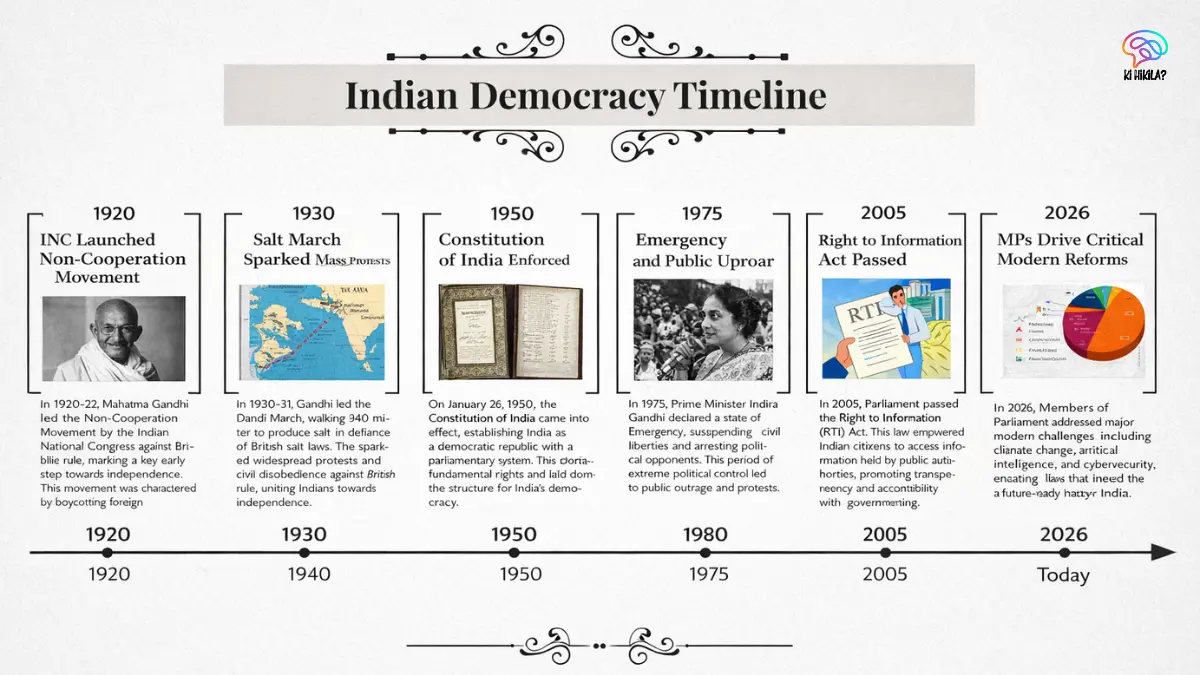
The RTI Act: A Landmark Achievement
The Right to Information Act, 2005, gave citizens the power to question government decisions.
MPs from different parties supported the law after public pressure. Parliamentary debates improved the bill, making it stronger. Today, RTI helps fight corruption across India.
Committee Exposures and Accountability
Parliamentary committees like the Public Accounts Committee exposed major issues such as:
- 2G spectrum allocation irregularities
- Commonwealth Games financial mismanagement
Both ruling and opposition MPs worked together, proving the strength of committee oversight.
Constituency-Level Impact
Some MPs have brought major change to their constituencies by:
- Using MPLADS funds effectively
- Bringing railway lines, colleges, and hospitals
- Raising local issues at the national level
While not all MPs perform equally, the best examples show how powerful and meaningful this role can be.
Final takeaway for exams
The role of Members of Parliament is not limited to speeches or votes. MPs:
- Make laws
- Control government spending
- Question the executive
- Represent citizens
- Protect democracy
Tools and Resources MPs Use to Perform Their Duties
The role of Members of Parliament is complex and demanding. To perform their duties properly, MPs use many tools and support systems. These tools help them understand issues, prepare for debates, and represent citizens better.
Parliamentary Research Services
Parliament has a research and information service that supports MPs.
This service provides:
- Background notes on bills
- Policy analysis
- Data and reports on national issues
Before speaking on a bill, MPs can ask for research briefs that explain the topic in simple terms. This helps MPs make informed arguments and ask meaningful questions.
Digital Platforms and Online Access
Parliament uses digital tools extensively.
The official Parliament website provides:
- Bills and amendments
- Committee reports
- Parliamentary debates
- Questions asked by MPs
Proceedings of Parliament are also telecast live, allowing citizens to watch debates. This increases transparency and keeps MPs accountable to the public.
Personal Staff Support
Each MP is allowed to hire personal staff using government funds.
These staff members help MPs with:
- Managing letters and emails
- Research work
- Constituency-related issues
- Office coordination
Given the large workload, this support system is essential for MPs to function efficiently.
Interaction with Experts and Stakeholders
MPs often meet:
- Subject experts
- Civil society groups
- Industry representatives
- Activists and professionals
For example, before voting on a data privacy law, MPs may consult technology experts, legal scholars, and rights activists. This consultation helps MPs understand the real-world impacts of laws.
Common Challenges Faced by MPs
The role of Members of Parliament comes with serious challenges. Understanding these gives a realistic picture of parliamentary life.
Information Overload
Parliament discusses many bills and reports in every session. Reading and fully understanding all of them is difficult.
As a result:
- MPs often specialise in certain subjects
- They rely on party research teams and committees
This makes teamwork and specialisation important in Parliament.
Balancing Constituency and Parliament Work
MPs must divide their time between:
- Delhi, when Parliament is in session
- Their constituency, where citizens expect help
Managing this distance and time pressure is one of the toughest parts of being an MP.
Political and Party Pressure
Most MPs belong to political parties. Party discipline often requires them to vote according to party decisions.
The Anti-Defection Law strengthens this rule. While it ensures stable governments, it also limits MPs’ freedom to vote according to personal views.
Constant Public Scrutiny
Social media and 24×7 news coverage mean MPs are always under public watch.
Every speech, vote, or statement is:
- Shared
- Debated
- Criticized instantly
This pressure can be stressful, but it also strengthens democracy by making MPs more accountable.
Exam-focused takeaway
The role of Members of Parliament is not simple or easy. MPs must:
- Learn continuously
- Manage heavy workloads
- Balance politics and public service
- Work under constant scrutiny
Understanding these tools and challenges helps you write better answers and gain a realistic understanding of Indian democracy.
The Future of Parliamentary Representation in India
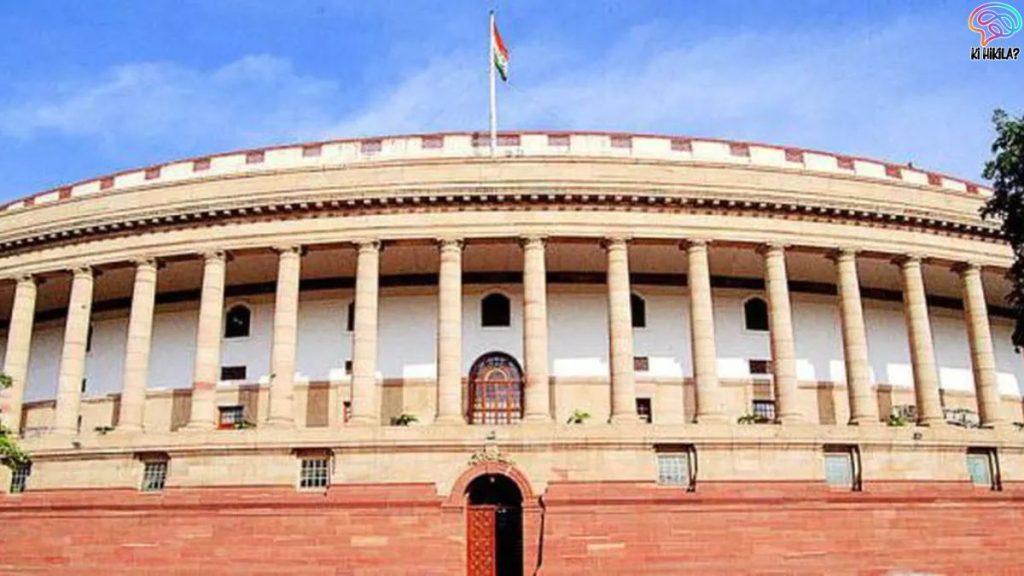
As India changes, the role of Members of Parliament is also evolving. New technologies, social expectations, and complex policy issues are shaping how MPs will work in the coming years.
Technology Integration in Parliament
The COVID-19 period showed that Parliament can use technology effectively. Virtual meetings and digital tools helped MPs continue their work during difficult times.
In the future:
- MPs may use digital platforms for consultations
- Committees may hold more online meetings
- Technology could improve research, coordination, and efficiency
If used carefully, technology can strengthen democracy without reducing transparency.
Rise of Younger MPs
India has one of the youngest populations in the world, and more young leaders are entering politics.
Younger MPs often bring:
- Fresh ideas
- Better understanding of technology
- Long-term thinking on issues like climate change and artificial intelligence
This shift can make Parliament more connected to future generations.
Higher Accountability from Citizens
Today’s citizens are more aware and vocal.
Because of:
- Social media
- 24×7 news
- Digital access to parliamentary data
MPs are under constant public scrutiny. Non-performing MPs face criticism quickly. In the future, MPs will need to be more transparent, responsive, and active.
Growing Specialisation Among MPs
Modern governance is complex.
Issues like:
- Cybersecurity
- Climate policy
- Data protection
- Artificial intelligence
require a deep understanding. In the future, MPs may increasingly specialise in specific policy areas, just like professionals do. This can improve the quality of debates and laws.
Your 30-Day Action Plan to Master the Role of Members of Parliament
You now have complete, exam-focused knowledge of the role of Members of Parliament. Here’s how to convert it into marks.
Week 1: Build Strong Foundations
- Read this guide twice
- Focus on:
- Legislative role
- Financial powers
- Control over the executive
- Memorize:
- Qualifications of MPs
- Key differences between Lok Sabha and Rajya Sabha
Week 2: Deep Understanding
- Study the law-making process
- Draw simple flowcharts for:
- Ordinary bills
- Money bills
- Constitutional amendment bills
- Memorise key Articles:
- Article 79 – Parliament composition
- Article 102 – Disqualification of MPs
- Article 105 – Powers and privileges
- Article 265 – No tax without Parliament’s approval
Week 3: Answer Writing Practice
- Practice questions like:
- “What are the financial powers of MPs?”
- “How do MPs control the executive?”
- Write timed answers
- Compare your answers with the relevant sections of this guide
This step is crucial for Mains exams.
Week 4: Revision and Real-World Connection
- Revise all topics quickly
- Follow current Parliament news:
- Bills being discussed
- Major debates
- Statements by MPs
Link theory with real events. This makes your answers current, relevant, and high-scoring.
Final takeaway for aspirants
The role of Members of Parliament is not just a Polity topic.
It’s the backbone of Indian democracy.
If you understand this topic well, you can:
- Answer static questions confidently
- Link current affairs easily
- Write balanced, mature answers
Key Takeaways
Members of Parliament form the backbone of Indian democracy. Their work keeps the system running smoothly. They make laws, control government spending, keep the executive accountable, and represent the people of India. Together, the 788 MPs, with 545 in the Lok Sabha and 243 in the Rajya Sabha, shape national policies and influence the future of the country.
Understanding the Role of Members of Parliament helps you become both an informed citizen and a successful exam candidate. You now know how MPs are elected, what powers they have, how they function inside Parliament, and what limitations they face. You also understand the difference between the two houses, the importance of parliamentary committees, and the real challenges MPs deal with in daily political life.
For exam preparation, focus clearly on the constitutional basis of MPs’ powers, the law-making process, financial control of the government, and the differences between Lok Sabha and Rajya Sabha. Questions related to Members of Parliament appear regularly in UPSC, State PSC, SSC, and other competitive exams under Indian Polity.
Democracy works well only when elected representatives perform their duties responsibly. Now, when you see news related to Parliament, debates, or MPs, you will understand what is actually happening and why it matters to you as a citizen.
Keep these notes ready for your final revision. With a clear understanding of the Role of Members of Parliament, you are fully prepared to answer any exam question related to this topic with confidence.
To strengthen your understanding and build complete command over Indian Polity, you should read these related articles next. Each one connects directly with the Role of Members of Parliament and helps in exam preparation.
Also Read:
FAQs About Members of Parliament
1. Who are Members of Parliament in India?
Members of Parliament (MPs) are elected or nominated representatives who serve in India’s Parliament, which includes the Lok Sabha (House of the People) and Rajya Sabha (Council of States). They represent the public’s interests, make laws, and ensure the government works for the people.
2. What is the difference between Lok Sabha and Rajya Sabha MPs?
Lok Sabha Members of Parliament are directly elected by citizens through voting in constituencies, while Rajya Sabha MPs are mostly elected by state legislative assemblies or nominated by the President. Lok Sabha has up to 543 MPs, and Rajya Sabha has up to 245.
3. How are Members of Parliament elected?
Lok Sabha MPs are chosen through direct elections using the “First Past the Post” system, where the candidate with the most votes in a constituency wins. Rajya Sabha Members of Parliament are elected indirectly by state assembly members using a proportional representation system. Elections are managed by the Election Commission of India.
4. What qualifications are needed to become a Member of Parliament?
To become a Member of Parliament, a person must be an Indian citizen, at least 25 years old for Lok Sabha or 30 for Rajya Sabha, and a registered voter (for Lok Sabha) or state resident (for Rajya Sabha). They cannot hold profit-making government jobs or have disqualifying criminal records.
5. What do Members of Parliament do?
Members of Parliament make laws, approve the national budget, question the government to ensure accountability, and raise issues from their constituencies, like schools or roads. They also join committees to study specific topics, such as health or defense.
6. How do North Indian MPs differ from East Indian MPs in their focus?
North Indian Members of Parliament, from states like Uttar Pradesh, often focus on agriculture and rural development due to the region’s farming economy. East Indian MPs, from places like West Bengal, prioritize disaster management and cultural preservation, reflecting the region’s coastal and literary heritage.
7. How long do Members of Parliament serve?
Lok Sabha MPs serve for five years unless the house is dissolved early. Rajya Sabha Members of Parliament serve six-year terms, with one-third retiring every two years, ensuring the house is never fully dissolved.
8. Can anyone vote for Members of Parliament?
For Lok Sabha, any Indian citizen above 18 can vote in general elections. For Rajya Sabha, only elected state assembly members vote, except for the 12 MPs nominated by the President.
9. Why are Members of Parliament important?
Members of Parliament connect people to the government by raising local issues, shaping laws, and ensuring the government works fairly. They represent diverse regions, from North India’s rural areas to East India’s coastal cities, making sure all voices are heard.
10. How can I learn more about Members of Parliament?
You can visit official websites like sansad.in for details on MPs, their constituencies, and parliamentary activities. Watching Parliament sessions on TV or reading news about laws and debates is also a great way to stay informed.