India’s Nuclear Power Prospects: Growth, Challenges and Future Opportunities

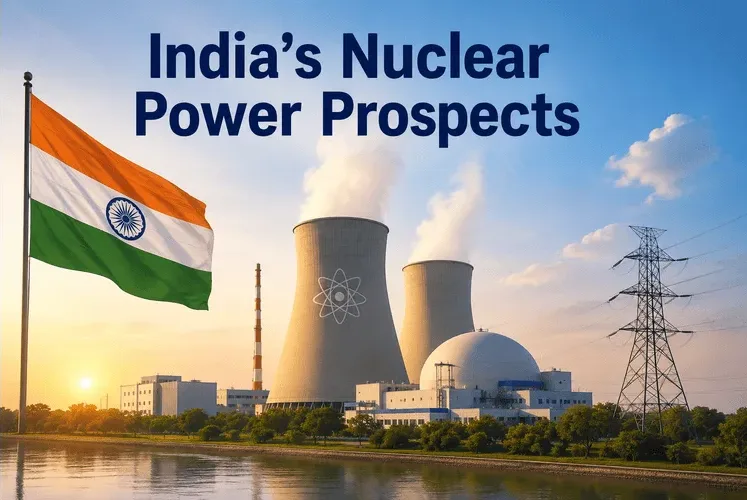
India’s Nuclear Power Prospects have become an important topic as the country looks for reliable, clean, and long-term energy sources to support its growing economy. India is one of the fastest-growing nations in the world, and increasing energy demand requires a strong and diversified power sector. Nuclear energy has emerged as a key component of India’s energy strategy because it can generate large amounts of electricity while producing very low carbon emissions.
India has developed its nuclear program through decades of scientific research, technological innovation, and policy planning. From the historic nuclear tests at Pokhran to the development of indigenous reactors and nuclear submarines, the country has made remarkable progress in this field.

Introduction to India’s Nuclear Journey
India’s nuclear program gained international attention in 1998 when it conducted five nuclear tests under Operation Shakti-98. Another significant milestone came in 2008 with the India-US Civil Nuclear Agreement, often known as the 123 Agreement, which opened doors for international nuclear cooperation.
In 2018, India announced that its nuclear triad had become operational after the successful deterrence patrol of the indigenous nuclear submarine INS Arihant. This achievement strengthened India’s strategic defense capabilities.
At present, nuclear energy contributes a small share of India’s total electricity generation. However, the government plans to significantly expand nuclear power capacity in the coming decades to meet rising energy needs while reducing dependence on fossil fuels.
What is Nuclear Energy?
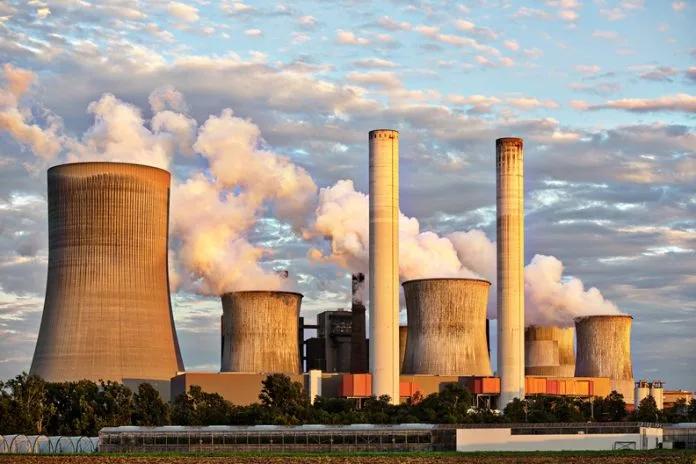
Nuclear energy is produced through a process called nuclear fission. In this process, atoms of uranium or other nuclear fuels are split, releasing a large amount of heat energy. This heat is used to produce steam, which drives turbines and generates electricity.
Advantages of Nuclear Energy
| Benefit | Description |
|---|---|
| Low Carbon Emissions | Produces electricity without releasing large amounts of greenhouse gases |
| High Energy Output | Small quantities of fuel generate huge amounts of energy |
| Reliable Power Supply | Provides continuous electricity unlike solar or wind energy |
| Energy Security | Reduces dependence on imported fossil fuels |
| Long-Term Solution | Can support industrial and economic growth for decades |
India’s Three-Stage Nuclear Power Programme
India’s nuclear power program was designed by Homi Jehangir Bhabha during the 1950s. The strategy was developed to make the best use of India’s limited uranium resources and vast thorium reserves.
The Atomic Energy Act of 1962 provided the legal framework for developing nuclear energy in the country.
India possesses approximately:
| Resource | Estimated Reserve |
|---|---|
| Uranium | About 70,000 tonnes |
| Thorium | About 360,000 tonnes |
Because India has one of the world’s largest thorium reserves, its nuclear program focuses heavily on utilizing this resource in the future.
Stage One: Pressurized Heavy Water Reactors (PHWRs)
The first stage uses natural uranium as fuel and heavy water as both moderator and coolant.
Key features include:
- Indigenous reactor technology
- High level of self-reliance
- Commercial-scale electricity generation
- Foundation of India’s nuclear infrastructure
India has successfully mastered PHWR technology and continues to expand this reactor network.
Stage Two: Fast Breeder Reactors (FBRs)
The second stage utilizes plutonium-239 generated from the first-stage reactors.
Objectives include:
- Producing more fuel than consumed
- Increasing fuel efficiency
- Supporting long-term nuclear growth
Fast breeder technology is considered crucial for India’s future energy security.
Stage Three: Thorium-Based Reactors
The final stage focuses on using uranium-233 derived from thorium.
This stage is particularly important because:
- India has abundant thorium reserves.
- Thorium reactors can provide sustainable energy for centuries.
- Dependence on imported uranium can be reduced.
Successful implementation of this stage could make India a global leader in thorium-based nuclear technology.
Major Nuclear Power Plants in India
Operational Nuclear Power Plants
| Plant | State |
|---|---|
| Rawatbhata | Rajasthan |
| Tarapur | Maharashtra |
| Kudankulam | Tamil Nadu |
| Kakrapar | Gujarat |
| Kalpakkam | Tamil Nadu |
| Narora | Uttar Pradesh |
| Kaiga | Karnataka |
Nuclear Plants Under Construction
| Plant | State |
|---|---|
| Kakrapar Units 3 & 4 | Gujarat |
| Kudankulam Units 3 & 4 | Tamil Nadu |
| Prototype Fast Breeder Reactor | Tamil Nadu |
| Additional Rajasthan Units | Rajasthan |
Planned Nuclear Projects
| Project | State |
|---|---|
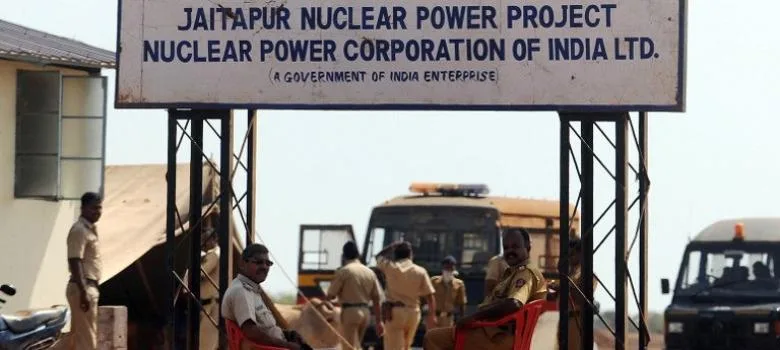
| Jaitapur | Maharashtra |
| Kovvada | Andhra Pradesh |
| Gorakhpur | Haryana |
| Chutka | Madhya Pradesh |
| Mahi Banswara | Rajasthan |
| Bhimpur | Madhya Pradesh |
These projects are expected to significantly increase India’s electricity generation capacity in the coming decades.
India’s Nuclear Doctrine
India adopted its official nuclear doctrine in 2003.
Key Principles
| Principle | Explanation |
|---|---|
| No First Use | Nuclear weapons will only be used in retaliation to a nuclear attack |
| Credible Minimum Deterrence | Maintain sufficient nuclear capability for defense |
| Responsible Nuclear State | Promote global nuclear stability and peace |
The “No First Use” policy reflects India’s commitment to responsible nuclear behavior.
Nuclear Tests Conducted by India
Pokhran-I (1974)
India conducted its first nuclear test in Rajasthan under the code name:
Smiling Buddha
This test demonstrated India’s nuclear capability and marked its entry into the group of nuclear-capable nations.
Pokhran-II (1998)
Between May 11 and May 13, 1998, India conducted five nuclear tests collectively known as:
Operation Shakti-98
These tests established India as a declared nuclear weapon state and strengthened its strategic position.
Challenges Facing India’s Nuclear Sector
Despite significant achievements, several challenges continue to affect the growth of nuclear energy.
1. Safety Concerns
Major nuclear accidents such as:
- Chernobyl disaster
- Three Mile Island accident
- Fukushima Daiichi nuclear disaster
have increased public concern regarding nuclear safety.
Although modern reactors are much safer, maintaining strict safety standards remains essential.
2. Nuclear Waste Management
Radioactive waste requires secure storage and disposal for long periods. Developing advanced waste management systems remains a major challenge.
3. Land Acquisition Issues
Many nuclear projects face delays due to:
- Local opposition
- Rehabilitation concerns
- Environmental debates
- Land acquisition disputes
Projects such as Kudankulam and Kovvada have experienced such challenges.
4. Limited Access to Nuclear Technology
India’s non-membership in the Nuclear Non-Proliferation Treaty (NPT) and the Nuclear Suppliers Group (NSG) has historically limited access to nuclear technology and materials.
5. Infrastructure and Skilled Workforce
Large-scale expansion requires:
- Advanced manufacturing facilities
- Highly trained engineers
- Skilled scientists
- Modern research centers
India continues to invest heavily in these areas.
India and International Nuclear Agreements
Nuclear Non-Proliferation Treaty (NPT)
The NPT aims to:
- Prevent nuclear weapon proliferation
- Promote disarmament
- Encourage peaceful use of nuclear technology
India has not signed the NPT because it believes the treaty creates unequal categories between nuclear and non-nuclear states.
Comprehensive Nuclear-Test-Ban Treaty (CTBT)
The CTBT seeks to ban all nuclear explosions.
India has not signed the treaty due to concerns related to:
- National security
- Strategic flexibility
- Absence of complete nuclear disarmament commitments by major powers
Missile Technology Control Regime (MTCR)
India became a member of the MTCR in 2016.
Benefits include:
- Access to advanced missile technology
- Stronger export control systems
- Support for strategic and defense cooperation
India and the Nuclear Suppliers Group (NSG)
The NSG was formed after India’s 1974 nuclear test.
Why NSG Membership Matters
Membership would provide:
| Benefit | Importance |
|---|---|
| Easier Nuclear Trade | Access to technology and fuel |
| Investment Confidence | Encourages international cooperation |
| Stronger Global Role | Recognition as a responsible nuclear power |
| Energy Security | Supports future reactor expansion |
Most major countries support India’s membership, although some differences remain regarding admission criteria.
India’s Growing Global Standing
India’s participation in international export control groups has strengthened its global reputation.
Important Memberships
| Group | Purpose |
|---|---|
| MTCR | Missile technology regulation |
| Australia Group | Control of chemical and biological weapon materials |
| Wassenaar Arrangement | Regulation of arms and dual-use technologies |
Membership in these organizations demonstrates India’s commitment to responsible technology management and non-proliferation principles.
Future of Nuclear Energy in India
India’s future energy requirements are expected to rise rapidly due to industrial growth, urbanization, and increasing electricity consumption.
Several factors support strong growth prospects:
- Strong government commitment
- Expanding reactor construction
- Indigenous technological capability
- Large thorium reserves
- International nuclear cooperation agreements
- Growing need for clean energy
The country’s unique three-stage nuclear program offers a long-term roadmap that few nations possess. If thorium-based technology becomes commercially successful, India could emerge as a global leader in advanced nuclear energy.
India’s Nuclear Power Prospects and the Road Ahead
India’s Nuclear Power Prospects remain highly promising despite challenges related to safety, financing, land acquisition, and international cooperation. The nation has developed a strong scientific base, indigenous reactor technology, and a clear long-term strategy built around uranium and thorium resources.
As India seeks energy security, economic growth, and reduced carbon emissions, nuclear power is expected to play an increasingly important role. Continued investment in safety, research, infrastructure, and international partnerships can help India transform nuclear energy into one of the pillars of its future development.
FAQs
What is India’s three-stage nuclear power programme?
India’s three-stage nuclear program uses uranium in the first stage, plutonium in the second stage, and thorium-based reactors in the third stage to achieve long-term energy security.
Who is known as the father of India’s nuclear programme?
Homi Jehangir Bhabha is known as the father of India’s nuclear programme.
What is India’s nuclear doctrine?
India follows a “No First Use” policy, meaning nuclear weapons will only be used in response to a nuclear attack.
Why has India not signed the NPT?
India believes the treaty creates unequal treatment between nuclear weapon states and non-nuclear states.
Which was India’s first nuclear test?
India’s first nuclear test was Smiling Buddha, conducted at Pokhran in 1974.
What is the importance of thorium for India?
India possesses one of the world’s largest thorium reserves, making thorium a key resource for its future nuclear energy strategy.
Why is NSG membership important for India?
NSG membership would improve access to nuclear technology, fuel supplies, and international investment opportunities.
How does nuclear energy help India?
Nuclear energy provides reliable electricity, supports energy security, reduces carbon emissions, and helps meet growing power demands.